REVIEW · LISBON
Secret Walking Food Tours in Lisbon – Belém
Book on Viator →Operated by Secret Food Tours · Bookable on Viator
Lisbon’s Belém district smells like a plan. This 3-hour walking food tour strings together major landmarks and classic Portuguese flavors in a tight, easy-to-follow route. You start near MAAT, then wind your way through gardens, monasteries, and viewpoints that make Belém feel like its own little world.
I love how the tour mixes big sights with food that actually fits the neighborhood. I also like the size: a maximum of 12 travelers, which keeps things social but not chaotic.
One thing to consider: you’ll be eating and pausing outdoors while you walk. If it’s windy or cool, you might wish you’d packed a layer, especially since one of the tastings is canned fish served with toasted bread.
In This Review
- Key highlights worth planning for
- Entering Belém from MAAT: art first, then bites
- The Central Tejo electricity angle (and why it works)
- Museu dos Coches: royal transportation as a visual feast
- The food tour rhythm: short stops, good pacing
- Afonso de Albuquerque Square: gardens with a purpose
- Why this stop feels Belém-specific
- Pink palace vibes: the President’s residence overlook
- Garden pause plus river air
- Jerónimos Monastery: Manueline detail that pays off
- A drawback: it’s easy to miss details if you rush
- Praça do Império gardens: geometry, fountains, and photos
- Centro Cultural de Belém and the Berardo Museum
- Padrão dos Descobrimentos: your payoff at the end
- What you actually eat: savory Portuguese classics and sweets
- My take on the balance
- Verde wine: a simple pairing
- Price and value: why $107.40 can make sense here
- Who should book this Belém food walk
- Guides that people remember
- Quick practical tips so you enjoy it more
- Should you book Secret Walking Food Tours in Belém?
- FAQ
- What does the tour include for food and drinks?
- How long is the Secret Walking Food Tours – Belém experience?
- Where do you meet and where does the tour end?
- Is it offered in English, and how big are the groups?
- What kind of walking is it?
- Can I cancel, and what happens if weather is bad?
Key highlights worth planning for
- MAAT as a stylish opening: art, architecture, and the nearby energy-story of Central Tejo
- Jerónimos and Manueline detail: you’ll see why this monastery matters on a UNESCO list
- Food that goes beyond sweets: fish, cod, savory pastries, plus chocolate and custard tarts
- Belém’s gardens in small doses: short stops that still feel like a breath of air
- Padrão dos Descobrimentos finish: big Tagus River views at the end of your walk
- Licensed guide, English-led, small group: easier questions, better pacing, more local context
Entering Belém from MAAT: art first, then bites
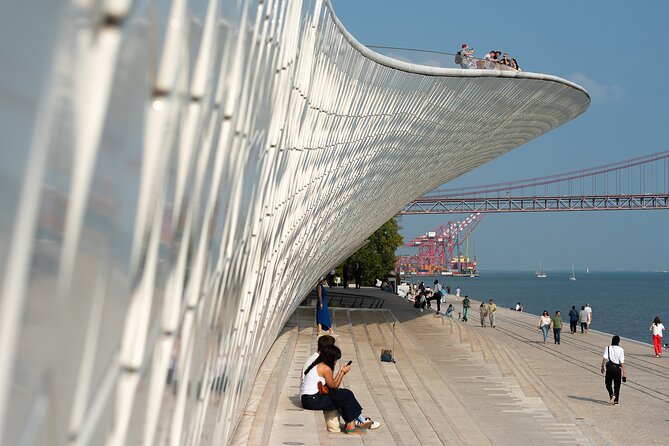
Belém is where Lisbon goes grand: monastery spires, river monuments, and “Portugal was out sailing” energy in stone. What I like about this tour is how it starts with MAAT (Museu de Arte, Arquitetura e Tecnologia) instead of jumping straight to the usual postcard spots. It sets a modern tone right away, which makes the older sights later feel more layered instead of repetitive.
MAAT’s area is also a smart staging point because you’re in a part of town where Belém’s major venues cluster together. That matters on a walking tour. Fewer long transit stretches means more time on your feet, tasting, and stopping to actually look up.
You can also read our reviews of more walking tours in Lisbon



The Central Tejo electricity angle (and why it works)
From MAAT, the route links to the story of electricity through the Electricity Museum, set in a former power station called Central Tejo. Early 20th-century Lisbon didn’t just run on trams and boats. It also powered itself into the modern era. Even in a food tour format, this kind of stop gives the landmarks a reason to exist, not just a pretty backdrop.
If you’re the type who likes understanding what you’re looking at, you’ll appreciate that the tour’s not only about where to eat. It’s about how Belém turned into a key player over time—first through exploration and industry, later through culture.
Museu dos Coches: royal transportation as a visual feast
Next up is Museu dos Coches (in Belém). This is where you’ll see ornate historic carriages and horse-drawn vehicles—designed for status, built for ceremony. It’s a reminder that Portuguese history isn’t only battles and ships. It’s also the everyday theater of power: who gets driven where, and how.
And visually, it’s a great “break” from food-focused attention. Your brain shifts gears. Then you’re ready to come back to tastings with better focus.
The food tour rhythm: short stops, good pacing
This isn’t a marathon. The tour is about 3 hours and designed around frequent, manageable pauses. Many stops are described as short time blocks, with free admission noted for the sights in the route. That makes the day feel like a tour of Belém’s highlights rather than a checklist where you rush through everything.
The pacing also matters because your tastings include both hot and room-temperature items—plus drinks like verde wine. You don’t want to arrive hungry, then spend an hour “waiting for the next bite.” The format keeps you moving while still giving you time to eat, look, and ask questions.
If you prefer a calm walking pace with time to stop and read small details, this style is a good fit.
Afonso de Albuquerque Square: gardens with a purpose
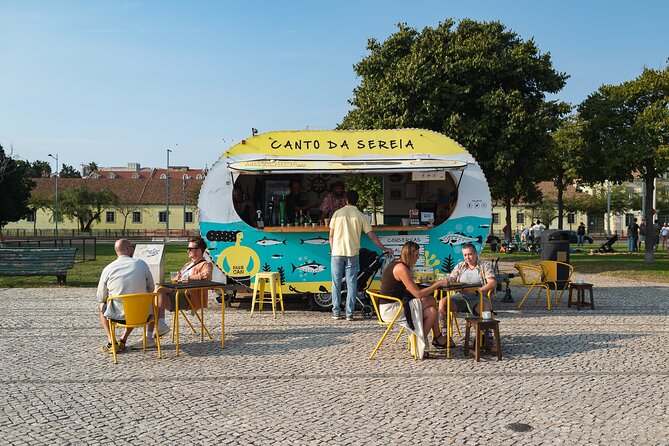
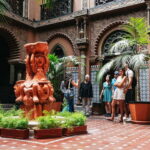
After the museum start, the route heads to Afonso de Albuquerque Square and Jardim Afonso de Albuquerque. This is a garden dedicated to the Portuguese explorer Afonso de Albuquerque, with manicured lawns, trees, and a central statue.
What’s practical here is that a garden stop gives you both shade and a reset. After the museum-heavy start, it’s a low-pressure place to slow down, regroup, and keep your legs from turning into noodles too early.
You can also read our reviews of more food & drink experiences in Lisbon




Why this stop feels Belém-specific
Belém is tied to exploration, but it’s also tied to how Lisbon celebrates those stories in public spaces. A statue in the middle of trimmed greenery isn’t just decoration. It’s a local way of saying: exploration isn’t ancient history here—it’s part of the identity.
And since you’re on a food tour, that identity matters. It helps connect why Portuguese classics taste the way they do: salt, seafood, pastry, and tradition in the same neighborhood that remembers voyages.
Pink palace vibes: the President’s residence overlook
The tour then includes a look at the official residence of the President of Portugal, a 16th-century palace with pink façades, lush gardens, and interiors connected to Portuguese heritage. You also get the framing advantage of being overlooking the Tagus River.
This stop is one of those “wait, I didn’t expect that” moments. You get a sense of how Belém mixes state power and scenic river views. Even if you don’t spend much time inside, the exterior and the setting help you understand why Belém is so iconic to locals.
Garden pause plus river air
From there, the route works into Jardins De Belém, known for maintained greenery, flowerbeds, and quiet fountains. It’s a short pause that can feel surprisingly restorative. In a 3-hour tour, those small green breaks keep the day pleasant, not just educational.
Jerónimos Monastery: Manueline detail that pays off
Next is the big one: Mosteiro dos Jerónimos. This 16th-century monastery is a UNESCO World Heritage site and a standout of Manueline architecture—the ornate Portuguese style tied to the Age of Discovery. The monastery also houses the tomb of explorer Vasco da Gama, so you’re looking at more than a church. You’re looking at a monument to exploration made stone.
If you’re the type who wonders how Portugal’s overseas era shows up on the ground, this is the clearest answer in Belém. The carvings, the scale, and the way the complex is laid out all point to a country celebrating its voyages through art and architecture.
A drawback: it’s easy to miss details if you rush
Since this is a walking food tour, you won’t be doing a slow museum crawl. If you want to read every plaque and stare at every panel, you might find the stop timing a bit snug. That said, as an intro stop, it’s excellent—especially because the tour keeps you moving through multiple Belém landmarks instead of getting stuck in one place.
Praça do Império gardens: geometry, fountains, and photos
After Jerónimos, you’ll reach Jardim da Praça do Império, a large landscaped garden designed for the 1940 Portuguese World Exhibition. Expect geometric flowerbeds, ornate fountains, and walking paths with landmarks nearby, including Mosteiro dos Jerónimos and the Padrão dos Descobrimentos.
This is a great “middle” stop: not too museum-heavy, not too far from the main monuments, and perfect for quick photos without feeling like you’re stuck in a crowd.
Centro Cultural de Belém and the Berardo Museum
The route also includes Centro Cultural de Belém, a major cultural hub for exhibitions, concerts, theatre performances, and conferences. It also houses the Berardo Museum, featuring contemporary art.
This is a smart inclusion because Belém isn’t only about medieval and early modern Portugal. It’s also where Lisbon places current culture in the same district. For you, it means the tour doesn’t end with history. It hints at where the city goes next—through modern art and events in a striking complex.
If you’re on a tight trip schedule, this stop can also help you decide what to prioritize if you return on your own.
Padrão dos Descobrimentos: your payoff at the end
The walk ends at Monument to the Discoveries (Padrão dos Descobrimentos). This iconic landmark is shaped like a ship’s prow and honors explorers and navigators tied to Portugal’s maritime history.
The best part is the finish viewpoint potential. You can admire the sculptures and, if you want, climb to the top for panoramic views over the Tagus River and surrounding landmarks.
As a closing move on a walking tour, this works because it gives you a “big picture” moment. You’ve seen gardens, monuments, and architectural styles up close. Now you get the city’s overall map in one glance.
What you actually eat: savory Portuguese classics and sweets
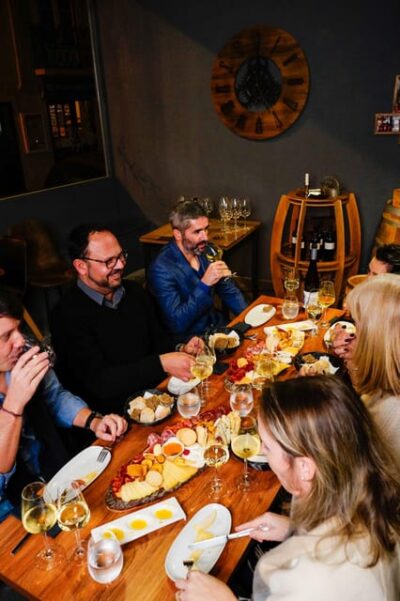
Here’s the practical truth about why food tours in Belém work: the flavors match the neighborhood. On this tour, you get a spread that covers both savory and sweet.
You can expect:
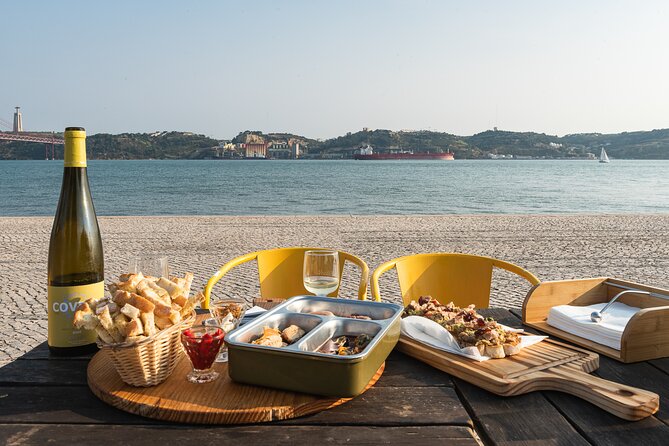
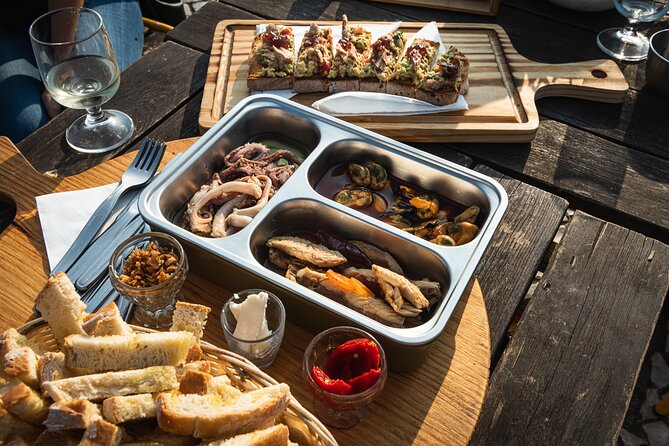
- Canned fish with toasted bread
- Crispy pastry pocket with savory filling (pastel de massa tenra)
- Golden-crusted cod with potatoes and spinach
- Artisanal chocolates
- Belém custard tarts (pasteis de Belém)
- A Secret Dish
- Water and verde wine
My take on the balance
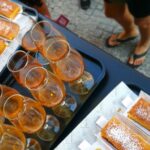
This lineup is a good mix. It’s not only custard tarts, and it’s not only seafood in one form. You’ll hit multiple textures—crisp pastry, soft bread, flaky fish, creamy custard, and chocolate. It also helps you learn what Portuguese “comfort foods” look like outside of desserts.
One caution: canned fish might be polarizing. I’d plan for that tasting to be a cold or cool-weather factor since one experience note mentioned it being cold outside in wind. Bring a layer and pace yourself so that salty, briny bite doesn’t catch you by surprise.
Verde wine: a simple pairing
The tour includes verde wine, which you’ll likely find light and refreshing compared to heavier reds. It’s a sensible pairing with seafood and salty flavors. If you don’t drink, ask your guide how they handle it for your group—your data shows wine is included, but it doesn’t spell out alternatives.
Price and value: why $107.40 can make sense here
At $107.40 per person, you’re not paying only for snacks. You’re paying for:
- a licensed guide
- multiple tastings across savory and sweet
- water and verde wine
- a route that links major Belém landmarks within a tight walk
The group size cap of 12 travelers adds value because it keeps the guide’s attention focused and the experience from turning into a moving crowd. That can matter as much as the food itself, especially if you like asking questions about what you’re seeing.
Also, many of the stops are listed with free admission for the short visit. That’s a hidden value lever: you’re not stacking paid entry tickets on top of a food tour price.
If you’re traveling with limited time and you want both Belém’s icons and actual Portuguese eating, this price can feel fair.
Who should book this Belém food walk
This tour is best for you if:
- you want Belém highlights without trying to plan a dozen separate stops
- you like learning how Portuguese dishes connect to place
- you prefer a small group walking format
- you want a guided way to visit MAAT, Jerónimos, and the Discoveries monument in one go
It may be less ideal if:
- you expect a slow, museum-style deep dive at Jerónimos or MAAT
- you dislike seafood or particularly briny foods like canned fish
- you want a strictly dessert-only itinerary
Guides that people remember
This tour is led in English by licensed guides, and three names show up with strong praise: Marta, Antonio, and Claudia. What stands out in their approach is how they connect what you’re tasting to what you’re standing in front of—food plus context, not food as an afterthought.
Some guides also share follow-up help, like favorite places to eat after the tour. That’s the kind of practical bonus that can extend the value of your booking beyond the 3 hours.
Quick practical tips so you enjoy it more
- Wear shoes you can walk in for a few hours. This is a walking tour across Belém.
- Bring a light layer. One tasting includes canned fish, and you’ll have outdoor moments.
- Eat at a steady pace. You’ve got multiple courses and a sweet finish.
- If you’re sensitive to seafood flavors, mention it early to your guide so you can plan your bites.
Should you book Secret Walking Food Tours in Belém?
Yes, if you want a single, well-paced way to experience Belém’s icons and taste classic Portuguese food in one morning or afternoon. The combination of major landmarks (like Mosteiro dos Jerónimos and Padrão dos Descobrimentos) with a balanced food lineup—cod, pastry, custard tarts, and verde wine—makes it efficient and satisfying.
I’d choose it especially if you’re the type who likes walking tours that teach you what to notice. The small group size and licensed guidance help a lot.
Skip or rethink it if seafood isn’t your thing, or if you want long, unhurried time inside the big monuments. This is a tight, curated walk—excellent for getting oriented fast, not for studying every carved detail for hours.
FAQ
What does the tour include for food and drinks?
The tour includes a selection of food such as canned fish with toasted bread, a crispy savory pastry pocket (pastel de massa tenra), golden-crusted cod with potatoes and spinach, artisanal chocolates, Belém custard tarts (pasteis de Belém), a Secret Dish, plus water and verde wine.
How long is the Secret Walking Food Tours – Belém experience?
It lasts about 3 hours.
Where do you meet and where does the tour end?
You start at MAAT – Museum of Art, Architecture and Technology on Av. Brasília. The tour ends at the Monument to the Discoveries (Padrão dos Descobrimentos) on Av. Brasília.
Is it offered in English, and how big are the groups?
Yes, it’s offered in English. The tour has a maximum of 12 travelers.
What kind of walking is it?
It’s listed as requiring moderate physical fitness. Since it’s a walking tour, you should plan for comfortable shoes and outdoor walking time.
Can I cancel, and what happens if weather is bad?
You can cancel for a full refund up to 24 hours in advance. The experience requires good weather, and if it’s canceled due to poor weather, you’ll be offered another date or a full refund.