REVIEW · LISBON
Alfama Tour in Lisbon Old Town
Book on Viator →Operated by Take Lisboa · Bookable on Viator
Alfama feels like living theater. This guided walk in Lisbon’s oldest neighborhood turns tight lanes, centuries-old fountains, and cliffside viewpoints into one easy route you can actually follow, with English guidance and a pay-what-you-want setup (Alfama and tip-based are the two big themes). You’ll also get practical local recommendations to help you enjoy the rest of your day in Lisbon, whether you pick a morning or afternoon slot.
Two things I like a lot are the way the guide strings together history in plain language, and the lineup of viewpoints that makes Lisbon feel huge even though you’re walking mostly at street level. The walk also gives you a satisfying rhythm: small stops for stories, then short climbs, then a payoff at miradouro after miradouro (miradouro views are a major reason to do this on foot). Guides often bring the neighborhood to life with music, architecture talk, and local culture details named right in the route.
One drawback to consider is the physical side: Alfama’s streets are hilly, with stairs and steep grades. Even with a paced group and frequent discussion stops, you should expect a workout day, not an easy stroll (stairs are part of the deal).
In This Review
- Key highlights before you go
- Why Alfama works best on foot
- Price and value: a tip-based walk that stays fair
- Where the tour starts near R. dos Bacalhoeiros
- From Casa dos Bicos to Medieval fountains: the first 60 minutes
- Igreja de São Miguel, Nuno Saraiva’s mural, and how stories connect
- Miradouros: Santo Estêvão, Portas do Sol, and Santa Luzia
- Lisbon Cathedral and churches: what you see and what’s optional
- Guide energy, local culture, and a possible ginjinha stop
- Comfort tips for steep streets, rain, and photo stops
- Who should book this Alfama tour, and who might skip it
- Should you book? My practical take
- FAQ
- How long is the Alfama walking tour?
- What does the tour cost?
- Is the tour offered in English?
- Are entry tickets included for the main sights?
- Does the tour include food or drinks?
- What’s the cancellation policy?
Key highlights before you go
- Pay what you want: no set “fixed price” feel, and tipping at the end is expected.
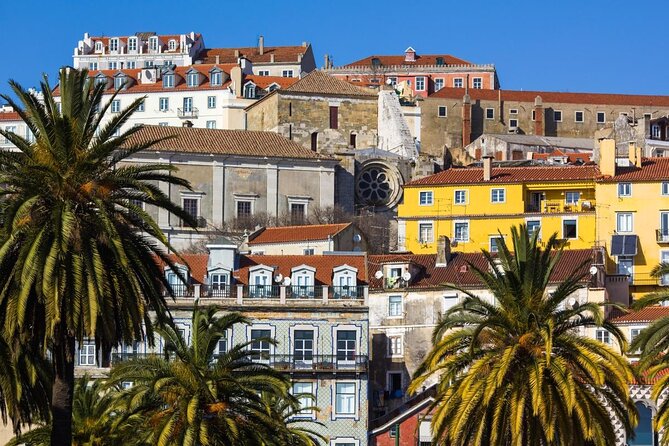
- Miradouro payoff: Santo Estêvão, Portas do Sol, and Santa Luzia show Alfama from three angles.
- Medieval stops: you’ll pass fountains tied to the 1200s and see how old water infrastructure shaped daily life.
- Sé de Lisboa without the stress: you get the exterior and context, while the inside is optional (5€).
- Small-group feel: up to 25 people, and many guides keep the pace friendly.
- English storytelling: the tour is offered in English and leans hard on narrative.
Why Alfama works best on foot
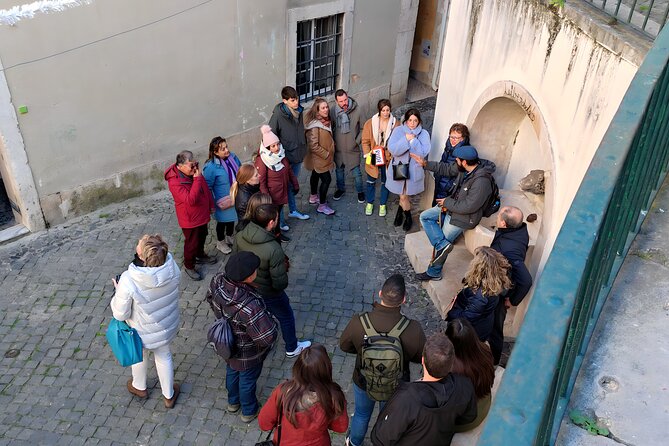
Alfama is the kind of Lisbon neighborhood where “landmark hopping” can turn into constant detours. The streets curve, the buildings crowd close, and every turn seems to reveal a new angle on the hills. Walking with a guide helps you keep your bearings fast and gives your brain something to hold onto: one route, one set of themes, and enough time at each pause to understand what you’re actually looking at.
I like this format because it’s not only about standing still for photos. You move through the district in chunks—fountains, plazas, churches—so you start to see patterns. The neighborhood’s water sources matter. The central plazas act like “rooms” in an old city. And the church squares are where community life has gathered for centuries.
English guidance also matters here. Alfama rewards curiosity, but you don’t need a crash course to enjoy it. A good guide can connect the dots between the medieval elements (like old fountain structures) and the modern city layers you can still spot today, including political eras and cultural traditions that show up in how people talk about the place.
You can also read our reviews of more tours and experiences in Lisbon.

Price and value: a tip-based walk that stays fair
This tour is listed at about $3.62 per person, but it’s designed as a fully tip-based experience where your guide earns the real value at the end. That changes the math. You’re not paying for a “hard product” ticket. You’re paying for a human who can guide you, answer questions, and turn a confusing maze into an enjoyable story.
From a value standpoint, this makes sense because you’re getting:
- A structured 2.5-hour route (so you don’t waste time figuring it out)
- A guide who shares culture and traditions, not just facts
- Local recommendations that can improve your rest-of-trip decisions
- A group size that can stay manageable (maximum 25 travelers)
The main practical caution is to tip thoughtfully. People consistently praise the guides for storytelling, pacing, and personal attention. If you arrive expecting a cheap sightseeing bullet, you’ll probably leave feeling under-supplied. If you arrive ready to support the guide, you’ll likely feel you got your money’s worth.
No food or beverages are included, so don’t plan on this being your meal. Think of it as your “orientation walk” that helps you enjoy the rest of Alfama later.
Where the tour starts near R. dos Bacalhoeiros
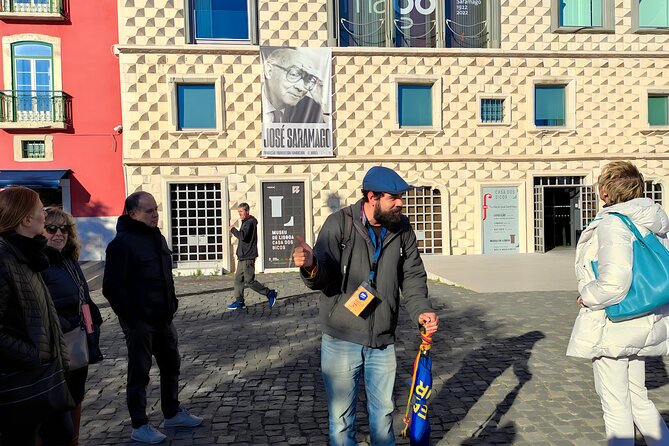
The meeting point is at R. dos Bacalhoeiros 12A, 1100-070 Lisboa. It’s not far from public transportation, which is useful because Alfama can be tricky to reach if you’re relying on guesswork. The tour uses a mobile ticket, so you’ll want your phone charged before you head out.
Expect the walk to finish in a different location. That’s normal in neighborhoods like Alfama, where the best viewpoints and key plazas don’t sit in a neat loop. Plan your next step with that in mind. If you’re trying to grab dinner or connect to another tour right after, give yourself a buffer so you don’t feel rushed.
Timing-wise, the schedule you’ll see may include an afternoon option (one start time shown is 3:30 pm). Since you can choose morning or afternoon, pick what fits your energy and the light you want for the viewpoints. If you’re sensitive to heat or crowds, the afternoon can still work well—just be ready for the uphill grind regardless of the hour.
From Casa dos Bicos to Medieval fountains: the first 60 minutes
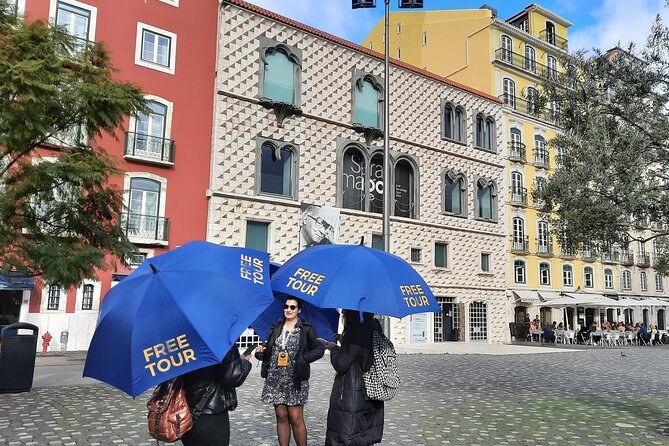
The walk begins near Casa dos Bicos–Museu de Lisboa, recognizable for the blue umbrellas that frame the start of your route. You’ll have about 15 minutes here. Admission isn’t included, so you’re mainly using this stop for orientation and context. If you’re curious, you can decide later whether you want to pay to go inside—what you gain from the guide is the “why this building matters” portion.
Next comes a major Alfama theme: water and public fountains. You’ll stop at Chafariz D’El Rei, where the Chafariz de El-Rei is described as likely the first public fountain in Lisbon, built in the 13th century and connected to the hillside’s water resources. Expect around 10 minutes here, and it’s free. Even if you’ve never cared about fountains before, this is the kind of stop that makes you notice how a city survives and grows. Water shapes routes, daily routines, and even where people gather to talk.
From there, you’ll hit the central square area with Largo do Chafariz de Dentro (about 10 minutes, free). This plaza has long roots, once called Chafariz dos Cavalos (Horse Fountain). In Alfama, names and details aren’t random—they hint at what people used to do there and what the neighborhood valued.
Then you continue through nearby plazas—Largo de Sao Rafael and Largo do Salvador—each about 10 minutes and free. These stops aren’t about one “wow” object. They’re about learning how the neighborhood’s small spaces function like stages for stories. You’ll get a sense of how the old street network, the fortress-like walls, and everyday life overlap.
Igreja de São Miguel, Nuno Saraiva’s mural, and how stories connect
As the route moves deeper into Alfama’s core, you’ll spend time at Igreja de São Miguel (about 15 minutes, free). This church and its square are closely tied to the Popular Saints Festivities, which gives you a cultural anchor. It’s one thing to see a church façade; it’s another to understand how the community uses that spot at specific times of year.
Then you’ll encounter the History of Lisbon mural by Nuno Saraiva (about 10 minutes, free). This is a smart kind of detour because it bridges street-level Lisbon with a larger narrative. Murals like this can act like a local “reader’s map,” helping you connect what you saw earlier (older city elements) with how Lisbon likes to tell its story today.
You’ll keep moving toward the viewpoint sequence, but before you climb into the high vantage spots, these stops help you understand the neighborhood’s layers. It’s also where many guides show off their style. In the feedback I saw, guides like Mariam and Laura get praised for keeping people engaged with clear storytelling. Some guides also sing or use music as a memory tool for themes like fado and saudade.
If you’re the kind of traveler who likes a tour that explains why things are where they are, this middle stretch is where it starts to click.



Miradouros: Santo Estêvão, Portas do Sol, and Santa Luzia
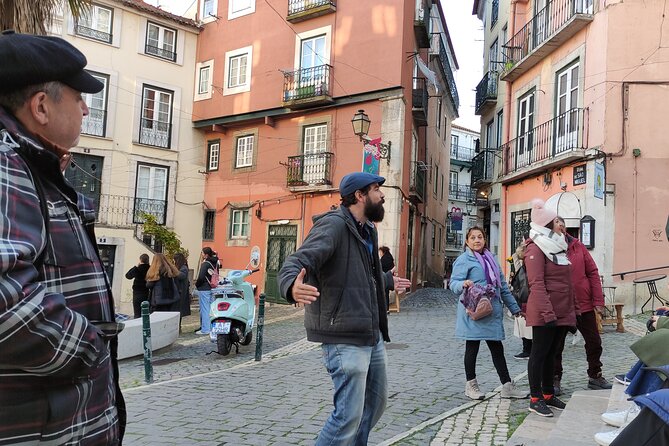
This is the big payoff section. Alfama is built on slopes, so your best views are earned through walking. Expect short climbs and maze-like street segments as you head toward viewpoints, with time to settle and look.
First: Miradouro de Santo Estêvão (around 15 minutes, free). The route description notes that depending on your pace, you’ll move through the “mazy Alfama” streets to reach the viewpoint and the Church of Santo Estêvão. This is one of those spots where the guide’s commentary matters. Without context, you mostly see roofs and walls. With context, you start seeing how the district’s layout shaped life and how the city preserves its edges.
Next: Miradouro das Portas do Sol (about 10 minutes, free). This viewpoint is often described as an enormous balcony overlooking Alfama, and it’s the kind of place that looks postcard-ready for a reason. Your best move here is to take a wide look first, then let the guide point out smaller details.
Finally: Miradouro de Santa Luzia (about 10 minutes, free). This terrace is described as romantic, and it’s easy to see why. If you’re traveling with photos in mind, this is a great moment to slow down. If you’re traveling with a timeline in mind, it’s also a short stop, which helps you keep the full route feeling manageable.
These viewpoint breaks are also where you get mental relief. Alfama can feel like a visual sprint if you’re wandering alone. With a guide, you get pauses on purpose.
Lisbon Cathedral and churches: what you see and what’s optional
After the viewpoints, the route brings you to Lisbon Cathedral (Sé de Lisboa), described as the oldest and most important church in the city, with construction dating back to the 12th century. You’ll spend around 15 minutes here, and entry inside isn’t included. The tour notes that the cost to go inside is 5€, so you can decide on the spot whether that’s worth it for you.
This choice is practical. Cathedral interiors can be stunning, but they also add time. In a walking tour like this, the value comes from getting the context outside and keeping the pace of the afternoon or morning. If you’re the type who loves churches, you can factor that 5€ into your plans. If you’d rather keep momentum, you’re not left feeling like you skipped “the main thing.”
You’ll then finish with Church of St. Anthony (about 15 minutes, free). This spot is linked to celebrating in front of the Church of Santo António, Lisbon’s most cherished saint. It’s a fitting end because it gives you a community-focused landmark right when you’ve already learned the neighborhood’s story.
Guide energy, local culture, and a possible ginjinha stop
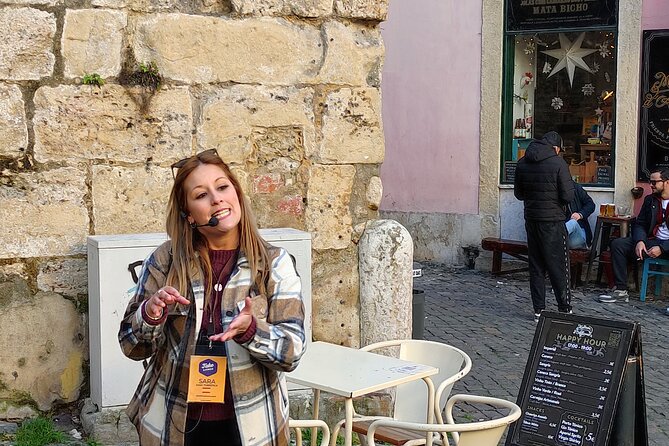
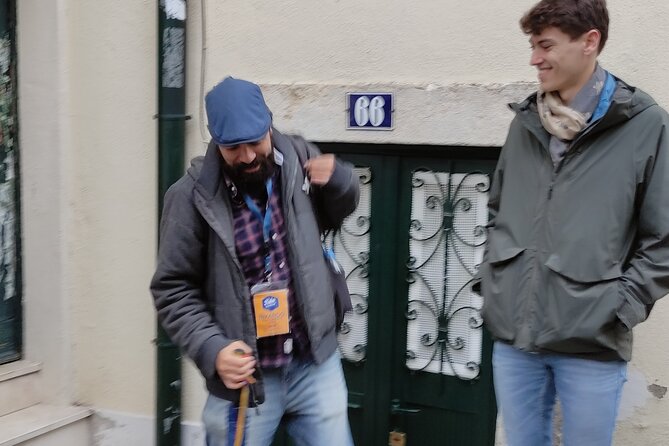
The quality of this tour is very tied to the guide. The standout praise in the feedback I reviewed repeatedly points to storytelling that feels personal and fun—plus pacing that accounts for real bodies on real hills.
Names that show up with strong praise include Hugo, Cláudia, Jessica, Katrina, Belen, Fernanda, Nina, and Cecelia. Many of these guides are credited with explaining architecture and history in a way that makes Alfama feel connected, not like a pile of sights. Some guides also connect Lisbon’s culture to music: fado gets explained not just as a genre, but as an emotional inheritance shaped by longing and resilience.
One extra detail you might get on your particular walk: the chance to taste ginjinha (often described as being offered at a doorway stop). Some feedback specifically mentions the local icon Dona Alice and a serving style in chocolate cups. Because this isn’t spelled out as a fixed itinerary item, treat it as a maybe. But if your guide leans into local food and tradition, you’ll have the opportunity to try it.
The guide also shares dozens of suggestions to enjoy Lisbon to the fullest. That usually matters more than people expect. A well-timed recommendation can turn a generic day into a great one.
Comfort tips for steep streets, rain, and photo stops
This walk needs the right footwear. Alfama’s grades are no joke, and the tour involves plenty of stairs. In the feedback, people specifically called out the need for excellent walking shoes and noted that the grades can be challenging. That’s your key preparation message.
Also, build in patience. Even when the group moves smoothly, the streets slow you down. If rain hits, it can still work; at least some guides kept tours running in bad weather.
One practical upside: guides often manage the route to include shady discussion points and moments to pause for photos. Some feedback also mentions opportunities to use restrooms along the way, which can be a big deal on a 2.5-hour uphill route.
If you’re traveling with a moderate fitness level, plan to take your time on the climbs. The tour is designed for people who can handle walking and hills, not for people who want to avoid elevation.
Who should book this Alfama tour, and who might skip it
This tour is a strong fit if you want:
- A guided introduction to Alfama that helps you navigate without stress
- A route built around viewpoints, plazas, and churches (not just random street wandering)
- A guide who tells stories that link the neighborhood’s medieval roots to Lisbon’s later cultural layers
You should consider skipping if:
- You hate stairs and steep climbs and don’t want to manage hilly terrain
- You’re only looking for quick photo stops with minimal walking
- You need a food-inclusive experience (this tour does not include meals or drinks)
For solo travelers, couples, and friend groups, it also works well because small-group pacing means you can ask questions. For families, this depends heavily on the ages and stamina of the group, since the hills are part of the tour.
If you’re in Lisbon for a short time and want your first Alfama day to make sense, this walk can be a great start. It sets you up to explore on your own afterward with far less confusion.
Should you book? My practical take
Book it if you want Alfama to feel understandable, not random. The best part is the combination of structured walking and storytelling: fountains, plazas, churches, then three viewpoint stops that make the effort pay off. The price is low on paper, but the real value is in the guide experience and the local recommendations you leave with.
Before you go, do two things: wear good shoes, and be ready to tip your guide generously if you enjoyed the experience. If you show up curious and a little patient with the hills, you’ll likely feel like you got a true sense of place.
If you want a Lisbon day that’s heavy on views, culture, and orientation in a compact time window, this Alfama walk is one of the most sensible ways to spend 2.5 hours in the neighborhood.
FAQ
How long is the Alfama walking tour?
It runs about 2 hours 30 minutes.
What does the tour cost?
The listed price is about $3.62 per person, and the experience is tip-based, with tipping welcomed and expected at the end.
Is the tour offered in English?
Yes. The tour is offered in English.
Are entry tickets included for the main sights?
Not always. The Casa dos Bicos–Museu de Lisboa stop does not include admission, and Lisbon Cathedral entry is not included. The tour notes that Cathedral entry costs 5€ if you want to go inside.
Does the tour include food or drinks?
No. Any food or beverages are not included.
What’s the cancellation policy?
You can cancel for free up to 24 hours in advance for a full refund. If you cancel less than 24 hours before the start time, the amount paid is not refunded.