REVIEW · LISBON
Private guided tour to 7 Colinas and Belém in an electric Tuk Tuk with 4.5 hours.
Book on Viator →Operated by SPR Tours · Bookable on Viator
Lisbon by electric tuk tuk makes the hills feel manageable. This private 4.5-hour route strings together classic viewpoints, historic neighborhoods, and Belém’s big-name sights without the long gaps that can happen on your own, especially if you want a guided story as you go.
I really like two parts: the electric tuk tuk keeps you moving comfortably through steep streets, and the miradouro stops (Portas do Sol, Santa Luzia, and Senhora do Monte) let you actually understand Lisbon’s seven hills with real skyline views, not just photos. If you get a guide like Jorge, his knack for explaining things in a way that works even with kids is a huge plus, and the tour’s pacing tends to stay friendly for mixed groups.
The main drawback is simple: you cover a lot of places in 4.5 hours, so some moments are photo stops and most museum entries are not included—so plan around walking time and bring your own energy for the bells-and-banners sightseeing sprint.
In This Review
- Key things to know before you ride
- Electric tuk tuk and a full loop: how this tour actually feels
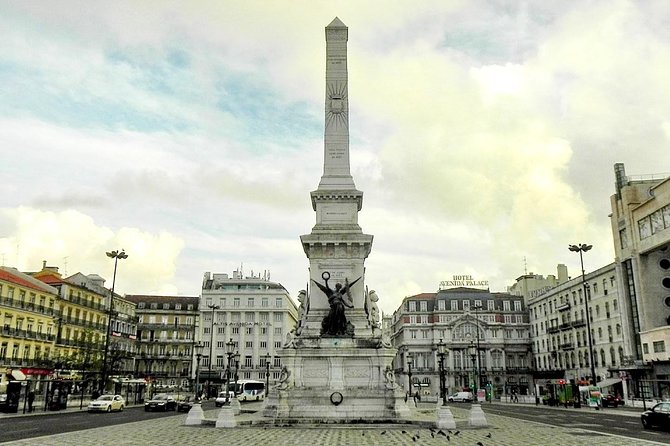
- Start at Restauradores: elevators, obelisks, and the route’s opening act
- Rossio and the upslope approach: finding Lisbon’s “seven hills” in real time
- The historic-center monuments: what’s worth slowing down for
- Rua Augusta to the Cathedral side: stone, arches, and church landmarks
- Tile work and the Portas do Sol / Santa Luzia viewpoint pair
- Alfama, fado, and the sidewalk details you might miss solo
- Senhora do Monte and the big viewpoint payoff
- Panteão Nacional and the photo-stop rhythm
- Santa Justa elevator area and São Pedro de Alcântara: views from the other side
- Parque Eduardo VII and the 25th of April monument
- Passing São Bento, the Assembly zone, and Oriente-side museum context
- Belém section: Jerónimos, Tower zone, and the Discoveries Monument stretch
- Jerónimos Monastery: what you should look for
- Belém Tower and the Discoveries Monument: the photo set that makes sense
- Pastéis de Belém: the smart way to do the signature bite
- Museums and modern Lisbon stops: MAAT, LX Factory, and the river museums vibe
- Price and value: what you’re really paying for at $295.45
- Practical tips before you book
- Is this the right tour for you?
- FAQ
- FAQ
- Where does the tour start and where does it end?
- Is pickup included?
- How long is the tour?
- What language is the tour guide?
- Is this a private tour?
- Is food included?
- Are entrance tickets included?
- What’s included in the tour price?
- What if I need to cancel?
- Is the tour suitable for everyone?
Key things to know before you ride
- Electric tuk tuk for steep-city navigation across multiple Lisbon elevations in one go
- Four viewpoint moments designed to help you grasp the seven hills: Portas do Sol, Santa Luzia, Senhora do Monte, and the Eduardo VII area
- A classic-elegant core route through Rossio, Rua Augusta, Lisbon Cathedral, and Santa Justa and Gloria elevator zones
- Belém in the same day: Jerónimos Monastery area, Belém Tower area, and the Discoveries Monument stretch
- Pastéis de Belém stop with guide help so you can focus on tasting instead of queue-watching
Electric tuk tuk and a full loop: how this tour actually feels
This is the kind of tour you take when you want Lisbon to make sense fast. You start at Restauradores, right by the Gloria Elevator and the Obelisk, then your guide walks you through the old center and up toward Lisbon’s highest points. The electric tuk tuk is the quiet hero here. When the route includes big elevation changes (and yes, you do reach the highest viewpoints), the tuk tuk helps you keep your legs for the stops where you actually want to stand and look.
The second key ingredient is the way the route is built. It’s not just a list of sights. It’s a storyline about Lisbon’s position—how the city sits on hills, how neighborhoods stack vertically, and why Belém matters as Portugal’s maritime-facing front door.
And because it’s private, you’re not stuck with a one-size-fits-all group tempo. You can ask questions in real time, and the guide can nudge you toward what’s most worth your time that day.
You can also read our reviews of more guided tours in Lisbon


Start at Restauradores: elevators, obelisks, and the route’s opening act
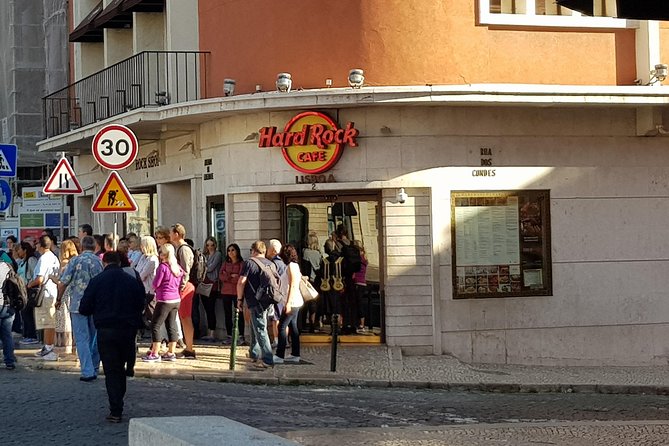
Your tour begins at Hard Rock Café Lisbon at Av. da Liberdade 2, then you start where the landmarks cluster. Restauradores is both a practical start point and a useful “reset button” for first-time visitors.
From here, you’ll get the atmosphere around:
- the Obelisk area and the view corridors that feed into the historic core
- the Elevador da Gloria, a classic old funicular-style elevator connecting Restauradores down toward São Pedro de Alcântara
- the general flow toward Rossio, where Lisbon’s major central streets pull you into the old-city maze
If you’re the type who likes understanding logistics while sightseeing, you’ll appreciate that this tour doesn’t just show monuments. It explains how these routes connect different levels of town.
Rossio and the upslope approach: finding Lisbon’s “seven hills” in real time
Once you leave the start zone, you head into Rossio and follow the cobbled streets through tighter old-city lanes. This is where “seven hills” becomes more than a trivia line. The guide’s job is to connect what you see—churches, squares, stairways, and viewpoints—to the geography underneath.
You’ll pass or stop near major anchors such as:
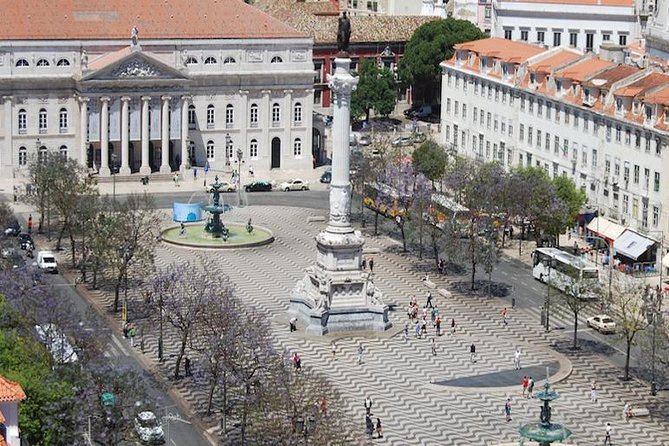
- Teatro D. Maria II and the Statue of D. Pedro IV in the Rossio square area
- Santa Justa Elevator (as a sight zone passed along the way)
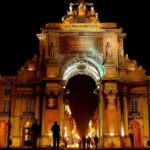
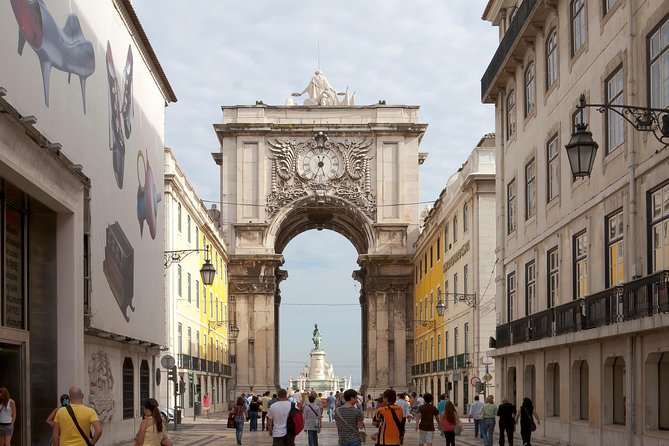
- Rua Augusta and its triumphal arch area, which frames the central civic spine of Lisbon
On a normal self-guided day, it can feel like you’re wandering. In this format, you’re moving with a plan that keeps the steep parts from turning into just sweat.
The historic-center monuments: what’s worth slowing down for
This part of the route packs in Lisbon’s old-world identity, and you’ll see it in layers—royal and religious landmarks, then streets and tiles, then the view breaks that reset your brain.
Here are the stops and sight zones that matter most for your time:
Rua Augusta to the Cathedral side: stone, arches, and church landmarks
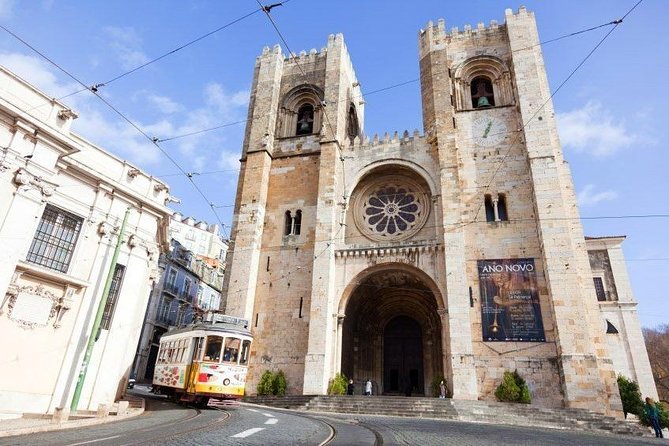
You’ll cross Rua Augusta and pass the Triumphal Arch area. Then you’ll head toward the religious heart of the city with stops and sight zones that include:
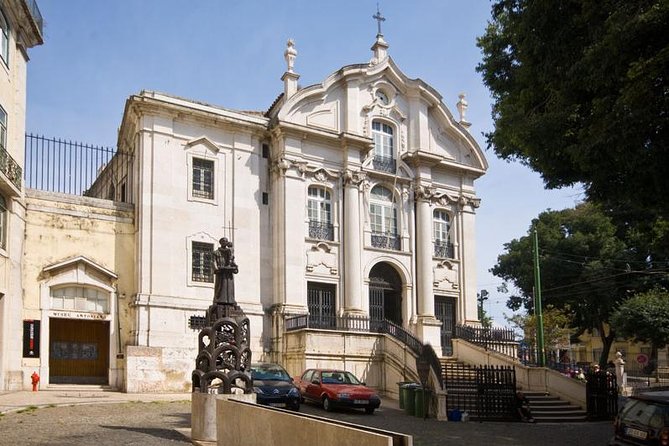
- St. Anthony’s Church (where St. Anthony was born and lived)
- the Lisbon Cathedral area
- the older-feeling church zones that help you picture how the city formed over centuries
If you like architecture, this chunk rewards you. If you don’t, it still works because the route keeps offering view breaks soon after, so you don’t get sight-fatigue.
You can also read our reviews of more private tours in Lisbon





Tile work and the Portas do Sol / Santa Luzia viewpoint pair
Two of the easiest ways to fall in love with Lisbon are the viewpoints and the azulejo (tile) details. This tour builds both into short stops at Miradouro das Portas do Sol and Miradouro de Santa Luzia, each with time to take photos and orient yourself.
At Portas do Sol, you’ll look out toward:
- São Vicente (with the symbol of Lisbon)
- Alfama, described as the second-oldest neighborhood in Europe
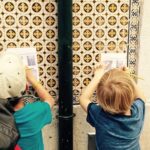
At Santa Luzia, you’ll again see Alfama and get a focus on the unique tiles of the Church of Santa Luzia.
These are free stops and they’re short (think around 10 minutes each), but that’s exactly why they work. You get a strong view moment without losing half your day to crowding.
Alfama, fado, and the sidewalk details you might miss solo
As you move through the older neighborhoods, the guide points out small things that make the place feel lived-in. One neat touch is the reference to sidewalk stones with the face of Amália Rodrigues, the famous fado singer. It’s the kind of detail that’s easy to walk past if you’re just focused on the next big name.
You’ll also pass key Alfama-adjacent and hilltop zones such as:
- Graça Church and the Villa Sousa area
- São Vicente de Fora (as a passed sight zone)
- the Fado Museum area (passed along the route)
- and the general “up-and-down street” rhythm that defines this side of Lisbon
There’s even a stop or photo moment that references the narrowest street in Lisbon, plus other street-level landmarks like House of the Beaks, Largo do Carmo, and the Ruins of the Church of Carmo area as you move toward the next high viewpoint stretch.
Senhora do Monte and the big viewpoint payoff
After moving through the neighborhoods and passing the area tied to the flea market that runs Tuesdays and Saturdays (Feira da Ladra), you’ll reach Lisbon’s highest big overlook: Miradouro da Nossa Senhora do Monte.
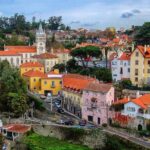
This is the “main viewpoint” moment on the route. You’ll have about 10 minutes to stand, look, and connect the hills you’ve been hearing about with the city spread below. You’ll also see church features near the viewpoint zone (including Church of Saint Genes, noted as part of the viewpoint area).
Short stops at big viewpoints are a smart strategy. If you try to linger too long, you risk losing time to the rest of the day. Here, the timing keeps you moving while still giving you that satisfying skyline moment.
Panteão Nacional and the photo-stop rhythm
Back down in the middle-hill area, you get a quick stop at Panteao Nacional, the Church of Santa Engrácia, Lisbon’s national pantheon. It’s a brief window (just a couple minutes for photos), but it’s an effective pause because it changes the kind of photos you’ll be taking. Instead of just the skyline, you get architecture and a landmark with national significance.
Nearby, the route includes passing the fado museum area, and other small but meaningful stops such as a public drinking fountain referenced as the place various social classes used to fetch water. There’s also a nod to 25th of April revolution significance tied to that area, which helps you understand why certain places feel like more than scenery.
Santa Justa elevator area and São Pedro de Alcântara: views from the other side
The route includes a segment that brings you to Miradouro São Pedro de Alcântara with about 10 minutes for photos. This viewpoint is useful because it gives you a different angle on the city and hints at the castle and the hills across town.
You also pass Parque Eduardo VII later for another view and the 25th of April Revolution monument.
Between these viewpoints, you’ll also see plenty of “in-between” Lisbon sights along the streets: the churches that punctuate the streets, the historic atmosphere, and the transitions from older districts toward the more modern museum and riverside stretch.
Parque Eduardo VII and the 25th of April monument
At Parque Eduardo VII, the tour includes another short view stop (around 10 minutes). This park stop matters because it’s not only about photos. It’s a way to understand how Lisbon’s modern public spaces hold national memory too.
You’ll also see the 25th of April monument, which adds context when you later hit Belém’s major civic and memorial areas. In other words, this is the “bridge” stop between the classic city layers and the river-facing Portugal story.
Passing São Bento, the Assembly zone, and Oriente-side museum context
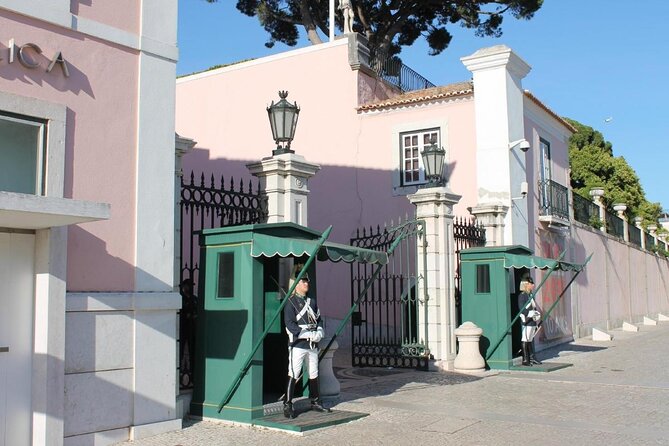
As your route swings eastward, you pass or stop near Parlamento São Bento, the São Bento Palace area where the Assembly of the Republic meets daily. The tour also notes a second official-residence connection behind the building area, which gives you a feel for Lisbon as a working capital, not just a postcard.
You’ll also pass museum and cultural landmarks in the wider city loop, including:
- Fundação Oriente (museum housed in former warehouses tied to the Cod Trade Regulatory Commission, plus a mention of key collections)
- Padrao dos Descobrimentos (the Discoveries Monument)
- CCB area (mentioned in the context of European Union presidency activities and cultural spaces)
- and multiple Belém-to-river-facing stops passed along the way
The route is busy, but it’s guided busy. The guide helps you connect why these sites are linked to Portugal’s overseas history.
Belém section: Jerónimos, Tower zone, and the Discoveries Monument stretch
Belém is where Lisbon turns outward toward the world. This tour reaches that part of town with the right sequencing: you move from viewpoints and old neighborhoods to the grand maritime story.
You pass or include key Belém highlights such as:
- Jeronimos Monastery (stop noted around 15 minutes; the church is highlighted, with tombs of Vasco da Gama, Luís de Camões, and family of King Manuel I)
- National Coach Museum area (passed along the route)
- Belém Tower zone and the maritime-defense context tied to it
- Padrao dos Descobrimentos (Discoveries Monument)
- Pastéis de Belém for the tasting stop
Jerónimos Monastery: what you should look for
Even if you don’t go deep into museum-level detail, Jerónimos is worth your attention because it’s the kind of building where scale and stonework communicate Portugal’s power and ambition.
This stop is marked as having free admission in the provided tour info, so you can treat it as a real, no-extra-fee moment—great value inside an already structured itinerary.
Belém Tower and the Discoveries Monument: the photo set that makes sense
The Belém Tower stop is described as a visit to the outside of the tower, with context about its changing roles across time. The Discoveries Monument stop is another easy photo target, and it’s framed with a note about the monument being originally built with perishable materials and later replaced with the concrete/stone replica inaugurated in 1960.
If you’ve ever wondered why Portugal’s maritime story feels so visual in Lisbon, these stops show you the answer fast.
Pastéis de Belém: the smart way to do the signature bite
You’ll end up at Pastéis de Belém, with a note that your guide will handle the purchasing so you don’t spend your precious time in line management.
Two practical things to know:
- The stop includes time for tasting, but the pastry itself is not included in the tour price.
- The classic way to enjoy them is hot, with powdered sugar and cinnamon (the tour notes the traditional serving style).
This is the part where you should slow down. Eat the pastry while it’s still at its best temperature. Then take a few minutes to look around Belém after you finish—because this tour moves on quickly, and you’ll want at least a small buffer for your own wandering after the guided portion.
Museums and modern Lisbon stops: MAAT, LX Factory, and the river museums vibe
This tour doesn’t stop at old-school Lisbon. You’ll also pass or visit modern cultural areas connected to the river zone and creative Lisbon.
In the Belém-to-riverside stretch, you’ll pass:
- MAAT (Museum of Art, Architecture and Technology)
- Electricity Museum area (noted as an old museum tied to the EDP Foundation located in the old Central Tejo)
- Oriente Museum
- National Museum of Ancient Art zone
- and the LX Factory area (described as a creativity-meets-shopping spot in a revived industrial space)
LX Factory is one of those places where the vibe matters as much as the sights. The tour frames it as a meeting point with shops, cafés, and restaurants set in repurposed industrial buildings, which is perfect if you want a break from strict monument time.
Price and value: what you’re really paying for at $295.45
At $295.45 per person, this tour costs more than a self-guided hop-on arrangement. The value isn’t just the electric tuk tuk. It’s the combination of a private guide plus a route that compresses a lot of Lisbon’s top viewpoints into one coherent flow, while also handling the timing of when you hit the best overlook moments.
What you get in the price:
- private guided sightseeing in English
- pickup offered with free pickup to match if you’re in Lisbon’s historic center
- liability insurance and personal accident insurance
- mobile ticket
- a guide who explains monuments and history throughout
What you don’t get:
- food and drinks
- entrance tickets (many stops are listed as free time/photos, but museum entry is not universally included)
- tips
So here’s how I think about it for your day: you’re paying to avoid the hardest part of planning Lisbon—choosing the order of hills and viewpoints. If you want the Belém highlights too, the guided structure helps you avoid wasting time backtracking.
Also, the tour is described as getting booked about 42 days in advance on average. If you’re traveling in peak season or have a tight schedule, booking ahead is a smart move.
Practical tips before you book
A few things will help you enjoy this more:
- Wear shoes that work on cobblestones. You’ll be walking on uneven streets even with tuk tuk rides.
- Keep your camera ready at viewpoints, because the stops are short by design (often 10 minutes or less).
- Plan for a snack moment. Food isn’t included, and the day is full, so you’ll likely want water or a bite outside the tour’s Pastéis de Belém focus.
- Know the timing reality: you’ll pass many sights and stop at the main anchors, so treat it like a highlight reel with a story, not a slow museum day.
Weather matters too; the tour notes it requires good weather, and if it’s canceled due to poor weather you’ll be offered a different date or a full refund.
Is this the right tour for you?
Book this tour if you want:
- a private guide and a high-efficiency route
- seven hills orientation plus Belém highlights in one day
- an easier way to handle Lisbon’s elevation changes via electric tuk tuk
- a guide who can connect monuments, neighborhoods, and the Lisbon-to-Portugal story without you needing to plan in advance
Consider skipping (or adjusting your expectations) if:
- you prefer museum time over short photo stops
- you have a strict budget that can’t flex for food and any entrance fees
If you’re traveling as a family, this route can work well because the pacing is built around viewpoint breaks and guided context. One guide named Jorge has been praised for delivering a tour that works for families with young kids, and that kind of attention to group needs is a big reason to choose a private format.
FAQ
FAQ
Where does the tour start and where does it end?
The tour starts at Hard Rock Café Lisbon (Av. da Liberdade 2) and ends back at the same meeting point.
Is pickup included?
Pickup is offered. Free pickup is available if your location is in Lisbon’s historic center, and you can also choose your meeting point within the center.
How long is the tour?
The tour lasts about 4 hours 30 minutes.
What language is the tour guide?
The tour is offered in English.
Is this a private tour?
Yes. It is a private tour/activity, meaning only your group participates.
Is food included?
No. Food and drinks are not included. There is a Pastéis de Belém stop, but the pastry admission is not included.
Are entrance tickets included?
Entrance tickets to museums and monuments are not included.
What’s included in the tour price?
The tour includes the meeting point, free matching pickup in the historic center (when applicable), liability insurance and personal accident insurance, and a trained guide.
What if I need to cancel?
Free cancellation is available up to 24 hours in advance for a full refund. If you cancel less than 24 hours before the start time, the amount paid is not refunded.
Is the tour suitable for everyone?
The information says most travelers can participate, and service animals are allowed.