REVIEW · LISBON
Lisbon City Center Tour – The Unmissable Lisbon
Book on Viator →Operated by Take Lisboa · Bookable on Viator
Lisbon gets intense fast. This tour helps you make sense of the city center in a 2.5-hour walking loop with real neighborhood rhythm. I like that it goes beyond the postcards with alleys and little sidestreets where cars never go, and you still end up seeing the big landmarks that anchor your bearings. Guides bring the story with energy too, and names like Miriam, Claudia, and Hugo show up often in standout feedback.
My other favorite thing is the format: you choose what it’s worth, with a pay-at-the-end feel that makes it easy to try even if you’re budget-minded. The one drawback to keep in mind is pace and footing. This is steady walking on uneven streets, and on a rainy or foggy day you’ll have fewer photo-friendly moments.
In This Review
- Key Highlights You’ll Actually Use
- Starting at Praça dos Restauradores, Then Walking Where Cars Can’t
- Praça dos Restauradores: A Portugal-First Intro in One Square
- Iglesia de São Domingos and the City’s Tolerance Themes
- Rossio Square to the 1846 Theatre Moment: Old Lisbon’s Stage
- Estação do Rossio: The Architecture Surprise
- Chiado Entry: From Main Squares Into the Thinking Person’s Lisbon
- Elevador de Santa Justa: See the View Vibe in the Free Area
- Largo do Carmo and Igreja de São Roque: Revolutions and Jesuit Beauty
- Bairro Alto Nightlife Without the Chaos, Plus A Brasileira for Pessoa Fans
- Teatro Nacional de São Carlos and Rua Augusta’s Final Push
- What Makes the Stops Work (Not Just What You See)
- Price and Value: Why a Low Cost Still Feels Like Real Tourism Credit
- Who Should Book This Walking Tour of Lisbon’s Center
- Should You Book the Lisbon City Center Tour?
- FAQ
- How long is the Lisbon City Center Tour?
- Where does the tour start and end?
- How much does it cost?
- Is the tour in English?
- Is a mobile ticket used?
- How big is the group?
- What happens if the weather is bad?
- Can I cancel and get a refund?
Key Highlights You’ll Actually Use
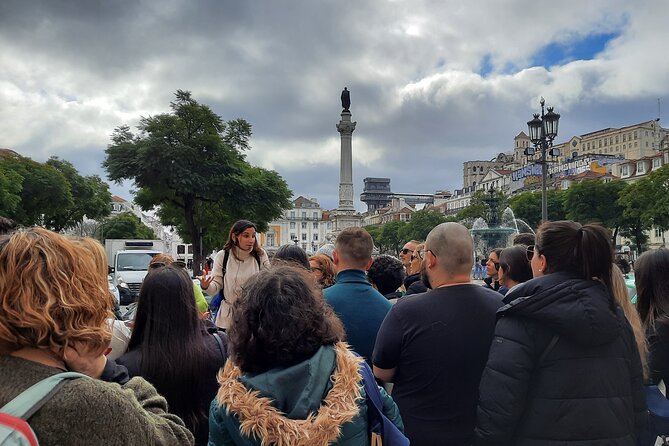
- Local routing: sidestreets and alleyways that reveal how Lisbon really works
- Big-sights, short-stops: iconic squares, churches, and viewpoints without dragging you all day
- Multiple neighborhood “zones”: Rossio, Chiado, Bairro Alto, and the waterfront finish
- Stop-by-stop context: what to notice when you return on your own
- Free-area lift moment: see the Santa Justa vibe without committing to a full add-on ride
- Guide takeaways: you’ll walk away with practical food and what-to-do guidance
Starting at Praça dos Restauradores, Then Walking Where Cars Can’t
The tour starts at Monumento dos Restauradores in Praça dos Restauradores, near where Avenida da Liberdade meets the action. It’s a great launch point because you get a clear “Lisbon is growing upward” feel right away, with the wide avenue energy nearby and the center tightening into quieter lanes.
From the first steps, the walking style matters. This route doesn’t feel like a straight line through major sights. You move through the parts that connect squares to neighborhoods, including the tucked-away streets locals use when they don’t want traffic noise. That’s a huge win if your goal is to feel oriented instead of just checking boxes.
Group size is capped at 25, so you’re not swallowed by a crowd. In real life, that usually means you can hear the guide, ask a quick question, and actually process what you’re seeing instead of speed-scrolling the city.
You can also read our reviews of more city tours in Lisbon



Praça dos Restauradores: A Portugal-First Intro in One Square
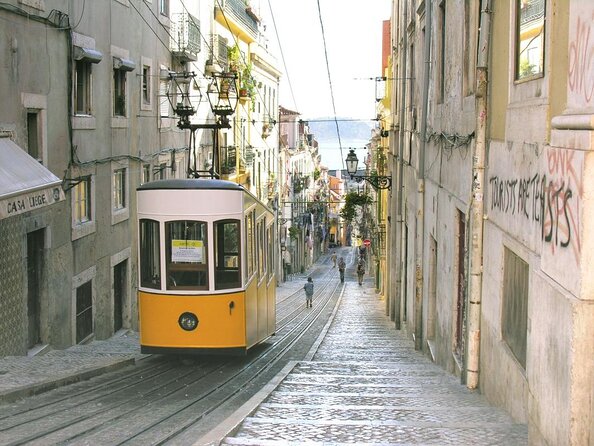
Stop one is Praça dos Restauradores, the square that acts like a tribute to Portugal’s independence. Even if you only glance at it at first, it sets the tone for the whole walk: Lisbon isn’t just scenery. It’s a place where political change and cultural identity show up in stone, street layout, and landmark naming.
If you’re the type who likes a quick “why should I care?” explanation, this is a solid start. The guide typically frames what you’ll see next so you notice more than you would on your own. You’re also close enough to Avenida da Liberdade that you can decide later whether you want to linger there for shopping or people-watching.
One practical tip: if you’re arriving early, take a moment to scan the streets radiating away from the square. Lisbon’s center is a web. Seeing the web early helps.
Iglesia de São Domingos and the City’s Tolerance Themes
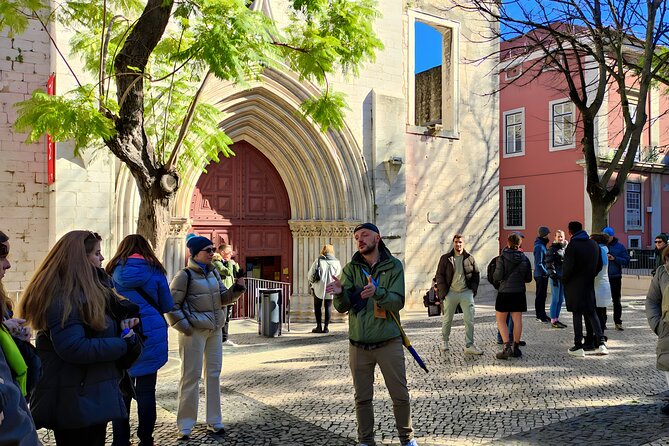
Next comes Igreja de São Domingos, described in a way that’s easy to miss at first glance: it’s among the less decorated churches, yet it’s considered rich in meaning. The point of the stop isn’t just architecture. It’s the message the place is carrying, linked to peace, tolerance, and unity.
That theme continues with the memorial stop dedicated to the victims of the Jewish massacre of 1506. You’ll see it framed as Lisbon’s acknowledgment of religious intolerance and fanaticism. This isn’t a “cute photo stop.” It’s a moment that makes you slow down, look, and connect the city’s past to the city’s identity today.
A caution, in a normal-tour way: if you prefer your sightseeing light and funny from start to finish, these stops can feel heavier. They’re still valuable. Just know the tour has emotional range, not just scenic rewards.
Rossio Square to the 1846 Theatre Moment: Old Lisbon’s Stage
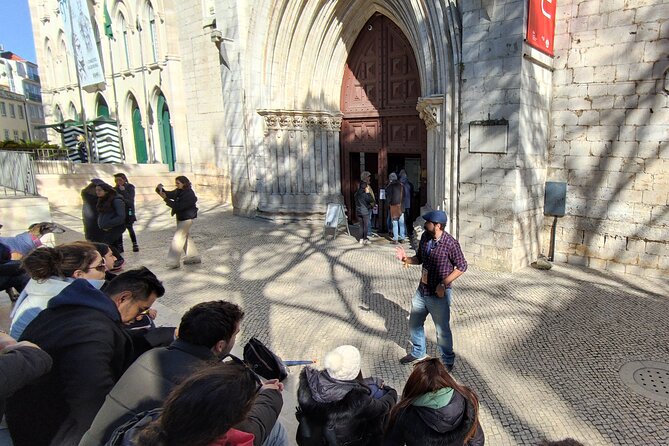
You then move to Praca Dom Pedro IV (Rossio Square), one of Lisbon’s oldest anchor points where major events played out for centuries. Even without a deep dive, the square helps you understand Lisbon’s center as a stage: commerce, politics, celebrations, and movements through time.
Right nearby is another stop tied to the year 1846, a building that opened then and has watched important moments unfold. Since it’s right in this cluster, it’s a smart pause before you head into Rossio’s landmark architecture. You’re basically training your eye for Lisbon’s layers: you look at one street corner and realize it has been “in use” for far longer than you’d expect.
Estação do Rossio: The Architecture Surprise
After that, you hit Estação do Rossio. It’s an imposing station, and that word fits: this isn’t a small commuter stop. Construction details and the sheer presence of the building tend to surprise people, especially if your mental picture of Lisbon is all pastel façades and slow trams.
This stop is also useful because stations are Lisbon’s living anatomy. Even if you don’t take any trains right then, you’re learning the geography of travel here. Then later, when you plan a day trip, you’ll have a stronger sense of where everything starts.





Chiado Entry: From Main Squares Into the Thinking Person’s Lisbon
The walk shifts into Chiado, often described as the entrance to Lisbon’s most cosmopolitan neighborhood. Chiado works well on foot because the vibe changes fast. You go from big public spaces into streets that feel made for strolling, browsing, and stopping in cafes.
You only get about a short window here, so don’t treat it like a full neighborhood exploration. Treat it as the “first taste.” Your real value is learning what Chiado feels like so you can decide later whether you want to spend your best slow afternoon here.
If you’re traveling alone, this part of the tour can feel especially comforting. You get a quick social rhythm, then you’re free to roam once you know the basic map in your head.
Elevador de Santa Justa: See the View Vibe in the Free Area
One of the clever stops is Elevador de Santa Justa. The tour includes access to the free area of the elevator, so you get the sense of Lisbon’s vertical drama without being forced into an extra ticket decision on the spot.
This matters because it’s easy to overspend in Lisbon when you hit all the “icon” attractions back-to-back. Here, the tour gives you the experience of the place—its scale, the framing, and the viewpoint potential—then you can decide later if you want to ride. That choice is the kind of value logic I like.
Also, if the weather is damp, Santa Justa is still worth standing near because the city’s rooftops and chimneys read well even through fog. Just keep expectations realistic for photos when visibility drops.
Largo do Carmo and Igreja de São Roque: Revolutions and Jesuit Beauty
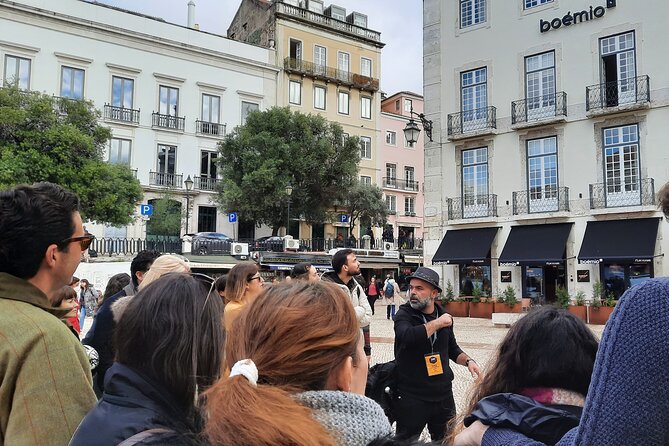
Then you head to Largo do Carmo, described as a stage for passionate revolutions. Again, this isn’t purely aesthetic. It adds a Lisbon theme you’ll keep seeing: public squares and church-adjacent streets have often been where people gather, protest, and push for change.
Next is Igreja de São Roque, built in the 16th century and noted as the earliest Jesuit church in Portugal. The most important takeaway here is that the church served as the Jesuits’ home church in Portugal for over 200 years, before they were expelled. That long timeline helps you understand why the interior is considered one of the world’s most valuable chapels in terms of what’s preserved and presented.
Practical note: churches can involve more standing and slower movement inside. Wear shoes you can stand in comfortably, especially if you’re with family or you tend to get tired on tours.
Bairro Alto Nightlife Without the Chaos, Plus A Brasileira for Pessoa Fans
Next is Bairro Alto, the nightlife district with a long timeline—over 500 years. On this tour, you’re not going out drinking. You’re getting orientation. You learn where the neighborhood sits and how the streets connect, so later you can choose a night that fits your style.
A short hop brings you to Largo do Chiado, the transition zone between Chiado and Bairro Alto. This small piece of geography helps make Lisbon feel connected instead of compartmentalized.
Then comes A Brasileira, where coffee is tied to the launch of a scene for thinkers and creatives. You’ll also hear about Fernando Pessoa and other intellectuals involved with the modernist magazine Orpheu. Even if you’re not a Pessoa deep-reader, this stop helps you understand why certain Lisbon streets feel “literary,” and why cafés matter here more than they do in some other cities.
If you love short, story-based stops, this is one of the stronger “only-in-Lisbon” moments.
Teatro Nacional de São Carlos and Rua Augusta’s Final Push
You also stop at Teatro Nacional de São Carlos, the national theatre focused on opera and choral and symphonic music. It’s one of those cultural markers that tells you Lisbon isn’t only about coastlines and viewpoints. It has a formal music life too.
Then the tour finishes with Rua Augusta, the most animated and charming downtown street—an ideal ramp into the grandest ending. You’ll end at Praça do Comércio, one of the most beautiful squares in Europe, where the city visually opens toward the Tagus.
This last stretch works because it closes the loop. Earlier you learned Lisbon’s squares and neighborhood transitions. Now you land at the big waterfront frame that makes the whole center feel like part of a bigger story.
If it’s windy or rainy at the end, Rua Augusta and Praça do Comércio can feel slick and crowded. But even then, the location is worth it. This is the “I get it now” finish.
What Makes the Stops Work (Not Just What You See)
A walking tour is only as good as what it teaches you to notice. The strongest parts of this experience are the little context threads that connect buildings, politics, and culture.
For example, you get:
- how churches reflect tolerance themes and power shifts
- how squares act like stages for history
- why areas like Chiado and Bairro Alto feel distinct even when they’re close
- how Lisbon’s “vertical” identity shows up in spots like Santa Justa
The guide layer is a big part of the value. Many people highlighted guides like Claudia, Hugo, Sandra, Miriam, and Ricardo for staying funny, engaging, and good at telling stories that stick. One review even praised the way a sudden rain and fog didn’t kill the tour’s energy, with the guide still pointing out good picture angles.
And here’s a practical bonus: one guide (Fernanda) reportedly sent extra local tips afterward via WhatsApp. Even if your guide doesn’t do exactly that, don’t be shy about asking for follow-up suggestions at the end.
Price and Value: Why a Low Cost Still Feels Like Real Tourism Credit
The listed price is $3.62 per person, and the model is pay-what-you-think the experience is worth. That’s an unusual combo: low “entry” cost, but the expectation that you value the guide’s work.
In plain terms, this is good for:
- first-time orientation in 2 hours 30 minutes
- solo travelers who want structure without a group bus
- people who prefer walking, stories, and quick neighborhood mapping
- anyone who wants to spend their extra money later on meals, viewpoints, or day trips rather than on a pricey tour package
With a cap of 25, you’re less likely to feel like a number. And because many of the stops are free to enter, you’re not stacking admission fees on top of your ticket.
The only value-killer would be the weather. The experience requires good weather, and if it’s canceled due to poor conditions, you’ll be offered a different date or a full refund. If you show up on a day that’s truly miserable, your experience can still be good, but expect fewer photo moments.
Who Should Book This Walking Tour of Lisbon’s Center
This one is a strong match if you want your first Lisbon days to feel organized. It’s also a good choice for:
- couples who want a shared “we learned the city” start
- solo travelers who don’t want to wander blind
- travelers who like history but want it tied to streets you can walk again later
- families who can handle steady walking (it’s manageable, but it is still walking)
It might be less ideal if you’re dealing with mobility limits, need lots of frequent seating breaks, or you’re not comfortable on uneven cobblestones. The tour is designed so most people can participate, but Lisbon sidewalks are Lisbon sidewalks.
Should You Book the Lisbon City Center Tour?
Yes, if you want a fast, smart, neighborhood-to-waterfront orientation that helps you plan the rest of your trip. The pay-what-you-think model also feels fair: you’re not locked into a rigid value proposition. You’re buying time with a guide who can point out what matters.
Before you book, check one thing: weather. If conditions are rough, your photo and outdoor visibility will be affected. Also be honest about walking comfort. If you can handle a steady pace on uneven streets, you’ll get a lot out of the route.
FAQ
How long is the Lisbon City Center Tour?
It lasts about 2 hours 30 minutes.
Where does the tour start and end?
It starts at Monumento dos Restauradores, Praça dos Restauradores, 1250-188 Lisboa and ends at Praça do Comércio, 1100-148 Lisboa, between the arch and the equestrian statue of D. José I.
How much does it cost?
The price is listed at $3.62 per person and the experience uses a pay-what-you-think approach.
Is the tour in English?
Yes, it is offered in English.
Is a mobile ticket used?
Yes, the tour uses a mobile ticket.
How big is the group?
The tour has a maximum of 25 travelers.
What happens if the weather is bad?
This experience requires good weather. If it’s canceled due to poor weather, you’ll be offered a different date or a full refund.
Can I cancel and get a refund?
Yes. You can cancel for a full refund up to 24 hours before the experience starts.