REVIEW · LISBON
Devour Lisbon: The Ultimate Portuguese Food Tour
Book on Viator →Operated by Devour Portugal Food Tours · Bookable on Viator
Lisbon’s food tells a story fast. This 3.5-hour small-group tour walks you through downtown neighborhoods while you eat enough for a real meal, with history tied to each bite. I especially like the tight group size and the way the guide turns classic dishes into something you actually understand. The one thing to watch: this is a walking tour, and if you’re sensitive to gluten or looking for vegan options, the fit isn’t ideal.
You’ll cover Lisbon’s Baixa, Chiado, and Cais do Sodré areas on foot, hitting long-running shops and true local hangouts. Along the way, you’ll sip wine, try Lisbon’s signature sour cherry liqueur, and end at Time Out Market for a proper sit-down finish. A big plus is that the tour is structured around “taste enough to matter,” not “snack for photos.”
In This Review
- Key things I’d plan for before you go
- Why Lisbon’s food tour feels like a quick orientation
- Route overview: Baixa, Chiado, and Cais do Sodré on foot
- Price and value: is $95.53 actually fair?
- The walking, the timing, and how to pace yourself
- Stop-by-stop: what each part is really for
- Stop 1: Confeitaria Nacional and Lisbon’s pastry legacy
- Stop 2: Manteigaria Silva and the sweet-but-serious middle of the day
- Stop 3: Ginjinha Sem Rival and the sour cherry ritual
- Stop 4: O Trevo and the Lisbon sandwich habit (bifana time)
- Stop 5: O Gaiteiro and the savory classics—cod, sausage, and fish rice
- Stop 6: Time Out Market Lisboa—where the tour cashes out
- Stop 7: Manteigaria (sweet finale)
- The foods and drinks you’ll actually remember
- The guides: why the best part is often the storytelling
- Dietary needs: what’s supported and what’s not
- What I’d bring (so the tour feels easy, not stressful)
- Should you book Devour Lisbon: The Ultimate Portuguese Food Tour?
Key things I’d plan for before you go
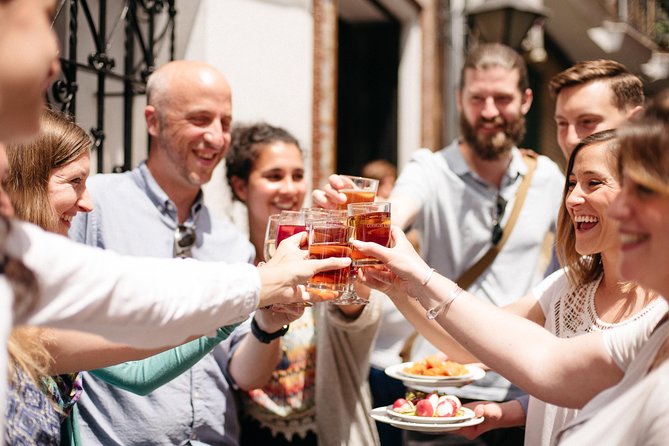
- Nine tastes and three drinks spread across seven small businesses, enough food for breakfast-and-lunch-level satisfaction
- Small group (max 10) means more questions, more back-and-forth, and less time waiting
- Stops across Baixa, Chiado, and Cais do Sodré so you see more than just one street of food
- History + technique is built into the way each dish is explained (not just what to eat)
- English tour with a local culinary guide and a take-home Devouring Lisbon guide for follow-up meals
- Diet limits apply: vegan and gluten intolerance/celiac aren’t supported; substitutions depend on the stop
Why Lisbon’s food tour feels like a quick orientation

Lisbon can be a lot on day one: hills, trams, crowds, and menus that all look like they say the same thing in different fonts. This tour gives you a simple game plan. You walk through central neighborhoods with a guide who connects what you taste to why it shows up again and again in Portuguese life.
I also love that you’re not just tasting sweets. You get salty, savory, and briny flavors in the mix—like Iberian ham, canned sardines, and bacalhau à Brás—so the tour doesn’t feel like a long dessert detour. And because the tour is built around enough food for a full meal, you can treat it as a centerpiece of your day instead of a side quest.
The only real drawback is physical: it’s a walking tour, and it’s meant for a moderate pace. If you want a sit-everywhere type of experience, or you’re not comfortable walking a solid stretch, you’ll feel it.
You can also read our reviews of more food & drink experiences in Lisbon



Route overview: Baixa, Chiado, and Cais do Sodré on foot
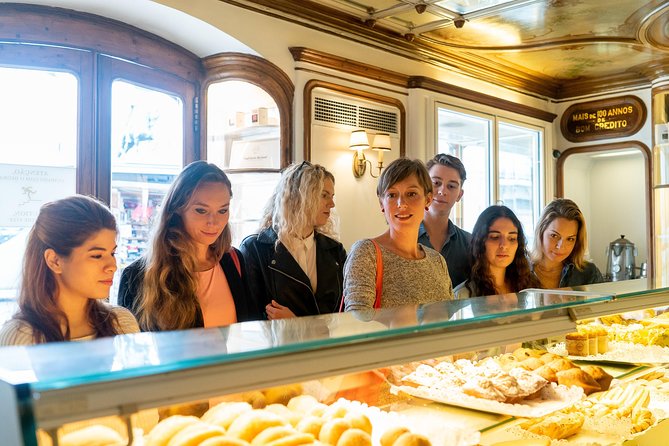
You’ll move through Lisbon’s downtown core across three distinct areas:
- Baixa: where you get a classic central-city feel—tight streets, historic flow, and the kind of food scene locals use all the time.
- Chiado: known for shops and old-meets-new energy, a strong area for tasting traditional items alongside modern favorites.
- Cais do Sodré: a lively part of town that rounds out the day with a more everyday, neighborhood-meets-market vibe.
The route matters because Lisbon’s food culture changes block to block. Your guide’s job is to make those changes make sense, so you leave with more than a souvenir list. You leave knowing what to order, what to avoid, and what’s worth repeating on your own.
Price and value: is $95.53 actually fair?
At $95.53 per person for about 3 hours 30 minutes, this isn’t a bargain snack crawl. But it does score well on value because you’re getting several things that add up fast:
- Enough food for a full meal: nine tastes plus three drinks.
- Seven small businesses: you’re paying for access, pacing, and local guidance—not just eating in one place.
- A local culinary guide and a Devouring Lisbon guide for what to do next.
- Wine tastings (plus Lisbon’s sour cherry liqueur), which would cost you on your own.
If you’ve ever paid for two “nice” tastings plus a dessert in Lisbon, you already know how quickly costs climb. For me, the price works best when you’re trying to learn the basics fast: how to order, what flavors define Portugal, and where the really good versions tend to show up.
The walking, the timing, and how to pace yourself
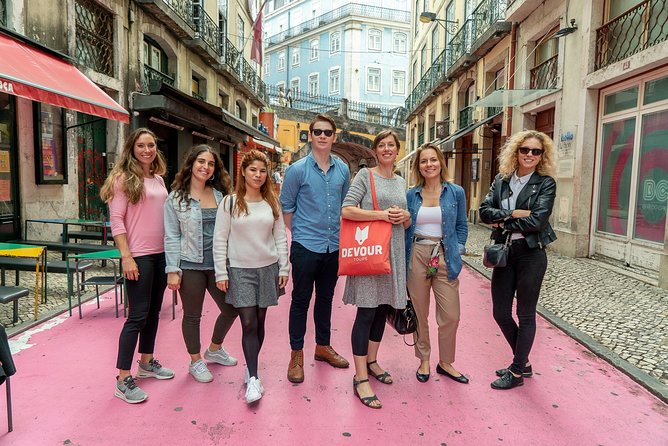
This is a walking tour with a moderate pace and is adaptable for some dietary needs. It’s also described as near public transportation, which helps if you need a reset mid-trip.
Practical advice: wear comfortable shoes. Lisbon’s streets can be uneven, and the whole point is to keep moving between stops so you can actually compare flavors in a row—ham to sardines to cod to custard tart, not ham then a long break then custard at some far-off point.
Also, go in with a reasonable appetite. The tour is designed so you’re eating breakfast-style bites and lunch-style dishes across the morning/early day, so if you show up stuffed, you’ll lose the best part: the ability to taste everything fully.
Stop-by-stop: what each part is really for
A few more Lisbon tours and experiences worth a look




Stop 1: Confeitaria Nacional and Lisbon’s pastry legacy
You start at Confeitaria Nacional, a place that fits Lisbon’s long relationship with butter, eggs, and sugar. This stop sets the tone: Portugal’s food isn’t only about hearty stews and fish. It’s also about precision pastries—simple ingredients turned into something special.
What you’re really getting here is a foundation for how Lisbon sweets work. Later, when you try custard and other classic confections, you’ll have a better sense of the style instead of just chasing whatever looks good.
A small consideration: if you prefer savory only, don’t worry—you’ll get plenty of that too. But this start is a reminder that Lisbon cuisine runs on both.
Stop 2: Manteigaria Silva and the sweet-but-serious middle of the day
Next is Manteigaria Silva, where you’ll continue the “Lisbon pastries are a craft” lesson. Even if you think you know pastel de nata already, these tastings are more about context and variety: you’re learning the differences in texture, filling, and pastry style.
This is also a good moment to slow down and ask your guide how locals think about sweets versus meals. Portuguese food habits can be less rigid than you’d expect, and this stop helps you see that.
Stop 3: Ginjinha Sem Rival and the sour cherry ritual
At Ginjinha Sem Rival, you’ll meet ginjinha, Lisbon’s famous sour cherry liqueur. This isn’t a random sip. It’s one of those city-signature drinks that shows up in Lisbon stories for a reason.
The key for you: ginjinha sits in a sweet-tart lane that makes sense with the pastries you’re tasting. It can also act like a palate reset so the savory stops ahead feel cleaner.
If you’d rather keep alcohol out of your experience, the tour is described as adaptable with non-alcoholic options—but replacements aren’t guaranteed at every stop, so plan to email ahead if it’s important.
Stop 4: O Trevo and the Lisbon sandwich habit (bifana time)
At O Trevo, you’ll zero in on a Portuguese classic: the bifana, a traditional pork sandwich. This is one of those dishes that feels plain until you taste it the right way—savory pork, usually stewed for tenderness, paired with bread that can handle the flavor without collapsing.
This stop helps you understand why Lisbon is so sandwich-friendly. Many cities treat sandwiches as quick lunch. Lisbon treats them as local identity.
Stop 5: O Gaiteiro and the savory classics—cod, sausage, and fish rice
Then comes O Gaiteiro, where your savory tasting gets heavier and more Portuguese in the best way. Based on the menu, you’re in line for flavors like:
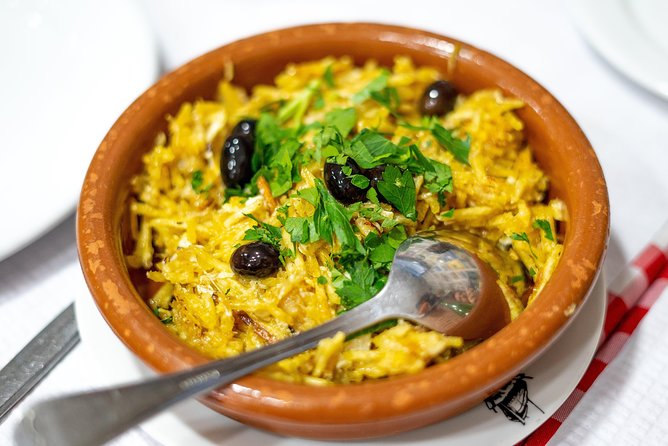
- Bacalhau à Brás (codfish, typically with egg and potato textures)
- Alheira (a traditional Jewish sausage)
- Fish rice
This is where the tour turns from “tasty stops” into “real food knowledge.” Cod and fish rice are part of Portugal’s long seafood relationship. Alheira also gives you a chance to connect food with community history, not just taste.
A tip: pay attention to the guide’s explanation here. This is the section where “why” matters more than “what.” It’ll change how you order later.
Stop 6: Time Out Market Lisboa—where the tour cashes out
At Time Out Market Lisboa, you get a sit-down finish that feels practical. You’re not ending with another tiny sweet bite. This is where the tour turns into a full meal experience, built for you to leave satisfied.
One useful thing: the market is a great place to keep eating after the tour. Even if you don’t know Portuguese yet, you’ll recognize familiar items from what you just tried, so you can navigate the menu more confidently.
Stop 7: Manteigaria (sweet finale)
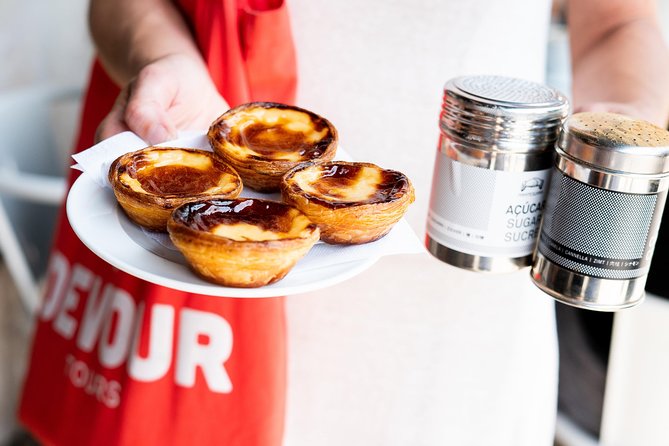
You finish with Manteigaria again, which signals the tour’s last lesson: don’t rush dessert. The sweet finale on this route is built to bring the day to a satisfying close—especially with items like Pastel de nata, Pão de Deus, Bola de Berlim, plus coffee.
If you’re a pastry fan, you’ll like the pacing. If you’re not, at least you’ll have context: you’ll be able to judge quality and texture instead of ordering blindly elsewhere.
The foods and drinks you’ll actually remember
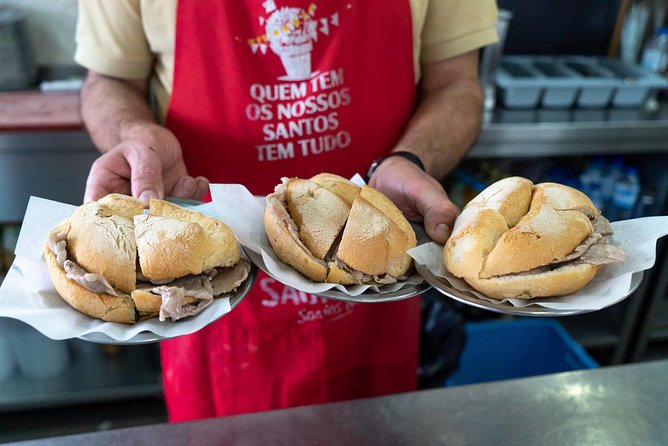
Here’s the menu style you can expect, with enough variety to cover a full Portuguese food spectrum:
Savory + starters
- Iberian ham
- Bifana (pork sandwich)
- Canned sardines
- Bacalhau à Brás (codfish)
- Alheira (traditional Jewish sausage)
- Fish rice
Desserts + coffee
- Pastel de nata
- Pão de Deus
- Bola de Berlim
- Coffee
Drinks
- Wine tastings
- Ginjinha (sour cherry liqueur)
If you like comparing, this tour is good at it. You get salt-to-sweet contrast, plus drinks that keep resetting your palate.
The guides: why the best part is often the storytelling
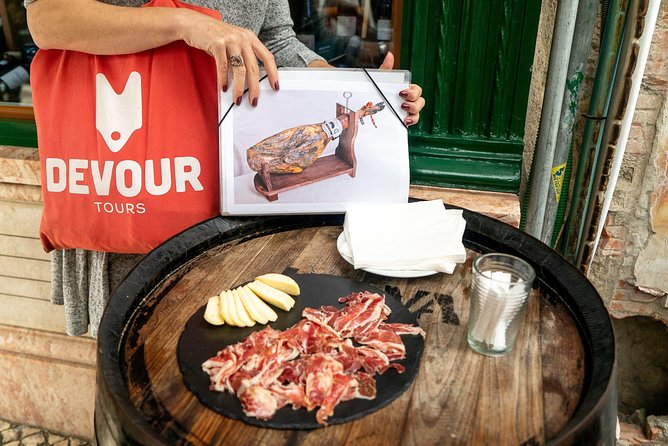
This tour is consistently praised for guide quality. You might get a guide like Helena, Cecilia, Merritt, Natalia, Nina, Agatha, Borja, Anastasia, Alicia, or Ann—all names that show up as examples of how the tour is led.
What those guides tend to do well is connect:
- food to local culture
- dishes to the city’s past
- flavors to how locals actually eat
That sounds nice on paper, but it changes your day. When you understand the story behind cod or custard, you don’t forget it. You also eat better after the tour, because you stop treating Portugal like it’s a menu you randomly sample.
One extra plus from real experiences: guides keep the mood friendly and inclusive, even when weather gets rough. If rain or heavy clouds show up, the tour still stays focused, and you’re kept moving.
Dietary needs: what’s supported and what’s not

The tour is described as adaptable for:
- Pescatarians
- Dairy free
- Vegetarians
- Non-alcoholic options
- Pregnant women
But there’s an important limit: you may not have a replacement food option at every stop. If you have a restriction or allergy, you should email the guest experience team after booking so ingredients can be arranged.
Also, this tour is not suitable for vegans and it’s not suitable for gluten intolerance or celiac disease. If that’s you, you’ll want a different plan.
What I’d bring (so the tour feels easy, not stressful)
You don’t need special gear, but a few basics help:
- Comfortable walking shoes
- A light layer (Lisbon weather shifts)
- A small snack habit for later—not to undo the tour, but so you’re not stuck hunting food if you get extra-hungry after dessert
- If alcohol isn’t for you, plan ahead for the non-alcoholic option so you’re not guessing on the day
Should you book Devour Lisbon: The Ultimate Portuguese Food Tour?
I’d book this tour if you want a high-impact introduction to Lisbon food in one morning-to-early-afternoon chunk. It’s especially worth it when you’re the type who likes to learn while you eat—because the stops aren’t random. You’re guided through classics like bacalhau, alheira, and pastel de nata, with enough quantity to feel like you had a meal, not a sample.
Skip it (or rethink) if:
- you can’t do gluten or you’re vegan
- you don’t want to walk a moderate route in central Lisbon
- you prefer a long sit-down restaurant style only (this is built around multiple stops)
For everyone else, it’s a strong first or second day activity. You’ll get your bearings fast, and you’ll leave with both taste memories and ordering confidence.