REVIEW · LISBON
Lisbon: History, Stories and Lifestyle Walking Tour
Book on GetYourGuide →Operated by LISBOA AUTÊNTICA LDA · Bookable on GetYourGuide
Lisbon clicks into focus on this hill-walk. I love how it mixes Bairro Alto street-level history with storyteller energy from guides like Paulo, Ana, and Ricardo, and you’ll also get serious lookout time at Miradouro São Pedro de Alcântara. The tradeoff is real: expect hills and steps, so build in a slower pace when your legs start negotiating.
What makes this outing work is the way the stops connect big moments to specific corners of town. You move from Jesuit art at São Roque Church to Gothic architecture at the Carmo convent and church, where the Carnation Revolution began in 1974. And yes, the included coffee-and-cake break is a nice reset, not an afterthought.
You finish in the Alfama maze and then at Lisbon Cathedral, built in 1150, just a few years after Lisbon was taken back from the Moors. It’s a smart way to get oriented fast, but since you only have 3 hours, you’ll still want to return later for anything that really grabs you.
In This Review
- Key things I’d circle on your map
- Bairro Alto to Alfama: a hill-walk that teaches Lisbon in the right order
- Bairro Alto: the 16th-century starting point and the post-1755 reset
- Miradouro São Pedro de Alcântara: where the geography clicks
- São Roque Church: tiles, gold, and Jesuit storytelling
- Carmo convent and church: Gothic architecture and the Carnation Revolution
- Santa Justa and Baixa: a Gothic Revival viewpoint plus the city center feel
- Riding Lisbon’s iconic tram: short, sweet, and very worth it
- Portas do Sol to Alfama: Monastery, National Pantheon, and old-street navigation
- Lisbon Cathedral at the end: a 12th-century anchor for everything you saw
- Coffee, cake, and the small comfort that keeps the tour human
- Price and value: why $29 feels fair for what you get
- Should you book this Lisbon history and lifestyle walking tour?
- FAQ
- How long is the Lisbon History, Stories and Lifestyle Walking Tour?
- How much does the tour cost?
- What’s included in the price?
- Is hotel pickup and drop-off included?
- Where does the tour start and end?
- Will I ride a tram on this tour?
- What sights and neighborhoods are visited?
- What languages are available for the live guide?
- Is this tour private or in a group?
- Can I cancel for a refund?
Key things I’d circle on your map
- Bairro Alto backstory from the 16th century, with the city’s post-1755 renewal explained in human terms
- Miradouro São Pedro de Alcântara for big Baixa and Tagus River views
- São Roque Church for Jesuit interiors, including gilding, tiles, and painted decoration
- Carmo convent and church tied to the Carnation Revolution of 1974
- Santa Justa elevator area for one of the city’s best viewpoints
- Alfama’s old streets and the Saint Anthony festival vibe, plus fado culture context
Bairro Alto to Alfama: a hill-walk that teaches Lisbon in the right order
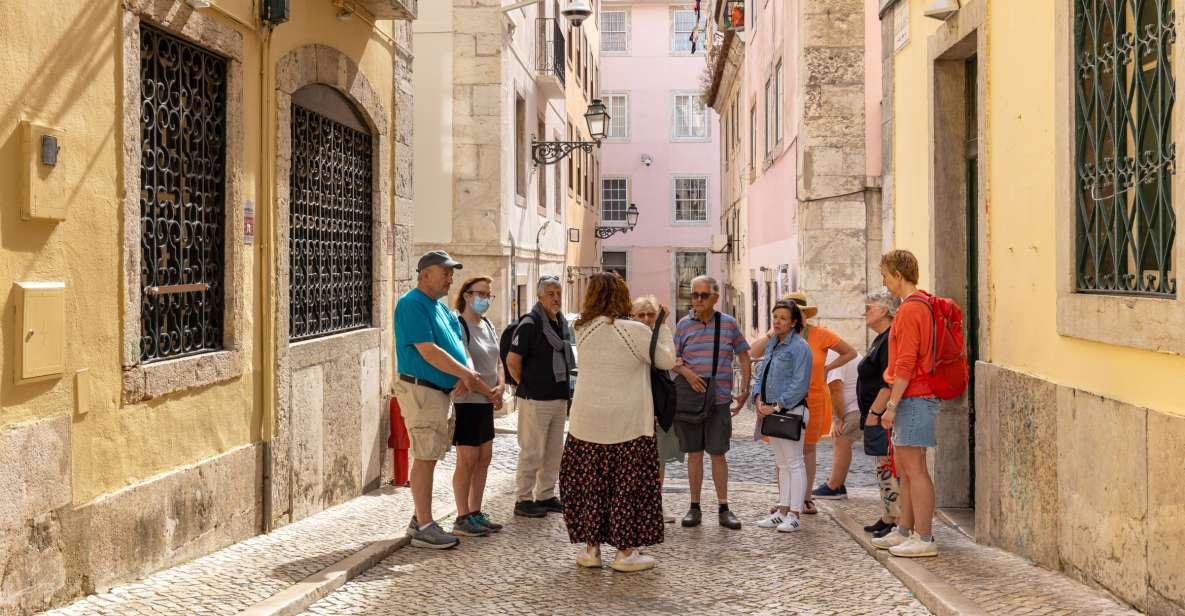
This is the kind of tour that works like a good conversation: it starts in one neighborhood, builds context, then changes elevation so the city makes sense. Lisbon is built on hills, so you’ll keep seeing how views, churches, and streets connect. That’s the real value here: you’re not just collecting landmarks, you’re learning the logic of the city.
At the start, you’re in Bairro Alto, a district with roots reaching back to the 16th century. From there, the guide tells you how Lisbon changed over time, including what happened after the 1755 earthquake. You’ll hear how that massive disruption shaped the way people moved and rebuilt the city, and how areas like Baixa and Bairro got a new rhythm afterward. This context matters because later, when you’re standing in older-looking streets, you’ll understand why they feel the way they do.
I also like that the tour keeps the pace readable. Reviews mention frequent stops and a relaxed rhythm, even when it’s hilly. If your goal is a first-trip orientation with real stories, this format fits well. If your goal is to see everything in depth, you’ll need a second day for that.
You can also read our reviews of more walking tours in Lisbon



Bairro Alto: the 16th-century starting point and the post-1755 reset
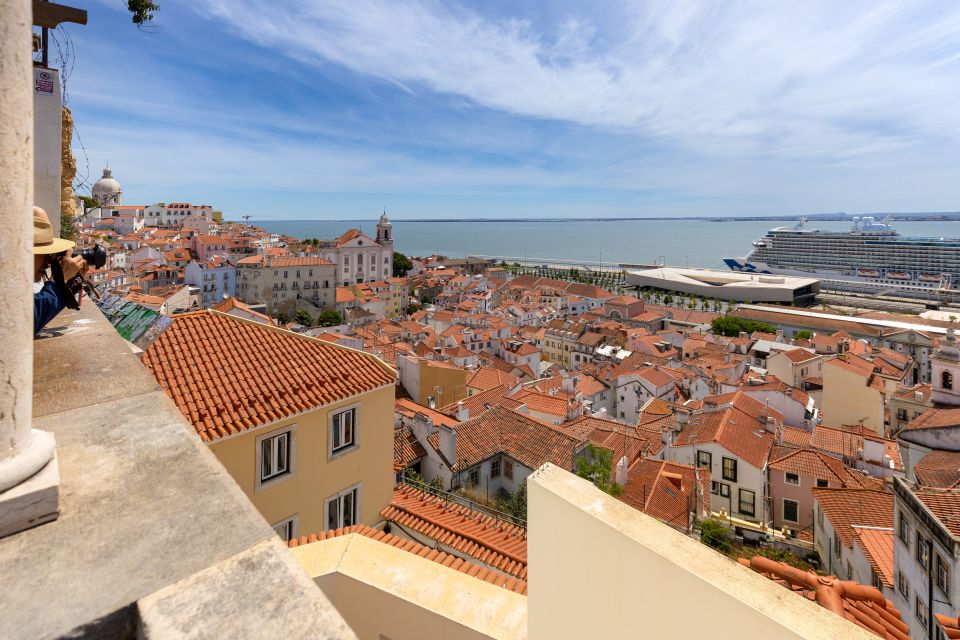
Bairro Alto isn’t just a scenic neighborhood stop. It’s the tour’s historical launchpad. You’ll learn about the district’s role as Lisbon evolved, and then you’ll connect that to the earthquake of 1755. The key detail I find helpful is that, after the earthquake, this area became appealing for families moving back into the city fabric. That renewal idea makes the rest of the walk feel less random.
Also, Bairro Alto is a great place to start because the streets naturally lead you toward viewpoints and churches rather than away from them. You’ll be walking with the city’s “up and down” rhythm, so each next stop feels earned instead of tacked on.
Possible drawback: because it’s a real walking route through steep areas, you may want to wear shoes you’re willing to sweat in. Even a confident walker will feel it here.
Miradouro São Pedro de Alcântara: where the geography clicks
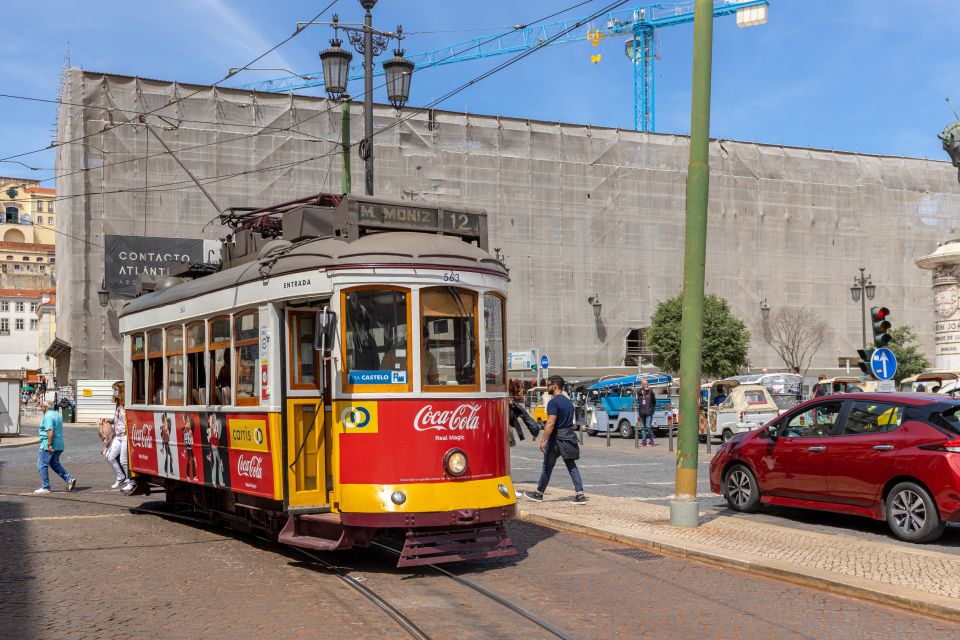
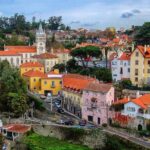
After Bairro Alto, the tour heads toward Miradouro São Pedro de Alcântara, a garden viewpoint with wide views over Baixa and the south bank of the Tagus River. This is one of those stops that turns map-reading into understanding. From up here, Lisbon’s hills don’t look like trivia. They look like the reason everything was built where it was built.
You’ll also get a feel for how neighborhoods relate to each other. Baixa sits lower, Alfama sprawls along the river-facing slopes, and the Tagus gives the whole system a direction. If you’ve ever stared at a Lisbon map and felt the streets were just decorative lines, this viewpoint fixes that feeling.
Practical tip: you’ll likely spend a few minutes taking photos, then keep walking. Go easy on shoe-tightening and start with your camera ready, because you’ll want your hands free while you move.
São Roque Church: tiles, gold, and Jesuit storytelling
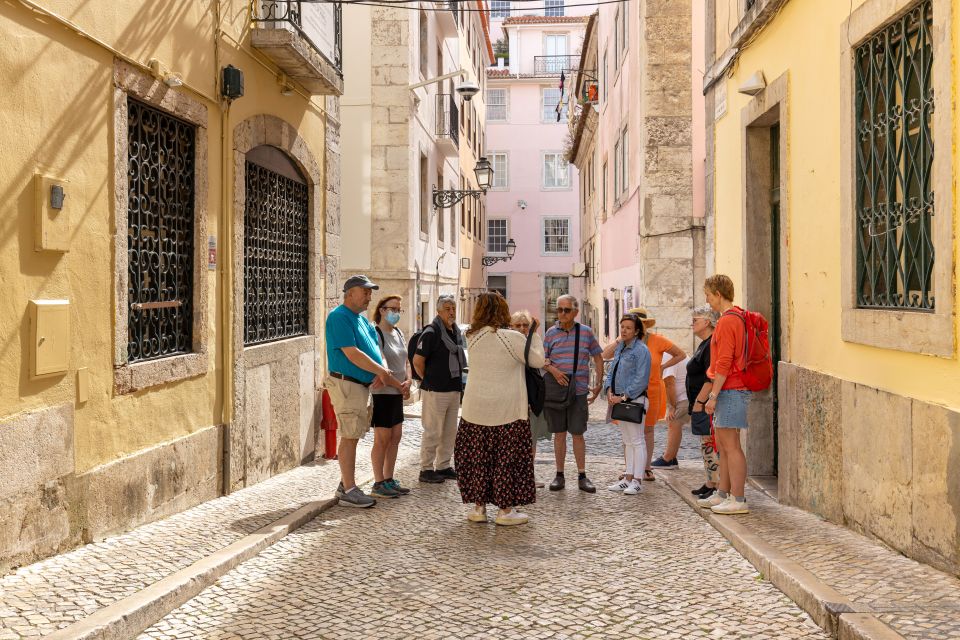
Next up is São Roque Church, built by the Jesuits. The outside is described as austere, but inside it shifts into something more museum-like: gilding, tiles, and painted interiors in Mannerist and Baroque styles.
What I like about stopping here on a walking tour is that the guide can slow down the pace just long enough to let the details matter. This is not a quick walk-by. You’ll have the chance to see how Lisbon’s religious art fits the city’s personality: practical on the street, dramatic inside.
Possible drawback: churches tend to have rules about noise and movement, and interiors can feel dim compared to the street. If you’re the type who wants every photo to come out perfect, plan to accept a bit of natural lighting limitation and focus on what you can actually see.
Carmo convent and church: Gothic architecture and the Carnation Revolution
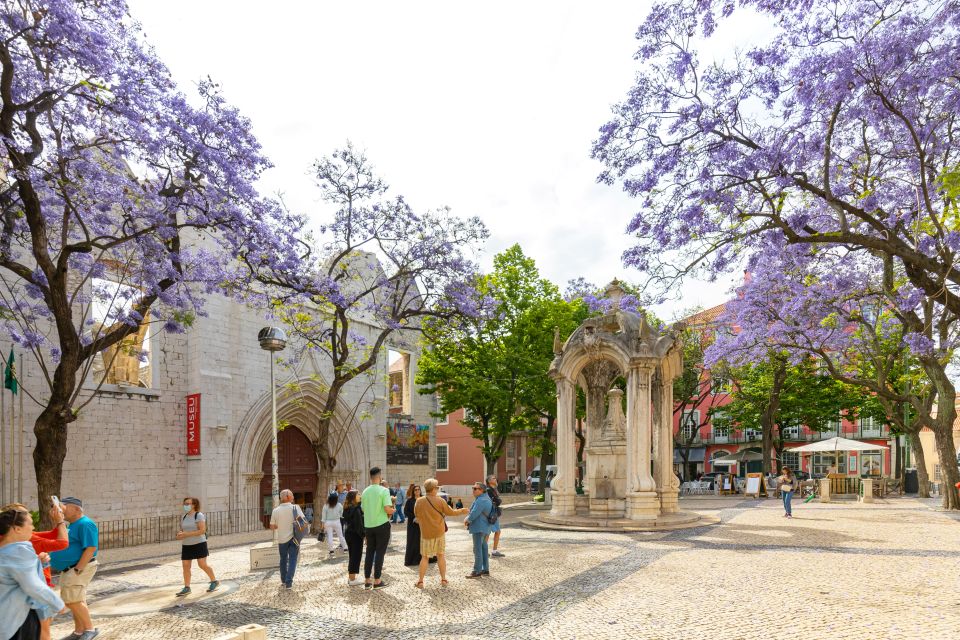
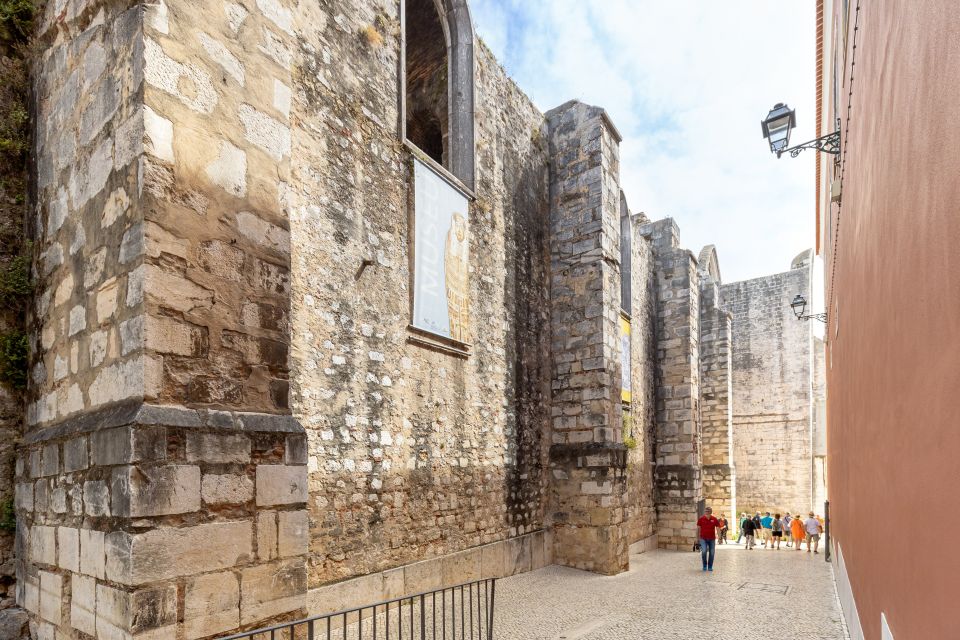
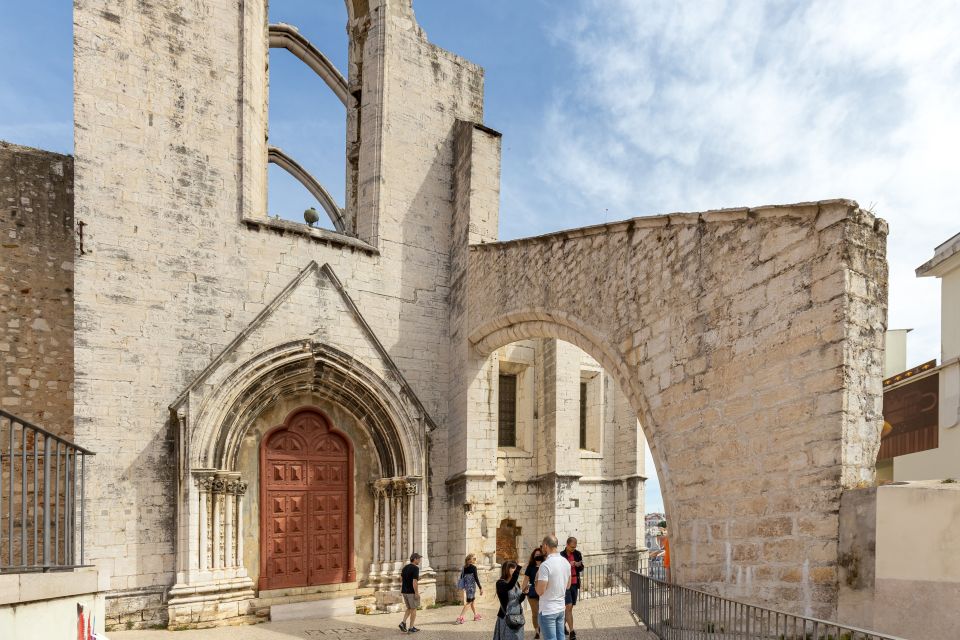
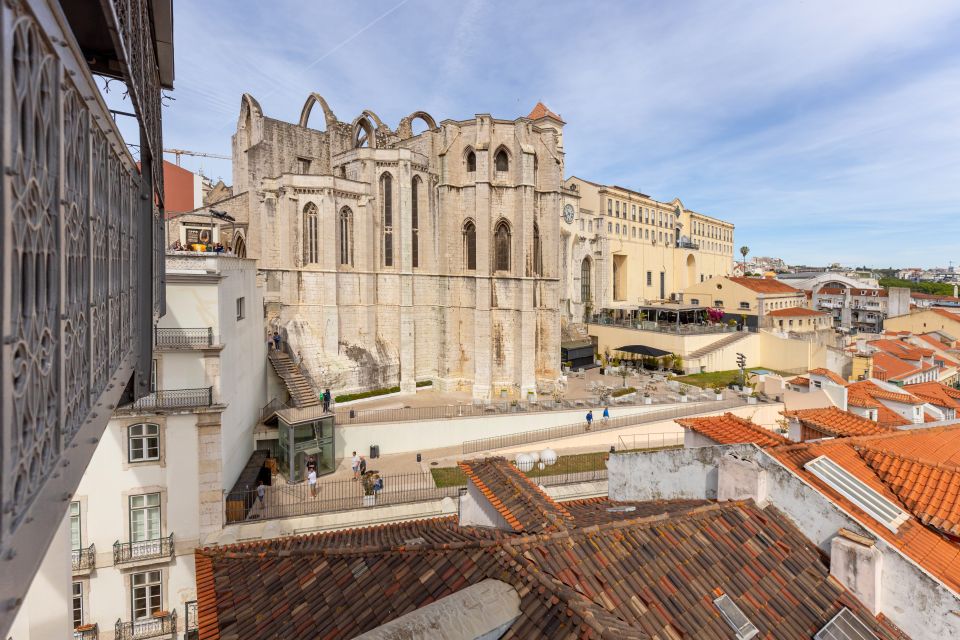
Then you head downhill to the Carmo convent and church, known for Gothic architecture. This stop has a second layer that makes it memorable: it’s historically tied to the Carnation Revolution that began in 1974, ending nearly five decades of dictatorship.
This is one of the reasons the tour feels more than sightseeing. The guide doesn’t treat politics like an abstract chapter. You’re standing in a real place as you learn what happened there and why it mattered. Even if you don’t know Portuguese history well, the timeline becomes clearer when you can picture the city around it.
Practical angle: when you move from these heavy historical sites back into the flow of streets, you’ll often feel that your walking tour has a pulse. That’s the effect this part has.
You can also read our reviews of more historical tours in Lisbon






Santa Justa and Baixa: a Gothic Revival viewpoint plus the city center feel
The tour reaches Santa Justa elevator, an imposing monument in the Gothic Revival style. Even if you don’t ride the elevator itself during your stop, the area functions as a viewpoint moment and a scale moment. Lisbon suddenly looks taller, denser, and more layered.
From there, you see a number of sights in Baixa, which is the city’s heart area. This matters because Baixa is where a lot of visitors focus first. Here, though, you’ll experience Baixa with context, knowing why Lisbon built the way it did and how earlier events shaped the city layout.
Also included is a short break before the tram segment. That’s a smart move in a tour like this. You get energy back, plus it helps you stay patient when the walking picks up again.
Riding Lisbon’s iconic tram: short, sweet, and very worth it
The tour includes a tram ride. You’ll go up from the castle area to Portas do Sol. This tram segment isn’t just a photo opportunity; it changes your tempo. For a 3-hour tour, that small shift from walking to riding keeps the experience from feeling like a checklist march.
You also get to experience how Lisbon feels in motion. Narrow streets and steep changes are hard to process on foot. On the tram, you get the sensation of how the city climbs and turns.
Possible drawback: trams can be slower than you expect on busy streets. The upside is that you’re there for atmosphere, not speed. If you’re already thinking like a local, you’ll enjoy this part.
Portas do Sol to Alfama: Monastery, National Pantheon, and old-street navigation
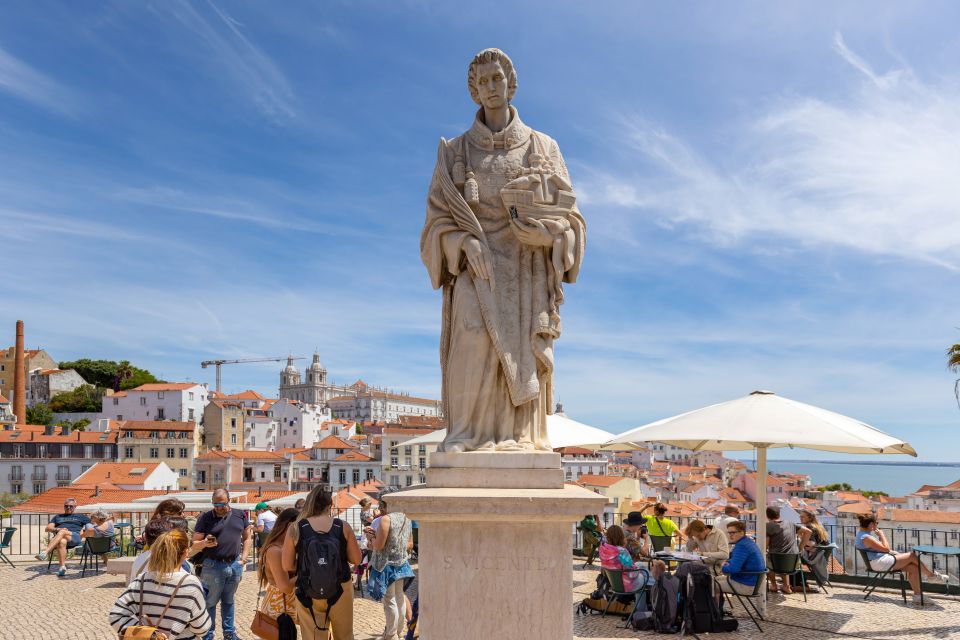
At Portas do Sol, the tour moves into Alfama’s orbit and you’ll see major landmarks along the way. The Monastery of São Vicente de Fora and the National Pantheon are part of the view-and-walk connection, and then the guide brings you into the Alfama district itself.
Alfama is Lisbon’s oldest and most traditional neighborhood, known for fado houses and the neighborhood energy around saints’ festivals—especially Saint Anthony. This isn’t just trivia. It helps you understand why the streets feel like they’ve been used for generations, and why certain kinds of music and celebration still make sense here.
What I love about ending with Alfama is that you get the city’s “everyday texture” after the major monument stops. You’ve learned the architecture and the big moments, and then you land in the place where life happens in narrow streets and slow turns.
Practical tip: expect more foot traffic in Alfama areas on festival days. If you’re sensitive to crowds, time your visit around quieter hours.
Lisbon Cathedral at the end: a 12th-century anchor for everything you saw
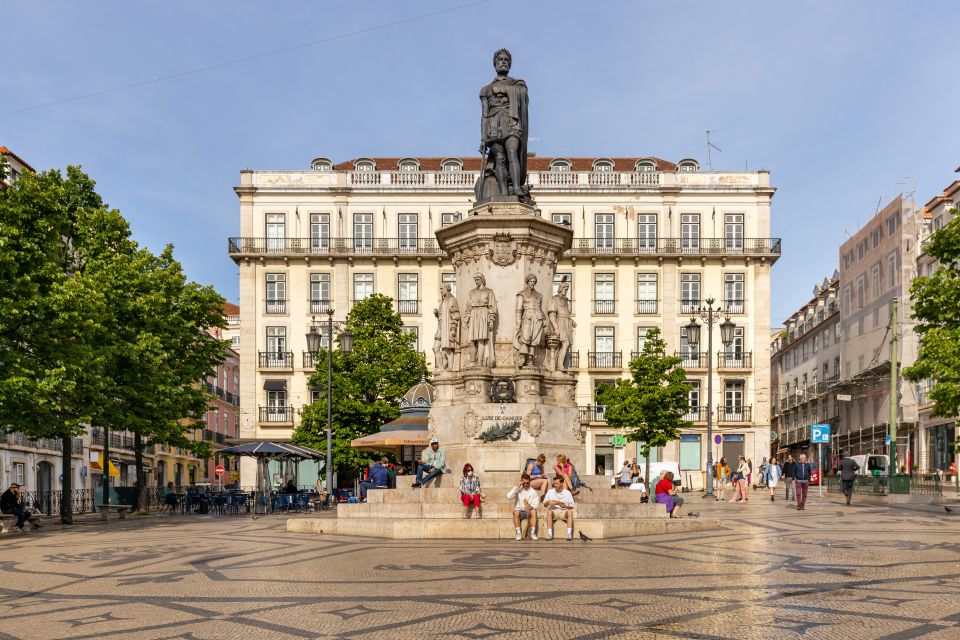
The tour ends at Lisbon Cathedral, built in 1150, about three years after Lisbon was taken back from the Moors. Over time, the cathedral underwent architectural changes, so the building becomes a mix of styles rather than one single period snapshot.
This ending works because it pulls the story together. You spend the earlier portion learning how Lisbon rebuilt and redefined itself after major shocks, and then you finish with a landmark that shows how layered change became normal for this city.
If you’re the kind of traveler who likes closure, this stop gives it to you. If you prefer to keep moving, you might find yourself tempted to hang around the area after the tour to look closer.
Coffee, cake, and the small comfort that keeps the tour human
This tour includes coffee and cake, which sounds basic until you’re in Lisbon hills and you want a predictable energy bump. Reviews also hint that the pastry stop often leads into Lisbon classics like pastel de nata, which makes the break feel local and rewarding.
I like this added value because it signals something important: the tour is built for humans, not just for photos. A coffee and pastry moment gives you a chance to ask questions, compare notes, and catch your breath without rushing.
Price and value: why $29 feels fair for what you get
At $29 per person for a 3-hour guided walking tour with a tram ride, coffee, and cake, this is strong value if you want orientation plus context. The two biggest cost “savers” are (1) you’re paying once for the guide, and (2) the tram ride and refreshment stop are included.
Could you build a DIY route and see some of these sights? Sure. But the guide’s job here is the difference between seeing and understanding. When you hear why places matter—like the Carnation Revolution connection at the Carmo site—you’ll remember the tour after you leave. That’s hard to replicate with a map app.
One more value point: the tour is offered in private or small-group format. Smaller groups usually mean you hear the guide better and spend less time waiting for everyone to regroup.
Should you book this Lisbon history and lifestyle walking tour?
Book it if you want a focused, 3-hour orientation that hits the major neighborhoods in a sensible order: Bairro Alto up top, viewpoints and churches in between, then Alfama and Lisbon Cathedral at the end. It’s also a good choice if you like guides who tell stories well and can adapt when real-world stuff happens, like tram delays or rainy weather.
Skip it (or plan a different style) if you have very limited walking tolerance for hills and steps. This route is built on Lisbon’s elevation, so you’ll feel that even with stops.
If you’re deciding between doing one tour now versus saving your time for later, my advice is simple: do this early. It helps you return to the places that really grab you with way better context, and it saves you guesswork on where to spend your next hours.
FAQ
How long is the Lisbon History, Stories and Lifestyle Walking Tour?
The tour lasts 3 hours.
How much does the tour cost?
It costs $29 per person.
What’s included in the price?
The tour includes a live guide, a walking tour, a tram trip, coffee, and cake.
Is hotel pickup and drop-off included?
No, hotel pickup and drop-off are not included.
Where does the tour start and end?
The tour begins at a meeting point that may vary depending on the option booked, and it ends at Lisbon Cathedral, built in 1150.
Will I ride a tram on this tour?
Yes. The tour includes a tram ride, going up from the castle to Portas do Sol.
What sights and neighborhoods are visited?
You’ll visit Bairro Alto, Miradouro São Pedro de Alcântara, San Roque Church, Carmo convent and church, Santa Justa elevator, Baixa, Portas do Sol area, Monastery of São Vicente de Fora, the National Pantheon, Alfama, and Lisbon Cathedral.
What languages are available for the live guide?
Portuguese, Spanish, Italian, German, French, English.
Is this tour private or in a group?
Private or small groups are available.
Can I cancel for a refund?
Yes. You can cancel up to 24 hours in advance for a full refund.