REVIEW · LISBON
Pastel de Nata Cooking Class in a Lisbon Pastry Shop
Book on Viator →Operated by eatwith · Bookable on Viator
Pastel de Nata takes real hands-on work. In Lisbon, this 90-minute class at Casa dos Ovos Moles has small-group attention and a port-and-ginja tasting while you build the custard tarts from scratch. The trade-off: you work as a team, so you won’t be baking an entire tart solo.
I like that the session mixes technique with context. Filipa talks through the tart’s history while you’re actually doing the steps, not just watching. And with a maximum of 6 people, you’re more likely to get corrected quickly than left to figure things out on your own.
In This Review
- Key takeaways before you go
- Casa dos Ovos Moles: where you start in Lisbon’s old-city lanes
- Filipa’s 90-minute rhythm: history first, then flour
- From dough to pastry: the part that looks easy and isn’t
- Custard filling and assembly: how the pastry quality gets built
- Baking and timing: the moment you stop second-guessing
- What you actually get to taste: Porto wine and ginja to start
- Small group size: why max 6 changes everything
- Family friendly for age 12+: making it work for different skill levels
- Taking the skills home: what you’ll remember after the last tart
- Price and value at $99.72: what you’re really paying for
- Who this Pastel de Nata class suits best
- Should you book this Pastel de Nata class?
- FAQ
- How long is the Pastel de Nata cooking class in Lisbon?
- What time does the class start?
- Where do I meet the instructor?
- Is the class offered in English?
- How many people are in the group?
- Is it suitable for kids?
- What’s included to eat and drink?
- Do you make the custard tarts from scratch?
- What if I have food allergies or a special diet?
- Is there free cancellation?
Key takeaways before you go
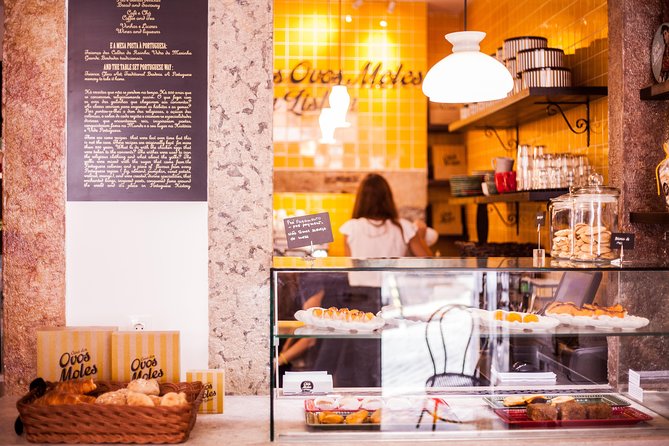
- Casa dos Ovos Moles setting: a working Lisbon pastry shop atmosphere, right where locals do dessert
- Filipa runs the show: clear instruction plus hands-on help while you work the dough and filling
- Port and ginja pairing: your first taste comes with Porto wine and ginja liquor
- Small group size (max 6): better focus, more chances to ask questions
- Family friendly for age 12+: kids can join, with a paced approach that keeps it fun
Casa dos Ovos Moles: where you start in Lisbon’s old-city lanes
You meet at Calçada do Sacramento 25 (1200-393 Lisboa). This is the kind of location where you can show up a few minutes early, look around, and get your bearings fast before class. It’s also described as near public transportation, so you’re not locked into a long commute.
One nice bonus: this part of town is close to a castle area. So after class, you can often turn dessert time into a walk-and-sights hour without needing a full plan.
You can also read our reviews of more cooking classes in Lisbon



Filipa’s 90-minute rhythm: history first, then flour
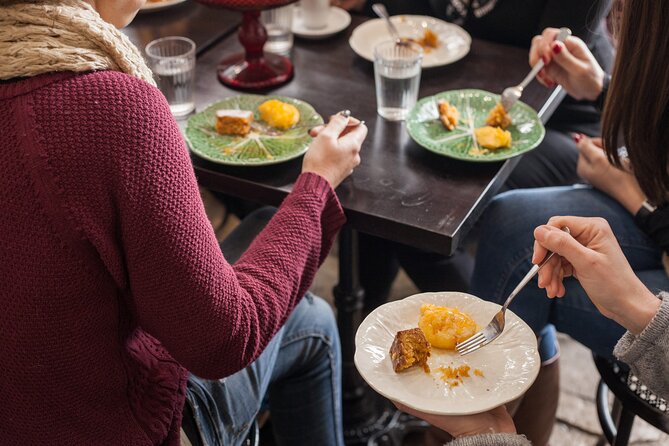
This experience runs about 1 hour 30 minutes and is offered in English. The class is suitable for children age 12 and older, and the setup is built for participation. With a maximum of 6 travelers, it stays intimate, which matters because Pastel de Nata is one of those pastries where small mistakes show up fast in the final texture and look.
Filipa (the instructor and shop host) introduces the sweets and adds the story behind the tart while you cook. That combo is smart: when you understand what you’re aiming for—crisp shell, creamy custard, that classic top finish—you cook with more purpose and less guesswork.
From dough to pastry: the part that looks easy and isn’t
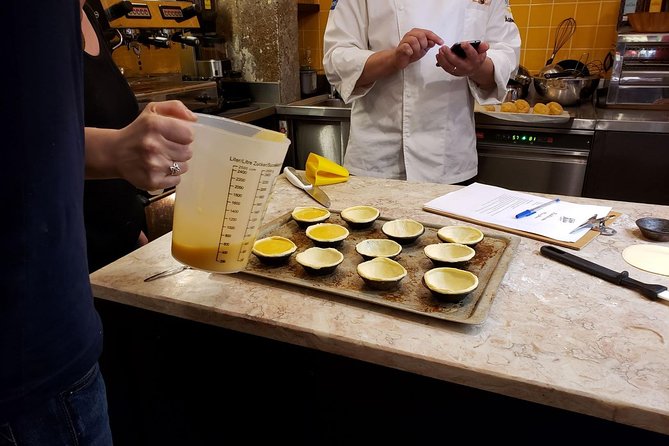
Pastel de Nata starts with the dough work, and that’s where this class earns its keep. You’re not just assembling a pre-made tart shell. You make the famous Portuguese custard tarts from scratch, including the pastry base.
Here’s what I think you’ll enjoy: the instruction focuses on technique, especially handling thin dough. One review highlights how moving the dough without breaking it looks effortless from the outside, but it takes practice. In a hands-on class like this, you get to try, get corrected, and learn what went wrong before the baking stage locks in the result.
You’ll likely rotate through parts of the process as a group. That team approach is not a downside—it’s how small-group teaching stays efficient in 90 minutes. You still get hands-on time, but the class is paced so everyone contributes without the timeline collapsing.
Custard filling and assembly: how the pastry quality gets built
Once the pastry work is under control, the next step is the filling and assembly. Pastel de Nata is famous for its contrast: a pastry shell that bakes up with structure, and a custard that stays tender. This is where the steps you practiced with the dough start to pay off.
What you’re training for is consistency. If your pastry is too thick, your tart won’t bake the same way. If the filling handling isn’t right, you can end up with a custard that’s not as smooth or not as nicely set. With an instructor watching, you’re not stuck guessing. You can ask questions while it’s still fixable.
Also, expect the instruction to be interactive. Reviews mention patience and lots of detail, including encouragement to ask questions and corrections when something isn’t following the method. That matters because Pastel de Nata isn’t just a recipe—it’s a set of techniques you learn by doing.
Baking and timing: the moment you stop second-guessing
Baking is the stage where you learn fastest. You can follow steps perfectly and still need to understand how long and how hot the process needs to be for the right end result. In this class, you learn by seeing what happens after you put the tart together.
And yes, you do get to eat what you make while it’s fresh. Fresh-from-the-oven Pastel de Nata is a different experience than what you buy later in the day. The shell texture and the custard feel change quickly as they cool.
If you’re a first-timer, don’t panic if your tart doesn’t look identical to the next person’s. Small variations in dough thickness or how the filling is portioned can change the look. The good news is that the class is built around teaching techniques, not grading perfection.
A few more Lisbon tours and experiences worth a look





What you actually get to taste: Porto wine and ginja to start
Food and drink are part of the experience, and the menu is very clear.
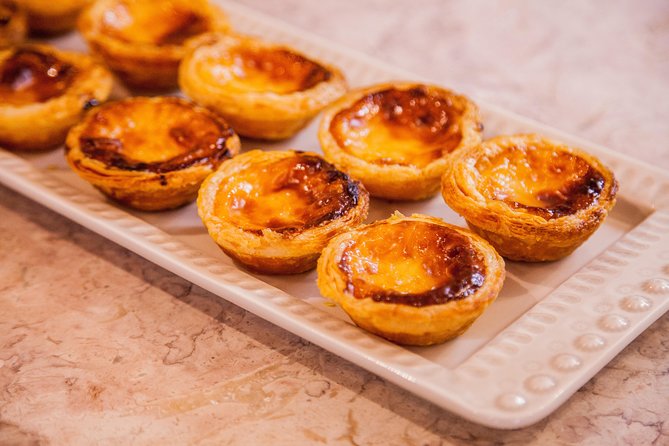
For the starter, you’ll eat Pastel de Nata served with Porto wine and ginja liquor. That’s a classic Portuguese pairing: sweet, warming alcohol, and a tart that carries its own vanilla-and-caramel vibe.
Then you’ll also have dessert drinks like wine, aperitif, coffee, tea, and water. So even though it’s a “baking class,” you’re not leaving hungry. In fact, you end up with the best kind of souvenir: the memory of a tart you made yourself.
Small group size: why max 6 changes everything
Most food classes fail for one reason: you spend most of the time watching or waiting. Here, the max 6 setup is the main reason the session feels personal. In practice, that means you get more attention when your dough is fighting you, or when you’re unsure about a step.
Reviews repeatedly point to Filipa’s supportive style—friendly, patient, and detail-focused—and mention the instructor correcting mistakes without making anyone feel bad. If you learn best by hands-on coaching (instead of reading a recipe later), this is the environment you want.
There’s also a social side. One review talks about meeting other participants during the team effort. That matters if you’re solo, on a date, or traveling with kids and want a structured way to connect without it feeling forced.
Family friendly for age 12+: making it work for different skill levels
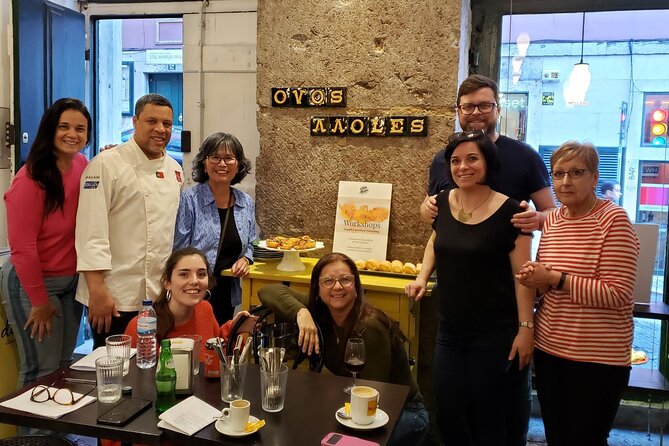
This class is family friendly, with a minimum age of 12. What I like about that is it sets expectations: you’re not dealing with a stiff, adult-only format.
One review notes that the teacher modified the approach for participants who weren’t typical adult bakers. That’s the right way to run a class like this. Pastel de Nata requires coordination, not just interest. If you’re bringing a teen or a kid, they’ll still have meaningful work to do, even if they aren’t doing every single step alone.
Practical tip: if you’re bringing kids, help them pace themselves. Thin dough can be a little intimidating, so calm handling and listening closely to the instructor’s cues will save you time and stress.
Taking the skills home: what you’ll remember after the last tart
A cooking class is only worth it if it changes how you cook next time. Here, you come away with more than the idea of Pastel de Nata—you learn the techniques that make it possible.
You’ll likely leave knowing:
- how dough handling affects the final pastry shell
- how the filling step shapes texture and set
- how to work with corrections while there’s still time to fix the method
If you’re hoping to reproduce these at home, accept one truth: Pastel de Nata rewards practice. Even professionals doing high-volume work still rely on careful steps done by hand, and you feel that during the process. The class builds respect for the craft, not just a craving.
One more practical bonus: use Filipa’s experience in Lisbon. Reviews mention that the instructor gives dinner recommendations. If you’ve got the energy after class, ask for where to go nearby for a simple Portuguese meal.
Price and value at $99.72: what you’re really paying for
At $99.72 per person, this isn’t a bargain. The right way to look at the price is to ask what you get that you can’t easily copy.
You’re paying for:
- hands-on instruction from Filipa during the steps that cause the most trouble
- a small group (max 6), so you’re not stuck waiting your turn
- a full experience that includes starter tastings (Porto wine and ginja) and drinks afterward
- the chance to make Pastel de Nata from scratch, not from a kit
One review flags the price as a consideration, which is fair. Still, multiple reviews argue it’s worth it because the instruction is detailed and the result is delicious, especially with fresh baking.
If your travel style is “one great class, then eat the city’s other food,” this fits that plan. If you’re looking for cheap and casual, you may feel the cost more.
Who this Pastel de Nata class suits best
This class is a good match if you want:
- a small-group Portuguese pastry lesson
- a real technique class, not just a food tasting
- a fun activity that still delivers tangible results you can eat
It’s also well suited for:
- couples who want a shared project
- families with kids 12+
- people who enjoy Lisbon’s food culture and want something hands-on before walking the city
Should you book this Pastel de Nata class?
If you like learning by doing, yes, book it. The combination of from-scratch technique, a small group, and the included Porto wine and ginja liquor makes it feel more like training than a sightseeing add-on. And since Pastel de Nata is one of Portugal’s most famous snacks, making it yourself is a satisfying way to understand why it’s so beloved.
The main reason to hesitate is the price, plus the fact that it’s team-based rather than everyone completing every micro-step alone. If that’s not a deal-breaker—and you want a guided, hands-on night—this is a strong choice for Lisbon.
FAQ
How long is the Pastel de Nata cooking class in Lisbon?
It runs for about 1 hour 30 minutes.
What time does the class start?
The start time listed is 3:00 pm.
Where do I meet the instructor?
The meeting point is Calçada do Sacramento 25, 1200-393 Lisboa, Portugal.
Is the class offered in English?
Yes, the experience is offered in English.
How many people are in the group?
The class has a maximum of 6 travelers.
Is it suitable for kids?
It’s suitable for children aged 12 and older.
What’s included to eat and drink?
You’ll start with Pastel de Nata served with Porto wine and ginja liquor, and you’ll also have wine, aperitif, coffee, tea, and water.
Do you make the custard tarts from scratch?
Yes. The class teaches you to make the famous Portuguese custard tarts from scratch.
What if I have food allergies or a special diet?
You need to communicate any food restrictions (allergy, special diet, etc.) when booking.
Is there free cancellation?
Yes, free cancellation is available. You can cancel up to 24 hours in advance for a full refund.