REVIEW · LISBON
Lisbon: Azulejos’ Design Create Your Own Tile Workshop
Book on GetYourGuide →Operated by Azulejos'design · Bookable on GetYourGuide
You draw azulejos, then take one home. This Lisbon workshop turns the famous azulejos look into something you design yourself using the beginner-friendly Formettes method.
I love how the process starts with simple pencil work and builds step-by-step, so you never feel behind. I also like that you leave with your finished 10cm x 10cm ceramic tile the same day, thanks to a transfer and thermal-press step after you draw.
The main thing to watch is value: you’re paying for one finished tile, and extra pieces cost extra. Also, it isn’t suitable for kids under 10.
In This Review
- Key points to know before you go
- Lisbon Azulejos in 2.5 Hours: the Formettes approach
- How the 3-step tile design process really works
- From your sketch to a real ceramic tile (the Photoshop + thermal press part)
- What the workshop feels like: cozy, patient, and not intimidating
- Price and value: what $64 buys (and what it doesn’t)
- Practical logistics: meeting point and how to show up
- Who should book this azulejos design workshop
- Tips to get a design you’ll feel good about
- Should you book the Lisbon Azulejos Formettes workshop?
- FAQ
- How long is the Azulejos Design Create Your Own Tile workshop?
- How much does it cost?
- What tile do I get to take home?
- Do I need any drawing experience?
- What are the main steps during the workshop?
- When will I get my finished tile?
- What’s included in the price?
- What languages are spoken during the workshop?
- Is there a cancellation option?
Key points to know before you go
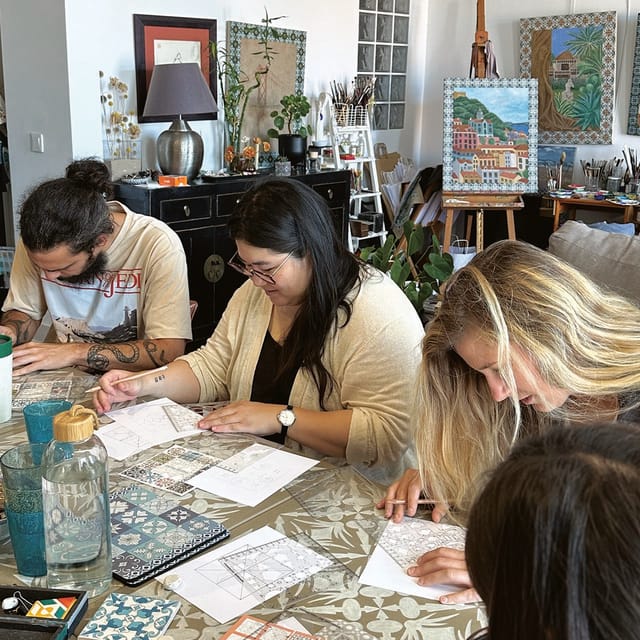
- Formettes has no drawing prerequisites, so you can create a real azulejos-style pattern without artistic background
- 3 clear making steps: pencil → black marker → watercolor coloring
- Post-workshop tech support: your design gets adjusted and multiplied digitally before it’s transferred to ceramic
- You take your tile home immediately, not days later or after shipping
- Small group or private sessions make it feel calm and personal
- Materials, drink, and cookies are included, which makes the price easier to swallow
Lisbon Azulejos in 2.5 Hours: the Formettes approach
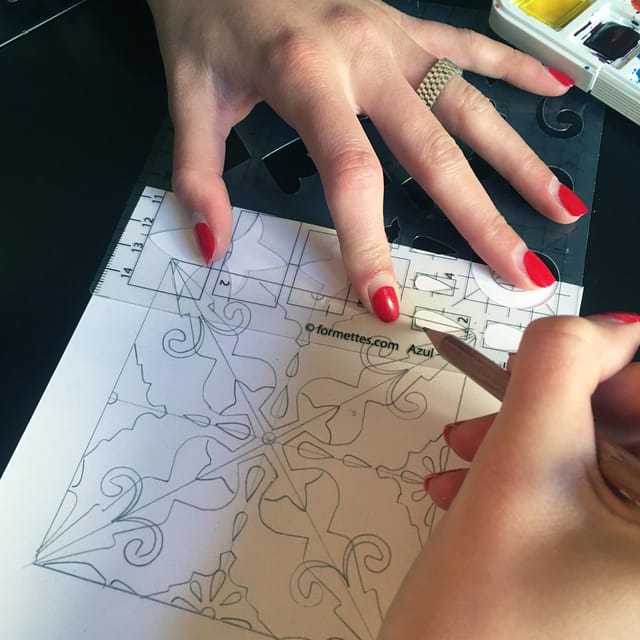
If you want a Lisbon souvenir that feels personal, this is one of the better ways to do it. You’re not just painting a copy. You’re creating a pattern inspired by traditional azulejos—the blue-and-white tiles you see everywhere—and translating your drawing into a finished ceramic piece.
The workshop runs 2.5 hours and centers on a method called Formettes. The big promise is simple: you don’t need special drawing skills. The tools and steps are designed so you can focus on your choices—shapes, balance, colors—rather than wrestling with technique.
Most people like workshops for the hands-on fun. This one also has a cultural angle that’s practical. Azulejos are all about repetition and pattern. So even if your design is more playful than traditional, you still end up with something that looks like it belongs on a Lisbon wall.
There’s also a “you can actually finish this” energy to the schedule. You sketch and paint in the session, then the team handles the digital prep and tile transfer so you don’t leave with a half-finished project.
A few more Lisbon tours and experiences worth a look



How the 3-step tile design process really works
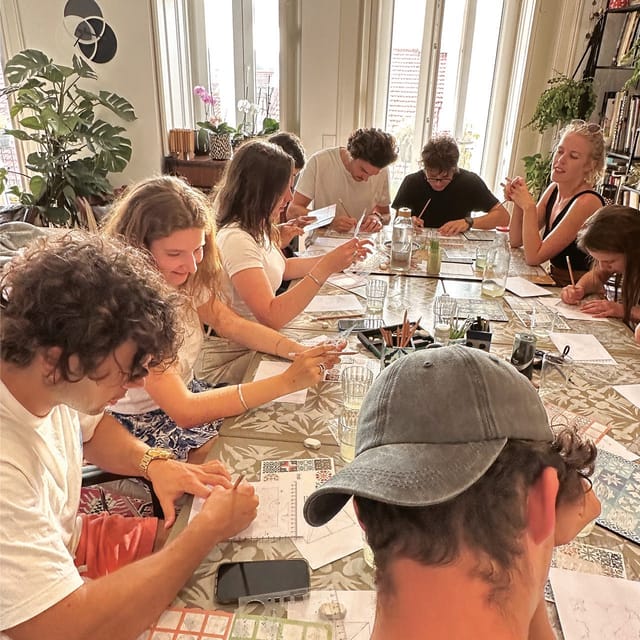
The session starts with a short presentation. You’ll learn what azulejos are, then how the Formettes tool helps you produce your own tile pattern. The instruction is friendly and structured, which matters because the steps are specific.
Here’s the workflow you’ll follow:
Step 1: Pencil drawing
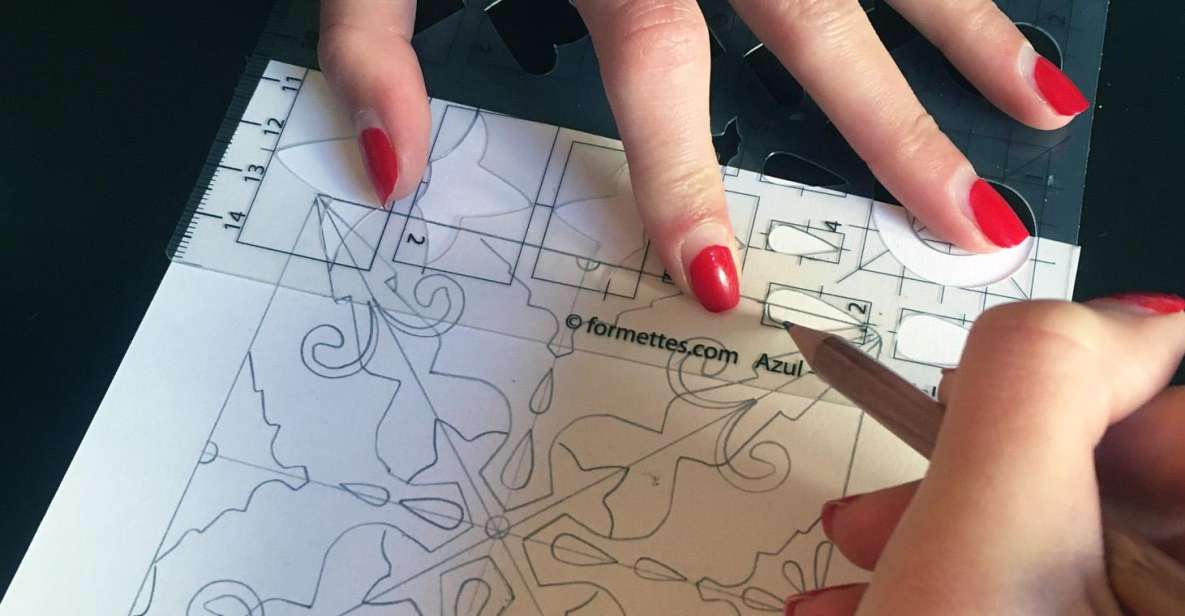
You begin by making your design with pencil. This is the part where you can be loose. Pencil is forgiving, and it lets you map out the pattern without pressure.
Step 2: Fine black marker and erasing pencil
Next, the pencil drawing is covered with a fine black marker. Then the pencil lines are erased. That matters because it separates the drawing stage from the final graphic lines the tile will use.
This step also helps you get that crisp azulejos look. Even if your shapes aren’t perfect, the marker lines give the design clarity.
Step 3: Watercolor coloring
Finally, you add color using watercolor. You’re not painting a whole scene like a canvas. You’re coloring pattern areas, so your decisions stay manageable. It’s more like planning a design palette than trying to do realism.
If you’re the type who freezes when you’re handed a blank page, this is a good class. The method keeps you moving, and the structure gives your creativity somewhere to land.
From your sketch to a real ceramic tile (the Photoshop + thermal press part)
One reason this workshop feels different from a basic craft class is what happens after you draw.
After the session, each design goes through a digital cleanup and layout step. Your drawing is worked on in Photoshop, with slight corrections if needed and then multiplied so the pattern transfers as a tile-ready design.
That’s the part that helps beginners. A lot of people worry their design won’t look polished on ceramic. The digital step is the safety net.
Then comes the physical transfer:
- A thermal press transfers the multiplied design to a ceramic tile (10cm x 10cm).
This is why you don’t have to wait around. You draw, you color, the team processes the design, and you’re able to take your tile home the same day.
From a practical viewpoint, this also means you’re paying for the “finishing power” that you probably don’t have at home: digital adjustment plus professional-grade transfer.
What the workshop feels like: cozy, patient, and not intimidating
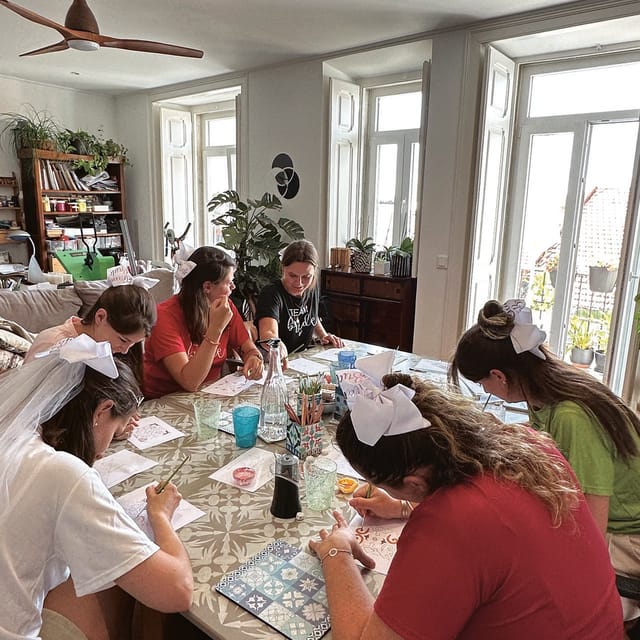
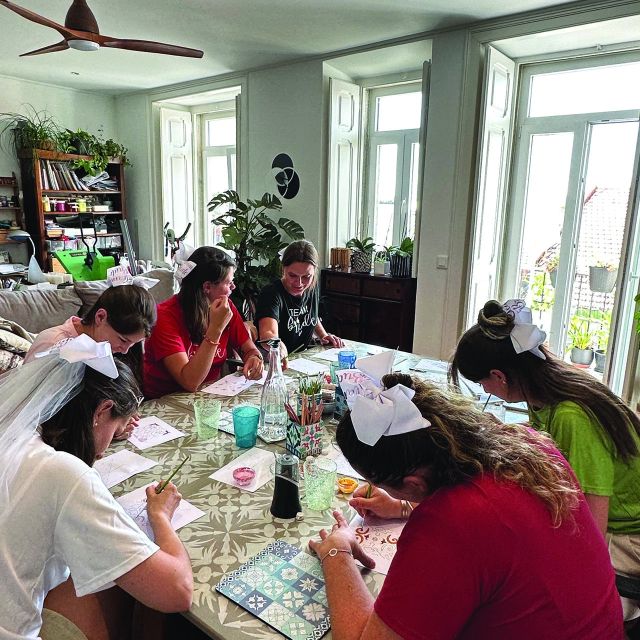
This class tends to run in a private or small group format. You’ll feel it as soon as you sit down—more conversation, more help, less waiting for your turn.
The tone is relaxed. You get guidance, but you also keep control of your design. In other words: you can go for traditional-looking patterns or something more personal and playful.
Many sessions are hosted by a French painter (people often mention Agathe by name), and the teaching style comes through as patient and encouraging. That’s important because the process has a few exact steps, and you want someone to clarify quickly rather than just handing you materials and hoping.
Also, the setting matters. Multiple participants highlight that it happens in a warm home-studio environment rather than a big impersonal classroom. That makes the workshop feel like a cultural activity, not a rushed production line.
Price and value: what $64 buys (and what it doesn’t)
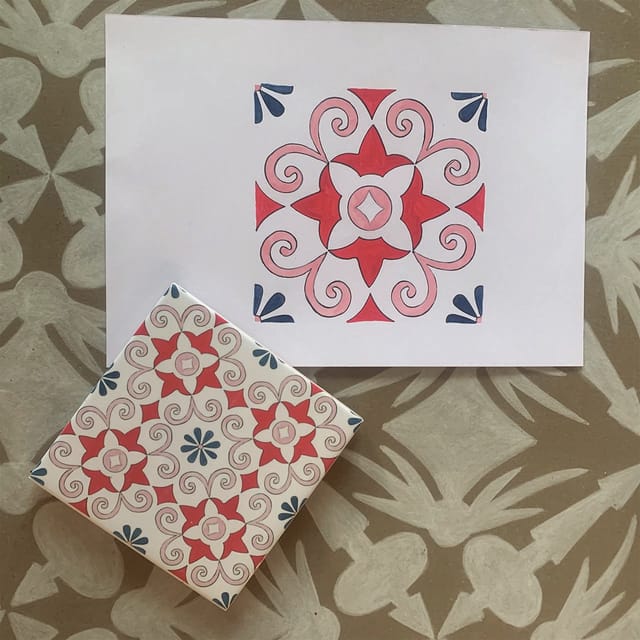
The price is $64 per person, for a 2.5-hour experience that includes:
- Instructor
- Drawing and painting materials
- Tea or coffee plus cookies
- One finished 10cm x 10cm tile
So you’re not just paying for instructions. You’re paying for the full pipeline: the designed pattern, the digital prep, the thermal press transfer, and the final ceramic tile you walk out with.
What’s not included is extra personalization or additional tiles. If you want more than one, you’d need to pay for the added tile. (Some participants reported adding a second tile for an extra €10, if that option is available on the day.)
Is it expensive? Lisbon isn’t cheap, and workshops for art souvenirs often cost real money. But in this case, the value holds up because you’re taking home a finished ceramic piece made through a real transfer process—not just a craft you made in the afternoon and hope survives.






Practical logistics: meeting point and how to show up
Your meeting point is Bell N°2. Plan to arrive a few minutes early so you can settle in.
Language support is French, English, and Portuguese, so communication should be straightforward even if you speak just one of those.
The workshop isn’t suitable for children under 10, which likely reflects the marker and fine-step process. If you’re traveling with older kids, the activity is structured enough for motivated learners, but the provided limit is still the limit.
What to bring?
- Really, just yourself and a willingness to make something imperfect.
- You’ll handle pencil, marker, watercolor, and the rest of the materials on site.
What not to stress about:
- You don’t need to be able to draw. The method is built to remove that barrier.
- You don’t need to know azulejos history. You’ll get enough context to understand what you’re making.
Who should book this azulejos design workshop
You’ll probably love this if:
- You want a Lisbon souvenir you designed, not something mass-produced
- You like pattern work more than portrait painting
- You enjoy hands-on activities with clear steps and friendly help
- You’re traveling solo, with a partner, or in a small group that wants a shared creative task
- You want to experience Lisbon culture through a craft that locals actually make and use
It may not be your best match if:
- You want a longer, deeper art class. This one is efficient by design.
- You only want a cheap souvenir. You’re paying for a finished ceramic tile created with professional steps.
- You’re traveling with a child under 10.
Tips to get a design you’ll feel good about
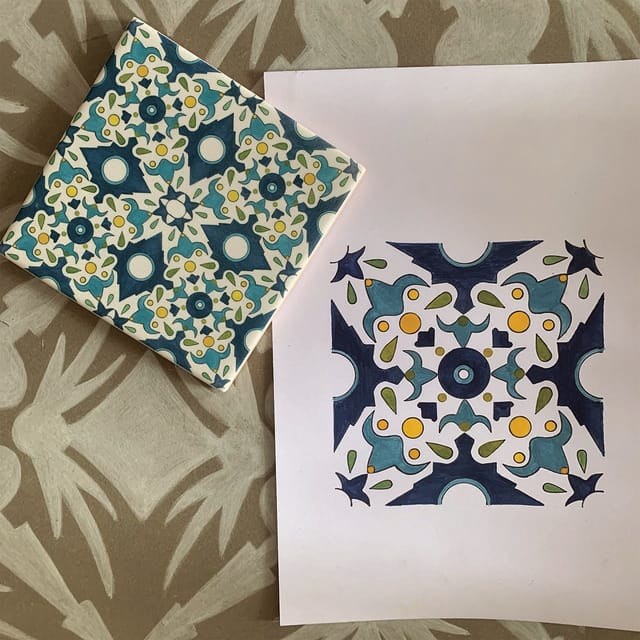
Because this workshop is pattern-based, you’ll get better results by thinking in repeating shapes, not one-off details.
A few practical ideas:
- Start with a simple plan in pencil. If it’s clear on paper, it will translate better.
- Pick a watercolor palette you’re comfortable with. Your joy matters more than traditional blue.
- Don’t overcomplicate the middle. Many designs look stronger when the center has breathing room.
- If you’re unsure, ask your instructor as you work. The class is set up so you can get guidance without losing your own choices.
If you’re the kind of person who worries your design won’t look “proper,” remember there is digital cleanup after your session. Your pencil lines don’t have to be perfect; they have to be understandable.
Should you book the Lisbon Azulejos Formettes workshop?
I think you should book this if you want a memorable, take-home craft that connects to Lisbon’s signature tiles and doesn’t require any talent test.
The biggest reasons to say yes are practical: you get one finished ceramic tile, you leave the same day, and the process supports beginners with a clear sequence plus post-workshop digital work. It’s also a good use of time in Lisbon because it’s a focused 2.5 hours, so it won’t wreck your sightseeing schedule.
If you’re budgeting tightly, plan for one tile (and decide in advance whether you want an extra). And if you’re traveling with young kids, double-check that age limit.
Overall, this is a smart choice for travelers who want something authentic, personal, and genuinely worth bringing home.
FAQ
How long is the Azulejos Design Create Your Own Tile workshop?
It lasts 2.5 hours.
How much does it cost?
The price is $64 per person.
What tile do I get to take home?
You receive a ceramic tile sized 10cm x 10cm.
Do I need any drawing experience?
No. The workshop uses the Formettes method and does not require drawing prerequisites.
What are the main steps during the workshop?
You start with pencil drawing, then cover it with a fine black marker and erase the pencil, and finally add watercolor coloring.
When will I get my finished tile?
You leave with your tile immediately after the workshop.
What’s included in the price?
Included are the instructor, drawing and painting material, a drink (tea or coffee), cookies, and the 10cm x 10cm tile.
What languages are spoken during the workshop?
The instructor speaks French, English, and Portuguese.
Is there a cancellation option?
Yes. You can cancel up to 24 hours in advance for a full refund.