REVIEW · LISBON
Lisbon Private Food Tour – Taste 10+ Local Dishes & Wines
Book on Viator →Operated by Secret Food Tours · Bookable on Viator
Lisbon has a way of turning food into a story. This private tour feeds you like a local, with enough samples for a full meal and wine like Port and Verde. I also like that you’re not stuck in a group shuffle—your pace can stay human. One consideration: it involves a fair amount of walking, so comfortable shoes matter, especially around the hills.
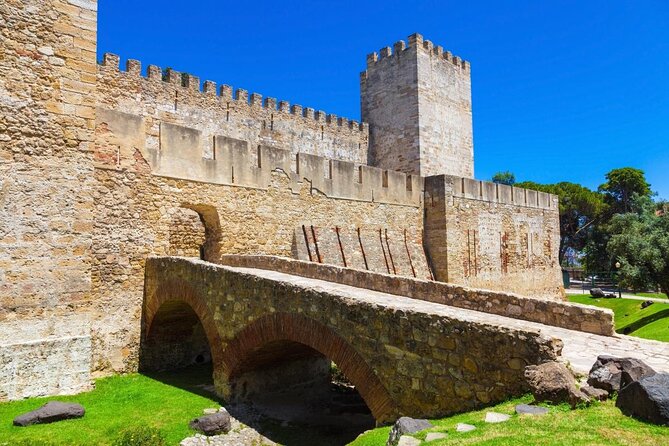
Stops mix classic Lisbon views with tastings, from the Santa Justa lift area to the São Jorge Castle neighborhood and the old slope district by the Tagus. If you’re lucky enough to get a guide like Marta or Jorge, you’ll hear how people’s history and daily life shape what ends up on the plate.
In This Review
- Key things that make this food tour worth your time
- A 3-hour private Lisbon food plan that actually leaves you full
- Price and value: what $370.05 per person really buys
- The tasting lineup: cheeses, petiscos, fish, bifana, and pastel de nata
- Portuguese cheeses and petisco-style bites
- Traditional fish
- The bifana and the pastry finish
- The Secret Dish
- Lisbon landmarks between bites: Santa Justa lift, old districts, convent history
- Getting up in the world: the Santa Justa lift area
- The hills and the oldest district slope by the Tagus
- The former convent stop: a pause with context
- São Jorge Castle neighborhood connection
- Pedro IV Square as the “center of gravity”
- Wines: Port and Verde, and how to taste them without fuss
- Walking, timing, and comfort: plan like Lisbon is hilly
- Guides matter: what Marta and Jorge tend to do best
- Who this Lisbon private food tour is best for
- Should you book it? My honest take
- FAQ
- How long is the Lisbon private food tour?
- What’s the price per person?
- Is this tour private?
- What’s included in the meal and tastings?
- What should I do if I have dietary requirements?
- Does the tour involve a lot of walking?
- Where does the tour start and end?
Key things that make this food tour worth your time
- 10+ tastings that add up to a real meal, not a few crumbs and a refill
- Port wine and Verde wine paired with classic Portuguese favorites
- Landmark stops placed between bites, so you learn without turning it into a museum day
- A private format where you and your group are the only ones in the experience
- A menu that covers cheeses, petisco/tapas, fish, bifana, and pastel de nata
- A weather-dependent outing, so build in flexibility
A 3-hour private Lisbon food plan that actually leaves you full
For a Lisbon food tour, the biggest question is simple: do you leave satisfied, or just taste a few things and drift into hunger? This one is designed so you’ll get lunch plus multiple stops featuring Portuguese cheeses, petisco-style bites, fish, and sweets like Pastel de Nata. In practice, that means you can treat this as your main meal and plan something light later.
The private part matters more than people think. If you want questions answered, want to move a bit faster, or want the guide to explain why a dish is eaten at certain times, you get that attention. It’s not a one-size-fits-all group lecture.
You can also read our reviews of more food & drink experiences in Lisbon



Price and value: what $370.05 per person really buys
At $370.05 per person for about 3 hours, this isn’t a budget snack crawl. But it also isn’t just “food on the street.” You’re paying for a guided sequence of tastings that includes lunch, multiple distinct dish types, and two wines (Port and Verde).
Here’s how I judge value on tours like this:
- If most of the “included” items are small tastes, the price should be lower.
- If the itinerary includes enough food for a full meal plus wine, the price can make more sense.
This tour lands closer to the second bucket. You’ll also get a “Secret Dish” that helps the menu feel less predictable. And because the tour is private, you’re not splitting guide time across a big crowd.
The tasting lineup: cheeses, petiscos, fish, bifana, and pastel de nata
What I like most is that the menu doesn’t repeat the same flavor style over and over. You get a spread across Portuguese food culture—from salty and creamy to savory sandwiches and classic pastries.
Portuguese cheeses and petisco-style bites
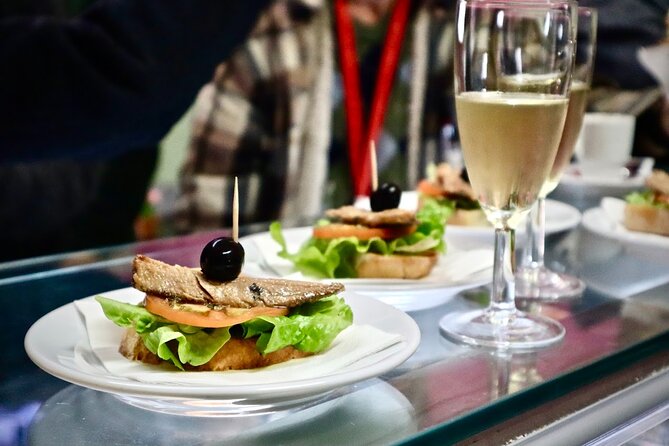
Cheese shows up early, and you’ll also enjoy Portuguese petisco (tapas). Petisco isn’t just a word for snacks—it’s part of how people socialize and drink. The idea is variety: different small bites that keep conversation moving.
If you’re a “one dish at a time” person, petisco can feel like a lot. But in this setup, it’s paced as part of the full meal. You’re not meant to eat everything at once; you’re meant to build your day’s flavor map.
Traditional fish
Portuguese fish deserves its own stop on any serious Lisbon itinerary. Including a traditional fish portion keeps the tour from becoming cheese-and-sweets only. It also helps you understand how the city’s location shapes what ends up on menus.
A few more Lisbon tours and experiences worth a look



The bifana and the pastry finish
You’ll also get bifana, a classic pork sandwich that’s a staple for fast, satisfying eating. It’s the kind of thing you can picture locals grabbing without making a big event out of it—exactly what makes it useful to learn from a guide.
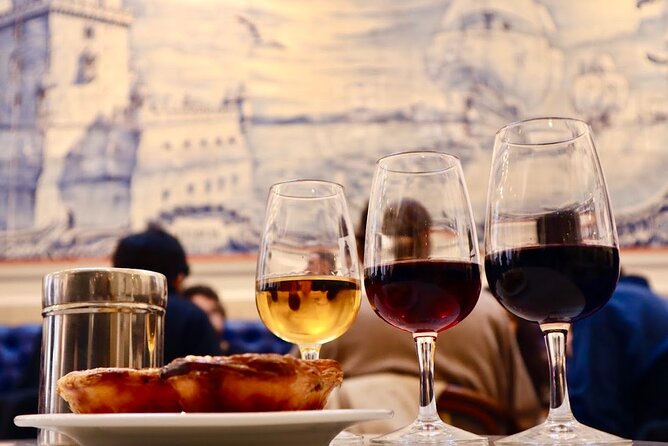
Then comes Pastel de Nata. In Lisbon, this pastry isn’t an afterthought. It’s a signature, and having it on the tour gives you a clean baseline for what good should taste like.
The Secret Dish
One item is intentionally left as a Secret Dish. That’s a smart move for variety, because you won’t know exactly what’s coming until you’re there. It also prevents the tour from feeling like a checklist of the same famous foods.
Lisbon landmarks between bites: Santa Justa lift, old districts, convent history
This tour doesn’t only feed you—it points you at the geography that shaped Lisbon eating habits.
Getting up in the world: the Santa Justa lift area
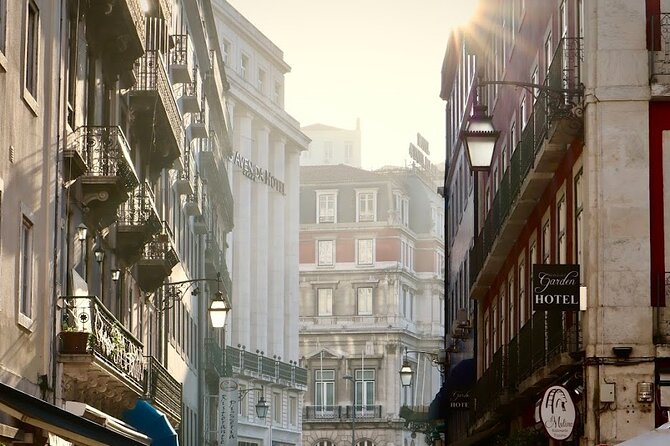
One of the stops is at an elevator/lift in the Santa Justa parish, at the end of Rua de Santa Justa, connecting lower streets to higher ground around Largo do Carmo. Why this matters for a food tour: Lisbon’s hills shape everything, including where people built neighborhoods and how daily movement worked.
You’ll also get a change of viewpoint, which helps you “see” the city instead of just walking through it while thinking about food.
The hills and the oldest district slope by the Tagus
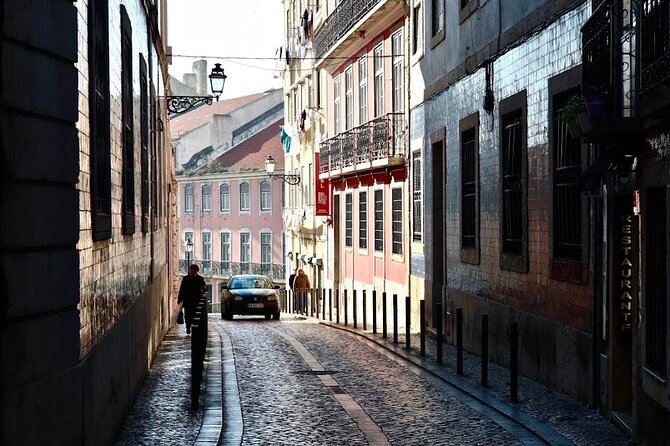
Another stop takes you into the oldest district of Lisbon, along the slope between São Jorge Castle and the Tagus river. This is the kind of area where narrow streets and hillside homes influence how people gather, eat, and shop.
For you as a visitor, it’s practical: after seeing the neighborhood layout, Portuguese food choices start making more sense. Why certain foods show up as quick bites. Why social eating and petisco fit the street life.
The former convent stop: a pause with context
There’s also a stop at a former Catholic convent in the Santa Maria Maior area. Even without turning it into an art lecture, it adds texture. Lisbon isn’t only about modern dining; it’s also about layers of institutions that shaped community routines.
A good food guide will connect those layers to what people relied on and how traditions stuck.
São Jorge Castle neighborhood connection
Your itinerary repeats a historic castle stop in the São Maria Maior parish area. You’re not just passing a landmark; you’re using it as an anchor point for the day. In a hilly city, anchors help you stay oriented, remember what you’ve seen, and connect the tastings to the places they belong.
Pedro IV Square as the “center of gravity”
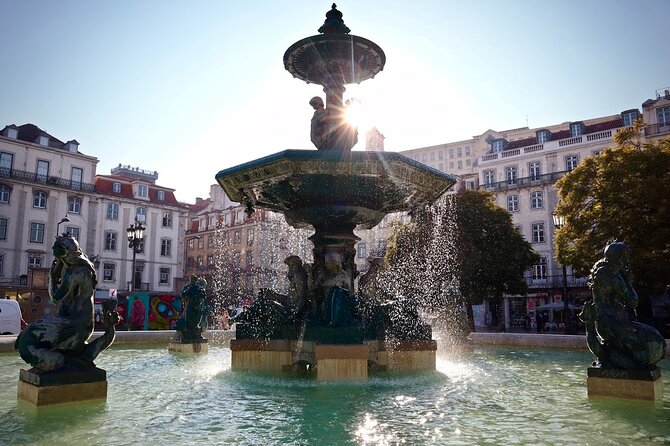
You’ll also cover Pedro IV Square—known by its popular name as the main square in Pombaline downtown since the Middle Ages. That’s useful because it’s a city-planning reference point. It helps you understand Lisbon’s bigger layout, not only its older slopes.
In short: the day moves between high viewpoints, old neighborhood streets, and a central square. That mix keeps the food tour from feeling like it’s happening on a random line on a map.
Wines: Port and Verde, and how to taste them without fuss
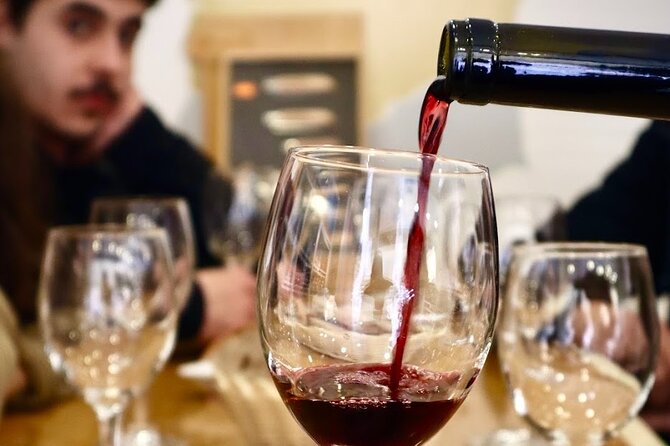
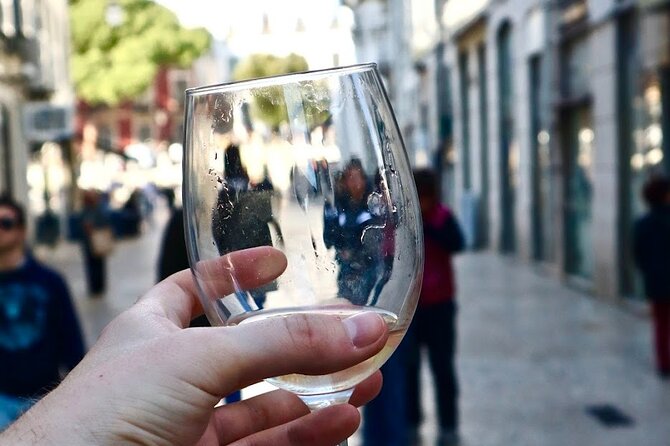
You’ll taste both Port wine and Verde wine as part of the included menu. Even if wine isn’t your main hobby, this works because the drinks are built into the course flow.
Port is typically richer and warmer in style, which pairs well with sweet pastry moments later in the tour. Verde is known for a lighter, fresher profile that can work nicely with salty petisco flavors and savory bites.
Don’t worry about being a sommelier. The point is to notice how the wine changes your perception of each dish. If your guide points out specific pairings as you go, you’ll remember them later when you’re ordering on your own.
Walking, timing, and comfort: plan like Lisbon is hilly
This experience warns that it involves a fair amount of walking, and I agree with that warning. Lisbon’s slopes can turn “about three hours” into a surprisingly active half-day if you’re not dressed for it.
My practical advice:
- Wear comfortable shoes with grip.
- If you’re prone to sore feet, consider bringing a small blister kit.
- Expect that outdoor weather can change the feel of the day.
The good part is that the walking isn’t random. Stops are spaced so you’re not just marching—you’re pausing for viewpoints, landmarks, and tastings.
Guides matter: what Marta and Jorge tend to do best
The reviews you’ll read highlight a theme: guides who connect food to place. When people mention Marta, they describe her as energetic with deep local context and stories that connect history, culture, and what you’re eating. Jorge gets praised in a similar way—interesting, helpful, and focused on using authentic local restaurants and strong observations along the way.
Even if your guide isn’t Marta or Jorge, the style is likely similar: explanations that help you understand why Lisbon eats the way it does, not just what you’re tasting.
If you want the most value from the tour, come ready with one or two questions:
- What dish is most tied to everyday life?
- Which wine style is most “Portuguese” at a café?
- What would you order next if you had only one hour?
Who this Lisbon private food tour is best for
This tour fits best if you want:
- A private experience where your group sets the rhythm
- A full lunch worth of Portuguese favorites (not just a snack tasting)
- Wine included, without needing to plan pairings yourself
- Landmark stops that help you understand Lisbon’s neighborhoods
It might be less ideal if you:
- Have mobility limits and can’t handle a fair amount of walking
- Need specific dietary accommodations (the tour notes that many gastronomy tours can’t always accommodate certain restrictions, and you should contact in advance)
Should you book it? My honest take
I’d book this Lisbon private food tour if you want one organized afternoon that gives you both food and context. It’s built around classic Portuguese dishes—cheeses, petisco, fish, bifana, Pastel de Nata—and it backs it up with Port and Verde wine. The private format also makes it feel less like a checklist and more like a guided day.
I’d think twice if you hate walking hills or if dietary needs are strict and non-negotiable—reach out early and confirm fit. Also, if you’re on a very tight schedule, remember this is about 3 hours plus the natural flow of outdoor stops.
If you want Lisbon in your stomach and your head, this is a strong choice.
FAQ
How long is the Lisbon private food tour?
It runs for about 3 hours.
What’s the price per person?
The price listed is $370.05 per person.
Is this tour private?
Yes. It’s a private tour/activity, and only your group participates.
What’s included in the meal and tastings?
The tour includes lunch and tastings such as Portuguese cheeses, Portuguese petisco (tapas), traditional Portuguese fish, Pastel de Nata, bifana, a Secret Dish, plus Port wine and Verde wine.
What should I do if I have dietary requirements?
You should contact the company in advance with any dietary needs. The tour notes that many gastronomy tours may not accommodate certain dietary restrictions.
Does the tour involve a lot of walking?
Yes. The tour involves a fair amount of walking, and comfortable shoes are recommended.
Where does the tour start and end?
It starts at R. dos Bacalhoeiros 14A, 1100-070 Lisboa, Portugal, and ends at Restauradores Square (Praça dos Restauradores, 1250-001 Lisboa).