REVIEW · LISBON
Lisbon Tour With Tuktuk
Book on GetYourGuide →Operated by Portugal Cities with Us · Bookable on GetYourGuide
Old Lisbon makes more sense when you roll through it. In a tuk-tuk, you can cover key historic areas fast, with guided stops that turn famous names into real places. I especially liked how the route threads together Alfama and the miradouros, so you get both street-level character and city-wide views.
I also like that the experience feels personal in the best way. Guides such as Joe and Rana (and others like Loji, Zoe, and Monir) commonly adjust for photo time and what you want to linger on, instead of treating every stop like a checklist.
One drawback to plan for: the tour is short (about 1.5–3 hours), and a few sights are brief guided moments, so if you love a specific place, you’ll want to spend extra time after the tour.
In This Review
- Quick things to know before you go
- Entering the Alfama world at tuk-tuk speed
- Where you start matters: Time Out Market, Hard Rock, or Museu do Fado
- The “quick guided hits” formula (and how to use it)
- Lisbon Cathedral and the old-core story you can see
- Portas do Sol terrace: where the view becomes a map
- Alfama: tiled facades, narrow lanes, and local energy
- Miradouro da Graça: a classic angle on the city
- Santo António Church, Gate of the Sun, and Castelo-area viewpoints
- São Vicente de Fora monastery: history you can point to
- Lisbon Flea Market and the chance to slow down
- National Pantheon of Santa Engracia and a strong visual payoff
- Praça da Comércio and the cruise-terminal pass-by
- Fado Museum stop: quick culture, easy follow-up
- The Pink Street: where Lisbon turns playful
- Time Out Market finish: turning the tour into an evening plan
- Price and value: is $32 worth it?
- Weather, comfort, and the small practical stuff
- Who this Lisbon tuk-tuk tour fits best
- Should you book this Lisbon tuk-tuk tour?
- FAQ
- FAQ
- How long is the Lisbon Tour With Tuktuk?
- Where do I get picked up?
- Where does the tour end?
- Is the tour guide available in English?
- Are entry tickets to sights included?
- Can I cancel and get a full refund?
- Can I reserve now and pay later?
- Is this tour suitable for children or wheelchair users?
- Do I need to choose a specific duration?
Quick things to know before you go

- You’ll use a tuk-tuk to skip a lot of hill pain compared to walking.
- Photo stops are part of the rhythm, and many guides will pause when you ask.
- The “old town” focus is real: Alfama, Graça/São Vicente area, and Castelo viewpoints.
- Many stops are quick guided hits (often around 5 minutes), so keep expectations flexible.
- Your evening plans are built in with a drop-off at Time Out Market.
Entering the Alfama world at tuk-tuk speed
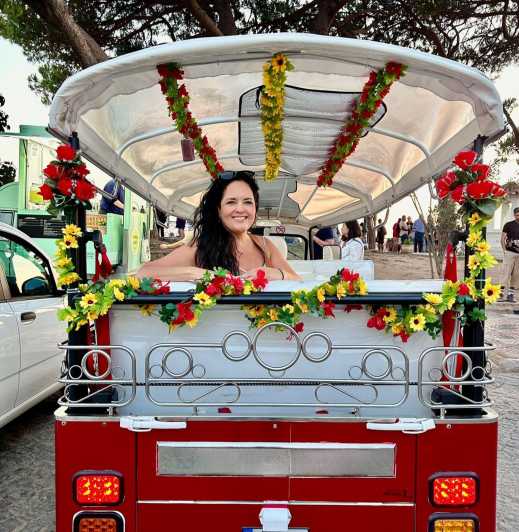
Lisbon’s oldest neighborhoods can feel like a maze until you see how everything connects. This tour is built for getting your bearings fast: you’re dropped into the historic heart, then carried up and around enough landmarks that the city’s layout starts to click. The key advantage is comfort for your legs—one reason this tour gets repeat love is that the tuk-tuk can work through narrow, winding roads that larger buses can’t manage as well.
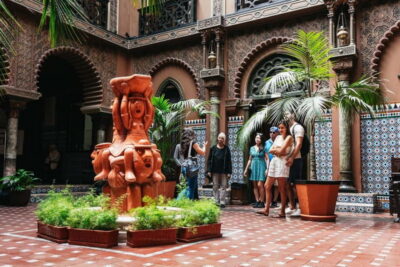
The vibe is also different from a standard bus ride. Because you’re smaller and closer to the streets, it’s easier to clock the details that make Lisbon feel unmistakably Portuguese: the tiled building fronts, the steep alley angles, and the way neighborhoods stack on top of each other.
I like that you’re not only looking at scenery—you’re being pointed toward meaning. A good example: you pass major religious and civic points in the old core, then pop out at viewpoints to see how the city “reads” from above.
You can also read our reviews of more tours and experiences in Lisbon.



Where you start matters: Time Out Market, Hard Rock, or Museu do Fado

Pickup is straightforward, with three options: Time Out Market Lisbon, Hard Rock Cafe Lisbon, or Museu do Fado. Starting near central landmarks is practical because it reduces guesswork. It also helps you plan the rest of your day—especially if you’re already near Chiado, Avenida da Liberdade, or the Alfama orbit.
If you want the least friction, I’d pick the pickup that’s closest to where you’re staying that morning. The tour is designed so you can get moving quickly and make the short duration count.
And yes, you can request pickup at the actual number they provide so the driver can contact you. That’s a small thing, but it matters in a city where meeting points can be confusing.
The “quick guided hits” formula (and how to use it)
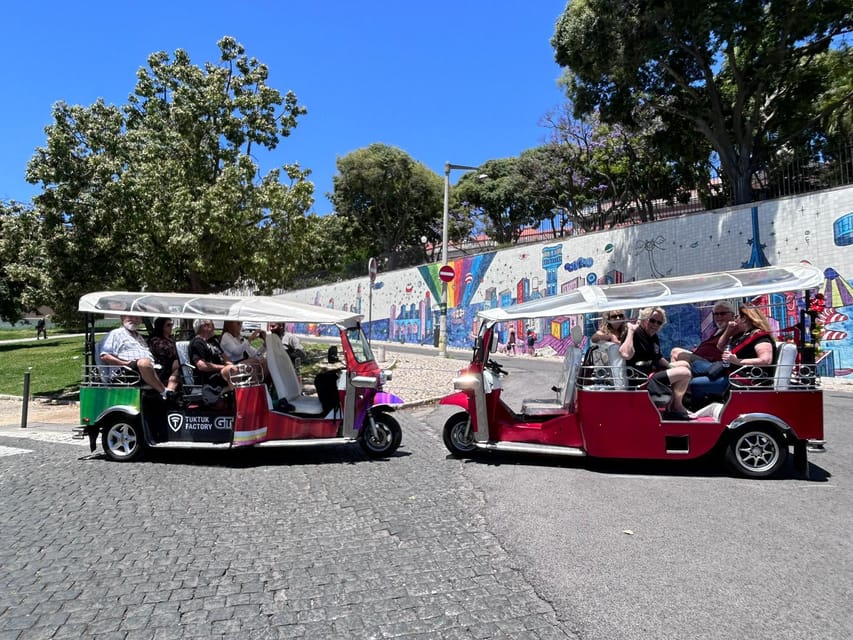
A lot of the tour’s stops are listed as guided moments that last about 5 minutes. That doesn’t mean the stop is pointless—it means the guide is giving you the context so you know what you’re looking at. Then you can decide what deserves more time.
Here’s how I recommend using that structure: when you hear a stop has real visual impact (like a terrace or a viewpoint), treat the guided portion as your briefing, then focus on photos and angles. When you hear a stop is more about history (like a church or museum stop), use the guided time for names and dates you can remember later.
Several guides in the feedback also mention letting people choose what to spend extra minutes on. So if a place clicks for you, it’s reasonable to ask for a little more time—just keep it within the overall tour flow.
Lisbon Cathedral and the old-core story you can see
One of the first stops is Lisbon Cathedral, often with a brief guided intro. The cathedral matters because it’s a strong anchor point for the old city. Even if you don’t go inside for a long visit, the exterior and the surrounding streets help connect Lisbon’s religious roots to the neighborhood grid.
Right after, you’ll continue through classic old-city textures—terraces and church-adjacent streets where the city’s history feels close enough to touch. If you’re arriving in Lisbon and want the fastest path to understanding how these neighborhoods evolved, this is the part that does that work for you.
Practical note: since you’re on a short tour, entry tickets aren’t included. So if you know you want to go inside a specific building, plan to do that later on your own.
Portas do Sol terrace: where the view becomes a map
Next you’ll get Portas do Sol Terrace, again with a short guided stop. This is the kind of location where Lisbon instantly turns from “pretty streets” into “I get it now.” Terraces like this show you the layers—rooftops, church silhouettes, and the way neighborhoods spill across hills.
If you’re the type who likes taking photos but doesn’t want to hunt for viewpoints all day, this is one of the best ways to do it. The guide’s job here is less about talking nonstop and more about pointing you toward the right angles so you don’t waste time.
If it’s overcast or wet, don’t panic. You’ll still get structure and depth in the scene—just keep expectations realistic for maximum sparkle.



Alfama: tiled facades, narrow lanes, and local energy

Then it’s Alfama, a neighborhood that’s famous for a reason. This is where you experience the old Lisbon feel up close: tight streets, colorful tiles, and constant visual variety. The tour’s approach here is to combine sightseeing with brief guidance so you understand why Alfama is such a big deal in the city’s story.
The big win in Alfama is orientation. After seeing Alfama from a terrace and then moving through it, you start to recognize the city’s rhythm: how movement channels through small streets, and how views pop out only when you reach the right bend.
Also, this tour’s format helps you spend less time fighting your way uphill on foot. A number of guides and drivers have been praised for getting people through efficiently—one of the recurring themes is that the tuk-tuk saves you from a lot of hill climbing while still giving you the neighborhood experience.
Miradouro da Graça: a classic angle on the city
At Miradouro da Graça, you’ll get another short guided stop focused on sightseeing and viewpoints. This is one of those places where you can photograph first and read later. The guide’s context helps you place landmarks without needing a guidebook open every minute.
I like that this tour doesn’t just throw you at one view. It gives you multiple viewpoints in different parts of the route, so your photos don’t all look like the same postcard.
If you want tips for getting better pictures: aim for a clean line between foreground rooftops and the broader city spread. Even a quick pause and a small angle shift can change the whole photo.
Santo António Church, Gate of the Sun, and Castelo-area viewpoints
The tour also threads through the Castelo area, including Santo António Church and the Gate of the Sun as you pass through. These are the kind of markers that make a route feel like a guided story instead of just driving around.
Even when you’re not spending long inside each location, passing these points helps you learn how Lisbon’s old walls and landmarks relate to the viewpoints above.
Then you move to Nossa Senhora da Monte, the highest point in Lisbon for long, panoramic views. You’ll get a guided moment at the Miradouro da Senhora do Monte, which is exactly where this kind of “highest point” payoff matters—because you’re seeing the city spread out, not just looking at nearby rooftops.
São Vicente de Fora monastery: history you can point to
You’ll stop at Monastery of São Vicente de Fora for a short guided visit. This is a good example of how brief stops still work on a short tour: you’re getting enough context to recognize what you’re seeing, without being stuck on a long schedule.
If you’re curious about religious architecture and Lisbon’s institutional power centers, you’ll get a quick primer here that helps you later when you spot similar styles around the city.
Just remember the real time limit: in a short tour, this is more “see and learn” than “tour and linger.”
Lisbon Flea Market and the chance to slow down
At the Lisbon Flea Market, the tour includes a sightseeing-guided moment. Market stops are valuable on this kind of tour because they add daily-life texture. You’re not only seeing landmarks—you’re seeing how Lisbon feels when people actually shop, browse, and chat.
I also like that market time is flexible in practice. Some guides in the feedback are praised for taking extra time when people ask, so if the flea market grabs your attention, it’s a place to request a little more browsing.
Since entry to specific sights isn’t included, think about this stop as a walk-through and vibe check unless you plan to buy or pay separately once you’re there.
National Pantheon of Santa Engracia and a strong visual payoff
Then it’s the National Pantheon of Santa Engracia for another short guided stop. This is one of those locations where the name alone can sound important, but the real value comes from how it fits into the route. It’s a landmark that ties the historic core together visually.
Because the tour is time-limited, you’ll likely get the main “what to notice” points during the guided window. If you want a deeper look inside, I’d plan a follow-up visit.
Praça da Comércio and the cruise-terminal pass-by
The route also connects you to the praça da Comércio area—the main square—plus a pass by the cruise terminal. Even if you don’t spend long here, it helps with perspective. Lisbon’s waterfront and major square contrast nicely with the narrow lanes you’ve been in, and it reinforces how different parts of Lisbon connect to tourism, trade, and movement.
This is a good segment for people who like to understand geography, not just collect photos. Seeing the square and then knowing you’ll be headed back toward neighborhoods and viewpoints helps you feel less lost.
Fado Museum stop: quick culture, easy follow-up
Next up is the Fado Museum with a short guided introduction. Fado can feel mysterious if you’ve never heard the music live. A quick museum stop gives you a starting thread—what fado is, why it matters, and how it fits into Lisbon’s identity.
Because entry tickets aren’t included, don’t expect a long museum session in this tour format. Use the stop to set yourself up for later: pick a fado show after you’ve had time to rest and plan.
The Pink Street: where Lisbon turns playful
Finally, you’ll see the Pink Street. This is the portion that tends to feel light and fun after the churches, monasteries, and viewpoints. It’s an easy win for photos, and it adds variety so the tour doesn’t feel like a nonstop lecture.
This stop also makes sense for timing: by the time you’re at the Pink Street area, you’ve usually already learned the “serious” parts of Lisbon’s old town, so the playful details land better.
Time Out Market finish: turning the tour into an evening plan
The tour ends at Time Out Market, and you get to stay there at your own pace. That’s a smart finish, because it removes a common problem with city tours: the transportation scramble after you’re tired.
Time Out Market is built for easy browsing—local stalls, cafes, restaurants, and bars. So after a short ride and quick sightseeing stops, you can do something low-effort and still feel like you had a Lisbon evening.
My practical suggestion: eat somewhere simple the first time (so you can recover and enjoy the market), then plan a second place nearby only if you’re still in the mood.
Price and value: is $32 worth it?
At $32 per person, the value comes from what you’re compressing into a short window. You’re paying for:
- Transportation by tuk-tuk, which cuts down hill strain and helps you access narrow streets
- A live English guide who gives context at multiple major points
- A route that mixes neighborhoods, viewpoints, and cultural landmarks
The main thing to watch is that entry tickets aren’t included, and some stops are brief. If you want long museum time or deep church interiors, this won’t replace a full-day ticketed itinerary.
But if you’re arriving in Lisbon and want to get oriented quickly while still seeing real, recognizable highlights, this price is fair—especially because the tour ends right where you can keep the evening going.
Weather, comfort, and the small practical stuff
A few practical notes based on what people report:
- The ride can feel bumpy, which is totally normal for small-road transit. If you’re sensitive to jolts, sit steady and don’t expect smooth highway comfort.
- Sound can be tricky in some open-air situations. If you can’t hear every word, don’t stress. Focus on the viewpoints and use the guide time for the big names.
- If the weather looks moody, bring a light rain layer or poncho. Wet days change the feel of Lisbon, and you’ll still want to get outside for photos.
If you’re flexible, you can also take advantage of guide timing. Some guides are praised for adjusting to rain windows when possible, which can turn a gray day into a workable photo hour.
Who this Lisbon tuk-tuk tour fits best
This experience is a strong match for:
- First-time visitors who want old town orientation fast
- People who want less uphill walking but still want real neighborhood texture
- Anyone who likes viewpoints plus quick cultural context
- Couples and solo travelers who want an easy plan with a built-in finish at Time Out Market
It may not be the best fit if you need:
- Wheelchair access (not suitable, and wheelchairs aren’t accommodated)
- Long guided stays at each major sight (the tour is designed for short, guided moments)
Should you book this Lisbon tuk-tuk tour?
Book it if your goal is to understand Lisbon quickly and end the day with food and drinks in one central spot. The tuk-tuk format is a real advantage here because it helps you cover more without exhausting your legs, and the route gives you both street-level Alfama character and wide-angle miradouro views.
Skip it (or pair it with other plans) if you’re the type who wants a slow, deep museum day or long timed-entry experiences. This tour is about smart coverage and getting the names and geography right so your next hours feel intentional.
FAQ
FAQ
How long is the Lisbon Tour With Tuktuk?
The tour runs for 1.5 to 3 hours. Starting times depend on availability.
Where do I get picked up?
There are 3 pickup options: Time Out Market Lisbon, Hard Rock Cafe Lisbon, and Museu do Fado.
Where does the tour end?
Both drop-off options end at Time Out Market.
Is the tour guide available in English?
Yes. The live tour guide speaks English.
Are entry tickets to sights included?
No. Entry tickets to sights are not included.
Can I cancel and get a full refund?
Yes. Free cancellation is available up to 24 hours in advance for a full refund.
Can I reserve now and pay later?
Yes. You can reserve now and pay later.
Is this tour suitable for children or wheelchair users?
It’s not suitable for children under 5, and wheelchair users are not supported. Non-folding and electric wheelchairs are also not allowed.
Do I need to choose a specific duration?
You can choose based on how much time you want. Duration can be 1.5 to 3 hours, depending on availability.