REVIEW · LISBON
Alfama and Mouraria Tour – The oldest neighbourhoods in Lisbon
Book on Viator →Operated by Hi Lisbon Walking Tours · Bookable on Viator
Lisbon’s history lives in uphill alleyways. This 2.5-hour walk through Alfama and Mouraria stitches together royal landmarks, medieval churches, and two of the city’s most scenic miradouros. You’ll get the sense of how Lisbon actually works when you move on foot, not just when you park at a photo spot.
I especially like the way the route blends classic set-pieces with everyday streets. The guide impact seems real here too: Walter, Tiago, Hugo, Jose, Claudia, and Ann-Elisha all got singled out for making the story feel clear and fun, not like a lecture.
One thing to consider: this is a hill-and-steps kind of tour. Even with pauses, you’ll want comfy shoes, water, and a mindset for climbing.
In This Review
- Key highlights
- Alfama and Mouraria: why these neighborhoods feel different on foot
- Where the tour starts: Praça do Comércio and spotting your guide
- Royal Lisbon first: Statue of D. Jose I and Praça do Comércio
- Churches and old architecture: Igreja de Santo António and Casa dos Bicos
- Alfama streets: walking the maze, then understanding it
- Lisbon Cathedral and Panteão Nacional: two big faith sites on the route
- The miradouros: Portas do Sol and Santa Luzia do the heavy lifting
- Castle of São Jorge: the climb you’ll remember
- Mouraria’s fado energy: Berço do Fado and St. Vincent de Fora
- Price and logistics: why $1.25 makes sense (and what to watch)
- What it feels like: pace, hills, and comfort on a 2.5-hour walk
- Your guide can change the whole experience: Walter, Tiago, Hugo, Jose, Claudia
- Should you book this Alfama and Mouraria tour?
- FAQ
- How long is the Alfama and Mouraria tour?
- How much does the tour cost?
- What language is the tour offered in?
- Where does the tour start and end?
- How large are the groups?
- Do I need an internet connection for the ticket?
- Is it suitable for most people?
- Is the tour weather dependent?
- Is there free cancellation?
Key highlights
- Orange-umbrella meeting point near the statue of King Jose I, so you can get started quickly.
- Alfama streets and viewpoints that actually explain why Lisbon looks the way it does.
- Castle-to-miradouro pacing, with viewpoints like Portas do Sol and Santa Luzia to break up the climb.
- Mouraria’s fado connection, including the Monumento Mouraria Berço do Fado.
- Small group size (max 20), which makes questions easier.
- Ridiculously low price for a structured, guided walk—still worth taking seriously for how much ground you cover.
Alfama and Mouraria: why these neighborhoods feel different on foot
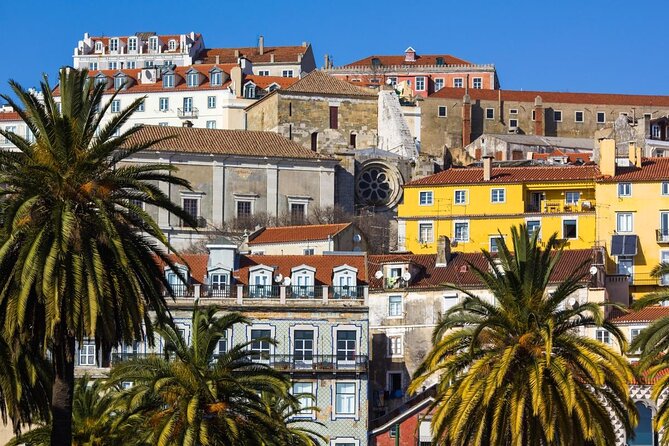
Alfama and Mouraria are Lisbon’s oldest neighborhood zones, and that age shows in the way streets twist, views open up suddenly, and churches pop into the scene like they’ve been there forever. This tour is built around that feeling: you’re not rushing through a single “must-see.” You’re getting a route that helps you read Lisbon—where the power was, where worship happened, and how people found breathing room above the river and the hills.
What makes it work is the mix of scales. You start with big civic landmarks, then move into smaller, more intimate places: a historic house façade, quiet church corners, and narrow lanes where the city’s daily life is close enough to smell. By the time you reach the miradouros, you’ll understand what you’re looking at rather than just pointing and shooting.
You can also read our reviews of more tours and experiences in Lisbon.

Where the tour starts: Praça do Comércio and spotting your guide
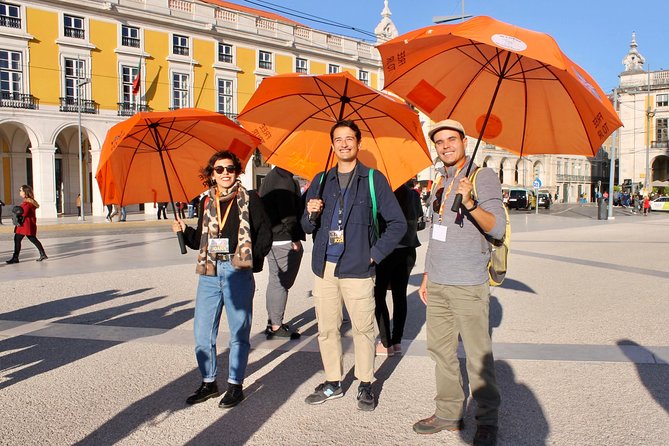
The meeting point is Praça do Comércio, and the tour ends around Praça do Rossio. You’ll likely want to arrive a bit early because Lisbon streets around the square can get busy fast.
Here’s the practical detail that matters: when you’re at the Statue of D. Jose I, look out for your guide’s orange umbrella, positioned between the big arch and the statue. That visual cue is your best bet if you’re arriving close to start time or if the group gets split by foot traffic.
If you tend to be early (or you worry about missing instructions), this is a good tour to plan for that. A small number of people ran into trouble when they showed up at the wrong spot and had to hunt around after the walk had started. In other words: show up on time, and use the umbrella/landmark cue instead of guessing.
Royal Lisbon first: Statue of D. Jose I and Praça do Comércio
You begin with the Statue of D. Jose I, a monument honoring King Jose I of Portugal. It’s a fine “orientation marker” because it puts you in the right part of the city right away, before you start climbing into older lanes. Expect a quick setup—enough context to understand who mattered and why Lisbon’s story wasn’t always about tourism.
From there, the walk takes you to Praça do Comérciо, one of Lisbon’s most important squares. Even if you’ve seen photos of it, the square hits differently in person because of the space and light. It also sets up a contrast: after the open area, you’ll soon be slipping into streets where you can’t see everything at once—exactly where Alfama shines.
Churches and old architecture: Igreja de Santo António and Casa dos Bicos
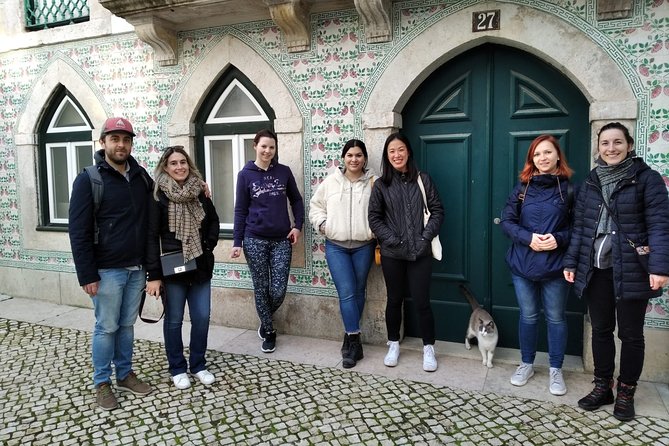
The tour then heads to the Church of St. Anthony, described as the place where St. Antony of Padua was born. Even if you’re not chasing religious art, churches like this help anchor the “why” behind neighborhood identity—Lisbon’s older areas formed around institutions, not just shopping.
Next up is Casa dos Bicos (Museu de Lisboa). It’s known for being one of the oldest houses in Lisbon and for its Manueline style—those decorative details that look like stone has been given a job beyond simply holding itself up. This stop is short, but it’s the kind of pause that pays off later. When you start seeing older building styles again, you’ll recognize them faster.
Alfama streets: walking the maze, then understanding it
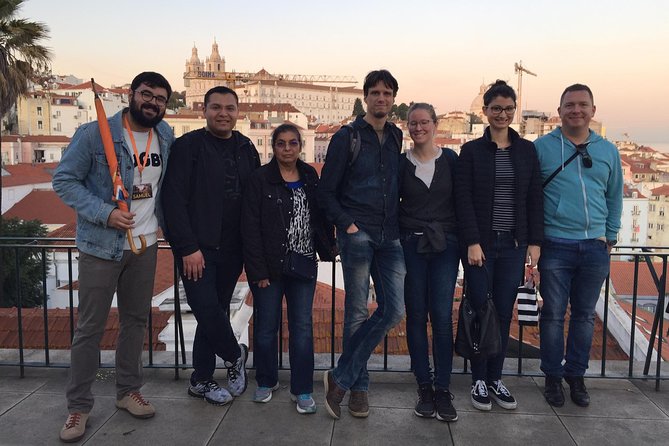
Once you enter Alfama, the tour shifts from landmarks to rhythm. This is where the hills and the street layout start telling stories. You’ll walk through the neighborhood’s lovely lanes for about 20 minutes, and the guide’s job becomes helping you “read” what you’re passing—street corners, church placements, and the way the city rises.
A big bonus here: Alfama is the part of Lisbon where you want to slow down anyway. So even though the tour is structured, you still get enough time to notice doorways, façades, and the small surprises that make Lisbon feel lived-in instead of staged.



Lisbon Cathedral and Panteão Nacional: two big faith sites on the route
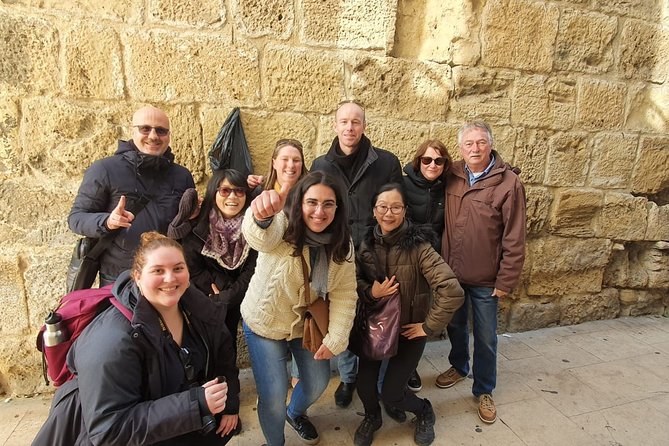
The walk includes Lisbon Cathedral, described as the oldest church in Lisbon. It’s a quick stop, but it’s important. Seeing it in context—inside a neighborhood route rather than as an isolated attraction—gives it more meaning. You’ll also understand why the surrounding streets feel like they orbit this kind of landmark.
Then there’s a lightning stop at Panteao Nacional, the National Pantheon of Lisbon. It’s brief (about a minute), but it’s a helpful punctuation mark in the route: Lisbon isn’t only about medieval origins. It also preserves later national identity in monumental ways.
One heads-up, based on real-world experience: the tour description lists admissions as free for these stops, but some people found they had to pay to enter certain areas like the cathedral or castle. The safe move is simple—plan as if you might need to pay if you want to go inside specific sections, and treat “free” as “you may not need a ticket for the viewing portion,” not a guarantee for every door.
The miradouros: Portas do Sol and Santa Luzia do the heavy lifting
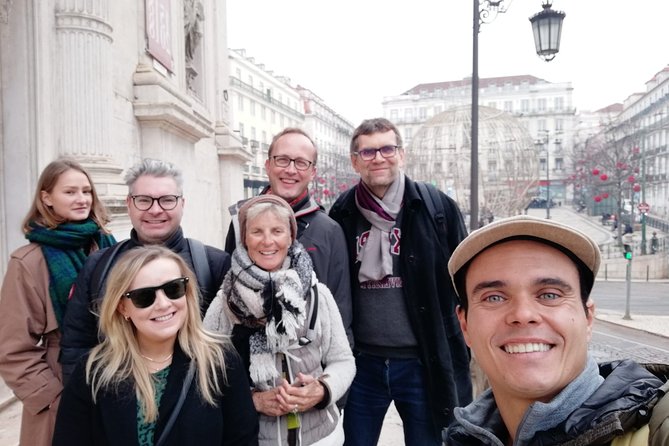
If you only care about views, this tour still earns its keep. Miradouro das Portas do Sol is one of the most beautiful viewpoints in Lisbon, and you’ll also get a chance to take photos without it feeling like a chaotic stop. The guide will help you point your camera in the right direction.
After that, you’ll move to Miradouro de Santa Luzia, one of the city’s most charming viewpoints. This one feels especially good because the neighborhood lanes feed into the view—so the panorama feels like a reward for walking, not something dropped in front of you like an elevator.
If you’re going in hot weather, pay attention to how your guide handles it. People have credited guides like Hugo for finding shade, building in breaks, and making sure everyone gets a moment to take pictures without feeling rushed. That’s not just comfort—it improves the whole tour quality.
Castle of São Jorge: the climb you’ll remember
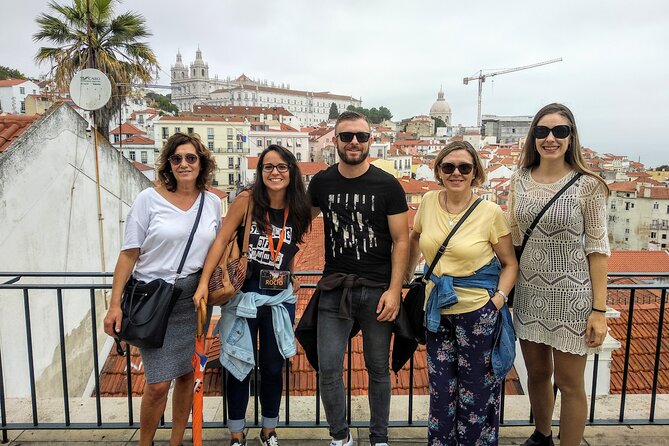
The route reaches Castelo de São Jorge, described as an old castle built by the Moors in the 8th century. Even if your visit here is short, it’s the kind of place where you naturally slow down. The castle’s purpose is defensive, but from street level it reads as “Lisbon’s spine.”
One practical consideration: expect hill work. Even when guides pace things well, you’re still going up, and the route includes stairs. Several people said guides handled this by breaking the climb into stages so it feels more manageable. If you know you’re slower on stairs, tell yourself that you’re allowed to take your time—just stay close enough to regroup at each corner.
Also remember the earlier heads-up about paid entry. The castle is often where that confusion shows up. If you want to enter, check what the “free” wording applies to, and budget a little for entry just in case.
Mouraria’s fado energy: Berço do Fado and St. Vincent de Fora
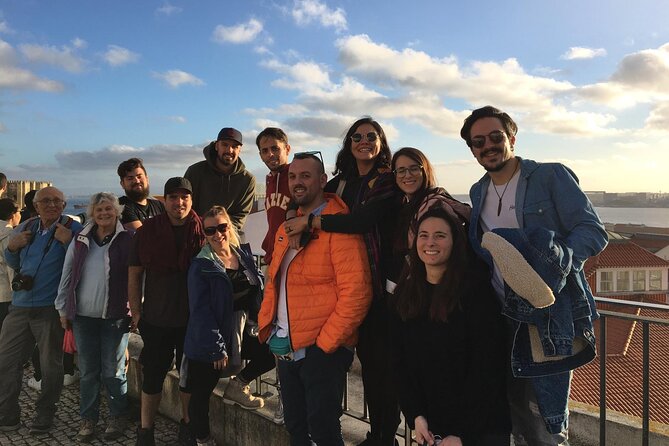
Once you move into Mouraria, the vibe changes again. You’ll walk around the charming streets for about 20 minutes, and you’ll hit Monumento Mouraria Berço do Fado. This stop matters because it connects Lisbon’s older neighborhood life to fado’s cultural identity. It’s not just a photo spot—it’s a reminder that music history lives in street corners, not only in concert halls.
Then there’s a short stop at Igreja de São Vicente de Fora, the church built in honor of St. Vincent. It’s quick, but it fits the pattern: institutions anchor these neighborhoods, and the tour helps you see that rather than skipping from one view to the next.
By the time you end around Praça do Rossio, you’ll feel like you’ve crossed from one Lisbon era into another—royal square to medieval church to fado corner—without the chaos of hopping between unrelated attractions.
Price and logistics: why $1.25 makes sense (and what to watch)
At about $1.25 per person, this tour pricing is shockingly low compared to typical guided walks. That kind of value can be tempting, but it also means the structure matters. You’re paying for the route, the timing, and the guide’s ability to connect the dots.
This tour also has a limit of up to 20 people, which keeps the group from turning into a line of strangers walking in silence. The English offering is also clearly stated, and you use a mobile ticket.
Two logistics watch-outs:
- If you’re picky about free entry, don’t assume every inside area is free. Some sights can require paid tickets even if the stop is listed as free.
- If you have trouble with pace, stay where you can hear the guide. A rare issue happened when someone fell behind and couldn’t clearly tell where the group went at corners. That’s fixable with one habit: keep your position consistent, especially at intersections.
What it feels like: pace, hills, and comfort on a 2.5-hour walk
This is not a flat stroll. The route includes viewpoints and a climb to the castle area, so you’ll likely be walking uphill and handling stairs. The tour time is about 2 hours 30 minutes, which is long enough to feel like a workout, but short enough to stay fun if you pace yourself.
The best strategy is boring but effective:
- Wear shoes with good grip.
- Bring water (especially in summer).
- Plan to take photos quickly and then move on. Waiting too long at viewpoints can mess with your ability to keep up.
If you’re traveling with someone who struggles with stairs, this might still work, but the group will move as one. Choose a day with comfortable temperatures, and look for a guide who naturally builds in stages on the climb—several guides in this program have been described doing that.
Your guide can change the whole experience: Walter, Tiago, Hugo, Jose, Claudia
What stands out from the guide chatter is not only facts, but delivery. People called out Walter for being animated and funny with a strong feel for architecture and history. Tiago got praise for being friendly and for answering questions, plus pacing the castle climb in stages. Hugo was credited for humor, professionalism, and managing heat with shade and breaks. Jose was praised for presenting perspectives on Lisbon’s oldest neighborhoods in an engaging way, while Claudia earned thanks for making the area feel fun and understandable.
No matter who you get, the best move is to ask real questions early—about what you’re seeing and why the city developed that way. That’s when the tour stops being a route and starts becoming a lens.
Should you book this Alfama and Mouraria tour?
Book it if you want Lisbon’s oldest neighborhoods in a single walk with smart stops: churches, old architecture, fado symbolism, and two standout miradouros. The low price makes it especially attractive if you’re first-time in the city and want bearings fast.
Skip it (or plan carefully) if you hate hills, stairs, or long slogs at viewpoints. Also, if you’re strongly budgeting for paid entry, don’t treat the phrase admission ticket free as a promise for every inside space—some people have found ticket requirements once they tried to enter specific sites.
If your goal is to understand Lisbon by moving through it, this is a solid choice.
FAQ
How long is the Alfama and Mouraria tour?
It lasts about 2 hours 30 minutes.
How much does the tour cost?
The price is listed at $1.25 per person.
What language is the tour offered in?
The tour is offered in English.
Where does the tour start and end?
It starts at Praça do Comércio and ends around Praça do Rossio.
How large are the groups?
The tour has a maximum of 20 travelers.
Do I need an internet connection for the ticket?
You use a mobile ticket.
Is it suitable for most people?
Most people can participate, and service animals are allowed.
Is the tour weather dependent?
Yes. It requires good weather, and if it’s canceled due to poor weather you’ll be offered another date or a full refund.
Is there free cancellation?
Yes. You can cancel up to 24 hours in advance for a full refund.