REVIEW · LISBON
Lisbon Highlights Guided Walking Tour
Book on Viator →Operated by Hi Lisbon Walking Tours · Bookable on Viator
Lisbon’s center is easier to read on foot. This guided Lisbon highlights walking tour hits the big squares and streets fast, tying them together with the 1755 earthquake and ending at a famous photo viewpoint. At about 2 hours 30 minutes, it’s the kind of outing that helps you understand what you’re seeing without turning into a museum day.
I especially like the value for the time. For $21.72, you get a professional guide plus a tight route through places like Praça do Comércio, Rossio Square, and Santa Justa Elevator, with stories you can’t easily guess just by looking. I also like the pacing: the tour keeps moving, but each stop gets enough time to make the details stick, including practical city-color stops like ginjinha.
One thing to keep in mind: this is Lisbon walking in central areas, so you should expect hills and stairs (even if the guide keeps things moving at a good pace). Also, it’s weather-dependent, so plan to wear shoes you can handle on uneven sidewalks.
In This Review
- Key things you’ll notice right away
- Walking Lisbon’s highlights, without the guesswork
- Praça do Comércio: the earthquake that reshaped everything
- Augusta Street Arch to Municipal Square: power symbols in plain sight
- Rua Augusta’s grid plan, Santa Justa’s engineering story
- Rossio Square and São Domingo: monarchy endings and church drama
- Ginjinha, Casa do Alentejo, and the Moorish thread
- Avenida da Liberdade and Estação do Rossio: Lisbon in costume
- Carmo Square and Chiado: unfinished church, dictatorship, and revolution
- Finishing at Miradouro São Pedro de Alcântara: the view that ties the day together
- Price, pace, and why this feels like a bargain
- Guides bring the stories to life (Jose, Shiri, Telma, and more)
- Practical tips so the walk feels easy, not tiring
- Should you book this Lisbon highlights walking tour?
- FAQ
- How long is the Lisbon Highlights Guided Walking Tour?
- Is the tour offered in English, and do I get a mobile ticket?
- Where do I meet the guide, and where does the tour end?
- How large is the group?
- Are service animals allowed?
- What happens if the weather is bad or I need to cancel?
Key things you’ll notice right away
- A story-driven route that connects big moments like the Great Earthquake of 1755 to everyday Lisbon sights
- Santa Justa Elevator context and why it’s considered special in Portugal, plus its link to the Eiffel Tower
- Royal and political turning points covered across squares, churches, and the City Hall area
- Food-and-drink flavor stops that explain local institutions like ginjinha
- A smart photo finish at Miradouro São Pedro de Alcântara, timed to give you the best city view
Walking Lisbon’s highlights, without the guesswork
Lisbon can feel like a puzzle at first: beautiful, yes, but also layered. One minute you’re in a grand square, the next you’re looking at a church façade or a street arch with a name that sounds ceremonial. What makes this tour work is how it helps you “decode” the city in a short amount of time.
The route keeps to central Lisbon and focuses on high-recognition spots that also have real backstories. You’ll hear about the earthquake of 1755 and how it changed the city. You’ll also follow a trail through monuments, squares, and architecture that explain shifts in power and identity over time.
Group size stays small (up to 20 people). That matters because you get a guide who can actually manage questions and keep the group together, especially on busier streets near major landmarks. And you get a mobile ticket, which keeps your prep simple.
You can also read our reviews of more walking tours in Lisbon



Praça do Comércio: the earthquake that reshaped everything
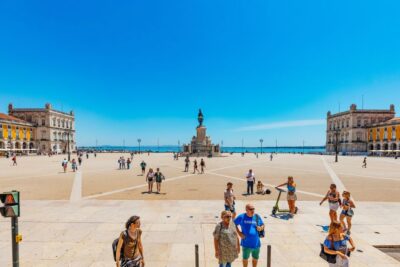
The tour starts at Praça do Comércio, the big showpiece square by the river. It’s a perfect opening point because the scale tells you Lisbon’s ambition right away. Then the guide brings in the Great Earthquake of Lisbon, the disaster that destroyed about 80% of the city.
This is more than scary history. Understanding the earthquake helps you read Lisbon like a city with scars and rebuilds, not just postcard beauty. When you later notice the layout of streets and the way certain areas “feel” planned, that earthquake context gives you a framework.
What to watch for here: look at the square’s layout and imagine what it meant to rebuild at that scale. Even if you only catch a bit of the story, the place makes it easier to visualize.
Augusta Street Arch to Municipal Square: power symbols in plain sight
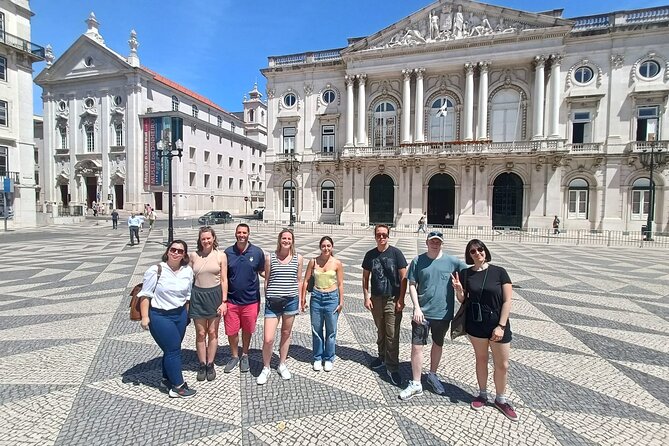
Next up is the Arco do Triunfo on Augusta Street. It’s imposing and very photogenic, but the best part is what the guide explains: what the arch represents to Lisbon and why this street feature became one of the city’s famous landmarks. The arch is one of those structures that looks like it’s always been there, until you learn it has a point and a message.
Then you head to Municipal Square, where the City Hall is located. This stop is about the end of Portugal’s monarchy. You’re in a civic space, so the story connects Lisbon’s old governance to the modern city identity. It’s also a reminder that Lisbon’s history isn’t only about kings and battles. It’s about how institutions changed and what that meant for the streets you walk today.
A practical note: these early stops move quickly. If you’re the type who loves to linger, keep your expectations realistic. The trade-off here is that you get to cover a lot of important ground in one go.
Rua Augusta’s grid plan, Santa Justa’s engineering story
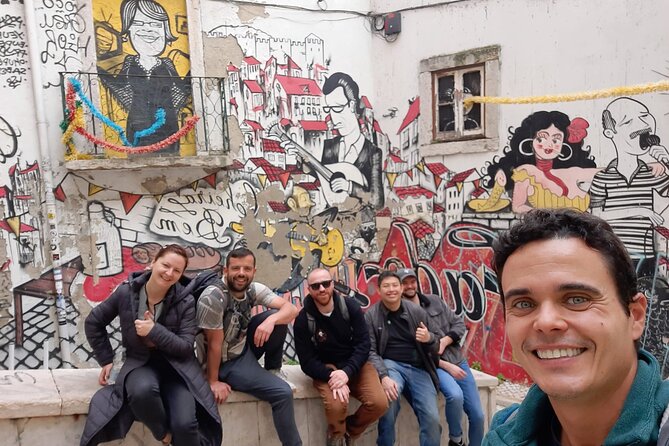
You’ll walk by Rua Augusta, which the guide frames as one of Lisbon’s most important streets. The big detail is why the area was built as a grid. That grid concept ties back to the idea of rebuilding and reorganizing after major disruption. It turns architecture into a clue rather than just scenery.
After that, you’ll see the Elevador de Santa Justa. Lisbon has plenty of viewpoints, but this is a different kind of highlight: the elevator. It’s described as the only elevator of its kind in Portugal, and the guide also explains its connection to the Eiffel Tower. That Eiffel link is one of those “wait, really” details that makes the building feel connected to a bigger European story.
Why this stop is worth your attention: it’s not just a ride you might take later. It’s a landmark that shows how Lisbon mixed function, style, and engineering pride.
Possible drawback: if you’re expecting an elevator museum-style inside tour, adjust your mindset. This is a walking tour with exterior focus at each stop, so the value is in the story and context, not in deep admission-based sightseeing.
Rossio Square and São Domingo: monarchy endings and church drama
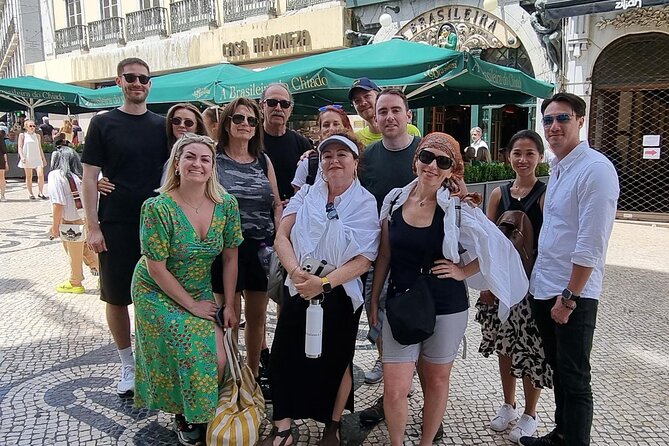
One of the tour’s strongest sections is the stretch around Rossio Square (Praca Dom Pedro IV). The guide points out that Rossio Square is the oldest square in Lisbon, dating back to the XIII century. That kind of timeline can feel abstract until you stand in the space. The city’s age becomes physical.
You’ll also hear about “Portuguese Stones,” plus the escape of the Portuguese royal family to a foreign country. Those elements give Rossio a dramatic edge. It stops being just a place with cafés and becomes a stage for political survival.
Then the route moves to Igreja de São Domingos. This is one of the most unique churches in the world, at least by the way the guide describes it, and you’ll learn about a saddest episode in Lisbon’s history tied to it. Church stops can go one of two ways: either dry and academic, or story-driven and human. Here, it’s clearly the second.
If you care about atmosphere: this is a good stop to slow down your photos. Churches reward a few extra seconds of looking. Notice the shapes and textures, then let the story anchor what you see.
You can also read our reviews of more guided tours in Lisbon



Ginjinha, Casa do Alentejo, and the Moorish thread
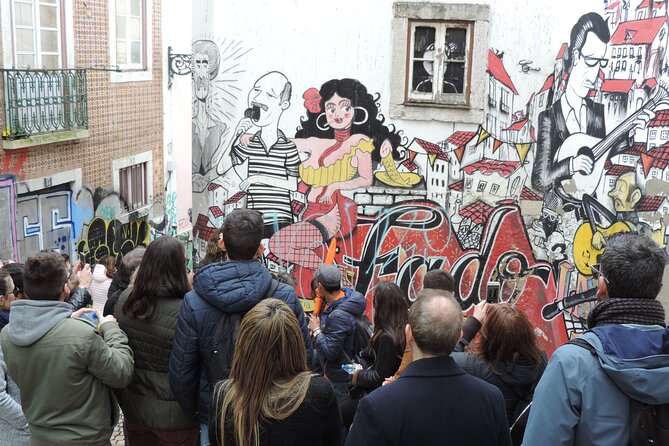
As you continue, you hit a very Lisbon stop: A Ginjinha. Ginjinha is the most famous liquor in Lisbon, and the guide explains why this shop became an institution. This kind of detail is pure gold because it turns a simple product into a city ritual. Even if you don’t plan to buy anything, you’ll understand why the place has staying power.
Then you’ll pass Casa do Alentejo and learn about Moorish influence in Portugal’s history. This is another way the tour broadens beyond the obvious royal-and-empire storyline. You start noticing how many layers of influence feed into buildings, design, and local identity.
Why these stops matter for you: Lisbon isn’t only “big landmark, big view.” It’s also these smaller cultural signals that make neighborhoods feel lived-in.
Avenida da Liberdade and Estação do Rossio: Lisbon in costume
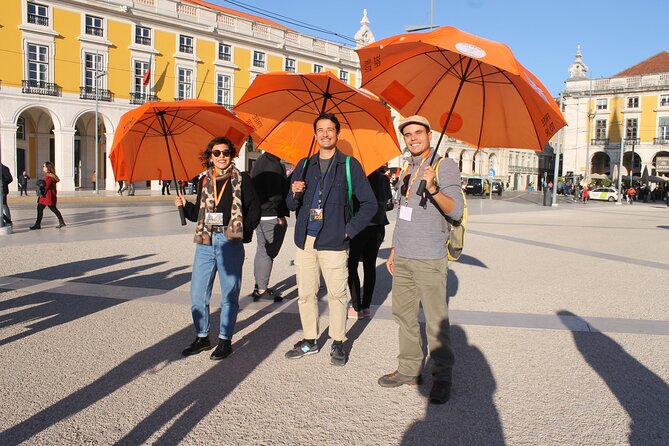
You’ll walk past Avenida da Liberdade, which the guide frames as Lisbon’s Champs-Élysées. This is where Lisbon looks more formal and modern, and it’s a nice contrast after the older squares and church stories. The guide also covers when it was built, so the avenue lands as a historical decision, not just a shopping street.
Then comes Estação do Rossio. The guide explains the history behind Rossio Station, noting that it was the first central station in Lisbon and describing its magnificent architecture style that’s found in Portugal. Stations are often ignored as “just a transit stop.” Here, you’ll get reasons to look up and notice design choices.
What I like about station stops: they’re a break from the “stand and stare” monuments. You’re walking, you’re moving, but you’re still seeing Lisbon as a functional city, not only a staged one.
Carmo Square and Chiado: unfinished church, dictatorship, and revolution
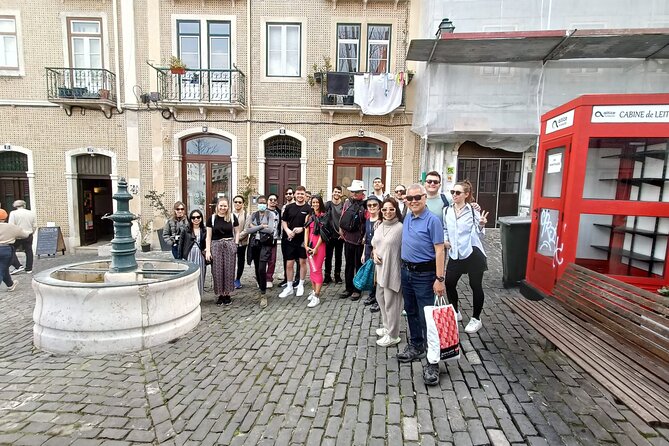
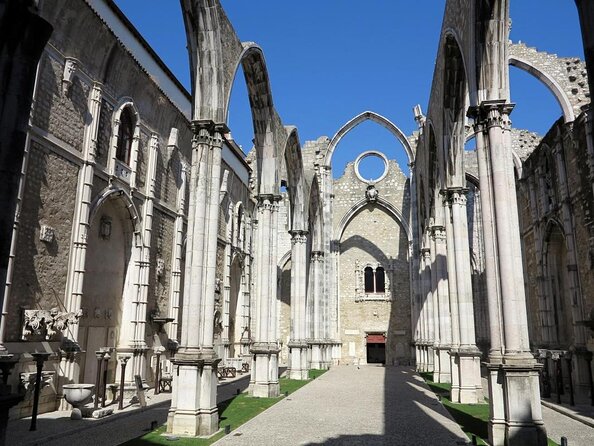
As you reach the Chiado area, the tour swings toward Carmo Square. You’ll see why the church is unfinished, and you’ll also hear about Portugal’s dictatorship and the revolution that put an end to it.
Unfinished churches can feel odd if you don’t know why they’re unfinished. This stop fixes that. Once you know the reason, you stop seeing it as a “mistake” and start seeing it as a historical interruption you can still read today.
Then you move through Praca Luis de Camoes and the Chiado atmosphere around it. You’ll see fancy shops from the area, and the guide flags Café A Brasileira as a meeting point for writers and poets in the 20th century. It’s a great example of how Lisbon history shows up in everyday routines. The city’s intellectual life wasn’t only books and salons; it lived in cafés.
Photo tip: if you like people-watching, Chiado is where your camera will feel more like a storytelling tool than a souvenir maker.
Finishing at Miradouro São Pedro de Alcântara: the view that ties the day together
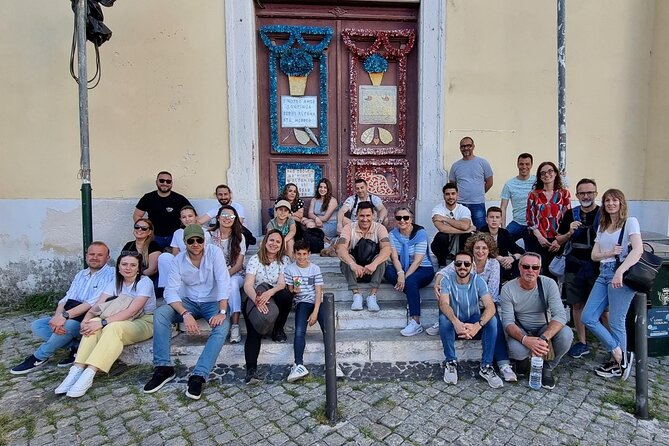
The tour ends at Miradouro São Pedro de Alcântara, a major viewpoint for a city-wide look. Viewpoints can be hit-or-miss on tours, but this one makes sense as a finale. You’ve just walked through squares, streets, and architecture, so the city view helps you “place” everything.
You also end near Praça Luís de Camões, next to a monument. That matters because you finish in an area that’s easy to re-orient from. After the tour, you’ll have a much clearer sense of where to head next for wandering.
Why I think the viewpoint finish works: it gives you closure. You’re not just leaving with photos. You’re leaving with a mental map.
Price, pace, and why this feels like a bargain
At $21.72 per person for about 2 hours 30 minutes, this is one of those tours that hits the sweet spot for budget travelers. You’re not buying access tickets to multiple attractions. You’re buying time with a guide who connects the dots across major Lisbon landmarks.
The tour includes all fees and taxes, and it has a small group limit (20 max). That means you’re less likely to feel like you’re herded through a checklist. The pacing also seems well judged. In feedback, people specifically call out that the tour speed felt right and that the time spent at each stop matched what they needed.
One consideration: because this is walking and Lisbon is full of hills, comfortable shoes are not optional. If you plan to also do other walking days, you’ll appreciate the fact that the tour keeps to a manageable length.
Guides bring the stories to life (Jose, Shiri, Telma, and more)
One reason this tour earns consistent five-star praise is the guide energy. In the feedback you provided, guides with names like José Guia, Shiri, Telma/Thelma, and Ann-Elisa/Anna-Elyse are highlighted for being engaging, friendly, and able to explain Lisbon and Portugal in a way that actually sticks.
You can feel the difference between facts and stories. This tour aims for stories. Earthquake details become explanations. Monarchy becomes personal. Architecture becomes meaningful, not just scenic.
If you’re choosing when to take it, I’d book it early in your trip. That’s when these stories help you interpret everything else you see afterward.
Practical tips so the walk feels easy, not tiring
Here’s how I’d set yourself up for success based on the tour style and what’s typical for this route:
- Wear grippy shoes. Sidewalks can be uneven, and Lisbon’s hills add up.
- Bring water and something light to snack on, especially if you like stopping for photos.
- Use the viewpoint finish. Don’t rush past it. Give yourself a few minutes to really look and orient.
- Plan your next stop nearby. Since the tour ends around Praça Luís de Camões, it’s a good jumping-off point for more wandering.
And if you’re traveling with kids or multigenerational group members, this tour format can work well. It’s short enough to stay fun, and the landmarks are recognizable even when you’re not reading every sign.
Should you book this Lisbon highlights walking tour?
If you want a high-impact introduction to central Lisbon without spending a lot of money, this is an easy yes. The route hits major landmarks you’ll see in guidebooks, but the value comes from the connections: the earthquake’s impact, political changes tied to squares and buildings, and the local culture signals like ginjinha.
Skip it only if you know you want deep, long museum admissions or a totally self-guided day where you never have to match a group pace. Otherwise, this is one of the smartest ways to get bearings fast and start exploring with context.
FAQ
How long is the Lisbon Highlights Guided Walking Tour?
It runs for about 2 hours 30 minutes.
Is the tour offered in English, and do I get a mobile ticket?
Yes. The tour is offered in English, and you’ll receive a mobile ticket.
Where do I meet the guide, and where does the tour end?
You start at Praça do Comércio, 574, 1100-148 Lisboa. The tour ends at Praça Luís de Camões, Largo Luís de Camões, 1200-243 Lisboa.
How large is the group?
The tour has a maximum of 20 travelers.
Are service animals allowed?
Yes, service animals are allowed.
What happens if the weather is bad or I need to cancel?
The tour requires good weather. If it’s canceled due to poor weather, you’ll be offered a different date or a full refund. Cancellation is free if you cancel at least 24 hours in advance for a full refund.