REVIEW · LISBON
Lisbon – Small Group Walking Tour
Book on Viator →Operated by My Lisbon Tours · Bookable on Viator
Lisbon rewards feet and good stories. This 3-hour, max-8-person walk threads together Baroque art, old-town streets, and big-photo stops so you leave with a real sense of the city’s shape. I especially like how the route starts with a high-quality church visit at Igreja de São Roque and then keeps building meaning at each neighborhood turn.
The second thing I like a lot is the pacing. Guides such as Rui Fernandez, Andre, Andriy, and Alex are repeatedly praised for keeping the group moving without rushing, and for answering questions clearly. One consideration: this is a walking tour with moderate fitness needs, and it’s scheduled for good weather, so pack for real conditions.
In This Review
- Key highlights at a glance
- A 3-hour walking tour that helps you read Lisbon fast
- Where you meet, and what that means for your day
- Igreja de São Roque: Baroque church art with a story
- Bairro Alto, Bica, and Cais do Sodré: the old Lisbon mood
- Trindade: one quick stop with surprising connections
- Largo do Carmo: Gothic ruins and the 1755 earthquake
- Santa Justa Elevator: the view is the payoff
- Chiado: traditional stores and everyday Lisbon
- The world’s oldest bookstore stop: a quick culture hit
- A Neo-Manueline train station: Lisbon’s design details
- Largo de São Domingos and Igreja de São Domingos: memory and place
- Lisbon’s central squares and pedestrian streets: walk it like a local
- Praça do Comércio (Terreiro do Paço): Portugal’s political center in one place
- Praça Dom Pedro IV: theater, opera, and local businesses
- Price and value: why $39.78 can work
- The walking reality: what to expect on your legs
- Who should book this tour
- Should you book this Lisbon Small Group Walking Tour?
- FAQ
- How long is the Lisbon Small Group Walking Tour?
- What is the group size, and is it in English?
- Where does the tour start and end?
- What’s included in the price?
- Is food included?
- Are admission tickets included for the stops?
- Do I need moderate physical fitness?
- What happens if weather is bad?
- Can children join?
Key highlights at a glance
- Small group size (max 8) for calmer questions and a smoother walk
- Igreja de São Roque for a focused look at Baroque church art
- Iconic viewpoints including a Santa Justa Elevator stop with city and Tagus views
- Neighborhood variety from Bairro Alto/Bica/Cais do Sodré to Chiado and Baixa
- Cultural details you can’t easily spot alone like links between worship, beer, and Freemasonry
- Ends at Lisbon’s big squares: Praça do Comércio and Praça Dom Pedro IV
A 3-hour walking tour that helps you read Lisbon fast
This Lisbon tour is built for people who want more than a quick highlight reel. In about three hours, you cover a compact slice of the city center, but the stops are chosen to explain Lisbon’s layers: faith, art, neighborhoods, and the major civic spaces that shape modern life.
I like how the tour doesn’t just point at buildings. It gives you the why behind them—so when you walk those streets later on your own, you’re not staring at random façades. You’re seeing patterns: where power moved, where communities clustered, and how events like the 1755 earthquake still echo in the city layout.
You can also read our reviews of more walking tours in Lisbon



Where you meet, and what that means for your day
You meet at Church of Saint Roch (Largo Trindade Coelho) and you end at Praça do Comércio. That’s a smart setup. Starting near a church means the first moments feel focused and easy. Ending at Terreiro do Paço keeps you near Lisbon’s central open space, so you can branch out afterward for lunch, a river walk, or more wandering through Baixa Pombalina.
It’s also offered in English, and the tour uses a mobile ticket. That matters for day-of convenience, especially if you’re juggling multiple reservations in a new city.
Igreja de São Roque: Baroque church art with a story
The tour kicks off at Igreja de São Roque (Saint Roque Mission). This is one of the finest churches in Lisbon, and the focus here is the artwork—especially its Baroque character. Even if you don’t call yourself a church-and-art person, this stop works because it’s short and guided. You get context on what you’re looking at, instead of trying to decode it on your own.
A practical plus: the stop is listed with admission ticket free, so you can keep your time and budget straightforward on the first part of the day.
Bairro Alto, Bica, and Cais do Sodré: the old Lisbon mood
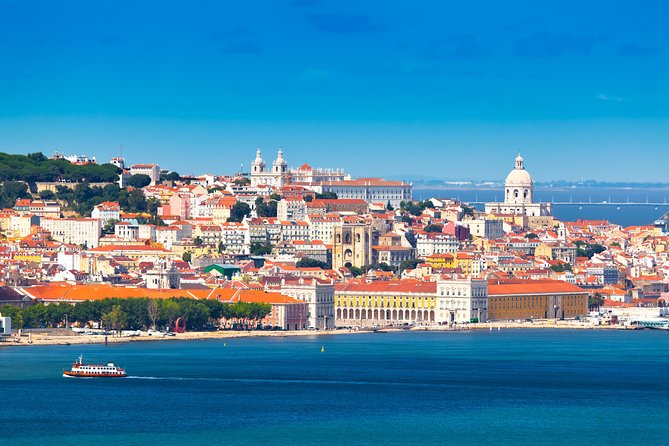
Next comes the older, more eccentric side of Lisbon. You walk through Bairro Alto, Bica, and Cais do Sodré with your guide, and the emphasis is on navigating streets that feel less like a grid and more like a lived-in patchwork.
This portion is where the tour starts to feel like Lisbon you can actually use later. Bairro Alto and Bica are the kind of areas where small turns matter. You’ll learn how the neighborhoods connect, so when you return for nightlife or viewpoints, you’ll know what side of the hill you’re standing on and why the streets feel the way they do.
Trindade: one quick stop with surprising connections
Trindade is a very short stop—just minutes—but it’s designed to spark curiosity. You’ll learn about a peculiar restaurant in Lisbon and how it connects catholic worship, beer, and Freemasonry.
That blend is exactly why this tour feels different from the usual church-and-square routine. It nudges you to see Lisbon as a place where ideas, institutions, and everyday life have been intertwined for a long time. You don’t have to love the topic—your guide makes the connections make sense while you keep walking.



Largo do Carmo: Gothic ruins and the 1755 earthquake
At Largo do Carmo, you get an idyllic square setting with a serious historical reminder. The Gothic ruins of the Carmelite Convent are tied to the earthquake of 1755, and the stop is quick but memorable.
This is a good pause point. Squares like this help you reset your eyes and legs, and ruins are one of the easiest ways to understand how Lisbon survived and rebuilt. If you’re the type who likes to know why a place looks like it does, this stop delivers.
Santa Justa Elevator: the view is the payoff
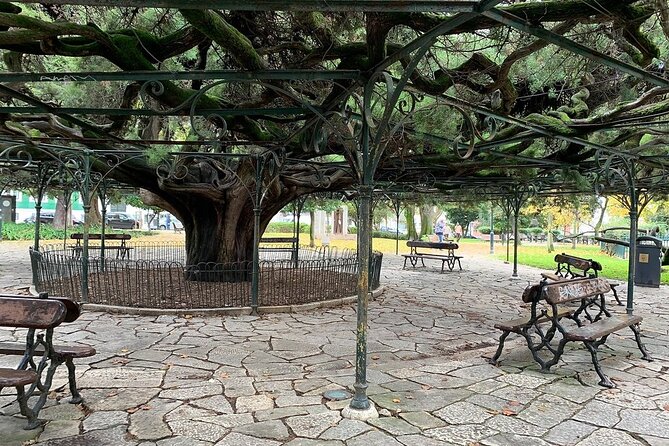
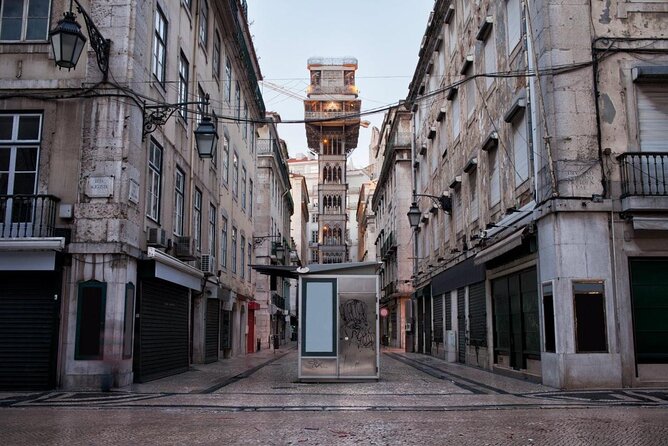
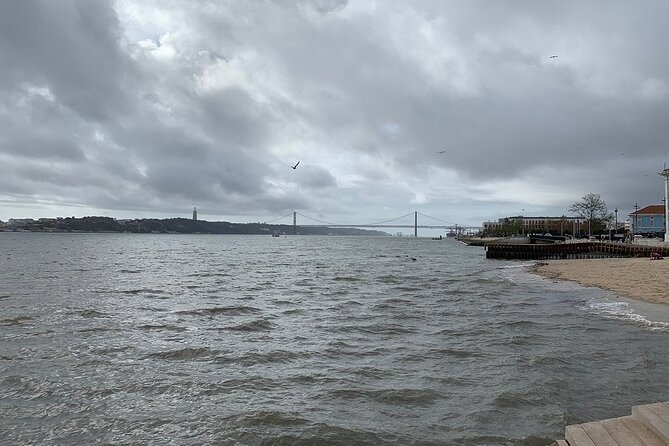
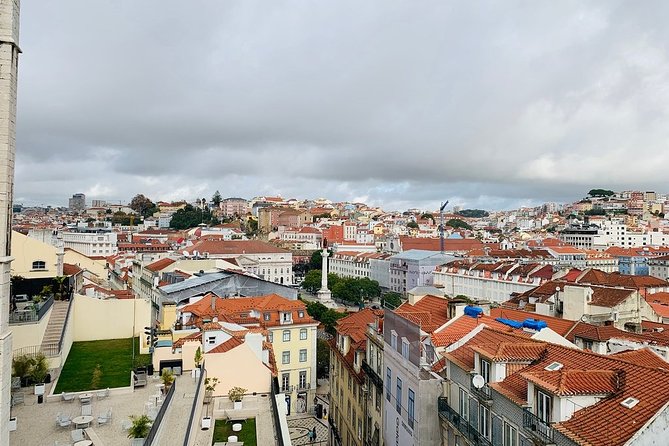
Then you reach Santa Justa Elevator for a classic Lisbon photo moment: a birds-eye view over the city and the River Tagus.
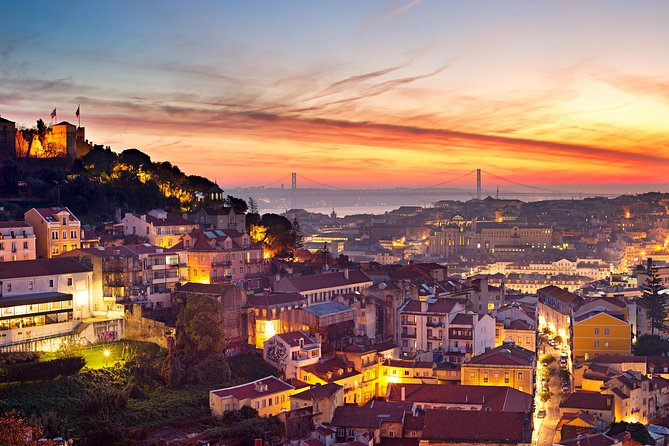
Even if you’ve seen the elevator in pictures, seeing the surrounding streets from above makes everything click. You can literally spot the city’s structure—ridges, neighborhoods, and how water frames the center. It’s also a relief stop: you get a concentrated “wow” without needing all-day museum time.
Chiado: traditional stores and everyday Lisbon
Chiado is the next tonal shift. Here, the tour focuses on the largest concentration of traditional stores and businesses. That’s a helpful change of pace after churches and viewpoints.
I like this part because it anchors the tour in day-to-day Lisbon. You’re not just visiting monuments; you’re walking through a commercial neighborhood that still supports locals. If you want to keep your Lisbon shopping purposeful, your guide can point out what’s worth a look.
The world’s oldest bookstore stop: a quick culture hit
The tour includes a visit to the world’s oldest bookstore. This is short, but it’s a memorable bridge between art/history and modern city life. It’s also a chance to slow down just enough to browse or pick up a small keepsake.
If you’re traveling with someone who likes reading, writing, or bookshop vibes, this stop is often the one they talk about later—because it’s specific, not generic.
A Neo-Manueline train station: Lisbon’s design details
Right after that, you’ll see a late 19th-century train station at the heart of the city center, known for its Neo-Manueline architecture. The tour won’t turn this into a long architecture lecture, but you’ll learn how to recognize the style and why it matters in Lisbon’s visual identity.
This is the kind of stop that rewards paying attention. Once you know what to look for, you’ll spot similar design cues elsewhere on your trip, even when you’re not with the guide.
Largo de São Domingos and Igreja de São Domingos: memory and place
The tour then moves into Largo de São Domingos, where you learn about the Jewish massacre of 1506 and the memorial honoring victims of religious persecution. This is one of the more reflective moments on the walk, and it’s short by design—just enough time to understand the site’s meaning without dragging it out.
Right afterward, you visit Igreja de São Domingos to see one of Lisbon’s unique places of worship and its interior. Together, these stops give you a more complete picture of Lisbon’s religious and cultural history—beyond the big Baroque highlight earlier.
Lisbon’s central squares and pedestrian streets: walk it like a local
As the tour continues, you’ll admire another historical city square and then stroll along one of the main pedestrian streets downtown, flanked by Santa Justa Elevator, coffee shops, and historical businesses.
This segment matters because it shows you how the city actually flows on foot. Lisbon is full of viewpoints, but daily life is about movement through streets like these. By the end, you’re not just seeing sights—you’re learning how to get from one to the next without feeling lost.
Praça do Comércio (Terreiro do Paço): Portugal’s political center in one place
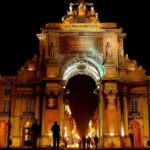
The walk ends at Praça do Comércio, also known as Terreiro do Paço. This is Lisbon’s great open square by the water, and your guide connects it to Portuguese historical figures such as the Marquis of Pombal and the regicide of 1908.
This stop is valuable because it gives you context for a place that can otherwise feel like a pretty waterfront backdrop. When you understand the political events tied to it, you read the space differently—like it’s not just scenery, it’s a stage.
Praça Dom Pedro IV: theater, opera, and local businesses
From there, you visit Praça Dom Pedro IV, one of the quintessential squares in the Baixa Pombalina district. You’ll see key attractions nearby, including the Queen Mary National Theater and Opera house, plus Tabacaria Mónaco and other local businesses.
This final square stop helps you wrap the tour into a practical plan for the rest of your Lisbon day. It’s central, and it’s surrounded by places you can actually step into—cafés, shops, and more streets worth walking.
Price and value: why $39.78 can work
At about $39.78 per person for roughly three hours, the value comes from three things:
First, the group size is small (maximum 8), which often leads to better conversation and less waiting around. Second, the tour includes a local guide and tour escort/host, plus taxes and handling charges. That’s not just paperwork; it usually means a smoother experience on the ground. Third, many stops are listed with admission ticket free, which reduces the temptation to spend extra just to keep going.
One note to keep your expectations clean: food and drinks are not included. That said, the tour can include time to grab a coffee and a pastel de nata if your timing allows, and guides often build in natural breaks rather than racing you to every corner.
The walking reality: what to expect on your legs
This is a walking tour with a moderate physical fitness level. The good news is that many people describe the route as mostly downhill and well paced, with guides making sure everyone can hear clearly and stay comfortable.
The caution is simple: you’re still on uneven streets and you’ll be walking for about three hours. Add rain and slippery cobblestones, and the “easy” parts of Lisbon can feel harder. Bring grippy shoes.
Also, the tour requires good weather. If conditions are poor, you’ll be offered a different date or a full refund. That’s a major plus for peace of mind.
Who should book this tour
Book it if you want a structured first orientation to Lisbon. It’s ideal for:
- First-time visitors who want the city center in a usable, logical order
- People who love photo moments but also want the story behind them
- Travelers who like asking questions and don’t want to be herded along
- Anyone who appreciates a mix of churches, neighborhoods, and major squares
Skip it if you’re looking for a purely museum-heavy day or if you don’t want any walking at all. This is a walking tour, not a coach ride.
Should you book this Lisbon Small Group Walking Tour?
Yes, if you’re using Lisbon as a serious trip and not just a quick stop. The strongest reason to book is the way the tour connects places you’d otherwise treat separately—church art, quirky neighborhood street life, symbolic squares, and a finish near the Tagus.
The guides—often named Rui Fernandez, Andre, Andriy, or Alex—are repeatedly associated with steady pacing and patient answers, and that makes a big difference on a short three-hour experience. I’d book this as your first or second day in town so you can walk Lisbon afterward with much more confidence.
FAQ
How long is the Lisbon Small Group Walking Tour?
The tour lasts about 3 hours.
What is the group size, and is it in English?
The tour has a maximum of 8 travelers, and it’s offered in English.
Where does the tour start and end?
It starts at Church of Saint Roch (Largo Trindade Coelho, 1200-470 Lisboa) and ends at Praça do Comércio (1100-148 Lisboa).
What’s included in the price?
You get a local guide and a tour escort/host, plus all taxes, fees, and handling charges and local taxes.
Is food included?
No. Food and drinks are not included.
Are admission tickets included for the stops?
The itinerary lists admission ticket free for the listed stops.
Do I need moderate physical fitness?
Yes, the tour calls for a moderate physical fitness level.
What happens if weather is bad?
The experience requires good weather. If it’s canceled due to poor weather, you’ll be offered a different date or a full refund.
Can children join?
Children must be accompanied by an adult.