REVIEW · LISBON
Lisbon 3-Hour Street Art Tour
Book on GetYourGuide →Operated by Discover Lisbon · Bookable on GetYourGuide
Street art in Lisbon has a second heartbeat. This 3-hour guided walk turns walls into a guided story, with you learning how different artists work and why their messages land in real neighborhoods. I love the way the guide ties each piece to the streets around it, and I love how you get both well-known and lesser-seen styles. The one catch: Lisbon is hilly, with stairs, and the tour keeps a pretty active tempo—so bring comfortable shoes and expect a real walk.
Starting in Martim Moniz near Hotel Mundial, you’ll head through Mouraria and Graça to spot murals, posters, stencils, and renovation-era projects. The route ends at a mural by Vhils, so you finish with a name you’ll hear again and again in the street art world. It’s also priced as solid value for what you get: local expert guidance plus art and historical references, with no food needed to plan around.
In This Review
- Key points before you go
- Meeting at Martim Moniz: finding the team and getting oriented fast
- Mouraria and Graça: why these neighborhoods make the art make sense
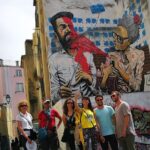
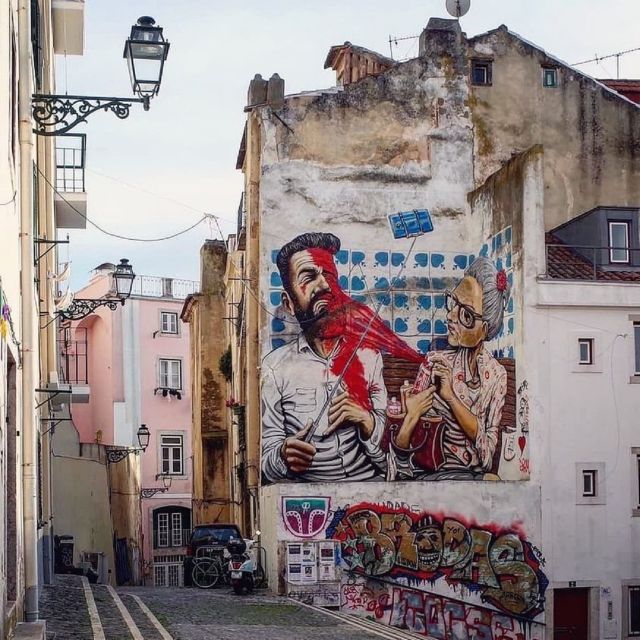
- What you’ll actually see: tags, posters, stencils, and murals
- The story behind the art: artists, techniques, and messages you can explain
- The finale at Vhils: finishing with a name you’ll recognize later
- Walking tempo, hills, and what to bring (so you stay comfortable)
- Price and value: is $33 worth a street art guide?
- Who should book this tour?
- Should you book Lisbon’s 3-Hour Street Art Tour?
- FAQ
- FAQ
- Where does the tour meet in Lisbon?
- How long is the street art tour?
- What language is the tour guide?
- What should I bring?
- Is food and drinks included in the price?
- Is the tour suitable with luggage, strollers, or wheelchairs?
- Can I cancel or pay later?
Key points before you go
- Start location is easy to spot once you know the landmarks: Martim Moniz square, by the soldierheads/bullets/helmets monument near Hotel Mundial.
- Mouraria and Graça give you real neighborhood variety, not one pre-picked wall.
- You’ll look for tags, posters, and stencils as well as bigger murals, so the art feels like a system, not random graffiti.
- The guide’s job is storytelling: you’ll hear the why behind the work—often social or political.
- You’ll see how art connects to old neighborhood renovation projects and shifting community spaces.
- The walk finishes at a Vhils mural, giving you a strong visual payoff to carry into your next day.
Meeting at Martim Moniz: finding the team and getting oriented fast
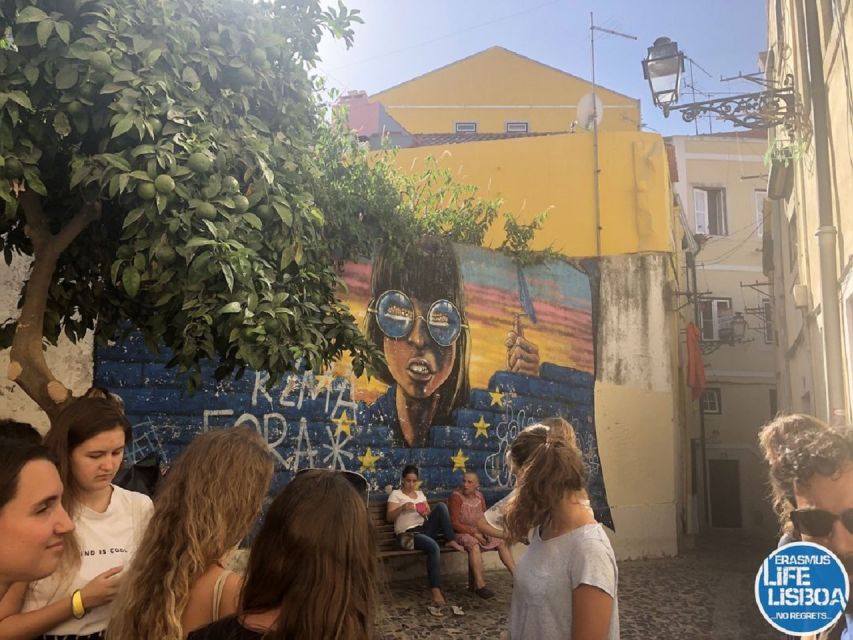
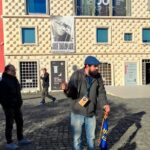
The tour meets in Martim Moniz square, right by the monument/sculpture with soldierheads, bullets, and helmets. It’s also near the green metro line, and it’s just opposite Hotel Mundial—so you’ve got multiple ways to confirm you’re in the right place. The team holds a board that clearly reads Lisbon Street art tour, which helps if you’re arriving from the metro and the square feels like a swirl of people and traffic.
This matters more than you’d think. Lisbon is a maze of hills and short stair connections. A clear start point means you can relax and focus on the street art instead of wandering until your energy drops.
A small practical note: you’re meeting in a busy public square, and the tour is a walking experience. Come with your plan ready—water bottle, phone charged, and shoes that can handle uneven pavement and steps. If you’re sensitive to heat, aim for a time of day that suits you, since you’ll be outside for the full 3 hours.
A few more Lisbon tours and experiences worth a look



Mouraria and Graça: why these neighborhoods make the art make sense
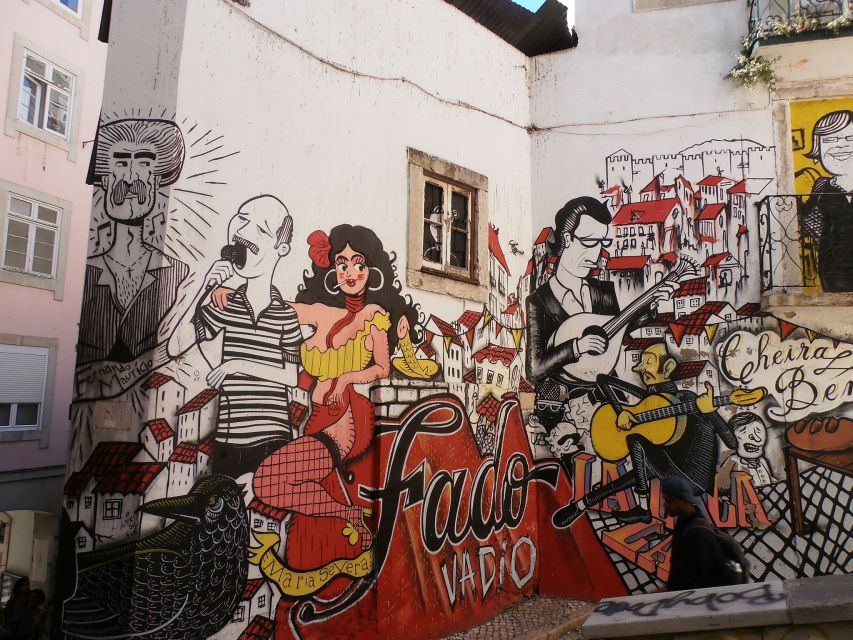
This route is built around Mouraria and Graça, two areas where street art fits the city’s daily rhythm. You’re not just looking at art as decoration. You’re seeing how the city uses walls to speak—about identity, politics, memory, and change.
Mouraria and Graça are especially good for street art because you’ll find a mix of:
- larger mural works and smaller pieces like posters and stencils
- artwork that feels tied to the renovation of older streets and buildings
- pieces with social or political messages
- work that functions like public remembrance, including memorials to important Portuguese personalities (the tour description flags this theme)
That combination is why guided street art tours work here. Without context, it can be easy to see street art as random style choices. With a guide, you start noticing the patterns: which artists use shape and contrast for impact, where stencil work shows up as a repeatable method, and why some murals look built to be read by people moving through the neighborhood every day.
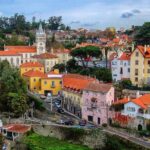
You’ll also be walking uphill and between levels, which is part of why the views can be a bonus on this kind of route. If you get a clear moment, don’t miss it—Graça can offer great sightlines over Lisbon.
What you’ll actually see: tags, posters, stencils, and murals
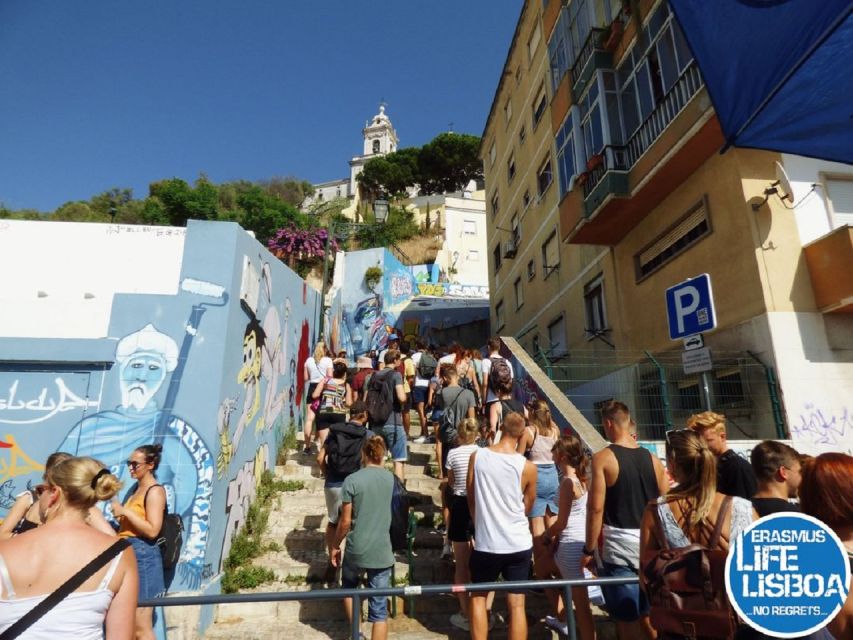
The tour is designed to show you the diversity of Lisbon street art, not just the biggest walls. That means you’ll spend time looking at different formats:
- Tags (quick, signature-style marks)
- Posters and wheat-paste style graphics (often more image-driven and layered)
- Stencils (clean-edged, repeatable, and instantly recognizable as a method)
- larger murals and multi-layer pieces
This variety changes the experience. If you only chase murals, you miss how street art culture spreads. Posters and stencils are often part of the same conversation as big murals, just delivered at different speeds and scales.
The tour also points you toward works by national and international artists, so you’re not stuck in only Portuguese names. Even if you’re new to street art, the guide’s route gives you a practical lesson: different techniques suit different messages, and different neighborhoods attract different types of work depending on walls, foot traffic, and community projects.
As you walk, you’ll learn how to look for details without turning it into a homework assignment. You start asking: What’s the tool? What’s the message? Who is it speaking to—locals, passersby, or future readers of the street?
The story behind the art: artists, techniques, and messages you can explain
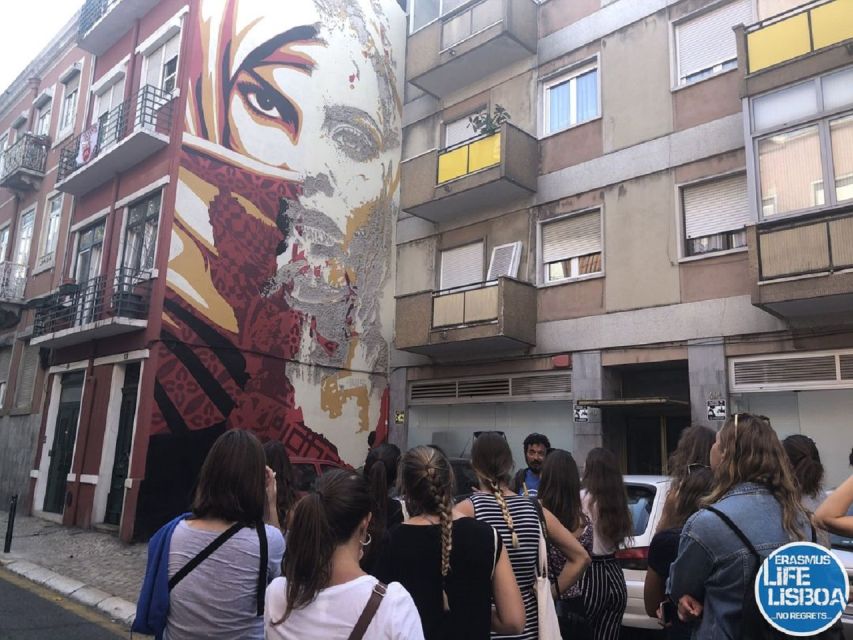
The biggest reason this tour works is the guide’s storytelling. The tour description is clear: you’ll hear the story behind each work of art, including historical references. In practice, that means you’re building a narrative map of Lisbon’s street art scene.
From the information you’re given, expect a strong emphasis on:
- artists leaving their mark across Lisbon
- techniques (how methods like stencils differ from mural painting)
- themes that show up repeatedly, especially social or political messages
- memorial themes and references to Portuguese figures
This is where a walking guide adds value over a phone app or a self-guided stroll. A guide can connect art to place: why a message feels sharper in one neighborhood than another, or how an artist’s technique changes the way you read a wall from street level.
You can also expect the tour to feel structured but not stiff. Multiple guides have been praised for taking their time to build context and keep the group engaged. One review specifically called out the guide’s passion and narrative style, and that matches what this kind of tour needs: street art is visual, but it lands better when you know what to look for.
One more plus: the tour can handle weather. Lisbon rain can be sudden, and you might get some of it during the walk. The tone from past departures has been to keep things fun and moving rather than shutting down.
The finale at Vhils: finishing with a name you’ll recognize later

The tour ends at a mural by Vhils, a national superstar in Portugal’s street art scene. That’s a smart way to end, because it gives you a payoff that feels like closure. You’ve been learning how to read art—technique, theme, neighborhood context—and then you land at a major reference point.
Finishing at a big-name mural also helps you carry the experience forward. After the walk, you’ll be better at spotting Vhils-style elements and understanding what makes his work resonate beyond the single wall.
It also makes for a smooth handoff to the rest of your day. When you leave, you can look at other street art you encounter with more confidence. Instead of asking, What am I seeing?, you’ll be asking, What’s the method and what’s the message?
A few more Lisbon tours and experiences worth a look





Walking tempo, hills, and what to bring (so you stay comfortable)
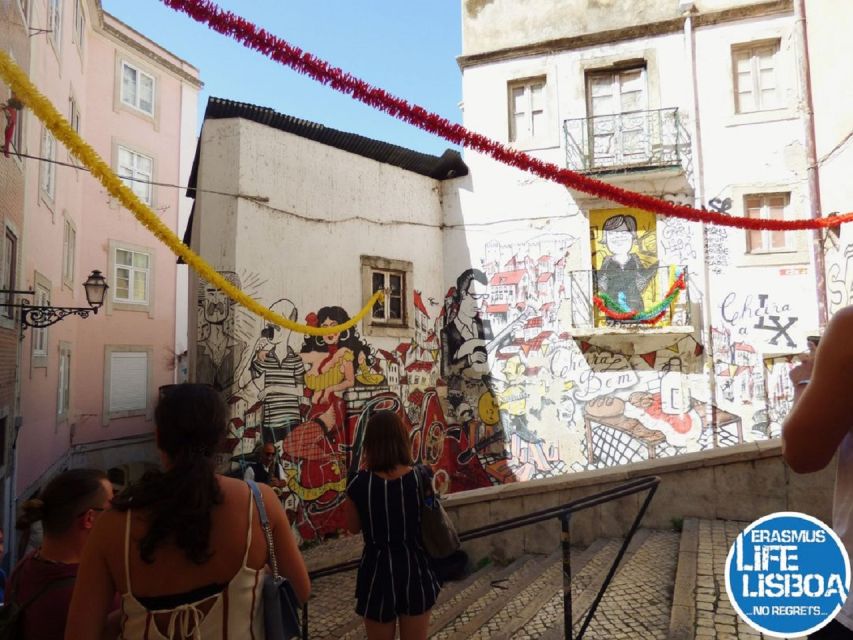
Let’s be real: Lisbon hills are no joke. The tour runs for 3 hours, and the pace is described as pretty active. One past participant even noted that it can feel fast, which actually helps—more time on your feet means more walls, more neighborhoods, more angles.
What to bring:
- Comfortable shoes
- Water
That’s it, and it’s honest. There’s no food included, so you’ll want to think about timing. If you book this early in your day, plan a proper meal after. If you book it later, have a snack beforehand so you’re not hungry while climbing stairs.
What to avoid:
- luggage or large bags (not allowed)
- prams/strollers if possible (Lisbon stairs make them a tough fit)
- non-folding wheelchairs or non-folding strollers (not allowed)
Not suitable for people with mobility impairments, mainly because of the hilly path and stairs.
If you do fine with walking tours, you’ll probably enjoy the tempo. If you’re used to slow, museum-style pacing, consider adjusting your expectations: this isn’t a sit-and-stare experience. It’s a movement-through-the-city experience.
Price and value: is $33 worth a street art guide?

At $33 per person for a 3-hour street art walking tour, you’re paying for three things: time, expertise, and a curated path through specific neighborhoods.
Here’s why it can be good value:
- You get a local expert guide who explains the art and adds historical references
- You cover multiple styles (tags, posters, stencils, murals) rather than one type of artwork
- The route focuses on neighborhoods that are actively shaping their future through renovation-era change—so the art feels tied to Lisbon’s living story
- You finish at a major artist mural (Vhils) instead of ending randomly
What’s not included matters too: food and drinks are not part of the price. That’s normal for a walking tour, but it means you should plan your schedule with hydration and a meal in mind.
My take: if you like street art, photography, and understanding how art connects to neighborhoods, this price usually feels fair for what you get. If you only want a casual stroll with zero context, you might feel you could DIY it. But the whole point here is the explanation—the stories behind each piece.
Who should book this tour?
Book it if:
- you want street art that connects to place, not just style
- you like walking and can handle hills
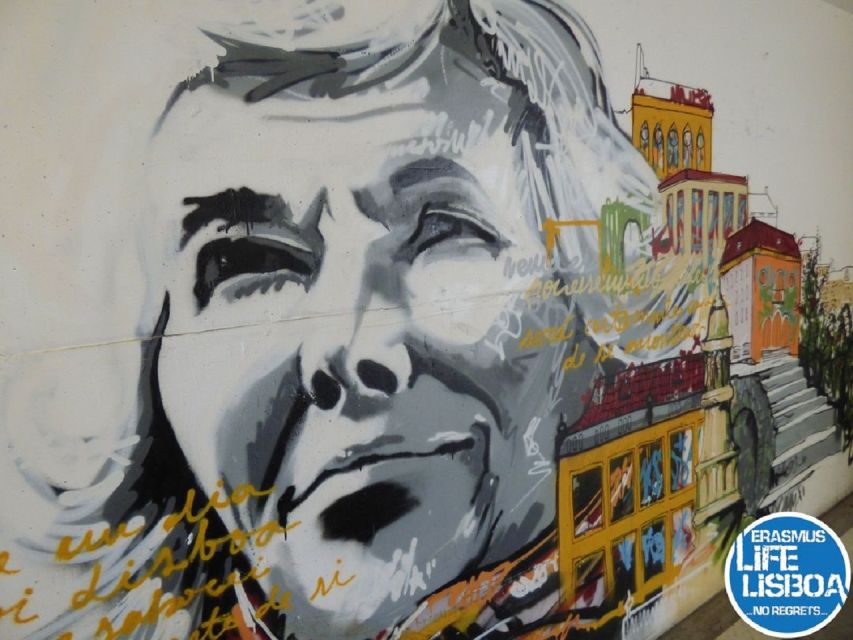
- you’re curious about Portuguese art themes like social/political messages and memorial murals
- you’d like an efficient way to learn what to look for in Lisbon
Skip it or choose something easier if:
- you have mobility limitations that make stairs difficult
- you don’t want an active walking pace
- you need food included during the tour (this one doesn’t)
If you’re the kind of traveler who likes to start your trip with a new lens—this is that kind of tour. You’ll come away with a better sense of Lisbon’s voice and a set of street art reading skills you can use all week.
Should you book Lisbon’s 3-Hour Street Art Tour?
Yes, if you’re visiting Lisbon and you want more than sightseeing. This tour gives you a guided way to read the city’s walls, with a focus on Mouraria and Graça and a strong finishing point at Vhils. The guides leading these walks (including Véro, and other names that have been praised on past departures) tend to bring energy and clear context, and you’re likely to leave with more than photos—you’ll leave with explanations you can actually repeat.
No, if hills and stair-heavy walking are a deal-breaker for you, or if you’d rather spend three hours sitting somewhere instead of moving through neighborhoods. In that case, you’ll be happier with a lighter, more accessible option.
FAQ
FAQ
Where does the tour meet in Lisbon?
The meeting point is Martim Moniz square, near the monument/sculpture with soldierheads/bullets/helmets. It’s close to the green metro line and just opposite Hotel Mundial, where the team holds a board for the Lisbon Street Art Tour.
How long is the street art tour?
The tour lasts 3 hours.
What language is the tour guide?
The live tour guide speaks English.
What should I bring?
Bring comfortable shoes and water.
Is food and drinks included in the price?
No. Food and drinks are not included.
Is the tour suitable with luggage, strollers, or wheelchairs?
Luggage or large bags are not allowed. Non-folding wheelchairs and non-folding strollers are not allowed. Because of hills and stairs, prams/strollers should be avoided if possible. The tour is not suitable for people with mobility impairments.
Can I cancel or pay later?
You can reserve now & pay later. You also get free cancellation up to 24 hours in advance for a full refund.