REVIEW · LISBON
Lisbon: Street Art Tour
Book on GetYourGuide →Operated by City Guru · Bookable on GetYourGuide
Lisbon’s walls talk when you know where to look. This street art tour turns ordinary streets into a map of stories, with neighborhood storytelling that helps you read what you’re seeing. I also like that it’s built to keep you away from large crowds and groups, so the walk stays relaxed and personal.
I love the mix of big, famous murals and the smaller works that most people would step past. With guides such as Erica, Maria/Erika, or Laith/Leith leading different dates, the explanations focus on what the art is saying and how the style connects to the street and the people around it.
One thing to plan for: you’ll be walking for about three hours on uneven terrain, and it’s not set up for wheelchair users. If you’re not great with hills and rough pavement, it may feel like more work than art.
In This Review
- Key highlights you’ll feel fast
- Why Lisbon street art works so well on a walking tour
- Meeting point and what to wear for the 3-hour route
- Bairro Alto for the big walls and modern energy
- Chiado and Baixa: when the art meets the everyday city
- Mouraria: where context helps you read the walls
- Graça Historic District: art plus views at the end
- The guide experience: Erica, Maria/Erika, and Laith/Leith
- Price and value: does $40 make sense?
- Who should book this street art walk
- Book it or skip it? My straight answer
- FAQ
- Where is the meeting point?
- How long is the Lisbon Street Art Tour?
- How much does it cost?
- Is the tour guide available in English?
- Does the tour include hotel pickup or drop-off?
- What should I bring?
- Is the tour wheelchair accessible?
- Is oversize luggage allowed?
- FAQ
- Can I cancel for a full refund?
- Do I pay at booking?
Key highlights you’ll feel fast
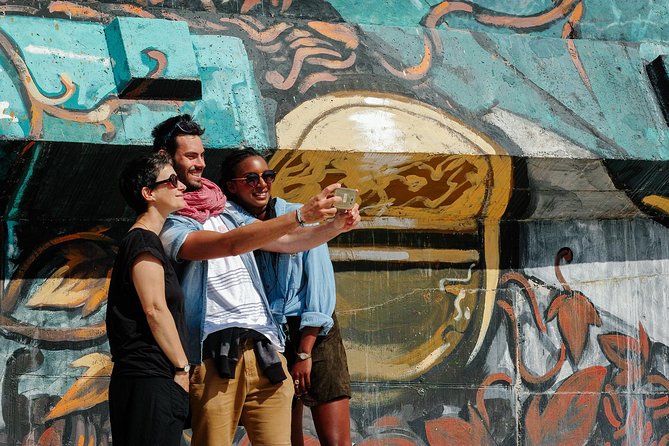
- Street artist-led guidance with real context for the works you see
- Neighborhood-by-neighborhood stops that connect murals to local life
- Famous murals plus tiny details, so you learn how to look
- A small, calmer pace that avoids the big-tour stampede
- Graça viewpoints with art close-up, so the scenery and the message land together
Why Lisbon street art works so well on a walking tour

Lisbon is one of those cities where the buildings don’t just sit there. The walls talk back—through paint, paste-ups, stenciling, and sculptural pieces that feel like they belong to the block. This tour is smart because it doesn’t treat street art like a museum exhibit. You see how the art sits in real neighborhoods, in real sightlines, on real streets that shape how people live.
What you end up with is more than photo ops. You learn the logic of what you’re looking at: where the piece is placed matters, the neighborhood mood matters, and the message changes depending on the community around it. That’s the part I like most. You don’t finish thinking street art is just graffiti. You finish thinking it’s language.
And it helps that you’re walking through multiple districts in a single session. Lisbon’s street art doesn’t look the same everywhere, and the route is designed so you can feel those shifts without overthinking it.
A few more Lisbon tours and experiences worth a look



Meeting point and what to wear for the 3-hour route
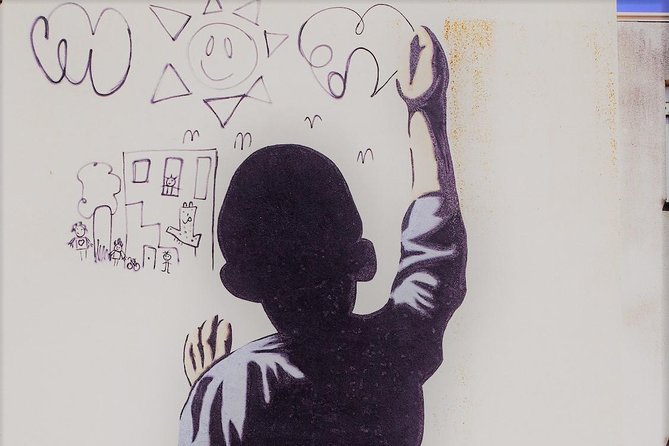
You’ll meet your guide in front of the Interpress building, on R. Luz Soriano 67. From there, you’ll spend about three hours on your feet, moving between neighborhoods rather than staying in one area.
Bring comfortable shoes. This isn’t a flat stroll, and you’ll need to handle unpaved or uneven ground at points. Also note the tour doesn’t suit wheelchair users, so choose another option if mobility is an issue.
A practical tip: Lisbon street art makes you look up a lot, and you’ll also stop to talk and take in details. That means your shoes should handle uneven pavement—and you should have enough comfort to pause without feeling like you need to power-walk.
Bairro Alto for the big walls and modern energy
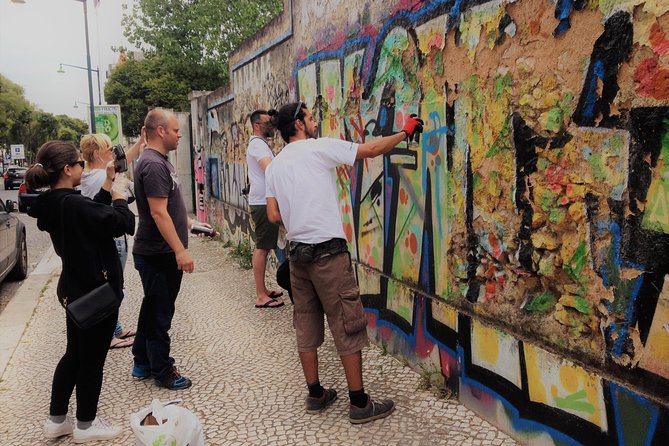
Bairro Alto kicks off the tour (about one hour), and it’s a good place to start because the area sets a modern tone fast. You’ll see murals and street sculptures that feel bold and present—works you can usually spot from the sidewalk, but that you’d still miss if you weren’t told what to notice.
In Bairro Alto, you’re really learning the “how” of street art here. Guides often point out techniques and the choices artists make: contrast, scale, placement, and how the piece interacts with the surrounding architecture. Even when the art feels contemporary, it’s not floating in space—it’s reacting to Lisbon’s streets and to what people are discussing in the city.
What to watch for: look at the edges of pieces, not only the center. Lisbon street art often hides its details in the transition zones—where paint meets stone, where the street level changes, or where a sculpture catches light from an odd angle.
A possible drawback: because Bairro Alto is a busy neighborhood in general, the guide’s job matters here. The goal is to keep your group from turning into another crowd. If you’re sensitive to noise or movement, go slow at the stops and let your guide lead where you look and where you pause.
Chiado and Baixa: when the art meets the everyday city
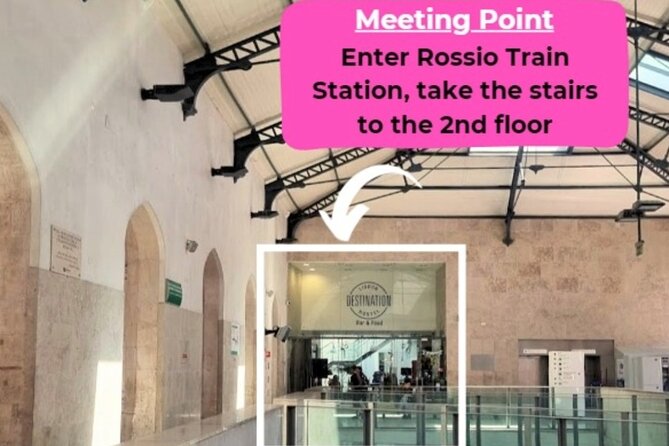
Next come two shorter stops—Chiado (about 20 minutes) and Baixa de Lisboa (about 20 minutes). These sections matter because they show street art in a different context. You’re moving through areas that feel more integrated into day-to-day Lisbon, not just a separate street-art world.
In Chiado and Baixa, I like that you can spot how artists work with more “everyday” views. You’ll often see pieces that seem to comment on city life in a way that’s easy to connect to your surroundings: a street corner becomes a platform, a wall becomes a message board, and suddenly the city’s rhythm gets part of the artwork.
These stops are also a chance to practice what you learned in Bairro Alto. After the first hour, you’ll start noticing placement and pacing—how street art is timed to a walk, how your perspective shifts as you cross intersections, and how a piece can feel completely different depending on where you stop.
Practical idea for you: when you arrive at these areas, choose one piece and study it for longer than you think you need. Your guide will likely connect it to neighborhood context, but you’ll get more if you also do a quick solo scan first.
Mouraria: where context helps you read the walls
Mouraria (about 30 minutes) is one of those Lisbon neighborhoods that gives street art extra texture. This stop is less about collecting the biggest murals and more about understanding how the community setting changes the meaning.
Street art here can feel like it’s part of an ongoing conversation—about identity, local pride, and how neighborhoods evolve. A good guide helps you avoid the common mistake of treating each work as if it’s only about the artist’s personal story. In Mouraria, the art often reads as neighborhood-aware. It reacts to daily life and to the people who share the streets.
What I’d focus on during Mouraria: the tone. Even when two works use similar styles, the emotional temperature can change. Your guide’s storytelling helps you pick that up, especially when they connect a mural’s message to what’s happening around it.
And this is where the tour format shines. You get enough time to understand why a neighborhood matters, without letting the walk drag. Thirty minutes is short enough to stay sharp, long enough to feel like you actually landed somewhere.






Graça Historic District: art plus views at the end
Graça Historic District wraps up the main loop (about one hour). If you want a satisfying finish, this is a smart choice. Graça brings you closer to Lisbon’s higher ground, and when you’re up there, the art feels more present—like it’s watching the city back.
The Graça portion is where you get a payoff: more time, more atmosphere, and plenty of chances to see large works in their setting. Even if you came for the street art, you’ll likely leave appreciating how the district’s character shapes what artists choose to make.
What to do with your camera: don’t just frame the mural. Frame the street around it, too. Lisbon’s hills and sightlines change the story of a piece. The same artwork can feel more intimate from one angle and more political or public from another.
Also, keep your energy for the end. You’ve been walking for hours by then, so your best move is to pick a couple of pieces at the Graça stop and give them your full attention. Your guide’s closing stories can tie them together in a way that makes the earlier stops feel connected.
The guide experience: Erica, Maria/Erika, and Laith/Leith

This tour is led by a live guide, and the strongest praise across recent experiences is how well the guide links street art to Lisbon itself. Names that show up include Erica and Maria/Erika, plus Laith/Leith on some dates. That variety matters, because street art isn’t one-size-fits-all—and neither is storytelling.
What you’re looking for in a good guide here is not just facts. It’s translation: turning a mural into something you can understand with your eyes and your brain in real time. The best guides on this route explain not only who made the work, but why it landed in that neighborhood, and how different artists use different techniques to say different things.
In practice, you can expect:
- Clear explanations that make the art easier to notice on your own afterward
- Answers to questions as you walk, so your curiosity doesn’t get stuck
- A focus on street art as part of Portuguese culture and social life, not just urban decoration
One more plus: this style of guide tends to share useful add-ons for Lisbon. Several experiences note the guides help with practical city recommendations after the walk, which can make the tour feel like a strong first move in your trip rather than a one-and-done activity.
Price and value: does $40 make sense?
$40 per person for a 3-hour walking tour is a fair price if you care about context. You’re not just paying to see murals at a few random corners. You’re paying for someone to connect:
- the neighborhood changes across Lisbon
- the story behind specific works
- the visual choices artists make (size, placement, style, technique)
That matters because street art can be easy to miss when you’re sightseeing on your own. This tour helps you learn how to spot meaning instead of just grabbing photos. And since it’s a walking tour with a live guide, your money goes toward interpretation and pacing—things that are hard to replace with a self-guided route.
If you’re the type who likes to understand what you’re seeing, the value rises fast. If you just want quick photos and don’t care about the story, you might feel it’s more explanation than you need. But for most people who enjoy art, neighborhoods, and the “why” behind what’s on the wall, $40 feels like a solid deal for three hours.
Who should book this street art walk
This tour is a great fit if you:
- like walking and you’re comfortable with hilly, uneven streets
- want street art tied to local culture, not just artist names
- enjoy small surprises, like unexpected pieces you wouldn’t notice without guidance
- want a calmer alternative to huge coach-style groups
It may be a poor fit if you need wheelchair access or if you struggle with long outdoor walking on rough surfaces.
Book it or skip it? My straight answer
I’d book this tour if you want Lisbon to feel like more than postcards. The best outcome here is not just seeing murals—it’s learning how to read the streets, neighborhood by neighborhood, with a guide who turns details into stories.
If you’re short on time and you still want one experience that changes how you look at the city, this is a smart pick. Just be honest about your walking comfort, bring good shoes, and arrive ready to look up.
FAQ
Where is the meeting point?
Meet your guide in front of the Interpress building at R. Luz Soriano 67.
How long is the Lisbon Street Art Tour?
The tour lasts 3 hours.
How much does it cost?
It costs $40 per person.
Is the tour guide available in English?
Yes, the live tour guide speaks English.
Does the tour include hotel pickup or drop-off?
No, hotel pickup and drop-off are not included.
What should I bring?
Wear comfortable shoes.
Is the tour wheelchair accessible?
No, it is not suitable for wheelchair users.
Is oversize luggage allowed?
Oversize luggage is not allowed.
FAQ
Can I cancel for a full refund?
You can cancel up to 24 hours in advance for a full refund.
Do I pay at booking?
You can reserve now & pay later, so you can book your spot and pay nothing today.