REVIEW · LISBON
3-Hour Guided Street Art Walking Tour of Lisbon
Book on Viator →Operated by TheCityGuru · Bookable on Viator
Lisbon’s walls tell better stories than postcards. In this 3-hour guided street art walk, you follow Lisbon’s street art trail through neighborhoods where graffiti, tiles, and murals all mean something—often about daily life, work, and power.
I love the small-group feel (up to 12 people) and how the guide connects what you’re seeing to the wider picture, from designs to social and political messages. I also like that the route is built for looking closely: you move corner to corner and keep finding new styles, from tags to big walls and even tile storytelling.
One possible drawback: this is a hilly walking tour with cobbles and uneven ground. Wear shoes you trust, and if mobility is an issue, skip this one.
In This Review
- The Lisbon Street Art Walk’s Biggest Wins
- Why This 3-Hour Street Art Route Works (Even If You’re Not an Expert)
- Meeting Point and How the Walk Flows Without Getting Lost
- Bairro Alto: Nightlife Traditions Painted in Public
- Elevador da Glória and Calçada da Glória’s Urban Art Gallery Feel
- Baixa de Lisboa: Azulejos and Cobblestones With Symbols and Stories
- Miradouro da Graça: When Street Art Reflects Work and Rights
- Alfama and Chão do Loureiro: A Car Park Turned a Five-Floor Gallery
- Guides Are the Secret Sauce: Erica, Maria, Leigh, Laith, and More
- Photo Tips for This Lisbon Street Art Walk (Without Losing the Plot)
- Comfort, Pace, and the Reality of Lisbon Hills
- Price and Value: Is $42.27 Worth It?
- Should You Book This Street Art Walking Tour?
- FAQ
- How long is the 3-Hour Guided Street Art Walking Tour of Lisbon?
- What is the price per person?
- Is the tour offered in English?
- How many people are in the group?
- Where do I meet the guide?
- Where does the tour end?
- What’s included in the tour price?
- What’s not included?
- Is there admission fee for the stops?
- What should I wear or be prepared for?
- FAQ
- What happens if the weather is poor?
- Can I cancel for a full refund?
- Is service animal access allowed?
- Will I get confirmation after booking?
The Lisbon Street Art Walk’s Biggest Wins
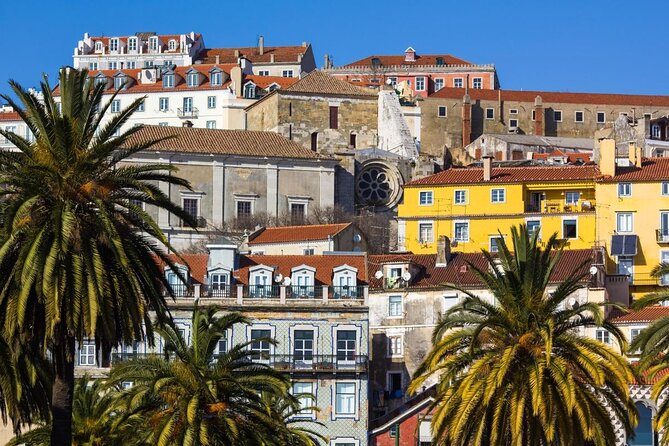
- Small group attention: you’re not stuck listening from the back of a crowd.
- Real context for what you see: murals aren’t treated like random decoration.
- Photo-ready pacing: frequent stops give you time to frame shots without rushing.
- Neighborhood variety: nightlife streets, tile-covered history blocks, and residential districts all show different themes.
- A built-in reset: there’s a rest break halfway through the walk.
- Strong guide track record: guides such as Erica, Maria, Leigh, and Laith are repeatedly praised for bringing stories to the walls.
Why This 3-Hour Street Art Route Works (Even If You’re Not an Expert)
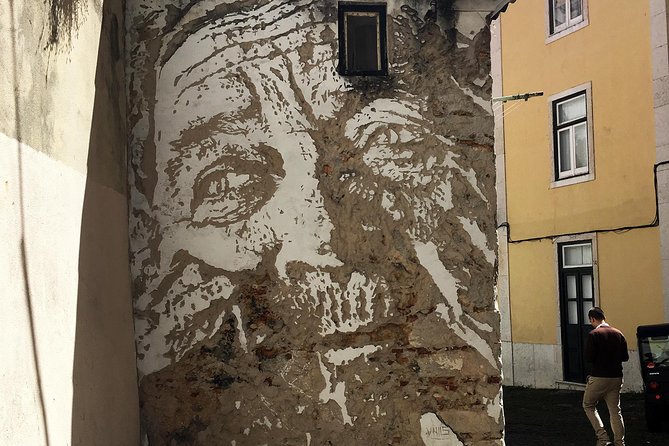
I like street art tours that teach you how to look. This one does that fast. You start with recognizable Lisbon neighborhoods, then learn the patterns behind what’s on the walls—styles, symbols, and why certain artists and messages show up where they do.
The best part is that street art here is not treated as a single thing. You’ll see graffiti and murals, sure, but you’ll also hear how tiled surfaces (azulejos) and building decorations can carry ideas the same way paint does. It turns your brain into a better “spotter” as you walk.
And for the practical side: the whole thing is just about 3 hours. That’s short enough to fit into a busy visit, but long enough that you don’t feel like you’re only seeing a few random corners.
You can also read our reviews of more walking tours in Lisbon



Meeting Point and How the Walk Flows Without Getting Lost
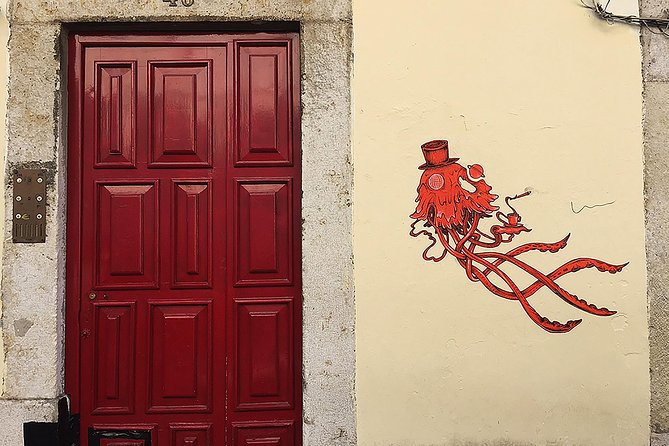
You meet at R. Luz Soriano 67, 1200-246 Lisboa and the tour ends at Miradouro da Graça, Calçada da Graça, 1100-265 Lisboa. Because the end point is different, it helps to plan that your return route after the tour will start from Graça.
The tour also runs as a proper guided walk, not a self-paced scavenger hunt. That matters in Lisbon, where streets can confuse even confident map users. You’ll keep moving in a line that’s designed for both sighting and interpretation.
Duration is listed as about 3 hours, with the route broken into five stops of roughly 30 minutes each. That schedule is why you don’t feel yanked from wall to wall too fast.
Bairro Alto: Nightlife Traditions Painted in Public
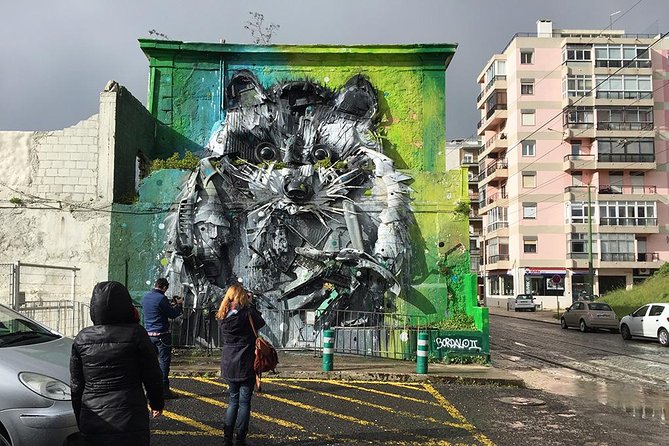
Bairro Alto is where Lisbon’s energy shows up on the street. At this stop, the focus is on how the neighborhood’s nightlife traditions and after-dark life connect to the street art you’ll find here.
What I like about this first stop is that it sets expectations early. You learn that street art isn’t only about politics or art-world trends. It’s also about local identity—what people recognize, what they react to, and how the neighborhood expresses itself out in the open.
What to watch for here
Look for how the art style matches the mood of the streets. You’re not just searching for a pretty mural—you’re training yourself to spot meaning in tone, placement, and subject matter.
Elevador da Glória and Calçada da Glória’s Urban Art Gallery Feel
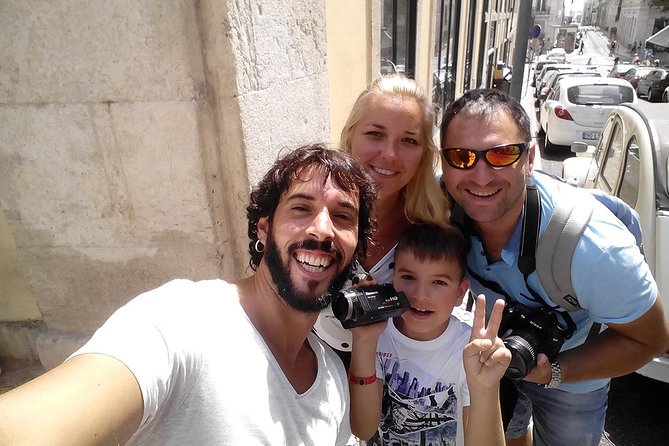
Your next stop is Elevador da Glória and the surrounding Calçada da Glória, described as one of Lisbon’s Urban Art Galleries. This is where you start seeing street art as an international conversation, not only a local one.
At this point, you’ll hear how artists from different places create projects here, and you get a sense of how Lisbon attracts street art culture instead of keeping it hidden. That’s a key shift in how you’ll read what you see: you stop asking only who made it and start asking why it’s there now.
Practical note: this is still part of a walking route, so keep your eyes up and your feet steady. Lisbon’s beauty is real, but so are the sidewalks and slopes.
Baixa de Lisboa: Azulejos and Cobblestones With Symbols and Stories
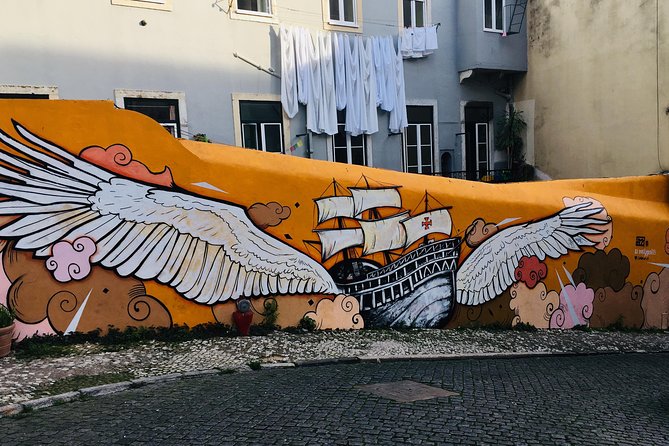
Then you pivot into Baixa de Lisboa, where the street art isn’t only about spray paint. Here, you’ll focus on the stories behind azulejos (Lisbon tilework) and the cobblestone streets themselves.
This stop is smart for two reasons. First, it expands your definition of street art beyond graffiti. Second, it gives you a gentle way into Lisbon’s visual language: symbols, designs, and how patterns keep showing up across the city.
What you’ll likely notice
- How tile designs communicate ideas without needing a written explanation.
- How the city’s older surfaces can carry messages that feel surprisingly current.
If you’re the kind of traveler who likes learning how a city “thinks,” this is the stop that will click.
You can also read our reviews of more guided tours in Lisbon





Miradouro da Graça: When Street Art Reflects Work and Rights
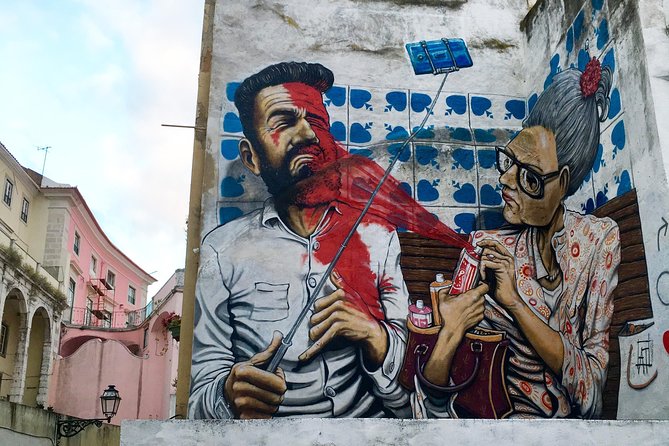
At Miradouro da Graça (Sophia de Mello Breyner Andresen), the tone changes. Bairro da Graça is more residential, and the street art here is tied to a legacy connected to workers’ unions and workers’ rights.
I appreciate that this stop makes a point. Street art in Lisbon isn’t only about aesthetics. It can be a living record of what communities believed, fought for, and needed to say.
Also, you’re at a viewpoint area. So while you’re learning about the messages, you can also take in the city angles that make the whole walk feel worth the effort.
Alfama and Chão do Loureiro: A Car Park Turned a Five-Floor Gallery
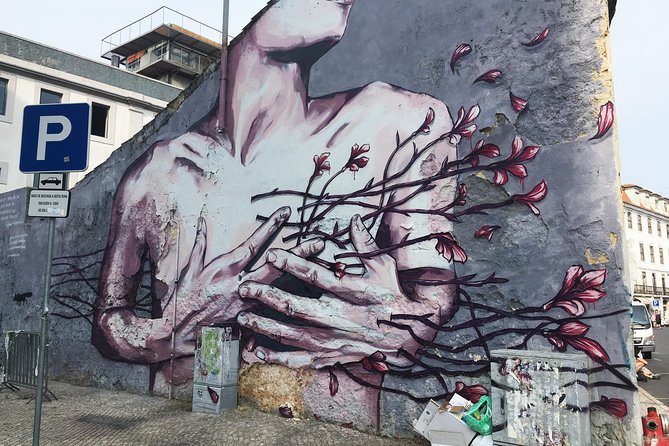
Your final neighborhood stop is Alfama, specifically Chão do Loureiro, where a car-park was transformed into a street-art gallery. The structure is described as a five-floor building showing some of Lisbon’s prominent street artists, especially from the south margin side of the city.
This is the stop that often feels like the “wow” moment, because it turns vertical space into an art experience. Instead of finding one wall, you’re faced with a whole building as a canvas.
Why it’s a great ending
- It feels like closure: you’ve built context, then you see lots of work in a single place.
- It gives you time to slow down. You’re not sprinting for the next corner—you can look, compare styles, and really absorb.
Guides Are the Secret Sauce: Erica, Maria, Leigh, Laith, and More

The guide makes this tour work. The feedback you’re given points to people like Erica and Maria putting street art into social, cultural, and historical context. Other guide names show up repeatedly too—Leigh and Laith—with praise for explaining meanings, methods, and how art connects across Europe and beyond.
Even if street art isn’t your main interest, a strong guide changes the experience from sightseeing into learning. You end up with a better instinct for details: symbolism, why certain messages show up together, and what it means when art appears in specific neighborhoods.
This is also why the small group size matters. You can ask questions, and your guide can respond in a way that keeps your attention on what you’re seeing right now.
Photo Tips for This Lisbon Street Art Walk (Without Losing the Plot)
If you plan to photograph street art, I’d treat this tour like a moving classroom. You’ll spot more if you balance two habits: looking for composition and listening for meaning.
A few practical moves:
- Bring your camera/phone strap and keep it short. Lisbon streets can be crowded near viewpoints.
- When you stop, don’t only shoot the art. Capture the setting too—the doorways, tile patterns, and street angles that explain the artwork’s placement.
- If you’re shooting people’s “faces” in murals or graffiti tags, remember you’re in a public space. Keep it respectful and fast.
The route is built around repeated stops of about 30 minutes, so you get time to take photos without feeling like you’re always asking permission to slow down.
Comfort, Pace, and the Reality of Lisbon Hills
This is a walking tour, so expect a workout. You’re told you must be able to walk on unpaved or uneven terrain, and you should plan for hills. Most people can participate, but if you have mobility issues, this is not recommended.
What helps most is setting expectations before you start. Comfortable shoes aren’t a suggestion here—they’re the difference between enjoying the views and constantly thinking about your feet.
Also note that the tour includes a rest break halfway through. That’s a real plus, not fluff. Use it to hydrate, shake out legs, and reset your camera grip.
Price and Value: Is $42.27 Worth It?
At $42.27 per person for about 3 hours, this isn’t a budget tour—but it is good value for what you get.
Here’s the value math that matters:
- You’re paying for a guide who connects the art to neighborhood life and themes.
- You get a small group experience, meaning less waiting and more direct attention.
- You’re covering multiple Lisbon neighborhoods in one go, without spending your whole day figuring out where to walk next.
- Most stops have free admission, so you’re not paying extra entry fees as the tour moves along.
If your alternative is walking around alone and hoping you stumble into the best walls, you’ll likely get fewer stories. This tour helps you see more on purpose—and understand why it’s worth your time.
Should You Book This Street Art Walking Tour?
I’d book it if you want Lisbon that’s more than viewpoints and pastel facades. This tour is especially good for art fans and photographers who like explanations, symbolism, and stories that connect to real neighborhoods.
You might skip it if:
- you can’t handle hilly, uneven walking,
- you’re looking for a light stroll with minimal interpretation,
- or you’re not interested in how street art ties into social and political context.
If you fall in the first group, you’ll come away with a stronger way to look at the city. You won’t just see walls—you’ll understand what they’re trying to say.
FAQ
How long is the 3-Hour Guided Street Art Walking Tour of Lisbon?
The tour lasts approximately 3 hours.
What is the price per person?
The price is $42.27 per person.
Is the tour offered in English?
Yes, it’s offered in English.
How many people are in the group?
The maximum group size is 12 pax, and the activity has a maximum of 15 travelers.
Where do I meet the guide?
You meet at R. Luz Soriano 67, 1200-246 Lisboa, Portugal.
Where does the tour end?
The tour ends at Miradouro da Graça, Calçada da Graça, 1100-265 Lisboa, Portugal.
What’s included in the tour price?
Included: a local guide, a rest break at the halfway point, and a small group tour.
What’s not included?
Food and drinks are not included, and there is no hotel pick up or drop off.
Is there admission fee for the stops?
At the listed stops, admission ticket fees are free.
What should I wear or be prepared for?
Wear comfortable clothes and shoes. You must be able to walk on unpaved or uneven terrain.
FAQ
What happens if the weather is poor?
This experience requires good weather. If it’s canceled due to poor weather, you’ll be offered a different date or a full refund.
Can I cancel for a full refund?
Yes. You can cancel up to 24 hours in advance for a full refund.
Is service animal access allowed?
Service animals are allowed.
Will I get confirmation after booking?
Confirmation is received at the time of booking.
(End of review.)