REVIEW · LISBON
Hands on Portuguese Cooking Class in Lisbon
Book on Viator →Operated by Compadre Cooking School · Bookable on Viator
Good food starts with your hands. This Lisbon cooking class lets you build a full Portuguese meal step by step, then sit down to eat it together. You’ll work at your own station in a small group setting, with an English-speaking instructor guiding you through real Portuguese technique.
I especially like that you cook a full starter plus two mains, so you leave with more than one recipe. I also like that you get recipes to take home, which makes the class useful long after your trip.
One drawback to plan around: there isn’t a dessert option built into the menu, and the alcohol setup is limited (wine is not served to participants under 18).
In This Review
- Key highlights you’ll feel right away
- Entering Compadre Cooking School and getting to work
- The 3-course rhythm: what happens during the 3 hours
- Your main dish focus: cod, meat, and Portuguese pepper energy
- How the small group format improves everything
- Starter, mains, and the work behind the flavor
- Sitting down together at the end (and why it matters)
- Recipes to take home: your best souvenir
- Price and value in Lisbon terms
- Who this class is best for (and who should think twice)
- Booking tips that make your night smoother
- Should you book this Portuguese cooking class in Lisbon?
- FAQ
- Is the cooking class in English?
- How long is the Hands on Portuguese Cooking Class in Lisbon?
- What’s included in the class meal?
- Where is the meeting point?
- What is the group size limit?
- Is alcohol served, and what about children?
Key highlights you’ll feel right away
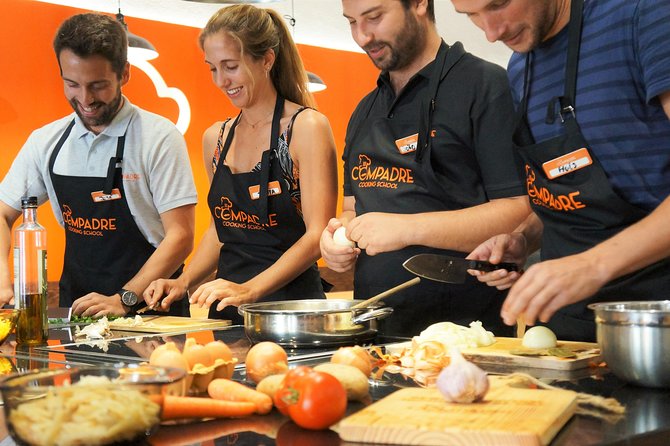
- Your own kitchen station in a clean, well-organized cooking school
- Small groups (max 12) for closer help while you prep each dish
- A full Portuguese meal from starter to two mains, including bacalhau (salted cod)
- Take-home recipes so you can recreate the dishes back home
- English-led instruction plus plenty of cultural context as you cook
Entering Compadre Cooking School and getting to work
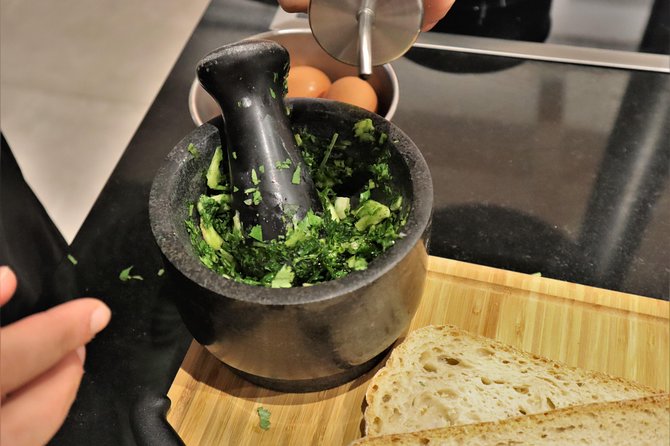
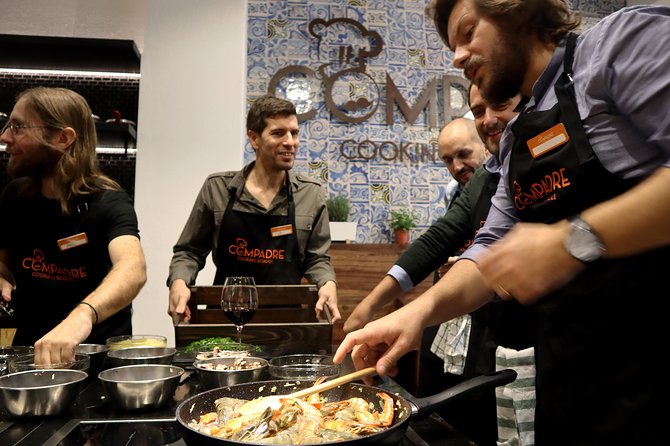
This class is built for people who learn best by doing. You’ll enter a roomy cooking school space and get assigned to your own workspace, not just a corner to watch from. The format matters. When you’re standing at a station with ingredients in front of you, you understand how Portuguese dishes come together: timing, seasoning, texture, and why certain flavors show up again and again.
The meeting point is at Compadre Cooking School, R. Heliodoro Salgado nº14, 1170-176 Lisboa. The location is described as near public transportation, which helps if you’re mixing this class into a busy Lisbon day. It’s also set up so the activity ends back at the same meeting point, which saves you from awkward end-of-class map adventures.
The class is designed for English speakers and uses a mobile ticket. That’s a small thing, but it keeps your day smooth. You show up, you scan, and you start cooking.
You can also read our reviews of more cooking classes in Lisbon



The 3-course rhythm: what happens during the 3 hours
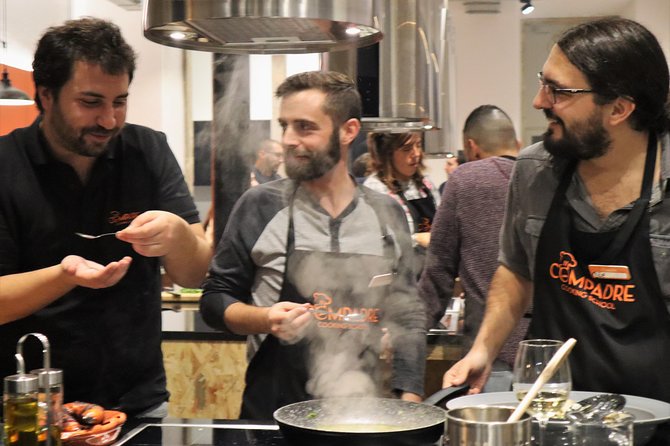
The pace is straightforward: you’ll prep and cook in steps, then eat what you make. The overall duration is about 3 hours, which is long enough to feel productive, but not so long that you get tired of the chopping and stirring.
Here’s the flow you can expect:
- You start with a traditional Portuguese starter.
- Then you move into two main dishes: one commonly a fish course featuring cod and another a traditional meat dish.
- At the end, you sit down and share the meal with the group.
This matters for two reasons. First, it’s not just a cooking demo. You’ll actually handle ingredients and learn processes, like how to manage salt-cured fish and how to build flavor in meat dishes. Second, the “cook, then eat” structure turns the class into an evening event. You’re not rushing out right after cooking; you get the payoff.
Your main dish focus: cod, meat, and Portuguese pepper energy
Portuguese cooking has a signature feel, and a lot of it shows up in the mains. This class centers on a classic pattern: bacalhau (salted cod), plus a meat dish, plus a starter. Even if you’re not a seafood person, bacalhau is hard to ignore in Portugal, and this class gives you a way to taste its role in everyday Portuguese meals.
From what you’ll be taught, expect instruction around the cod dish to include why it’s so important to Portuguese cuisine. You’ll also likely hear plenty about the peppers Portuguese cooks use, including how they contribute to flavor. Several people highlighted learning about spicy pepper choices and how that knowledge helped them order with confidence later in Lisbon restaurants.
Cod can also be a learning moment. Salt-cured fish needs a careful approach so it doesn’t end up too salty or oddly textured. In a hands-on setting with an instructor hovering, you can correct issues early instead of ruining the dish at the last second.
On the meat side, you’ll prepare a traditional meat dish that fits the Portuguese style—comfort food that’s flavorful and practical. Many classes in this school’s orbit include dishes people recognize from Portuguese menus, like peri-peri-style chicken flavors, and hands-on seafood prep can show up as well (including shrimp work such as removing heads and deveining). If you’re squeamish about that kind of prep, it’s worth keeping in mind.
How the small group format improves everything
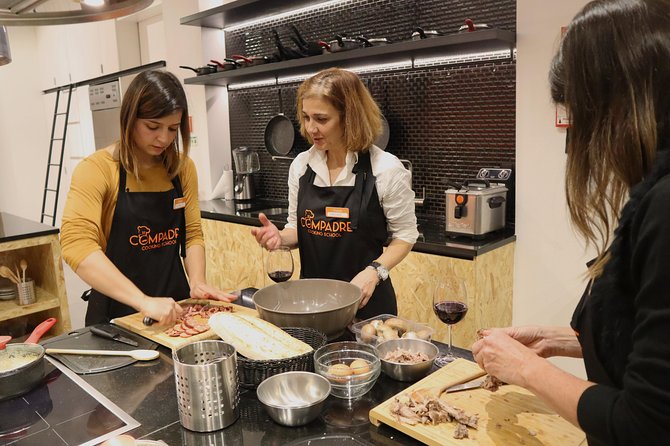
This isn’t a giant group where you fight for attention. The class caps at 12 travelers, and many experiences describe it as intimate enough that it can feel close to a private lesson. That’s a real advantage.
In a small group, you get help that’s immediate. If your sauce is too thin, if your knife work is slow, or if you’re unsure about seasoning, you don’t wait your turn. You ask, you adjust, you move on. That’s how you learn technique you can repeat later.
You also get a social element without chaos. People described the atmosphere as welcome and fun, and the end-of-class shared meal helps everyone feel like they’re part of the same cooking team, not just strangers taking turns at a station.
Instructors you may meet include Anna and Marta (with other names like Ana and Nina showing up in different class experiences). Across these instructors, the consistent theme is clear, step-by-step guidance paired with cultural explanations. Even if you came to cook, you leave with context, which helps you understand why the food tastes the way it does.
Starter, mains, and the work behind the flavor
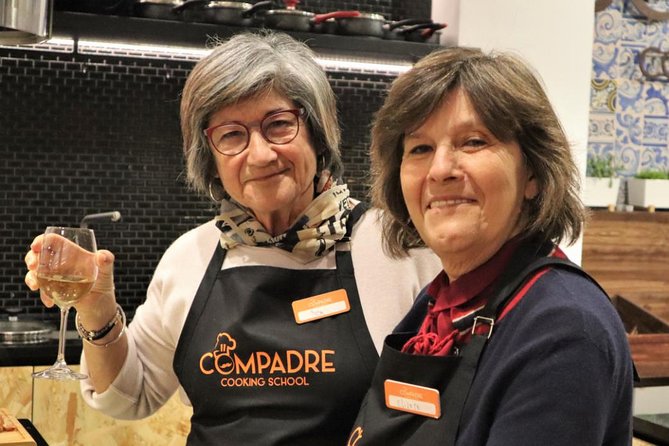
Portuguese food can sound simple on a menu, but it’s built on solid technique. The starter is your warm-up: you learn basic handling, flavor-building, and plating enough to feel confident before the heavier mains.
Then come the two mains. This is where the class earns its keep, because you’re not just tasting recipes—you’re learning the mechanics behind them.
A few examples of what you may experience in the working stations:
- Managing bacalhau so it tastes balanced, not harsh.
- Building flavor in meat dishes with Portuguese-style seasoning and cooking methods.
- Doing real prep work on proteins, including seafood cleanup tasks if that specific class includes them.
That last point matters. One downside mentioned is that at least some versions of the class include hands-on shrimp or prawn prep. For many people it’s no big deal. For some, it’s the only part that feels slightly awkward. If you hate that kind of kitchen work, plan to treat this as a “skills class” rather than a “cozy cooking” session. You’ll still get the knowledge and the finished meal.
A few more Lisbon tours and experiences worth a look





Sitting down together at the end (and why it matters)
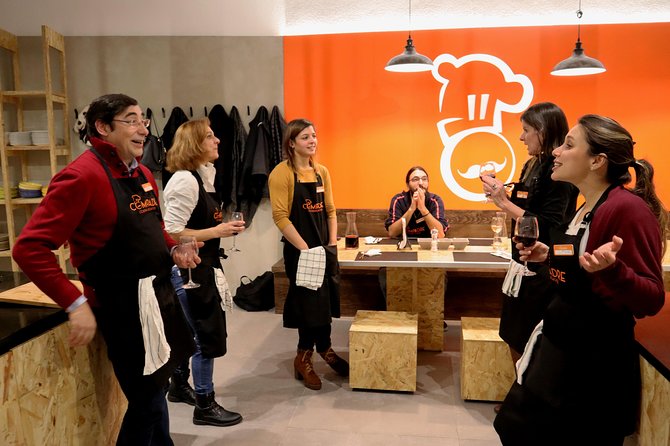
The meal you make isn’t just a reward. It’s part of the teaching. After you cook, you eat the dishes you built, usually alongside the other students. That shared table time turns the class into a real Lisbon night plan.
A key detail: you’ll get to taste what you made and connect the final flavor to the steps you did earlier. If a sauce tastes richer than you expected, you remember what the instructor had you do during prep. If something is milder than you guessed, you understand how Portugal balances spice, salt, and acidity.
Some people also described the social side as a highlight—meeting fellow students from different places, chatting while eating, and comparing what they learned. If you want a structured activity that still feels human, this is a good pick.
Recipes to take home: your best souvenir
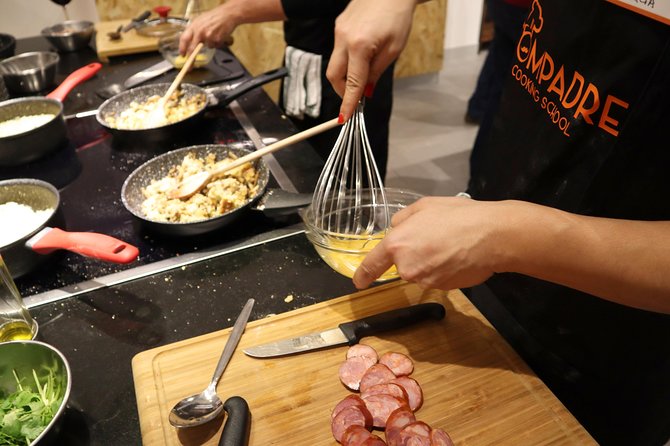
The most practical part of cooking classes is also the part people forget to ask about: do you get anything you can actually use later? Here, you do. You’ll take home the recipes, which means you can recreate what you cooked instead of relying on memory.
That matters because cooking knowledge fades fast when you’re back in your regular grocery store routine. Having the recipe steps helps you:
- recreate the same flavor profile,
- avoid common mistakes (like under-seasoning),
- and cook the dishes at home without reinventing the whole process.
If you enjoy hosting friends, this is also a gift to your future self. You’ll have a Portuguese menu you can pull out whenever you want, not just a one-time travel story.
Price and value in Lisbon terms
At $82.24 per person for roughly 3 hours, you’re paying for two things: instruction and a full meal you cook and eat. That price can feel high until you compare it to what you’d spend doing the same time block another way—dinner out plus a guided activity plus ingredients. Here, you’re basically paying for a guided cooking workshop that ends with lunch/dinner you helped create.
Value also comes from the group size. A max of 12 helps ensure you get more instructor attention than a larger class would. And the class includes multiple courses, so you’re learning more than one dish.
There are two value trade-offs to consider:
- There’s no dessert option included.
- Alcohol service is limited. Water or tea substitutes are used for under-18 participants, and one commonly mentioned detail is that wine is limited rather than unlimited.
If your goal is a hearty “Portugal night” with real skills, this is strong value. If your goal is a full meal that includes dessert and unlimited wine, you might feel a bit underfed in those categories.
Who this class is best for (and who should think twice)
This cooking class is a great fit if you:
- want hands-on learning, not just watching,
- like Portuguese food enough to cook it at home,
- enjoy small-group experiences,
- and appreciate historical or cultural context alongside the cooking.
It’s especially good for first-timers in Lisbon. A cooking class gives you a shortcut into Portuguese flavor—salted cod, pepper notes, classic cooking habits—so restaurant ordering later feels easier.
Think twice if:
- you strongly prefer a dessert-included menu,
- you want unlimited alcohol as part of the experience (wine appears limited),
- or you’re uncomfortable with possible seafood prep tasks like deveining shrimp.
That said, even for people with mixed expectations, the overall structure still works: you learn, you cook, you eat, and you leave with recipes.
Booking tips that make your night smoother
A few practical ideas before you lock it in:
- Book ahead if you can. The class is commonly reserved about 20 days in advance on average, so you don’t want to wait until the last minute.
- Arrive early enough to settle in. You’ll be assigned to a station, and once the cooking starts, the timing gets real.
- If you have food preferences or concerns about seafood or spice, it’s smart to mention it when you arrive so the instructor can guide you through what’s happening in your station.
And since the class ends where it starts, you can plan a calm evening afterward without rushing across town.
Should you book this Portuguese cooking class in Lisbon?
My take: you should book it if you want a practical, skill-based Lisbon experience. It’s one of those activities that pays off beyond the day you do it, because you take home recipes and you learn how Portuguese meals are built.
I’d skip it only if dessert is a must for you, or if you expect a party-style meal with lots of alcohol. Otherwise, the small-group setup, hands-on stations, and the focus on classic Portuguese dishes—especially bacalhau—make it a smart use of an evening in Lisbon.
FAQ
Is the cooking class in English?
Yes. The class is offered in English.
How long is the Hands on Portuguese Cooking Class in Lisbon?
The class lasts about 3 hours (approx.).
What’s included in the class meal?
You’ll learn to prepare a starter and two main dishes, including a fish dish featuring cod and a traditional meat dish. You also eat the meal you cook.
Where is the meeting point?
The class starts at Compadre Cooking School, R. Heliodoro Salgado nº14, 1170-176 Lisboa, Portugal. The activity ends back at the same meeting point.
What is the group size limit?
The class has a maximum of 12 travelers.
Is alcohol served, and what about children?
Alcoholic beverages will not be served to participants under 18 years old; water or tea will be substitutes. Children up to 17 must be accompanied by a participating adult (plus 18 years old).
If you’d like, tell me your travel dates and whether you eat seafood. I can help you decide if this menu style matches what you’re craving in Lisbon.