REVIEW · LISBON
Lisbon Essential Walking Tour: History, Stories and Lifestyle
Book on Viator →Operated by Lisboa Autêntica · Bookable on Viator
Lisbon makes sense on foot. This 3-hour walk connects big-picture stories to the exact streets and sights you’ll keep seeing later. You get a fast, fun way to understand how Lisbon grew, rebuilt, and still lives day to day across its hills.
I especially love the mix of viewpoints and interiors. You’ll get panoramic scenes from the miradouros, then step inside stops like the Igreja de São Roque to see art and tile work up close. I also like the smart pacing: you stop often, and you get a included coffee and cake break that keeps energy up for the walking.
One consideration: this is a hill-and-stairs style route. Expect real walking time (around 4 miles reported by one guest) and bring water and comfy shoes, especially if you’re sensitive to uneven ground. Also, the Santa Justa elevator ticket is not included, so you’ll decide on the spot.
In This Review
- Key things to know before you go
- Why a 3-hour essential walk is a smart first-day move
- Who this fits best
- Meeting points, pace, and what to pack for the hill route
- Small groups change the feel
- Bairro Alto: the 1755 earthquake story starts in the right place
- What to watch for here
- Miradouro São Pedro de Alcântara: quick orientation over the Tagus
- The value of viewpoints on day one
- Igreja de São Roque: Jesuit art inside an austere façade
- Quick practical note
- Carmo Convent and church: Gothic architecture meets 1974
- Why it matters for your trip
- Santa Justa elevator area: choose the viewpoint, not the ticket
- What I’d base your decision on
- Baixa café break and tram 28 to Portas do Sol
- Why the tram ride helps
- Alfama: the oldest streets, fado culture, and saint festival energy
- A tip for Alfama
- Finishing at Lisbon Cathedral: built in 1150, changed by centuries
- How to use this ending
- Guides and small details that make or break the experience
- Should you book this Lisbon Essential Walking Tour?
- FAQ
- How long is the Lisbon Essential Walking Tour?
- How much does the tour cost?
- What’s included in the price?
- What is not included?
- Do I need to pay for the Santa Justa elevator?
- What attractions and stops are on the route?
- Is the tram ride included?
- What language is the tour offered in?
- How big is the group?
- What’s the cancellation policy?
Key things to know before you go
- Small group size (up to 15) keeps it easy to ask questions and hear stories clearly
- Classic tram ride included, plus a café stop that turns the break into part of the experience
- Churches with different “Lisbon eras” including Jesuit art and a Gothic convent tied to 1974
- Major viewpoints from miradouros and the Santa Justa area for easy orientation
- Tour ends at Lisbon Cathedral, a grounded finish that helps you plan the rest of your trip
Why a 3-hour essential walk is a smart first-day move
Lisbon can feel like a puzzle. You look up at tiled façades and wandering lanes, and then you try to connect it all later using only a map and your phone battery. This kind of tour gives you that missing glue fast: neighborhood names turn into places, and historical events turn into things you can point at.
The value is also strong for the time. At $30.25 per person, you’re not just paying for someone to escort you around. You get a professional guide, an included tram trip, and an included coffee-and-cake stop, plus liability and personal accident insurance. For a first day (or a first half day) in town, it’s a practical way to pay for context instead of wandering in circles.
You can also read our reviews of more walking tours in Lisbon



Who this fits best
This works really well if you:
- arrive with limited time and want the highlights without overplanning
- like a story-led route instead of a checklist
- want “where to go next” advice while you’re still fresh in Lisbon
If you’re the type who hates guided walking routes, or you want long museum time with no schedule, you might prefer a more flexible plan.
Meeting points, pace, and what to pack for the hill route
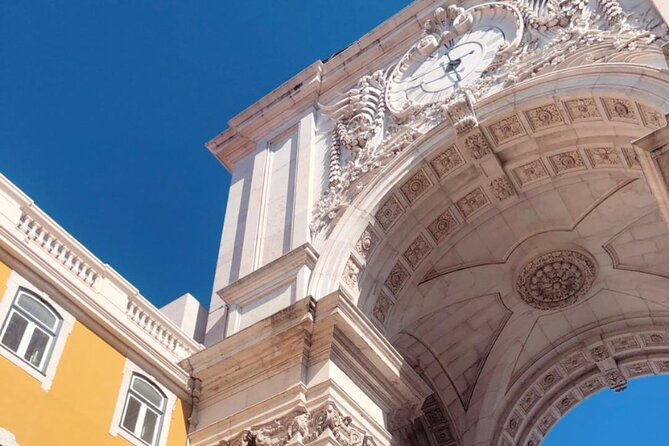
The tour meets and ends in Lisbon, and it’s scheduled for about 3 hours. You’ll be near public transportation, which helps if you need a quick hop before or after. Best tip: build the day around this start, not as an afterthought, because hills add up even when the stops are short.
One thing that kept showing up in guest feedback is the importance of footwear. Comfortable shoes matter here, since you’ll be moving along streets with changes in grade and lots of steps around viewpoints and churches. And yes, bring water. On warm days, Lisbon’s walking routes can feel longer than the clock says.
Small groups change the feel
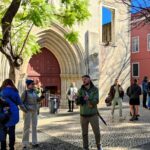
With a maximum of 15 travelers, the tour stays human-sized. That matters in narrow areas like Alfama and around busy landmarks, where a larger group can get stretched out. In a smaller group, you’re more likely to hear the guide’s key points and still have time for photos.
Bairro Alto: the 1755 earthquake story starts in the right place
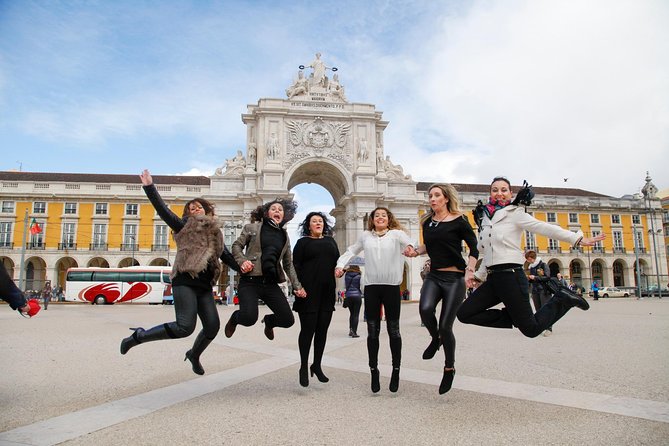
The walk kicks off in Bairro Alto, a hillside area that sits above the older city core. From the start, the guide helps you see the city as something that has evolved through shocks and rebuilds, not just a collection of pretty streets.
A key story you’ll hear early is how the 1755 earthquake changed Lisbon’s population and layout. After that disaster, families moved and the area’s role shifted, leading to renewal and new patterns of settlement. It’s the kind of historical connection that makes later stops click, because you start to understand why Lisbon looks the way it does.
You can also read our reviews of more historical tours in Lisbon






What to watch for here
Bairro Alto is also where you get your first sense of how Lisbon uses elevation. Even if you’re not climbing constantly right away, you’re surrounded by the reality of hills, balconies, and viewpoints. That makes the rest of the route feel less random.
Miradouro São Pedro de Alcântara: quick orientation over the Tagus
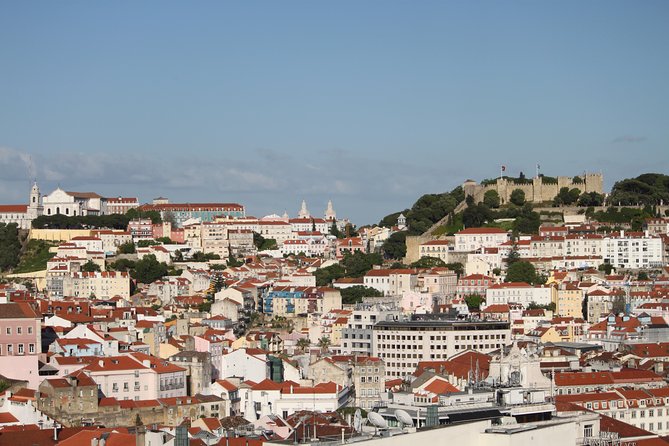
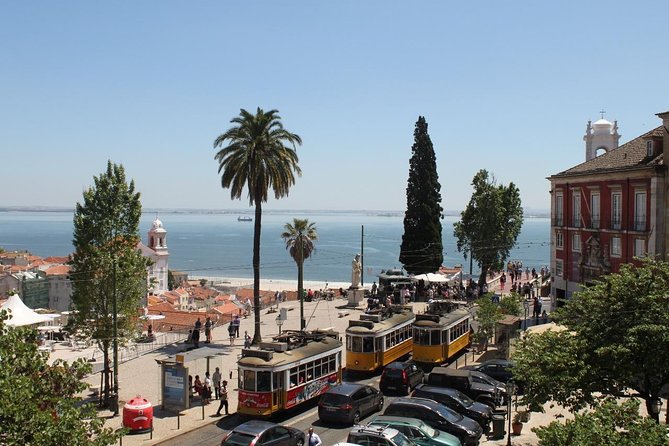
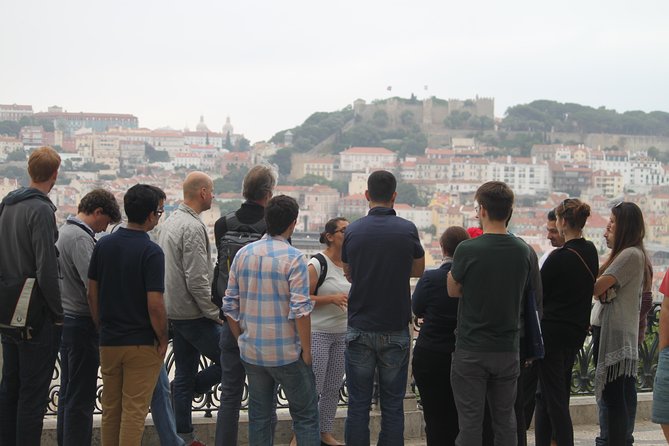
Next comes Miradouro São Pedro de Alcântara, with a stroll through its garden spaces and then a classic “look down, look across” moment. From here, you see the Baixa area and the south bank of the Tagus River, which is a huge help for orientation.
This is one of those stops where photos can tempt you into rushing. Don’t. Take a minute to locate what you’re going to revisit later: river line, lower neighborhoods, and where Lisbon bends around its water. Even a quick mental map helps when you start exploring on your own afterward.
The value of viewpoints on day one
Viewpoints are not just scenic breaks. They’re your “spell-check” for directions. When you know what you’re looking at, you walk with confidence instead of guessing.
Igreja de São Roque: Jesuit art inside an austere façade
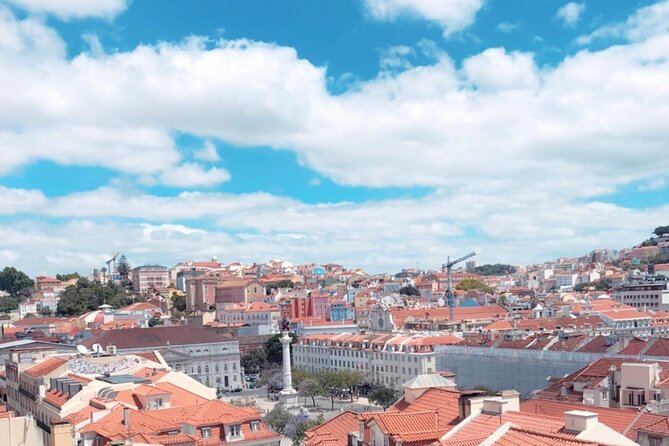
At Igreja de São Roque, you get a delicious contrast: an austere outside with a far more decorated interior. This church is tied to the Jesuits and is among the early Jesuit churches in Portugal, and even notable for being early on a worldwide scale.
Inside, the church feels like a museum without needing a ticket window. You’ll see gilding, azulejo tiles, and paintings that bring in Mannerist and Baroque style. It’s a great stop for two reasons. First, it shows how different Lisbon can be in just one building. Second, it reminds you that Portuguese religious art wasn’t only about faith; it was also about craftsmanship and public identity.
Quick practical note
This is not the time for slow wandering. Expect a shorter stop and then move on, since the route keeps you moving. If you want a longer museum-style visit, you can come back later with your own schedule once you know where everything is.
Carmo Convent and church: Gothic architecture meets 1974
Heading downhill leads you to the Carmo convent and church, known for its Gothic architecture. This is a stop with weight, because it’s also connected to the Carnation Revolution in 1974, which ended nearly five decades of dictatorship.
What makes this site work in a walking tour is the way it blends layers. You’re not just learning a date. You’re seeing a physical location tied to modern Portuguese history, right in the middle of the traditional city fabric.
Why it matters for your trip
Once you understand how 1974 shaped modern Portugal, it reframes a lot of what you’ll notice later: how people talk about the country, what’s celebrated, and what civic identity means here. Even in a short stop, it plants a useful context.
Santa Justa elevator area: choose the viewpoint, not the ticket
You’ll arrive near the Santa Justa elevator, an imposing structure built in Gothic Revival style. The elevator itself is a landmark, but the main “why” for most people is the view potential.
The ticket for the elevator is not included, so this is the moment when you decide. If you want the best skyline angles and you’re okay paying extra, it’s worth it. If you’d rather keep costs down, you can still enjoy the area and continue with the route.
What I’d base your decision on
If your day is already packed with viewpoints, you might skip it. If you’re trying to nail down the city geography and you love high vantage photos, consider adding the elevator ticket. Either way, this stop still gives you a key visual anchor.
Baixa café break and tram 28 to Portas do Sol
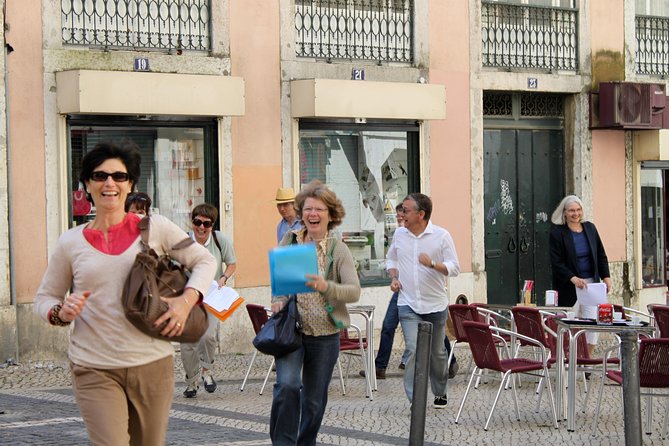
Then you dip into Baixa de Lisboa, where the tour includes a coffee with pastry at a local café. This break is more than a snack. It’s your chance to recover a bit, reset your legs, and slow down just enough to enjoy the change in neighborhood mood.
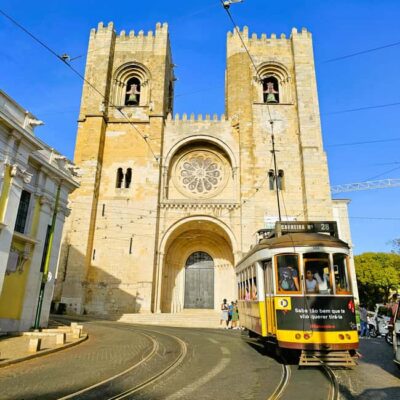
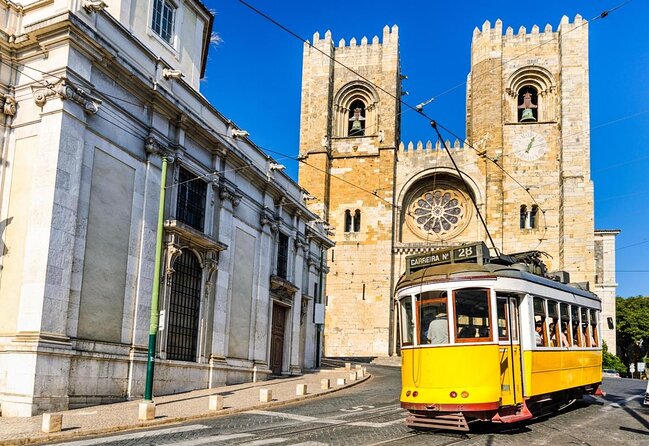
After the café stop, you head toward Praca da Figueira and nearby Baixa sights. Then comes the fun part: a included tram ride going up from the castle area to Portas do Sol. If you’ve heard of Tram 28, this is the kind of route people hope for when they want that old-school Lisbon experience without researching every twist.
Why the tram ride helps
The tram ride breaks up the walking and gives you a different angle on the streets. It also helps you glide from lower neighborhoods toward the viewpoints, so you’re not only walking up and down randomly. When you step off, you’re already in a better position to explore Alfama.
Alfama: the oldest streets, fado culture, and saint festival energy
From Portas do Sol, the tour shifts to Alfama, one of Lisbon’s oldest traditional neighborhoods. This is where the city feels like it’s always been here: narrow lanes, layered buildings, and constant glimpses toward the Tagus.
You’ll also pass by São Vicente de Fora monastery and the National Pantheon, which adds depth beyond the neighborhood vibe. Alfama is known for fado houses and for saint festivals, especially the celebrations around St. Anthony. Even if you’re not timing your visit to a specific festival day, the guide’s stories help you understand why this neighborhood holds onto tradition so tightly.
A tip for Alfama
In tight streets, photos can be hard. Instead, pay attention to where people are moving. Watch which turns lead toward the view points and river direction. That way, you can come back later and wander with intent.
Finishing at Lisbon Cathedral: built in 1150, changed by centuries
The route ends at Lisbon Cathedral, built around 1150, just a few years after the city was taken back from the Moors. Over time, it became a mix of architectural styles, so it’s not one single “period” building. That blend is exactly why it works as a final stop.
After three hours of viewpoints and churches, this feels like a grounded conclusion. You’ve seen how Lisbon shifts by district and by time period. Now you see a single site that carries multiple layers at once.
How to use this ending
Your day doesn’t have to stop here. Finishing at the cathedral area is useful because it gives you a clear landmark to work from for your next walk, meal, or museum stop.
Guides and small details that make or break the experience
The tour is built around the guide’s ability to make a route feel like a story. In the guide rotation, names like Paulo, Beatrice, Ricardo, Ana, Sofia, and Lucie come up often for keeping the group engaged and for adding practical tips. That matters because Lisbon’s hills and winding streets can be confusing at first.
You also get real “local utility” from the way the guide connects the dots: why certain areas grew after major events, how religious architecture fits into Portuguese identity, and how to navigate between places you’ll likely want to visit later. It’s the kind of guidance that makes the next day easier.
One final practical note: double-check your meeting spot on the day. Once in a while, a mismatch can happen with where people are directed to meet, and you do not want to waste time in a city where every block is a different climb.
Should you book this Lisbon Essential Walking Tour?
Book it if you want a strong first-day foundation. It’s a good value for the price because you’re getting more than sightseeing: you’re getting context, viewpoints, church interiors, and an included tram ride plus a coffee-and-pastry break. It’s also a smart pick if you like stories and short stops that help you plan your next moves.
Skip it or choose a different style if:
- you have limited mobility or know hills and stairs are a struggle
- you want a more museum-only or unhurried pace
- you want the Santa Justa elevator included in the price (it’s not)
If you’re arriving in Lisbon and want your bearings fast, this is one of the easiest ways to get them.
FAQ
How long is the Lisbon Essential Walking Tour?
It runs for about 3 hours.
How much does the tour cost?
The price is $30.25 per person.
What’s included in the price?
You get a professional guide, a tram trip, a coffee and cake break, and liability/personal accident insurance.
What is not included?
Other food and beverages are not included, and transfers to or from the meeting point are not included.
Do I need to pay for the Santa Justa elevator?
The admission ticket for Elevador de Santa Justa is not included.
What attractions and stops are on the route?
You’ll see Bairro Alto, Miradouro São Pedro de Alcântara, Igreja de São Roque, Igreja do Carmo, the Santa Justa elevator area, Baixa de Lisboa with a café break, Praca da Figueira, Alfama, and you’ll finish at Lisbon Cathedral.
Is the tram ride included?
Yes. The tram trip is included.
What language is the tour offered in?
The tour is offered in English (and other languages may be available when booking).
How big is the group?
The maximum group size is 15 travelers.
What’s the cancellation policy?
You can cancel for a full refund up to 24 hours in advance of the experience start time.