REVIEW · LISBON
Private Tour: Lisbon Sunset Walking Tour with Fado Show and Dinner
Book on Viator →Operated by Inside Lisbon · Bookable on Viator
Sunset walking plus Fado dinner feels made for the moment. I love that you get a private guide who strings together the best angles in the city, and I love that dinner and Fado tickets are built in—no juggling separate bookings.
One thing to consider: this is a hill-and-stairs kind of evening. With moderate walking fitness and cobblestones, you’ll want to move at a steady pace, and you may not love it if you want an easy, flat stroll.
In This Review
- Key highlights at a glance
- Why This Lisbon Sunset Tour Feels Like a Real Evening (Not Just Stops)
- Starting at Hotel Mundial’s Praça Martim Moniz Meeting Point
- Mouraria’s Fado Crib: Where the Evening Gets Personal
- Chão do Loureiro at Sunset: The Best “Pause and Look” Stop
- Ponte 25 de Abril and São Jorge: Two Landmarks, One Big Story
- Miradouro das Portas do Sol: The Alfama Photo Angle
- Alfama After Dark: Narrow Streets, Fado Origins, and Moorish Echoes
- Dinner + UNESCO Fado: What Happens After You Finish the Walk
- Is This Tour Worth $255.30 Per Person?
- Who Should Book This Lisbon Sunset Fado Tour?
- Should You Book This Lisbon Sunset Walking Tour with Fado and Dinner?
- FAQ
- What is the duration of the private tour?
- What time does the tour start?
- Where does the tour begin and end?
- What’s included in the price?
- Is transportation like trams included?
- Is this a private tour?
- Do you need to tell them about dietary needs?
Key highlights at a glance
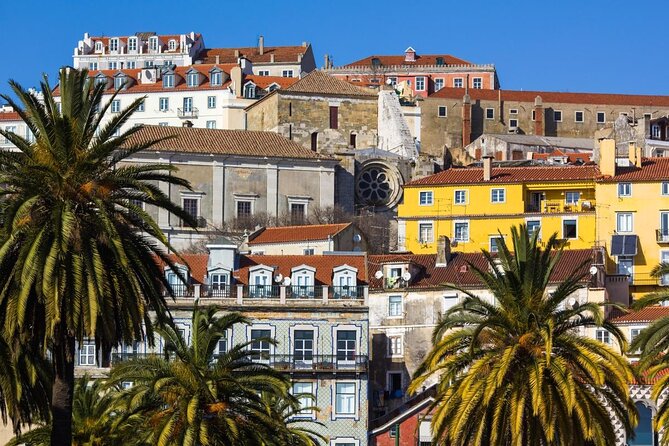
- Private guide, small plan: only your group, with a guide focused on your pace and questions
- Sunset viewpoints included: Miradouro Chão do Loureiro plus Miradouro das Portas do Sol
- Fado roots before the show: Mouraria stops tied to the neighborhood’s musical beginnings
- Ginjinha tasting at a local bar: a sour cherry liqueur moment with background Fado
- Dinner + show + drink: 3-course meal with wine or water, plus coffee or tea
Why This Lisbon Sunset Tour Feels Like a Real Evening (Not Just Stops)
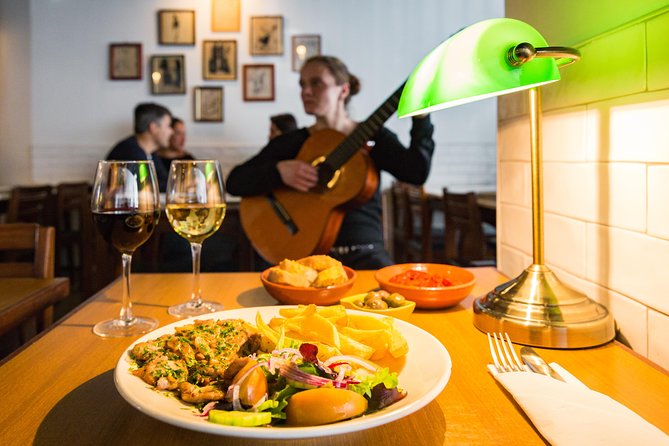
This tour is priced at $255.30 per person for about 4 hours, and the value comes from how much is wrapped together. You’re not just paying for a walk. You’re getting a guided circuit through key Lisbon areas plus a timed transition into the Fado show and dinner, with the ginjinha tasting slotted in along the way.
In practice, that matters. Lisbon nights can be amazing, but planning multiple pieces separately often turns into scheduling stress. Here, the “when” is handled for you: meet at the start point, hit the viewpoints while the sky turns, then settle into the evening meal and music. It’s also private, so you’re not fighting for attention or visibility when you stop at a lookout.
It’s worth noting that one review did flag a downside: the Fado experience can feel a bit like a dinner-theater setup rather than a tiny, ultra-local room. If you’re chasing a very small, off-the-beaten-path Fado vibe, you may notice that. If you want a well-run night that mixes music with history and a proper meal, this still hits the mark.
You can also read our reviews of more walking tours in Lisbon



Starting at Hotel Mundial’s Praça Martim Moniz Meeting Point

The tour starts at Hotel Mundial, right by Praça Martim Moniz, at 7:00 pm. I like this kind of start location because it’s central and easy to orient from. It also sets the tone: you begin with a short walking plan and early story cues before you reach the postcard viewpoints.
Stop 1 is practical and quick—around 15 minutes. You’re not being dragged around. You’re getting bearings and context so later corners in the evening actually mean something.
If you’re trying to time your night well, this is a smart window. Starting at 7 pm means you’ll hit the sunset lookouts with enough light for views, but you won’t be standing in the dark too early.
Mouraria’s Fado Crib: Where the Evening Gets Personal
Next you head into Mouraria, a district often linked with Fado’s origins. You visit the Monumento Mouraria Berço do Fado area and spend about 20 minutes in the alleys. This is one of those parts of Lisbon where the streets feel made for wandering—tight, old, and atmospheric.
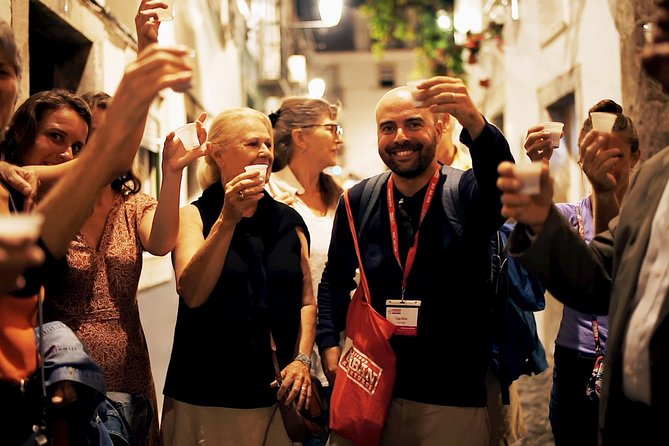
What I like here is the layering. The tasting isn’t random. You’re learning as you go, then you get a sip of Lisbon’s signature sour cherry liqueur: ginjinha. The tour includes that tasting, and you’re told it’s enjoyed at a bar with Fado playing in the background. That small detail matters because it lets you feel the music before you sit down for the formal show.
If you have a sweet tooth, good news: ginjinha is a rare Lisbon flavor you won’t get from a generic souvenir shop moment. If you hate sour drinks, you can still enjoy the stroll and skip the sip, but the tour does frame it as part of the experience.
Chão do Loureiro at Sunset: The Best “Pause and Look” Stop
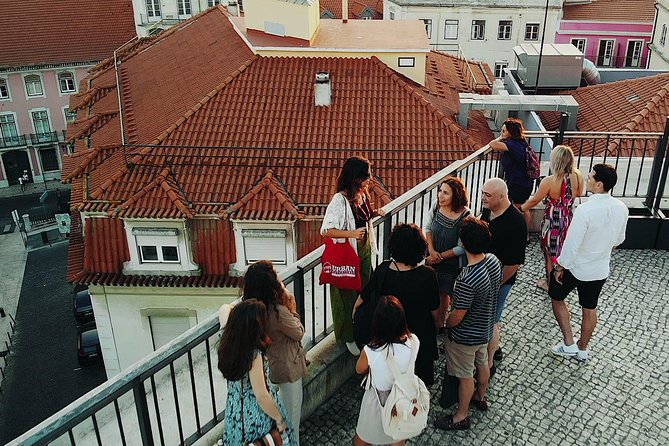
The next big move is to Miradouro Chão do Loureiro, with about 25 minutes here. This is the kind of stop you don’t rush. The tour is timed so you can actually watch the city change as the sun lowers.
From this viewpoint you’re aiming your eyes across Lisbon’s spread—especially toward landmarks that you’ll talk about later. Think of it as the evening’s visual anchor: once you’ve seen the map-like city view, the later streets in Alfama feel less like random maze turns and more like a story you can follow.
One practical consideration: viewpoints can get breezy and crowded. You don’t control the crowds, but having your guide manage timing helps. The guide is also there to point out what to look for, not just let you stand and guess.
Ponte 25 de Abril and São Jorge: Two Landmarks, One Big Story
You then take a short look at the Ponte 25 de Abril for about 5 minutes. It’s quick, but it’s not filler. The bridge frames the Tagus River in a very “Lisbon” way, and it helps connect what you’re seeing to what you’ll visit in Alfama—especially the city’s defensive and cultural center.
After that, you move on to Castelo de São Jorge for about 15 minutes of panoramic viewing. The castle is commanding for a reason: you get the sense of why this spot mattered. As the tour explains the city’s past, the viewpoints make the story feel physical, not just academic.
I also like that these stops are distributed. You aren’t climbing in one long effort without breaks. You’re doing a steady progression from one “wow, look at that” moment to the next.
You can also read our reviews of more private tours in Lisbon






Miradouro das Portas do Sol: The Alfama Photo Angle
Next is Miradouro das Portas do Sol for about 15 minutes. This is one of those Lisbon lookouts that feels like it was built for photos, but it’s more than that. It’s used here to focus your attention on the Alfama district’s eastern front and the Tagus River.
If you’ve ever been to Lisbon and felt the city is all hills and confusion, this is the fix. You get a clearer mental model of where Alfama sits and how the older streets relate to the river and the viewpoints.
Also, this stop is a good buffer before you go deeper into Alfama’s narrow cobblestones. You’ve already seen the overview; now you’ll walk the details.
Alfama After Dark: Narrow Streets, Fado Origins, and Moorish Echoes
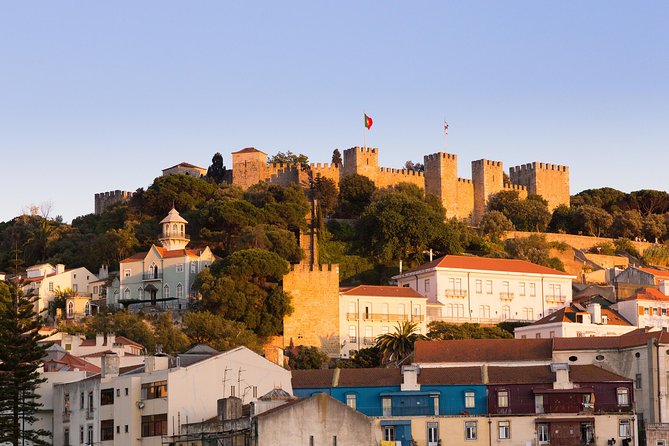
The final walking portion is Alfama, about 30 minutes. This is the oldest quarter and the neighborhood most people associate with Fado as a living art form. You’ll walk its narrow cobblestone streets at night, and that timing helps. Street sounds and the darker hours make the streets feel more intimate, more like you’re stepping into the real neighborhood rather than passing by it on a daytime checklist.
The tour also ties the area to Moorish history, and it leans into the idea that Fado’s birthplace isn’t just a label—it’s a place with deep layers. One of the most praised things in the reviews is how guides connect the dots: not only where you are, but why this corner exists, and how music and history became linked here.
If you get a guide who tells the story with real energy, the Alfama walk can feel like the best part of the whole evening. That showed up repeatedly in feedback: guides like Tiago (praised for Portuguese history depth), Dani/Daniel, Joanna/Joana, and Pedro were singled out for mixing facts with personality, and for keeping the group moving comfortably.
One note for your body: cobblestones and hills add up. This is why the tour asks for moderate physical fitness—it’s not extreme, but you should plan for uneven ground.
Dinner + UNESCO Fado: What Happens After You Finish the Walk
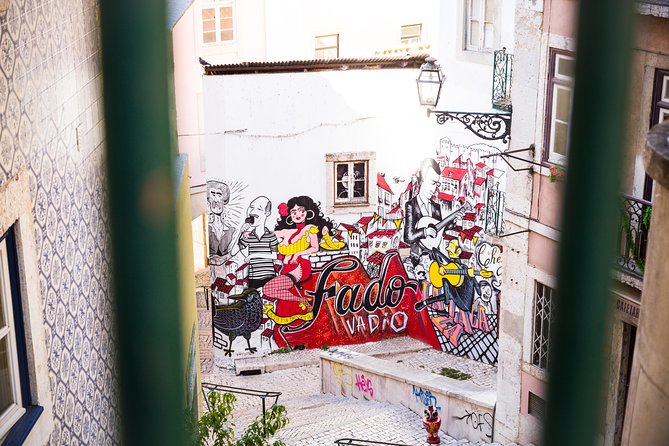
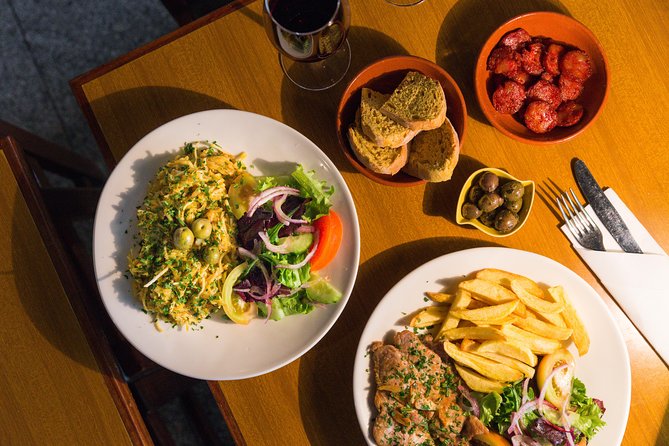
After the walking route, you arrive at a restaurant for the included evening. You get a 3-course Portuguese dinner with wine or water, plus coffee or tea. Then comes Fado, described as melancholic but also exciting—a music style shaped over time and listed by UNESCO as Intangible Cultural Heritage.
This is where the tour’s format really pays off. You’ve already heard the stories behind Fado’s neighborhoods. So when the show starts, it doesn’t feel like you walked into a random venue. It feels connected to the streets you just saw.
One review did mention a caution: the Fado can feel a bit commercialized, like a dinner-theater setup rather than a small local room. That’s a tradeoff. You usually get smoother organization and a solid meal. The trade is that it may not feel as raw as a low-key performance in a tiny venue.
The good news is that multiple reviews were strongly positive about the performers and the overall atmosphere. In particular, guides were praised for making sure the night stays personal and not just scripted, and for choosing restaurants that match the tour quality.
Is This Tour Worth $255.30 Per Person?
For a private tour, $255.30 per person can sound steep—until you price it out the usual way. Here you’re not paying separately for:
- a guide-led walking route
- ginjinha tasting
- Fado show
- 3-course dinner
- drinks (wine or water) and coffee or tea
Even if you like planning, Lisbon at night can turn into a timing puzzle. This tour solves that puzzle in one go, and that’s the real value: you buy fewer uncertainties.
Private also means your guide can adjust. One review praised a guide who changed the plan to match physical needs and even arranged a different meal when seafood wasn’t a good fit. That kind of flexibility is hard to replicate when you buy separate, rigid activities.
The only scenario where I’d think twice: if you’re chasing the most underground, non-touristy Fado you can find. This experience is built to be comfortable and structured, with dinner and show tied together.
Who Should Book This Lisbon Sunset Fado Tour?
This private sunset walking tour is best for you if:
- you want a guided evening that includes viewpoints and an actual plan for what to do next
- you’re excited about Fado but also want the historical context that explains why it belongs in Lisbon
- you prefer a private group format over crowded tours, especially on hills and cobblestones
- you like food that’s part of the cultural experience, not an afterthought
It may not be ideal if:
- you want only flat walking and minimal climbing
- you strongly prefer a tiny, non-commercial Fado room over a dinner-theater style presentation
Should You Book This Lisbon Sunset Walking Tour with Fado and Dinner?
I’d book it if you want your first real Lisbon night to feel cohesive: a guided route through Mouraria and Alfama, strong sunset views, then a meal and music that land with context. The private format, the included ginjinha tasting, and the fact that dinner and the show are handled for you make it feel like a complete evening instead of a collection of appointments.
If you’re picky about the exact feel of Fado (ultra-local versus dinner setup), read that as a possible tradeoff—not a guaranteed problem. The best signs here are the guide quality and the repeat mentions of a memorable dinner-and-music experience.
FAQ
What is the duration of the private tour?
It runs for about 4 hours (approximately).
What time does the tour start?
The start time is 7:00 pm.
Where does the tour begin and end?
It begins at Hotel Mundial, Praça Martim Moniz 2, Lisboa, and ends at Largo do Chafariz de Dentro in Alfama. The exact end location can vary depending on where dinner is served.
What’s included in the price?
You get an expert guide, ginjinha tasting, a Fado show, and dinner (Portuguese 3-course dinner with wine or water), plus tea or coffee.
Is transportation like trams included?
No. Entry to museums and monuments and a tram ride are not included.
Is this a private tour?
Yes. It’s private, so only your group participates.
Do you need to tell them about dietary needs?
Yes. You should advise any specific dietary requirements at time of booking.
If you want, tell me your walking comfort level and whether you prefer more music-focused or more history-focused evenings, and I’ll help you decide if this timing and format fits your trip style.