REVIEW · LISBON
Lisbon Walking Tour with a Local
Book on GetYourGuide →Operated by Humrahe · Bookable on GetYourGuide
Lisbon is best seen at walking speed. This local-guided route strings together riverfront panoramas and classic neighborhoods, with plenty of time to stop for photos, coffee, or a pastel. Two big wins for me are the sweep from Praça do Comércio up to Alfama viewpoints, and the way the guide tailors the tempo so you are not dragged. The main drawback: this is a cultural stroll, not a history deep-dive, so if you want heavy chronology and dates, you may miss that.
You can also choose how long you want to walk, from 1 to 6 hours, and you meet conveniently near major landmarks. Pickup is built in at the Arco da Rua Augusta area (beside the King José I statue facing the arch) or at Rossio Station, and you can even request another meeting point in/near the center. If you are traveling with a wheelchair, this tour is wheelchair accessible, and the pacing makes it more doable than many all-day walking plans.
In This Review
- Key highlights to look for
- Starting Under the Arco da Rua Augusta, Praça do Comércio to Rua Augusta
- Baixa’s geometric streets and Rossio’s square theatrics
- Largo do Carmo and Carmo Convent arches: quiet shade, sharp silhouettes
- Chiado corners to Miradouro de São Pedro de Alcântara’s skyline payoff
- Sé Cathedral down to Alfama’s tiled lanes, fado echoes, and jasmine stairs
- Santa Luzia and Portas do Sol: where the Tagus glitters and tram 28 rattles by
- How the 1–6 hour flexible pace works for real-life schedules
- What you really get from a local guide for $29
- Practical tips so the walk feels fun, not stressful
- Should you book this Lisbon Walking Tour with a Local?
- FAQ
- Where do I meet the guide?
- How long is the tour?
- Is the tour private and wheelchair accessible?
- What languages are the guides available in?
- What’s included in the price, and what’s not?
- Is there a cancellation option?
Key highlights to look for

- Praça do Comércio breeze to Rua Augusta archways: start with wide river views, then walk under the triumphal arch toward Baixa.
- Rossio framed by fountains and stone waves: great photo stops around the square feel theatrical without feeling staged.
- Miradouro de São Pedro de Alcântara: one of the best skyline terraces for castle, river, and red rooftops in this route.
- Alfama’s tiled lanes and fado echoes: laundry-line alleys and jasmine-scented stairways add real atmosphere.
- Santa Luzia and Portas do Sol viewpoints with tram energy: Tagus light and the casual clatter of tram 28 nearby.
Starting Under the Arco da Rua Augusta, Praça do Comércio to Rua Augusta
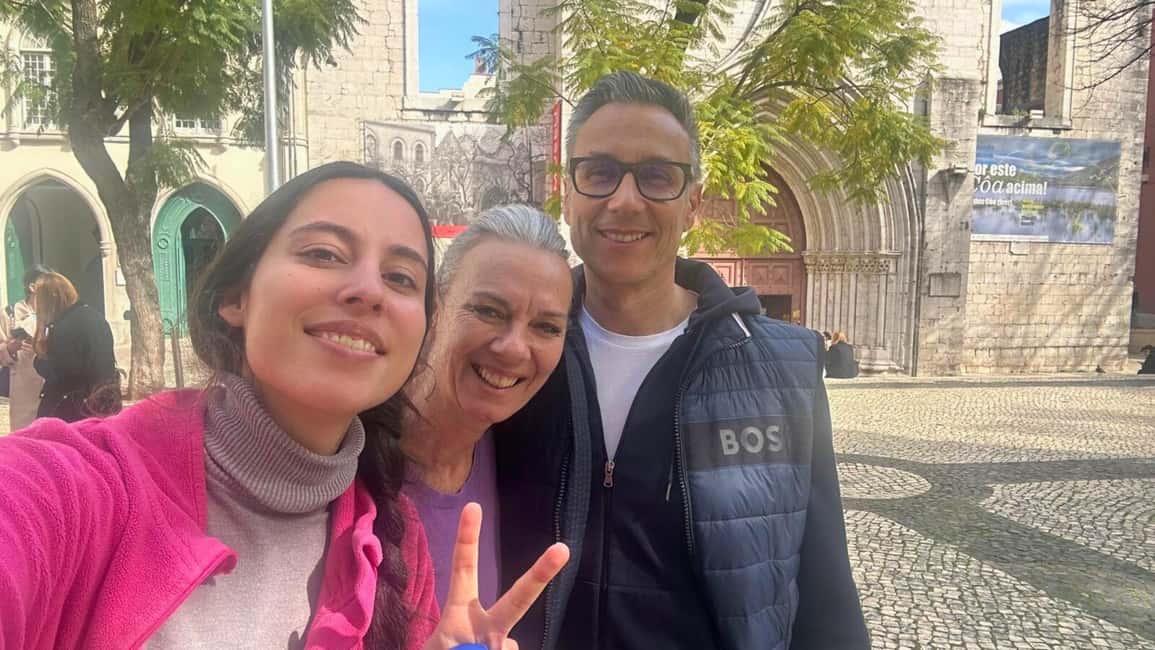
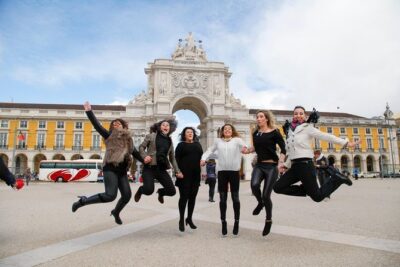
Your walk begins where Lisbon looks outward: at Praça do Comércio, by the King José I statue facing the arch. Expect that river air right away. It is a perfect opener because you get the “big picture” first, then the city pulls you inward.
From there, you head under the Arco da Rua Augusta and into Rua Augusta. This is the kind of street that rewards slow walking: you can watch the architecture shift as you move, and the arch gives you an obvious, photo-ready anchor. If you like getting your bearings fast, this start helps. Also, the route naturally sets up what comes next—Baixa’s straight lines and geometric street feel.
The one practical note: comfortable shoes matter here. The tour is manageable, but Lisbon’s cobbles and steps can be a lot if you are in thin-soled shoes. Go for grip and cushioning.
You can also read our reviews of more walking tours in Lisbon



Baixa’s geometric streets and Rossio’s square theatrics
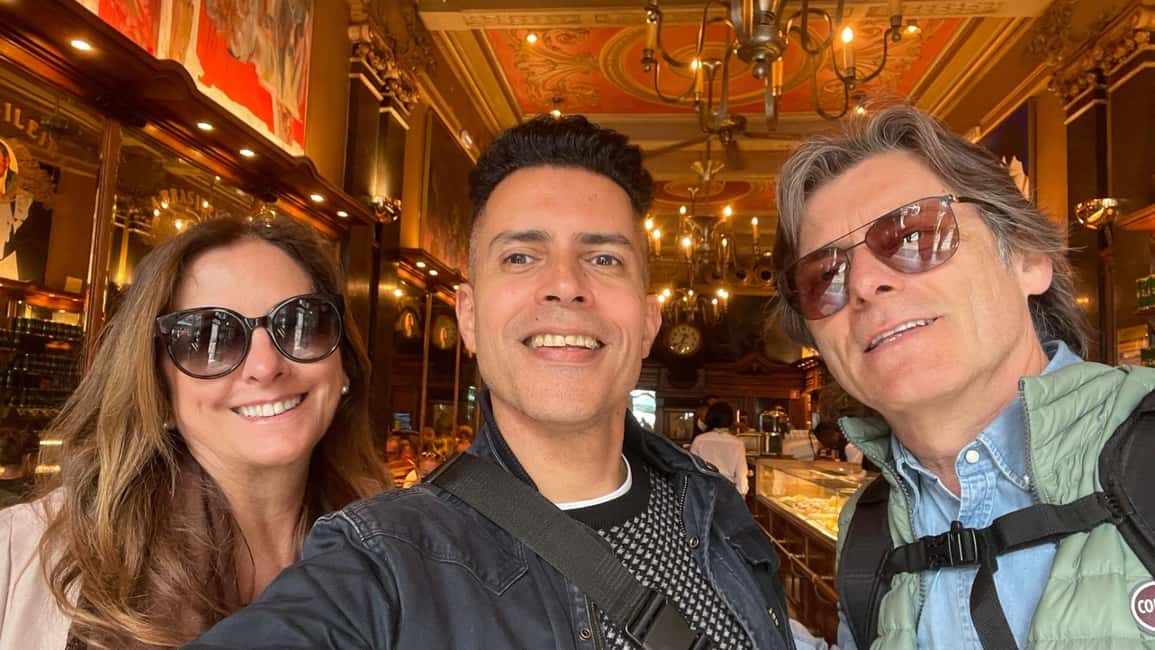
Baixa is where Lisbon gets tidy. You walk through the neighborhood’s structured layout—clean angles, geometric streets, and the black-and-white patterning that makes every corner look like a postcard. It is not just pretty. It also helps you understand how the city was rebuilt and planned, so the later twists of Alfama feel even more dramatic by contrast.
As you approach Rossio, the vibe changes again. Fountains and swirling stone-wave details frame the square, which makes it feel like a set piece. Even if you are not a museum person, you will enjoy how many directions your eyes can take—people watching, architecture spotting, and finding a good angle for your photos without walking extra blocks.
Keep an eye out for Santa Justa Lift peeking above rooftops. You do not have to ride it to appreciate it. Seeing the filigreed lift from below gives you a mental map of how Lisbon’s vertical connections work—stairs, elevators, and viewpoints all stitched into the city’s movement.
If you are traveling with time constraints, Baixa and Rossio are a great “core” section. You get big landmarks without committing to ticketed attractions.
Largo do Carmo and Carmo Convent arches: quiet shade, sharp silhouettes
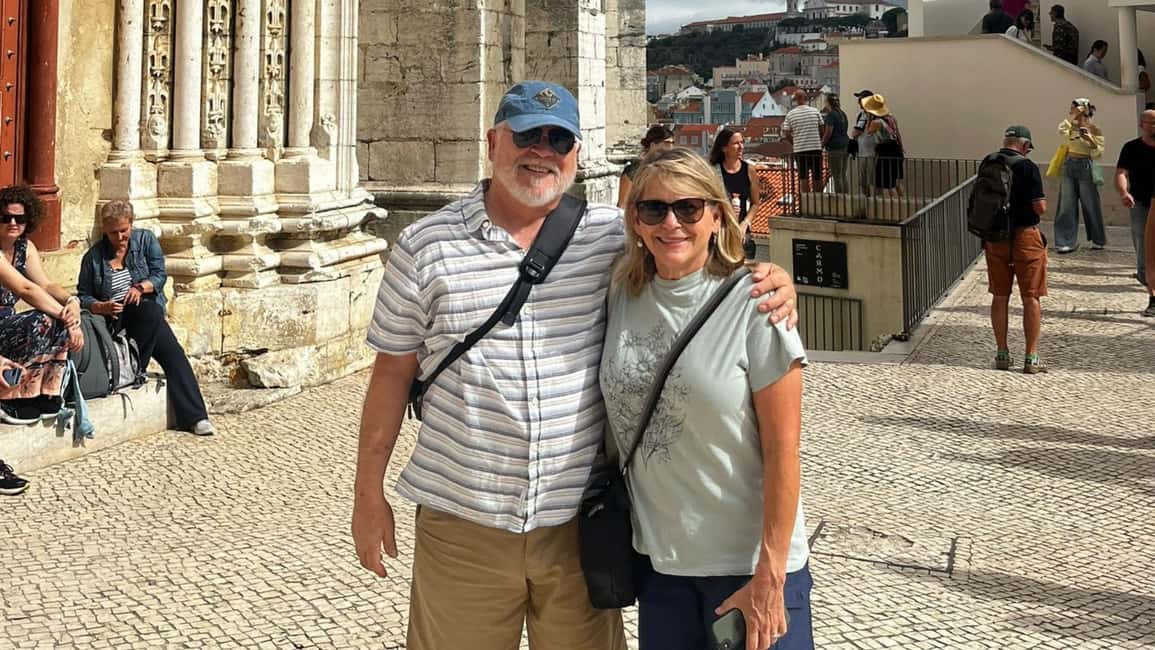
One of my favorite moments on this route is the shift into softer light around Largo do Carmo. You get a little pause from the busier streets, with a bit of quiet shade and space to regroup. Then the Gothic arches of the Carmo Convent come into view, creating that classic Lisbon contrast: delicate stone shapes against open sky.
This stop works well even if you only spend a few minutes here, because it is a visual “breather.” You stop, look up, and let the city reset your eyes before the climb toward viewpoints later. If you like photo composition, the arches give you natural frames for both buildings and skyline shots.
Also, this is where a good guide really helps. English, French, Portuguese, and Spanish are available, and the guide uses that to answer the questions that pop up in real time—what you are looking at, how the streets developed, and how locals think about the neighborhood today. On tours like this, those quick explanations are what turn sightseeing into understanding.
Chiado corners to Miradouro de São Pedro de Alcântara’s skyline payoff
Chiado is elegant, and the walk gives you just enough of it—corners that feel refined and a natural lead toward the biggest payoff: Miradouro de São Pedro de Alcântara. This is the garden terrace viewpoint where the skyline opens wide. Think castle in the distance, the river stretching out, and red rooftops that seem to go on forever.
What I like about this stop is that it is not just a view. It is a transition point. You look out, understand where you are in the city, then start descending toward Alfama’s older streets. It gives your walking route emotional rhythm, like the city is showing you a movie in chapters.
The miradouro also helps with pacing. If you want a coffee break or just a sit-down moment, this is an obvious place to do it because the scenery demands you slow down. The tour is built to be flexible, so you can linger without feeling like you are falling behind.
If you are a photographer: this is a strong place to capture wide-angle views. You will likely come away with photos that look different from the usual Lisbon close-ups, because the whole city layout is in the frame.
Sé Cathedral down to Alfama’s tiled lanes, fado echoes, and jasmine stairs
After the terrace, the route heads downhill with intent. You pass by the brooding façade of Sé Cathedral. Even if you are not going inside, the exterior gives the area a heavier, older tone. It is a visual cue that you are moving into Lisbon’s more ancient-feeling streets.
Then comes Alfama, and this is where the tour earns its cultural nickname as a friend-showing-you-around experience. You walk through tiled corners, alleys with laundry strung overhead, and spots where you can hear fado echoes. The whole neighborhood feels like it is alive in the background, even when you are standing still.
The stairways matter here. You might catch that jasmine-scented feel described in the route, and those scent-and-sound cues are part of why walking beats bus tours. The streets are made for slow looking. Every bend gives you a new composition: a doorway, a wall of azulejo tiles, a patch of sky between buildings.
Keep your eyes open for the final viewpoints coming up. Alfama can feel like it is all texture, but the tour does not leave you hanging. You are guided toward those sunlit “step outside and look” moments.



Santa Luzia and Portas do Sol: where the Tagus glitters and tram 28 rattles by
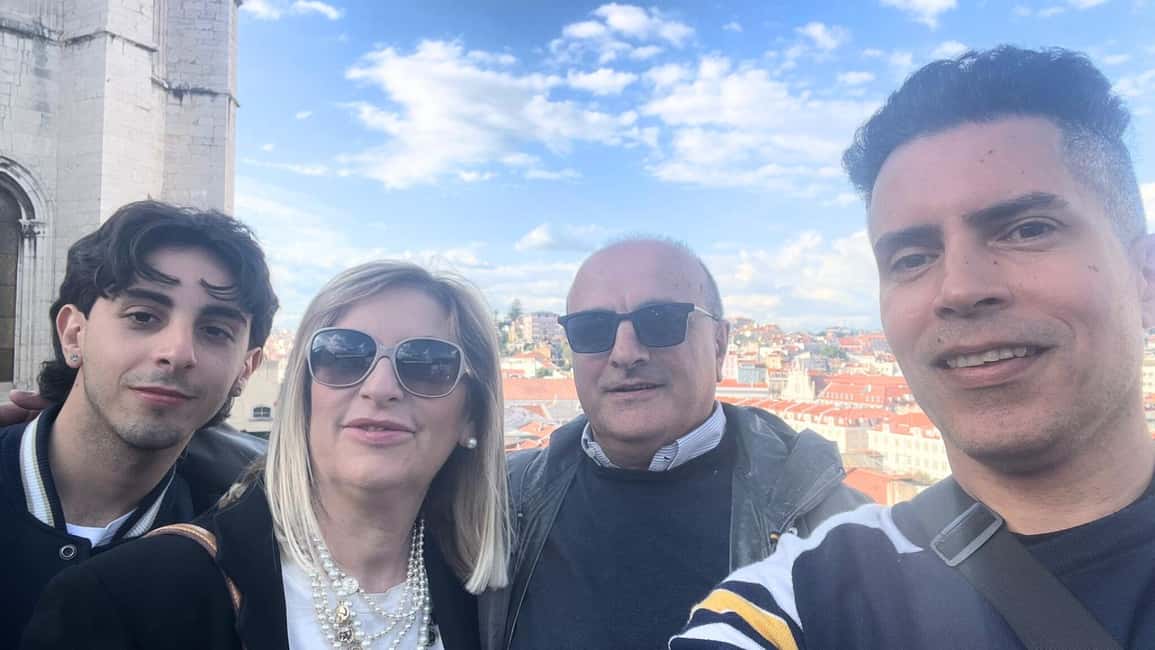
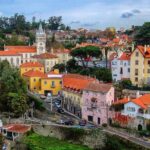
Near the end of the walk, the route lands on some of Lisbon’s most rewarding viewpoint energy. Santa Luzia and Portas do Sol are both positioned for that classic look: the Tagus catching light, the old neighborhood spreading below, and that sense of seaside wonder.
One of the practical joys here is the proximity of tram 28 activity. You might hear or see it pass while you are at the viewpoints. That adds motion to the stillness. It also makes your photos feel more real—like Lisbon is not posed for you, it is just going about its day.
If you have never visited before, this is a strong closer because it ties together everything you saw earlier. You started on the riverfront, worked through Baixa’s planned geometry, climbed into skyline terraces, then finished where the city’s older character shows up in tiles, stairways, and everyday sounds.
And yes, this is a good time to grab a warm pastel de nata if you want one. The tour pacing explicitly allows time to do that, so it does not feel like an afterthought.
How the 1–6 hour flexible pace works for real-life schedules
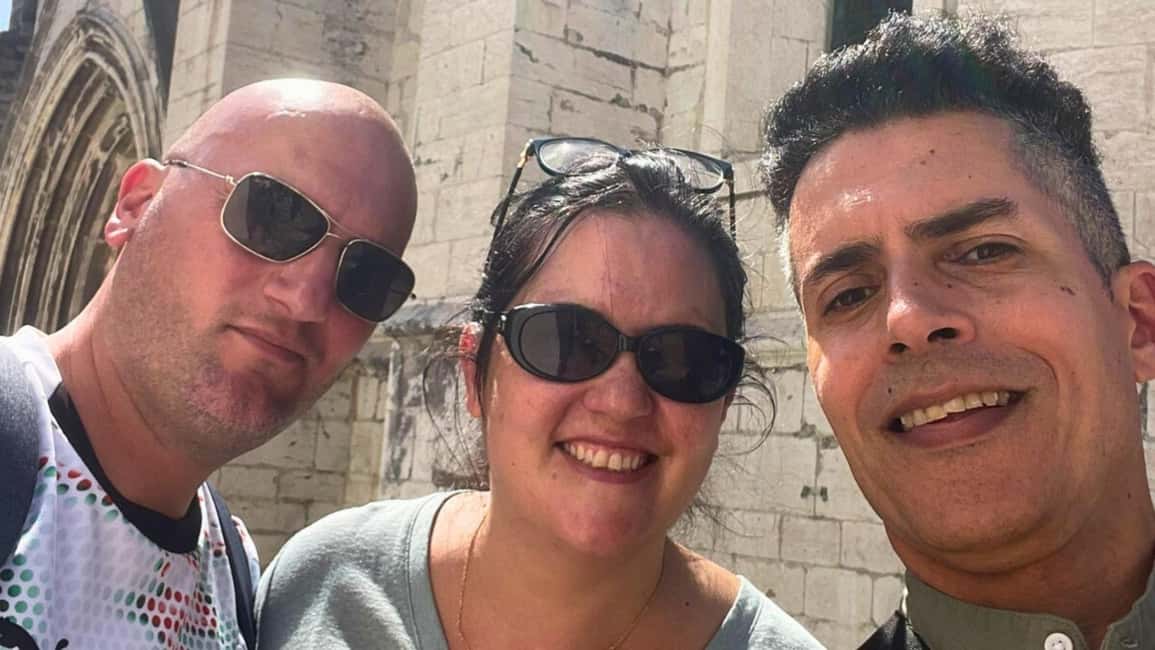
The duration is listed as 1 to 6 hours, and the itinerary is flexible. For you, that means you can match the walk to your energy level and the rest of your day. A shorter slot works well if you want the main highlights without extended viewpoint time. A longer one gives you breathing room to linger in squares and miradouros rather than just passing through.
It also matters that this is a private group. Private does not mean rushed. It means the guide can slow down when you want photos, or steer the route if you prefer more street-level texture over big panoramas. The guide also has room to tailor based on what you care about—views, neighborhood feel, or photo stops.
I also appreciate the built-in flexibility for a coffee stop. Lisbon walking tours can sometimes feel like a sprint between monuments. This one keeps the pace realistic, which helps you enjoy the details without getting numb from constant motion.
What you really get from a local guide for $29

At $29 per person, the value comes from more than the walking. This is about having context while you move. The tour includes guided walking and insider insights into culture and lesser-seen corners. You are not just collecting sights; you are learning how to read the city as you walk through it.
The guide experience is also a standout. In different schedules, you may get guides like Nessim or Vos, and the common thread in how they work is engagement and clear explanations. Expect a guide who can answer questions as you go and adjust the tempo to your group.
Language support is also a practical value. English, French, Portuguese, and Spanish are offered, so you are less likely to lose details because of a language gap.
One more value point: the meeting system reduces hassle. Pickup is included at two easy-to-find places, and you can request a different city-center meeting spot. That means you spend less time figuring out logistics and more time walking where it counts.
What is not included is food, drinks, transportation, and site entry tickets for anything not part of this tour. If you plan to add extra entry-based stops, confirm what is covered and be ready to cover any optional guide entry fees if attractions are part of the plan for private tours. That keeps your budget predictable.
Practical tips so the walk feels fun, not stressful

Plan for walking. Even if the route is flexible, you are still moving through neighborhoods with uneven surfaces and stairs. Bring comfortable shoes with good traction.
Bring a camera or at least a phone you trust. The itinerary has lots of photo-ready moments: Rua Augusta and its arch, Rossio’s square details, tiled viewpoints, and skyline panoramas at places like Miradouro de São Pedro de Alcântara, Santa Luzia, and Portas do Sol.
If you are heat-sensitive, plan your pacing. Lisbon can feel warm during the day, and this walk includes viewpoints and sun-exposed terraces. The built-in coffee or pastel time is not just a treat. It is also a chance to cool down.
Arrive on time. The pickup points are specific, and the schedule assumes you will start together. If you are late, you can miss the clean flow from Praça do Comércio into Rua Augusta and Baixa.
Should you book this Lisbon Walking Tour with a Local?
Book it if you want a smart way to see Lisbon’s main personality shifts in one go: riverfront grandeur, Baixa’s planned street order, Chiado’s refined corners, and Alfama’s lived-in feel. The route is a strong match for first-timers because it covers a lot of iconic sights without turning into a long list of ticketed stops.
Skip it or pair it with something more specialized if you want strict historical coverage and dates. This tour is designed to feel like a friend showing you around, with culture and everyday Lisbon feel at the center.
If you are on a tight schedule, choose a time length that still lets you reach the viewpoints calmly. If you are traveling with kids, note that children under 3 join free of charge, and the flexible pacing helps families move at a comfortable rhythm.
Overall, for $29, you are paying for the walk plus the guidance that makes the city click. You get panoramas, strong photo stops, and enough breathing room to enjoy it like a day out—not a checklist.
FAQ
Where do I meet the guide?
You can meet at one of two included pickup spots: beside the King José I statue facing the Arco da Rua Augusta in Praça do Comércio (under the Arco da Rua Augusta), or in front of Rossio Train Station (Estação do Rossio) beneath the twin horseshoe-shaped portals. You can also request another meeting point in or near the city center, like your hotel, a landmark, or a café.
How long is the tour?
The duration is flexible from 1 to 6 hours. Starting times depend on availability.
Is the tour private and wheelchair accessible?
Yes. It is a private group tour, and it is wheelchair accessible.
What languages are the guides available in?
Live guides are available in English, French, Portuguese, and Spanish.
What’s included in the price, and what’s not?
Included: a guided walking city tour, a flexible itinerary for private tours, and insider insights into culture and hidden gems. Not included: food and drinks, transportation, and tickets to sites not included in the tour.
Is there a cancellation option?
Yes. You can cancel up to 24 hours in advance for a full refund.