REVIEW · LISBON
Lisbon: City of Spies Guided Walking Tour
Book on GetYourGuide →Operated by Lisbon Walker · Bookable on GetYourGuide
Lisbon feels like a spy set. This 3-hour guided walk turns WWII Lisbon into a living story, with double agents, royals in exile, and high-stakes Portuguese neutrality guiding each step. I especially like how guides connect the big war picture to street-level details, and how hosts such as José, Rita, Joana, Ze, and Phillips tell the odd, true bits with sharp timing and humor.
I also love the pop-culture-to-history thread. You’ll hear how Lisbon’s underground characters helped spark ideas behind James Bond, plus the trail that leads to Garbo and the darker topic of Nazi gold in Portugal. One thing to plan around: even though it’s advertised as a 3-hour tour, at least one booking reported a much shorter actual duration, so don’t schedule tight connections right after.
In This Review
- Key Moments You’ll Walk Through
- Why Lisbon’s Spy Stories Feel Uncomfortably Real
- Portuguese Politics, Neutrality, and Salazar: The Backdrop That Changes Everything
- Double Agents and Royals in Exile: The City as a Meeting Room
- Garbo, Nazi Gold, and the Sort of Secrets Lisbon Collected
- James Bond Inspirations: From Lisbon Streets to Fictional Espionage
- Brussels, Allied Convoys, and the War by the Sea
- RAF vs Luftwaffe, Escape Routes, and Refugee Life on the Edge
- What the Tour Feels Like on the Ground: Pace, Weather, and Group Size
- Meeting Point and Getting Started Without Stress
- Price and Value: Is $29 a Smart Buy?
- Who This Tour Suits Best (and Who Might Want Something Else)
- Final Call: Should You Book Lisbon City of Spies?
Key Moments You’ll Walk Through
- Portugal’s neutrality under pressure: You’ll get the political backdrop that made Lisbon a magnet for intelligence work.
- Double agents and the game of shadows: Expect stories of back-and-forth loyalties and secret negotiations.
- Garbo and Nazi gold: The tour ties celebrity legend to real wartime intrigue.
- Convoys, consuls, and coastal battles: You’ll connect Lisbon’s role to Allied ship convoys and RAF/Luftwaffe clashes along Portugal’s coast.
- Royals and refugees in the same streets: You’ll see how exile and escape routes shaped the city’s wartime daily life.
- Small groups and private options: The best part is how well your guide can steer discussion without losing momentum.
Why Lisbon’s Spy Stories Feel Uncomfortably Real
Lisbon has a way of making history walkable. On this tour, you’re not just hearing dates and names—you’re getting the logic of why spies, profiteers, and refugees all ended up here at the same time. In plain terms: WWII didn’t close doors in Lisbon the way it did elsewhere. The city stayed open enough for people to move, trade, bargain, and hide.
That setting matters because it explains the tone of the stories. Lisbon was portrayed as a rare wartime meeting place where different sides could end up rubbing shoulders. Your guide uses that contrast—neutral on paper, complicated in practice—to show how intelligence networks worked when the rules weren’t clean.
And the guides really do make this real. Multiple guides were praised for turning facts into scenes, and for keeping the pace lively—so you’re not stuck in a history lecture voice the whole time. Guides named José, Rita, and Ze came up again and again for storytelling and energy, which is exactly what you want on a walking tour like this.
You can also read our reviews of more walking tours in Lisbon



Portuguese Politics, Neutrality, and Salazar: The Backdrop That Changes Everything
Before the spy tales get fun, the tour gives you the political wiring diagram. You’ll hear about Portuguese politics, major challenges the country faced, and the weight of Salazar’s dictatorship. This part is important because spycraft isn’t just clever people in trench coats—it’s also paperwork, censorship, pressure, and who controls access.
Portuguese neutrality is the key idea. Lisbon’s neutrality didn’t mean everyone got along; it meant everyone had to operate around constraints. Your guide walks you through how those constraints created opportunities—places to pass messages, arrange payments, and keep fragile alliances from fully breaking.
You’ll also touch on the broader moral mess of wartime cities: who profited, who protected themselves, and who used exile and refugees as cover. The stories aren’t just about heroes and villains. They’re about systems—how power and fear shaped everyday choices.
Double Agents and Royals in Exile: The City as a Meeting Room
One reason this works so well as a guided walk is that it keeps shifting scales. You’ll start with politics, then jump into the personal stakes: double agents, escape routes, refugees, and the constant churn of rumors and bargains.
Then comes the part that many history tours skip: royals and European social life in exile. You’ll learn how Lisbon hosted royalty, writers, artists, and socialites on the way to the U.S. That might sound like a fancy detour from war history—but it’s actually a huge clue. Exile groups needed contacts, safe passage, and money. Intelligence networks needed precisely that same kind of mobility. The same streets that carried glamour also carried risk.
When your guide describes how the city hosted people from different sides on equal footing, it’s not a slogan. It’s a practical explanation for how spies could blend in. Neutral spaces reduce predictability, and predictability is what good security relies on.
Garbo, Nazi Gold, and the Sort of Secrets Lisbon Collected
This is one of the tour’s signature topics: Garbo and Nazi gold in Portugal. Even if you only know the headlines, your guide gives the chain of context—why these stories stuck to Lisbon and why the city mattered to the wartime economy and intelligence game.
The value here isn’t just the name-dropping. It’s the way the tour links celebrity and rumor to logistics: money movements, leverage, and the usefulness of secrecy in a neutral country. That’s where the story becomes more than trivia. You start noticing how wartime secrecy often boils down to simple things like access, intermediaries, and timing.
If you enjoy the gray area between fact and myth, this segment is built for you. Guides were praised for making the unusual details feel grounded, not sensational. That matters, because spy stories can easily slide into camp. On this walk, the tone stays closer to real human decision-making.
James Bond Inspirations: From Lisbon Streets to Fictional Espionage
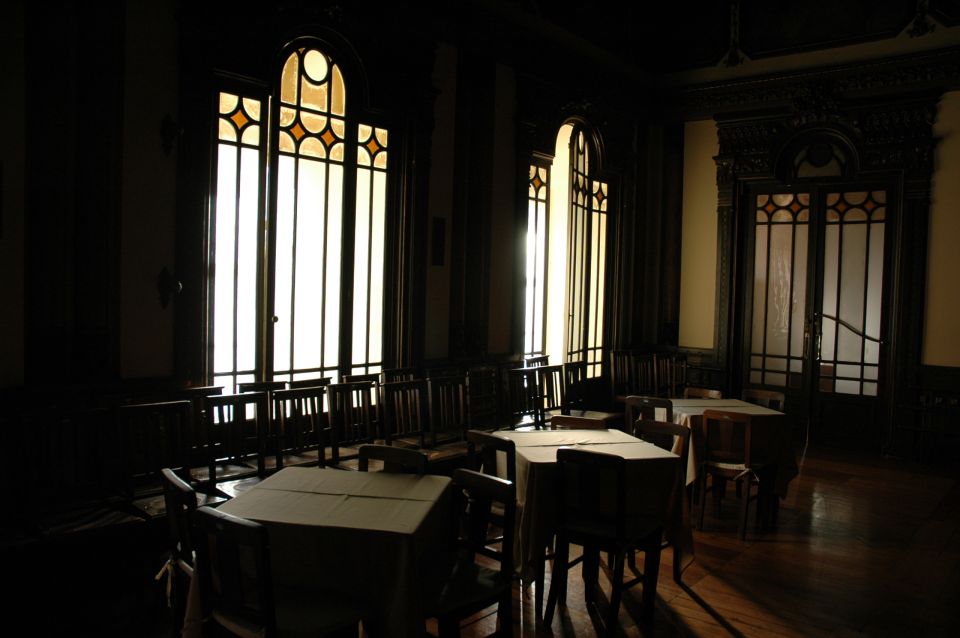
The tour explicitly connects Lisbon’s WWII atmosphere to the inspirations behind James Bond. You’ll hear how the city’s neutral-chaos mix fed the kind of spy narratives that later writers and filmmakers popularized.
Here’s what I think is the clever part: instead of treating Bond as a separate universe, the tour treats it like a reflection of older intelligence realities. That gives you a better lens for understanding why certain spy tropes exist—smugglers, secret meetings, high-society fronts, and cities where rules are negotiable.
If you like spy fiction, you’ll probably catch the logic fast: Lisbon wasn’t just a backdrop; it was a machine that churned secrecy. The tour helps you see why writers such as Ian Fleming and Graham Green could be inspired by the atmosphere of wartime Lisbon.
You can also read our reviews of more guided tours in Lisbon



Brussels, Allied Convoys, and the War by the Sea
Lisbon’s spy story isn’t only about the city itself. A big part of your walk connects Lisbon to wider wartime operations—especially the way the coast and shipping lanes shaped intelligence.
You’ll hear about a lonely fight of the Portuguese consul in Brussels, plus a spy network tied to Allied ship convoys. And then you’ll connect that to the harder edge of war on the coastline, with RAF and Luftwaffe battles referenced as part of the coastal reality.
Why is this valuable on a walking tour? Because it turns Lisbon from a name into a location with consequences. You stop thinking of it as just a setting for clever stories and start understanding it as a communications and movement hub—where information mattered as much as ships, and where news could change decisions.
It also helps you feel the tension in the city: if ships are under threat and consuls are dealing with pressure, then people in Lisbon can’t afford to be purely spectators. Everyone has to choose a side in practice, even when the country claims neutrality.
RAF vs Luftwaffe, Escape Routes, and Refugee Life on the Edge
The tour doesn’t shy away from the darker side of WWII in Lisbon. You’ll hear about escape routes, anonymous refugees, and how the city worked as a crossroads for people trying to survive. This is where the walking format shines.
As you move through the city with your guide, these stories stop being abstract. You get a sense of how a neutral city can become a pressure valve: one that helps people slip through cracks, but also creates opportunities for exploitation and betrayal.
Guides were praised for weaving WWII history with broader Portuguese context, which matters here. You don’t want just thriller-level drama. You want the story of how Portugal’s political situation created conditions for both rescue and risk.
What the Tour Feels Like on the Ground: Pace, Weather, and Group Size
This is a walking tour, so footwear isn’t optional. Bring comfortable shoes. The tour runs rain or shine, so you should plan for wet streets and slick stone when the weather turns.
On the group side, you can choose between private or small groups. That can make a noticeable difference because the strongest reviews focus on how guides interacted, explained, and kept the pace fun without turning it into a rigid scripted lesson.
One review stood out for flexibility: a guide reportedly adjusted the format for hearing and walking-impaired clients using a mix of sitting teaching and walking for those who could. That suggests the guides can be practical if you have needs—so if you do, it’s smart to ask ahead of time.
Timing is the only real caution. Duration is listed as 3 hours, but at least one booking reported a shorter experience. I’d plan with a buffer. If you’re trying to catch dinner reservations or a ferry right after, give yourself extra margin.
Meeting Point and Getting Started Without Stress
Your meeting point may vary depending on which option you book. Since you won’t have one single fixed address here, it’s worth arriving early once you know the exact spot.
One good operational note: the experience includes skipping the ticket line. Even without knowing which stop involves any ticketing process, this usually means less waiting at the start and more time for the walking portion of the tour.
Price and Value: Is $29 a Smart Buy?
For $29 per person over about 3 hours, this is strong value for people who want context, not just facts. You’re paying for a professional guide and a focused theme: Lisbon as a WWII spy crossroads—neutral politics, networks, refugees, celebrity legends, and the war spilling into coastal battles.
What makes it good value is that the story has range. You get political background, human stakes, and connections to pop culture. That combination is harder to find when you pay for a generic walking tour that covers architecture but barely touches 20th-century events.
Two small trade-offs to keep in mind:
- Food and drinks aren’t included, so you’ll want to eat before or after.
- You should expect to walk, so the comfortable shoes requirement isn’t a suggestion—it’s the whole game.
If you love history, WWII, or spy stories, you’ll likely feel the cost is fair. If you only want modern Lisbon neighborhoods or architecture, you might want a different tour. This one is built around secrets, politics, and wartime movement.
Who This Tour Suits Best (and Who Might Want Something Else)
This tour fits you best if any of these are true:
- You like WWII history, especially the gray-zone stories that don’t fit neatly into propaganda.
- You’re into spy fiction and want real-world inspiration behind it.
- You want Lisbon to feel like more than postcards, with a stronger sense of 20th-century pressure.
It may not fit as well if:
- You want mostly scenic highlights and short stops for photos.
- You need extremely predictable timing down to the minute, given that at least one booking reported less time than advertised.
If accessibility is a concern, remember the tour runs rain or shine and is walking-based. Still, there’s evidence that guides can adapt the format for some mobility/hearing needs, so it’s worth asking what adjustments are possible.
Final Call: Should You Book Lisbon City of Spies?
I’d book this tour if you want Lisbon to make sense in a deeper way. The city’s WWII reputation isn’t a random trivia theme. It’s a logical outcome of neutrality, dictatorship-era politics, and the movement of people and money through a connected port city. This walk helps you see that logic while also delivering the kind of stories that stick long after you leave.
Don’t book it if you’re only interested in modern Lisbon vibes or you can’t handle weather-wet walking. And if you have tight plans right after, give yourself buffer time.
If you’re on the fence, here’s my simple test: ask yourself if you’d enjoy a 3-hour walk that connects Portuguese neutrality, double agents, Garbo and Nazi gold, and James Bond inspirations into one story. If yes, this is an excellent match.