REVIEW · LISBON
Lisbon: Street Art and Historical Walking Tour
Book on GetYourGuide →Operated by My Lisbon Tours · Bookable on GetYourGuide
Street art here starts with a view. You meet at Miradouro da Graça and get your bearings on Lisbon’s hills before you even hit the street.
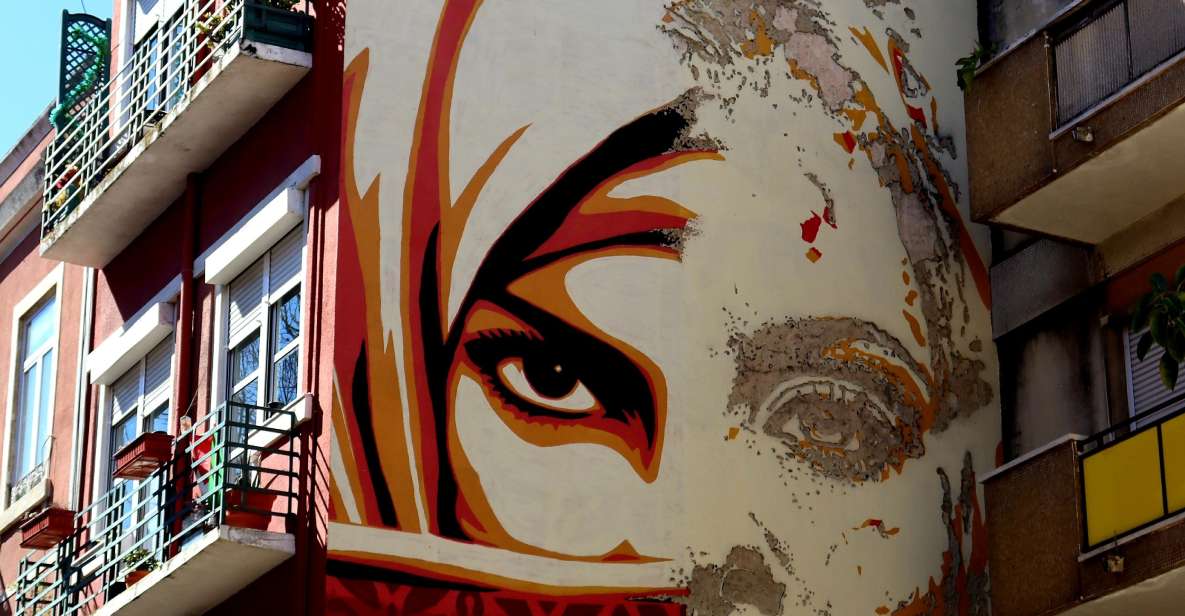
What I like most is the mix of street art and real neighborhood context: Graça, Mouraria, and Alfama feel like connected chapters, not random wall-hopping. You’ll spot works linked to artists such as Vhils, Nomen, Odeith, and Gonçalo Mar.Pro, and your licensed guide ties what you see to history, culture, and the forces shaping artists.
One drawback to plan for: the walking. Expect uneven sidewalks, traffic crossings, and lots of hills, and it’s not set up for mobility impairments. Wear comfortable shoes, because the city asks for legwork here.
In This Review
- Key moments that make this tour worth it
- Miradouro da Graça: the viewpoint that sets the whole route
- Graça and Mouraria: where street art and city life connect
- Miradouro Portas do Sol and the São Jorge Castle area
- Alfama’s backstreets: the part that feels like a secret map
- Artists and meaning: reading the walls like a local
- Timing, walking comfort, and small-group flow
- Cost and value: why $35 makes sense for this format
- Who should book, and who should skip
- Should you book this Lisbon street art walking tour?
- FAQ
- How long is the Lisbon Street Art and Historical Walking Tour?
- Where is the meeting point?
- What neighborhoods and viewpoints will we see?
- Is the tour in English, and is it a small group?
- What should I bring for the tour?
- What’s included in the $35 price?
- Is it easy to cancel?
Key moments that make this tour worth it
- Miradouro da Graça as your launch point so the route makes sense fast
- Street art with context, including history and the pressures behind the artwork
- Graça to Mouraria to Alfama, with less-touristy streets and small surprises
- Lookouts like Miradouro Portas do Sol for big Lisbon views on purpose
- Small group size (max 8) for a calmer pace and better Q&A
- A guide who thinks about safety, from traffic to tricky pavement
Miradouro da Graça: the viewpoint that sets the whole route

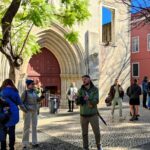
The tour starts at a very smart place: the church at Miradouro Sophia de Mello Breyner Andresen, also known as Miradouro da Graça (Calçada da Graça, 1100-265 Lisboa). Meeting there matters because Lisbon is a city of angles. From the start, you can see why the neighborhoods stack the way they do, and you start noticing landmarks instead of just following a line on a map.
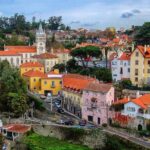
This is also where the “Lisbon feeling” kicks in. You get that classic layered skyline look over rooftops, viewpoints, and church towers, with hills that seem to fold into each other. One past guest specifically noted the view over the rooftops, the bridge, and St. George Church—exactly the kind of orientation that makes the walking tour feel like a story, not a scavenger hunt.
From there, you work your way through streets where the walls carry meaning. When you’ve already seen the city from above, street-level details land better: you understand sightlines, distances, and why certain streets feel sheltered or exposed. It’s the same idea as starting a walking tour at a map museum—except Lisbon is the museum.
If you’re the kind of person who likes to know where you are, this opening pays off quickly.
You can also read our reviews of more walking tours in Lisbon



Graça and Mouraria: where street art and city life connect
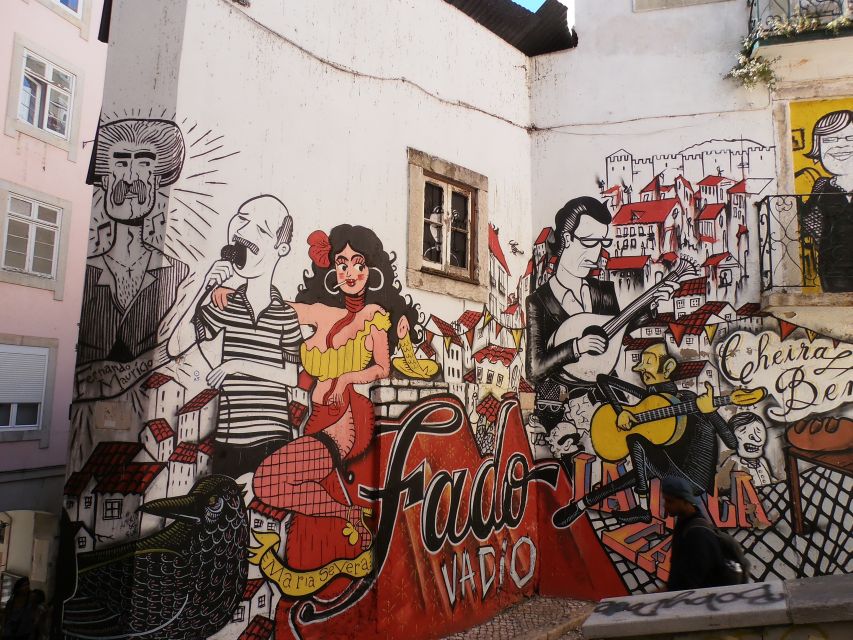
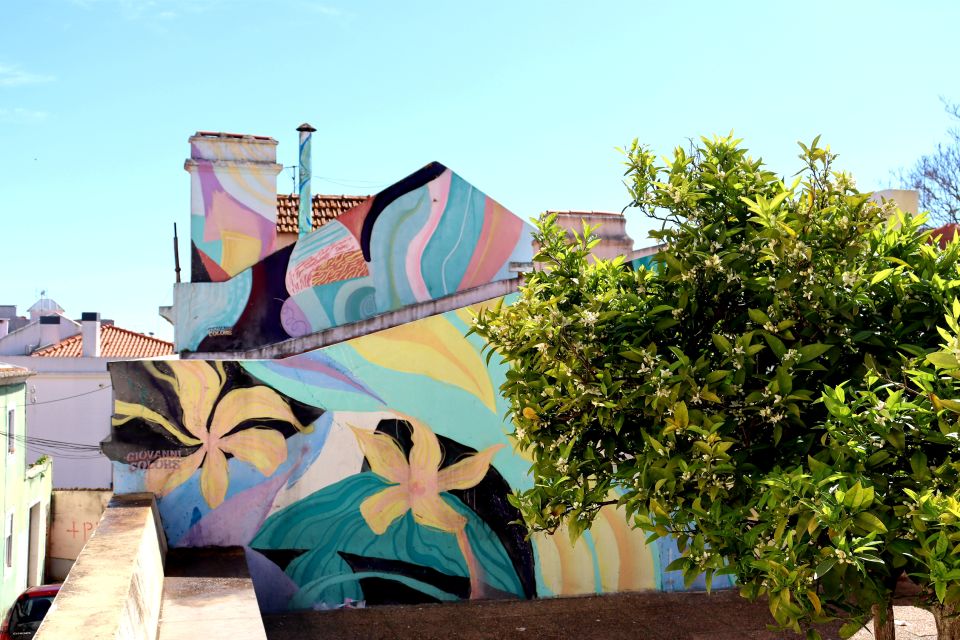
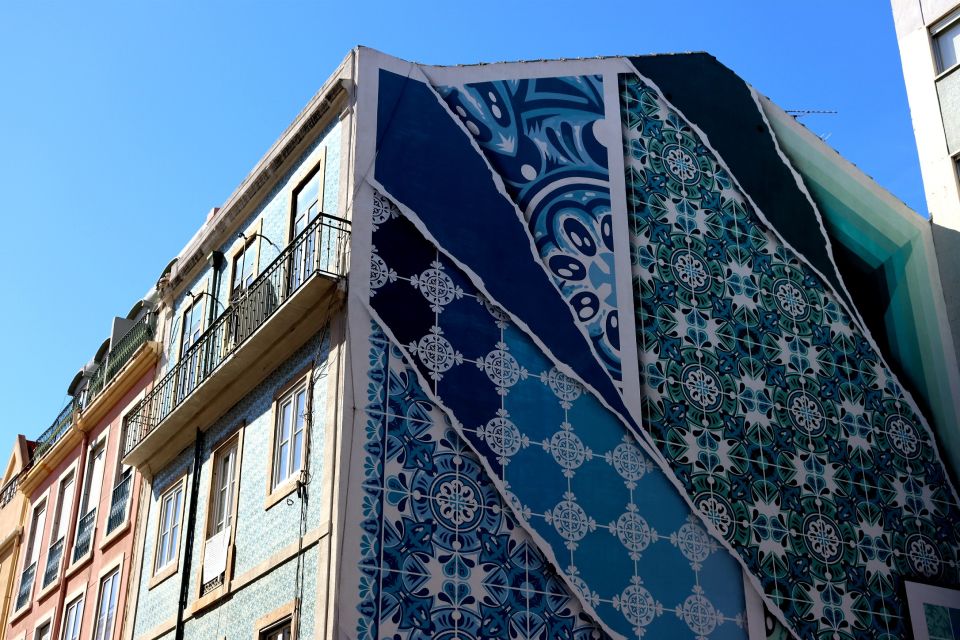
After the viewpoint start, the tour focuses on the street art scene in Lisbon, including works by local and international urban artists. The route takes you through Graça and Mouraria, neighborhoods that are close enough to central sights yet still feel like they have their own rhythm.
Here’s what makes this part special: the guide doesn’t just point at a wall and move on. The best tours do interpretation, and this one aims right for that. You learn how artists build identity through their work, and you get context on why certain styles show up in specific places. That context matters because street art is rarely just “pretty paint.” It can be a response to local life, politics, social tension, or even the economics of where artists can (and can’t) work.
You’ll run into named artists such as Vhils, Nomen, Odeith, and Gonçalo Mar.Pro, which gives you something concrete to track as you walk. If you’re new to street art, names help. If you already love graffiti and urban art, names help even more because you can start comparing techniques and themes as you go.
One detail I really value: safety and pacing. A guest noted the guide was attentive to safety while navigating traffic, cracks in sidewalks, and protruding stone tiles. Lisbon’s streets can look manageable until you’re actually on them. Having that kind of street-smart guidance makes you feel like the tour is in control, not just “good luck.”
Miradouro Portas do Sol and the São Jorge Castle area

East side Lisbon is where the views stack up. As you keep moving, you head toward excellent lookout spots such as Miradouro Portas do Sol, another classic hilltop viewpoint where the city opens up in front of you. It’s not just a photo stop. These viewpoints act like punctuation marks in the route—brief pauses that reset your perspective before you head back into tighter streets.
From that lookout area, the tour also brings you into the São Jorge Castle zone. Even if you don’t spend time inside the castle grounds, getting there on foot with commentary helps you understand why this area feels like a center of gravity for Lisbon’s story. It’s one thing to see a castle from far away; it’s another to walk into the neighborhood context around it, hearing what it means historically and culturally.
This is also where the tour’s “street art + history” mix gets practical. Castle views and lookout hills might feel like separate topics at first, but here they connect. Street art doesn’t float in a vacuum. It sits in real communities, and those communities have deep roots.
Expect more stairs and hill angles in this stretch. One past guest mentioned the walk ended up mostly downhill, which can make the experience feel easier on the legs than you’d expect. Still, plan as if you’ll work those calves.
Alfama’s backstreets: the part that feels like a secret map
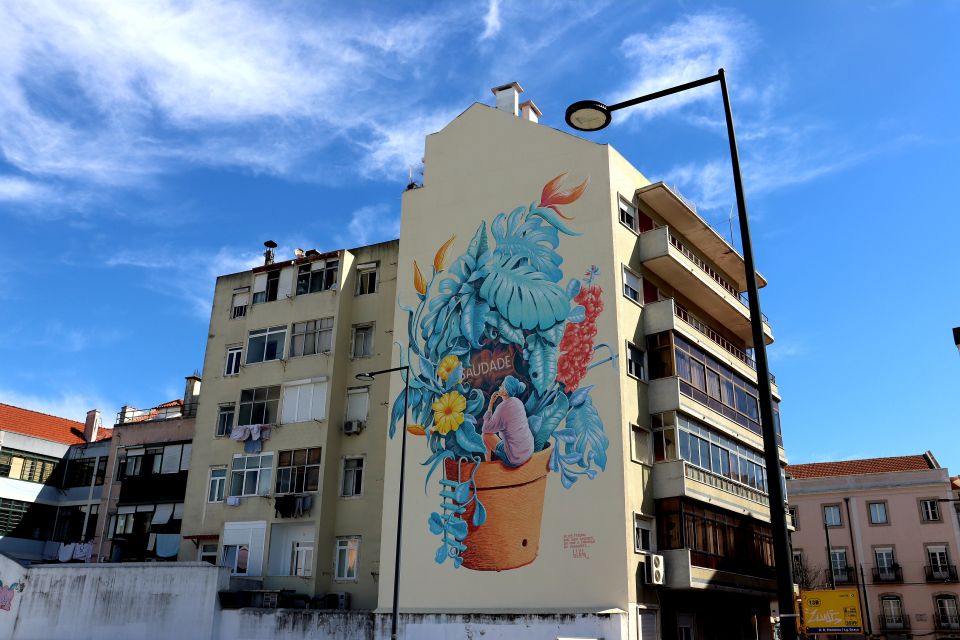
Then you shift toward Alfama and Mouraria’s quieter corners, going off the main tourist path. This is the “hidden treasures” part in practice: it’s not that the streets are abandoned. It’s that they’re less stage-managed. You notice small storefronts, everyday street texture, and walls that don’t look like they’re waiting for cameras.
Alfama is also where Lisbon’s cultural heritage shows up most strongly. The tour leans into that, using the neighborhoods as a living framework for what you’re seeing on walls. The guide explains life in the city and what there is to see and do, which is useful if you’re planning more days in Lisbon afterward. A good tour leaves you with a sense of the city beyond the walking route, and that’s what this one aims for.
There’s another payoff too: surprise. One guest said the tour ended in an unexpected place but ended up being the most impressive work seen that day. That’s exactly the kind of moment that keeps street art tours from feeling repetitive. Lisbon has enough walls that you can always find more art, but the best guide knows how to arrange your path so the strongest impressions land near the end.
If you like places where the city feels lived-in, not theme-parked, Alfama is where you’ll feel that.
Artists and meaning: reading the walls like a local
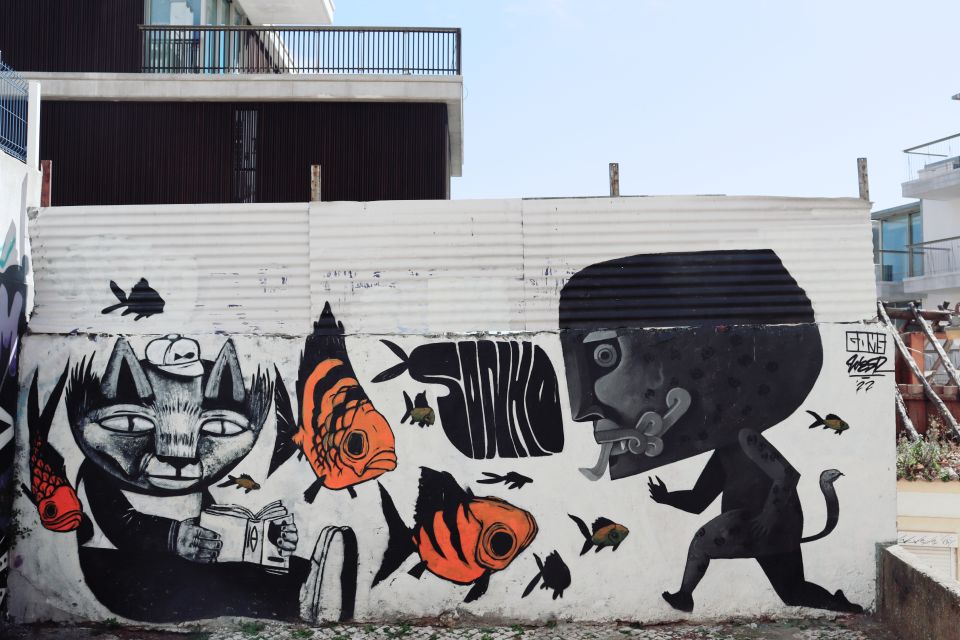
Let’s talk about the artists, because this tour gives you names and lets you notice patterns. You’ll encounter works tied to Vhils, Nomen, Odeith, and Gonçalo Mar.Pro. That’s not random. It signals a tour that wants you to see urban art as part of Lisbon’s ongoing conversation.
Here’s what you’ll likely come away thinking, based on how the guides approach the work: street art often uses identity—who the artist is, who the neighborhood is, who gets a voice. It can also reflect pressure: what artists respond to, what they challenge, and what they try to preserve or criticize.
Past guests also described the tour as including depth on lives, history, politics, and even literature-style cultural context tied to artists’ motives. That’s why the guide matters as much as the walls. Technique is interesting, but meaning is the hook.
In some groups, guides have included people like Rui, Andriy, and Andre, and guests singled out their ability to connect artwork to the broader story of Lisbon. One person even mentioned that Rui hand-selects tours and breaks down street art culture piece by piece so you build your own picture instead of receiving a lecture-only experience.
The practical takeaway for you: if you’re the type who likes to ask why something exists, bring that energy. The route is short enough that the guide can respond to what your group cares about—art style, political angle, neighborhood context, or simply how Lisbon’s street culture works.
You can also read our reviews of more historical tours in Lisbon






Timing, walking comfort, and small-group flow
This is a 3-hour walking tour with a small group limited to 8 participants. That small size is not a marketing detail—it’s the difference between stopping long enough to look closely and getting dragged along. In a larger group, you miss moments. Here, you can ask questions and keep up without feeling rushed.
The tour is designed for walking. Comfortable shoes are recommended, and you should assume uneven pavement and stone tiles will be part of your reality. One guest noted the guide navigated traffic and tricky pavement carefully, which suggests you’ll be guided through the “real street” parts, not just the smooth tourist stretches.
Also, the group moves at a pace that suits the route, which one past guest described as “perfect amount of time,” with the walk mostly downhill. Even if your legs don’t feel that way, you’ll at least have the structure: lookouts, art stops, then neighborhood streets.
Not suitable for people with mobility impairments. If that’s you or someone traveling with you, this tour’s style (hills, uneven streets) will likely feel like a mismatch.
No hotel pickup means you’ll start at the meeting point and walk your way through the neighborhoods from there. It’s simple, and it keeps the tour focused.
Cost and value: why $35 makes sense for this format
At $35 per person for a 3-hour small-group walk, the value comes from what’s bundled into that price: a guide plus local taxes and fees. You’re paying for interpretation, safety-minded navigation, and a route designed to connect lookouts, neighborhoods, and specific art stops in a coherent way.
Could you do a self-guided street art walk? Sure. But you’d be guessing which walls matter and what stories they connect to. This tour does the work of selection and sequencing. It also saves you time. Lisbon’s neighborhoods take effort to understand. A good guide shortens that learning curve.
Also, you’re not stuck in one “viewpoint loop.” The route intentionally mixes viewpoints (like Miradouro da Graça and Miradouro Portas do Sol) with neighborhood streets (Graça, Mouraria, Alfama) and with the broader historical anchor of the São Jorge area. That combination is harder to replicate on your own without serious planning.
What’s not included is equally useful to know: meals and drinks aren’t part of the price. And there’s no hotel pickup/drop-off. So think of this as a focused half-day activity you pair with a meal before or after, depending on your schedule.
If you like value in the form of “more than just photos,” this tour’s price lines up with its real payoff.
Who should book, and who should skip
This tour is ideal if you like any of these:
- Street art with context, not just images
- Lisbon’s neighborhoods beyond the standard central checklist
- People-and-place stories, including how art connects to culture and politics
- A route that includes multiple lookouts, so you get city orientation plus art
You might skip it if:
- You want a low-walking, low-stairs afternoon
- You need step-free routes (it’s not suitable for mobility impairments)
- You’d rather do museums or ride transit nonstop instead of walking through neighborhoods
If you’re traveling with a friend who says they’re not really into street art, this can still work. The way the tour ties art to neighborhood life and history makes it more than a niche hobby stop. One past guest even said it was the best part of the trip for someone who ended up loving the art for the stories behind it.
Should you book this Lisbon street art walking tour?
If you want Lisbon in one package—lookouts + neighborhoods + street art with meaning—this is an easy yes. The small group size helps, the route makes sense because it starts at Miradouro da Graça, and the guide’s job is to connect what you see on walls to what Lisbon is.
Before you book, be honest about the walking. Comfortable shoes are a must, and the city’s uneven pavement is part of the deal.
If your schedule is flexible, also like that the tour offers free cancellation up to 24 hours in advance for a full refund. That’s useful when Lisbon weather turns moody or plans shift.
FAQ
How long is the Lisbon Street Art and Historical Walking Tour?
It lasts 3 hours.
Where is the meeting point?
Meet at the church located at Miradouro Sophia de Mello Breyner Andresen (Miradouro da Graça), Calçada da Graça, 1100-265 Lisboa, Portugal.
What neighborhoods and viewpoints will we see?
You’ll visit Graça, Mouraria, and Alfama, with lookout stops such as Miradouro da Graça and Miradouro Portas do Sol. The tour also includes the São Jorge Castle area.
Is the tour in English, and is it a small group?
Yes, the tour guide leads in English, and it’s a small group limited to 8 participants.
What should I bring for the tour?
Bring comfortable shoes, since the tour involves walking.
What’s included in the $35 price?
The price includes the guide and local taxes and fees.
Is it easy to cancel?
You can cancel up to 24 hours in advance for a full refund.
If you want, tell me your travel dates and what else you’re doing in Lisbon that day. I’ll help you pair this with nearby sights and meals so your feet (mostly) stay happy.