REVIEW · SAO MIGUEL
Coasteering in Caloura (Sao Miguel – Azores)
Book on Viator →Operated by Fun Activities - Azores Adventure · Bookable on Viator
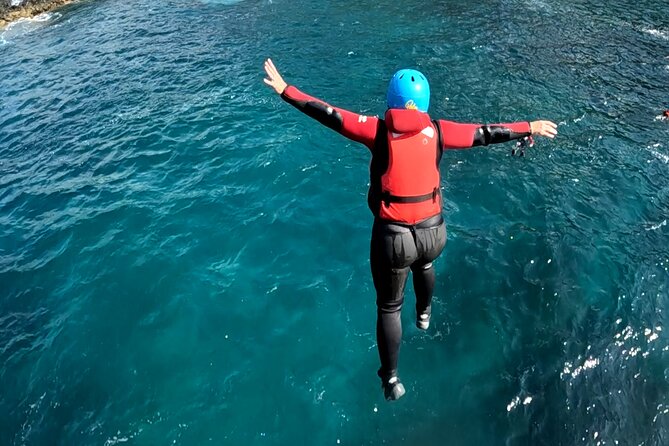
Cliff jumping meets caves and snorkeling. Coasteering in Caloura is a hands-on way to see São Miguel’s rugged coast close up, mixing short hikes, rocky bays, optional 1–8 meter jumps, and snorkeling for marine life. It’s about 3 hours of real motion, not a sit-and-stare tour.
I love the safety-first approach, where guides keep you moving but also dial in technique and control, including clear encouragement without pressure. I also like that the day feels thoughtfully run and environmentally minded, with guides like Bruno, Paulo, and Ricardo standing out for keeping the vibe fun while staying focused on safety.
The main drawback is that good weather matters. If conditions are rough, you might get less time playing in the waves/currents, and the route can still include high jumps (up to 8 meters), even though there are alternatives if you’re not comfortable.
In This Review
- Key things to know before you go
- Caloura’s volcanic coastline: the setting that makes this work
- The 3-hour flow: what your afternoon looks like
- Safety and technique: why the guides matter (Bruno, Paulo, Ricardo)
- Jumping off cliffs up to 8 meters: how to choose your level
- Exploring caves and natural pools: the part that feels truly different
- Snorkeling the Atlantic: what marine life time is like
- Getting there from Ponta Delgada: logistics that keep it simple
- Price and value: what $84.10 buys you in the real world
- What to bring (and what to skip)
- Who should book coasteering in Caloura (and who might pass)
- Should you book this coasteering tour in Caloura?
- FAQ
- FAQ
- How long is coasteering in Caloura?
- Where does the tour start and end?
- Is pickup offered from hotels or accommodations?
- What language is the tour offered in?
- Do I need to be comfortable with the highest jumps?
- What kind of physical fitness do I need?
- What should I bring?
- Is this tour affected by weather?
Key things to know before you go
- 1–8 meter jump options with alternatives if the heights feel too intense
- Short coastal walk on volcanic rock before you get into caves and water time
- Snorkeling for marine biodiversity in the Atlantic around Caloura
- Small groups (max 12), so you get more attention and calmer pacing
- Safety-obsessed, environment-conscious guides who tailor encouragement to you
- Photos and videos available at the end for an easy souvenir
Caloura’s volcanic coastline: the setting that makes this work
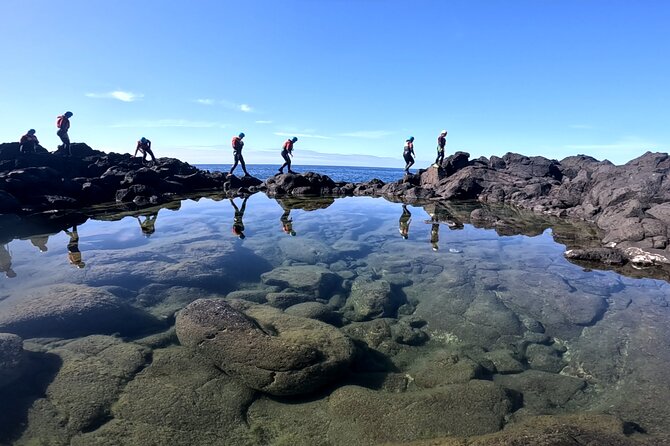
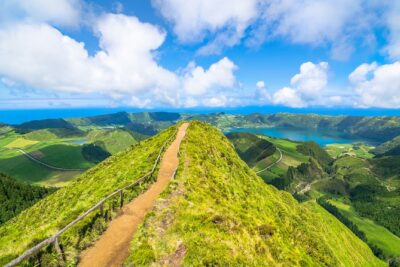
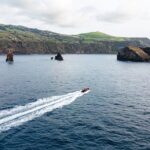
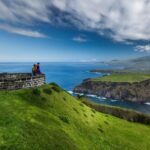
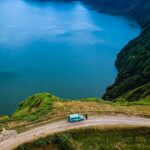
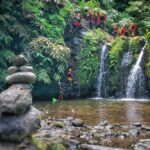
Coasteering in Caloura is built for the Azores. This is central-southern São Miguel, about a 20-minute drive from Ponta Delgada, where the coast is shaped by volcanic action and sheltered enough to give you lots of natural corners to explore. When you get to Caloura, the whole idea clicks: you’re not just “seeing the ocean,” you’re moving along it—past bays, caves, and natural pool areas carved into rocky shore.
A big part of the appeal is the variety packed into one stretch. You’ll go from irregular volcanic stones (lava-flow rock) to inland bays and cave areas, then shift into the ocean for snorkeling and controlled entry points. That mix is what turns this into a true activity day instead of a standard sightseeing loop.
You can also read our reviews of more tours and experiences in Sao Miguel.
The 3-hour flow: what your afternoon looks like
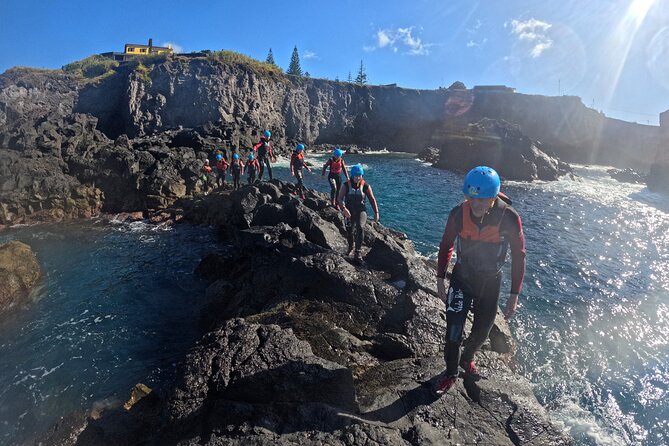
This tour runs about 3 hours total, and it typically follows a simple, efficient rhythm. You’ll meet in/around Ponta Delgada (with pickup offered at or close to your accommodation if available), then head to the Caloura coast.
Once you arrive, the first step is practical: equipment distribution and a safety briefing. This matters more than people think. Coasteering is part hiking, part ocean activity, and part jump-choice challenge. A solid briefing is what keeps everyone comfortable, especially when group members range from kids to adults.
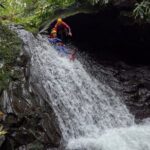
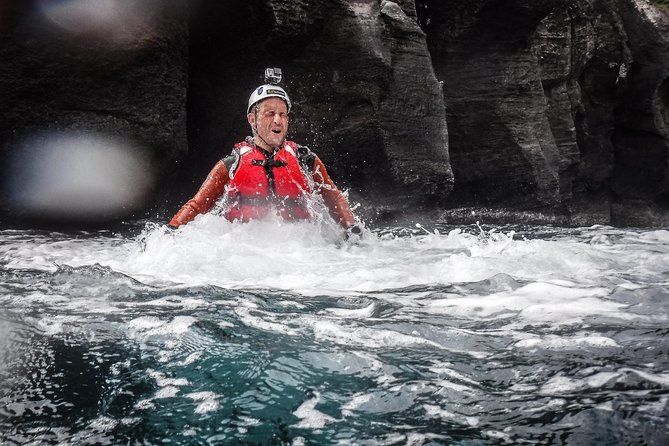
After that, it’s a short walk along the coast through rough volcanic terrain. Then the real fun starts: exploring caves, moving between natural pools and sheltered bay pockets, and using the jump/diving entry points that the route offers. Some jumps are optional, and heights can range from 1 to 8 meters depending on the spot and your comfort level.
If conditions allow, you’ll also get time in the water for snorkeling, focusing on marine life and the biodiversity you can spot along this coastline.
Safety and technique: why the guides matter (Bruno, Paulo, Ricardo)
The most consistent praise is about how safety-led the experience feels. The guides are repeatedly described as extremely safety oriented, while still keeping the energy high. That combination is rare: you can be hyped without being sloppy.
Names that came up in the reviews include Bruno, Paulo, and Ricardo. One reviewer specifically credited Ricardo with making the whole thing feel easy to talk to—and also mentioned he gave local recommendations at the end. Another theme was that guides encourage you without pressure, and they work to make sure you leave feeling more confident than you arrived.
Here’s what to expect in practice:
- You’ll get direction on how to handle the rocky footing during the coastal walk.
- You’ll get a clear sense of which jumps are optional and what alternatives exist.
- You’ll be supported in your comfort level, not forced to match someone else’s pace.
If you’re worried about heights, pay attention to the tour’s key note: if you feel uncomfortable with the high jumps, there are alternatives. That’s huge. It means you can still do the core coasteering experience—caves, bays, and water time—without feeling trapped by the most adrenaline-heavy parts.
Jumping off cliffs up to 8 meters: how to choose your level
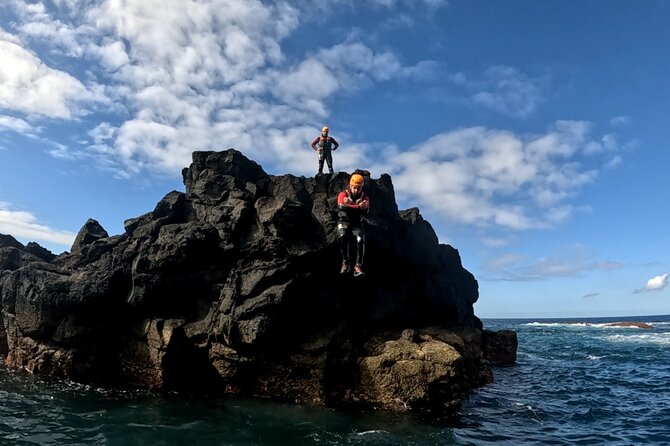
Yes, you might see 1–8 meter jumps. And yes, at the top they can feel bigger than you expect—something a first-timer noted when describing how the height didn’t look that high until they were actually standing there.
But the design of the tour is built around options:
- Some jumps are optional.
- If you don’t want the high ones, you can choose alternatives.
- The guides will encourage you, not bully you into doing something you don’t want.
My advice: treat the jump points like a menu, not a test. Pick one or two that match your comfort early in the session. Once you’ve settled, you can decide whether to step up to higher options.
Also, don’t ignore how this affects confidence. One review described conquering fear even as a first-time cliff jumper who didn’t know how to swim. That doesn’t mean this is a swimming lesson tour, but it does reinforce the point: support and alternatives are part of how the day works.
Exploring caves and natural pools: the part that feels truly different
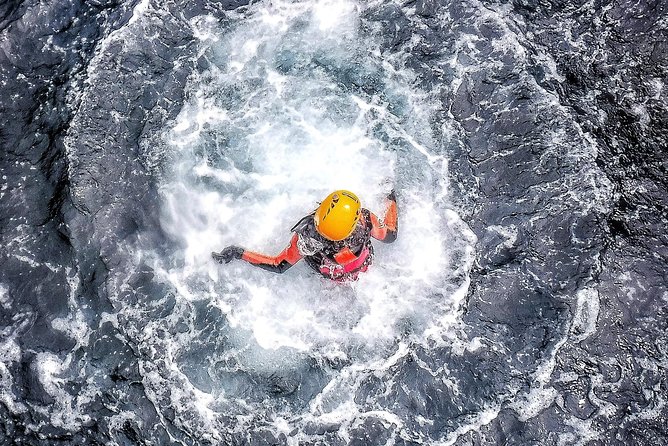
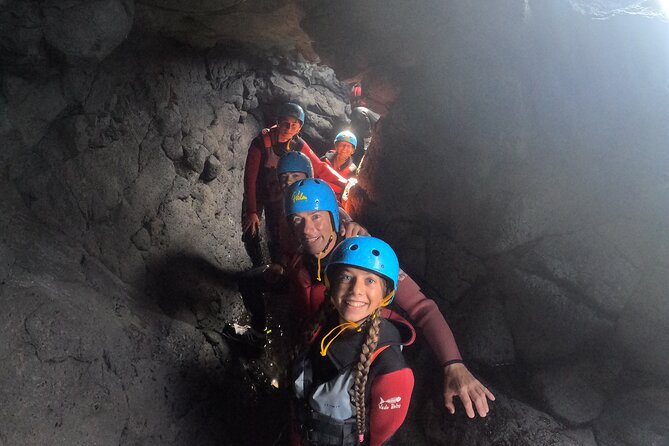
Caves are listed as part of what you’ll explore, and that’s exactly the kind of detail that makes Caloura memorable. Most coastline tours show you views. Coasteering moves you through the coastline’s shape: you’re navigating rocky edges, entering and leaving natural water pockets, and checking out cave areas as the terrain and waterline allow.
The volcanic rock matters here. The coastline includes irregular stones from lava flows, which create uneven paths and ledges. That adds a “real place” feeling. It also explains why the tour asks for moderate physical fitness. You’ll be moving over rock and changing surfaces during the day.
One good sign from reviews: people reported that this works across abilities and age ranges. A family described ages from 8 to 70 on the same tour. That usually means the guide-led pacing and the option points do real work—so you’re not stuck doing the hardest version the whole time.

Snorkeling the Atlantic: what marine life time is like
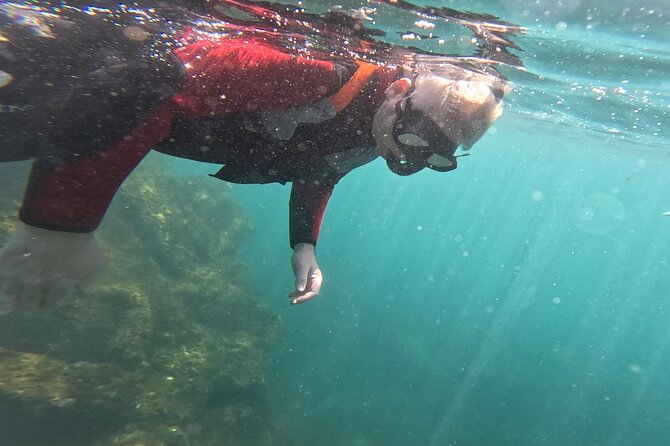
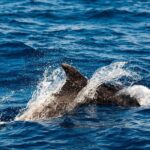
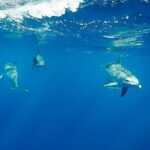
In the ocean portion, snorkeling is a key component. The goal isn’t just a quick check of your gear—it’s time to enjoy the Atlantic around Caloura and discover marine biodiversity.
A few practical thoughts so you enjoy this more:
- Don’t expect a perfectly calm day. If conditions are rough, the tour notes that you may have less wave/currents play. Snorkeling time is the planned focus, but how it feels can depend on conditions.
- Go in with curiosity more than performance. This is about looking around and spotting what’s there.
The tone from reviews suggests people felt the snorkeling and water time were a genuine part of the experience—not an add-on tacked to the end.
Getting there from Ponta Delgada: logistics that keep it simple
The tour starts and ends back in/near your Ponta Delgada meeting point. Pickup is available if you book it (for Ponta Delgada), and pickup is described as at or close to where you’re staying. After the activity, you’re dropped off at the same place.
A couple of details matter for real-life planning:
- There’s a mobile ticket, so you won’t be scrambling for paper.
- It’s “near public transportation,” so you’re not forced to be car-dependent in the city.
- The activity uses a small group size (maximum 12 travelers), which tends to make pacing and safety briefings easier.
Price and value: what $84.10 buys you in the real world
At $84.10 per person for about 3 hours, this isn’t a cheap half-day in the Azores—but it’s also not a “pay for a bus ride” kind of price. You’re paying for:
- Guide time that includes safety briefing and active supervision
- Equipment provided for the activity
- Access to a specific coastal area and the route that goes with it
- Snorkeling time for marine biodiversity
- Photos and videos available at the end (easy souvenir value)
One reason it’s booked well in advance—average booking 25 days ahead—is that it fits a sweet spot: it’s active and memorable, but short enough that you can still stack other São Miguel plans the same week.
If you’re choosing between this and a more passive coast tour, the value equation flips. Coasteering costs more, but you’re doing far more than viewing. You’ll feel the coastline in your legs, your balance, and your decisions about jumping.
What to bring (and what to skip)
This tour is very clear about essentials. Bring:
- Swimwear
- Comfortable clothing
- Your own beach towel
- A water bottle
- A sunscreen (high priority in open ocean conditions)
- A hair elastic if you need it
Also, you’re asked to provide shoe size under special requirements (with U.S., U.K., or E.U size). That’s a useful detail because coasteering requires the right fit for safety and comfort.
One more tip: wear or pack clothing that dries fast. You’ll be in and around water, and your comfort improves when you don’t spend the ride back soaked in heavy fabric.
Who should book coasteering in Caloura (and who might pass)
This is a great fit if you want:
- A hands-on way to see São Miguel’s coast beyond viewpoints
- A mix of walking, caves, and ocean time
- An activity that scales to you, thanks to jump alternatives
It also seems to work for mixed groups. Reviews included everyone from kids to older adults, with guides keeping the experience fun while staying safety focused.
You might want to think twice (or ask more questions before booking) if:
- Heights and jumping make you panicky. Alternatives exist, but you should still be honest about comfort.
- You struggle with uneven footing and moderate physical demands. The rocky volcanic walk is part of the day.
- Weather is a concern on your schedule. Good weather is required; if it’s canceled due to poor conditions, you’ll be offered another date or a full refund.
Should you book this coasteering tour in Caloura?
I’d book it if you want a memorable São Miguel experience that feels real: caves you actually reach, bays you move through, and snorkeling that’s tied to the coastline you came for. The biggest selling point is the way the guides combine safety, environment awareness, and high-energy encouragement—names like Bruno, Paulo, and Ricardo come up for a reason.
Skip it if you’re mainly after a laid-back tour, or if you know you can’t handle the idea of ocean entry and cliff-jump decision-making even with alternatives. And if your travel dates are tight, remember this is weather dependent, so flexibility helps.
FAQ
FAQ
How long is coasteering in Caloura?
It’s about 3 hours, approximately.
Where does the tour start and end?
It starts in Ponta Delgada, Portugal, and ends back at the same meeting point.
Is pickup offered from hotels or accommodations?
Pickup is offered if available. Pick-up is described as at or close to your accommodation, specifically for the Ponta Delgada area.
What language is the tour offered in?
The tour is offered in English.
Do I need to be comfortable with the highest jumps?
No. If you feel uncomfortable with the high jumps, there are alternatives.
What kind of physical fitness do I need?
The tour notes a moderate physical fitness level is required.
What should I bring?
Bring swimwear and comfortable clothing, plus your individual beach towel, a water bottle, sunscreen, and a hair elastic if needed.
Is this tour affected by weather?
Yes. The experience requires good weather. If it’s canceled due to poor weather, you’ll be offered a different date or a full refund.