REVIEW · LISBON
Lisbon: Iconic Landmarks Walking Tour
Book on GetYourGuide →Operated by Sandemans Tours · Bookable on GetYourGuide
Lisbon rewards curiosity fast. In just 2 hours, this walk stitches together key landmarks and the stories behind them, from seafaring ambition to the 1974 return of democracy. I like that the guide keeps it moving yet still makes time for photos and street-level context, so you leave with a clearer map of the city. Another thing I love is how the route uses real places (not just slides) to explain big events like the 1755 earthquake and the Salazar years.
You’ll get a strong sense of Lisbon’s street rhythm as you pass through areas like Baixa Pombalina and Bairro Alto, with stops that feel intentionally chosen for both views and meaning. The guide support matters too: English and Spanish delivery, plus insider suggestions on where to eat, drink, and explore after the tour.
One thing to consider: it’s a short walking format, so you won’t spend long at any single monument. Also, it isn’t suitable for wheelchair users, and paid attractions are not included unless you choose to add them later.
Key highlights you’ll notice right away
- Praça do Comércio as your history starter, by the river’s edge
- Miradouro de São Pedro de Alcântara for quick, high-impact city views
- Carmo Convent ruins as a haunting reminder of 1755
- Santa Justa Lift area for rooftops photos and a classic Lisbon look
- Bairro Alto + Baixa Pombalina to compare old quarters and post-earthquake rebuilding
In This Review
- Why This 2-Hour Lisbon Walk Makes Sense
- Starting at Praça do Comércio: Where Lisbon Met the World
- Miradouro de São Pedro de Alcântara: Get Your Bearings in Photos
- Carmo Convent Ru ruins: Lisbon’s 1755 Earthquake in Stone
- Santa Justa Lift Area: Rooftops, Views, and the Idea of Lisbon’s Verticality
- Baixa de Lisboa and Baixa Pombalina: Rebuilt Streets After Disaster
- Bairro Alto: Seafarers, Explorers, and Everyday Culture
- The Carnation Revolution and the Salazar Years
- The Best Part: The Guides Who Make It Click
- Price and Value: What $4.72 Buys You in Lisbon
- Timing, Shoes, and What to Expect Day-of
- Should You Book This Lisbon Iconic Landmarks Tour?
- FAQ
- What is the starting point of the tour?
- How long is the walking tour?
- What languages are the guides available in?
- Is food or drink included?
- Are paid attractions included?
- Is the tour wheelchair accessible?
Why This 2-Hour Lisbon Walk Makes Sense

If you only have a day or two in Lisbon, you need a fast way to understand the city. This tour is built for that. It covers a tight loop that links the riverfront, the center, and the viewpoints that help you mentally place everything you’ll see later.
I also like the timing. With a 2-hour window and multiple short stops, you get momentum without feeling trapped in one spot. You’re not just ticking off buildings; you’re walking through cause-and-effect history.
Starting at Praça do Comércio: Where Lisbon Met the World
You begin at Praça do Comércio, meeting by the statue in the main square. This is the kind of place where the setting does half the teaching. The square sits right on the river, so it naturally connects to Lisbon’s role as a trading and travel hub.
Your guide sets the tone with what the square meant for merchants and travelers, and why the city’s future was so tied to sea routes. Even if you’re new to Portuguese history, the story lands because you’re standing in the exact geography that made it possible.
You’ll also get a photo pause here later, which helps. On a second look, you notice details you missed the first time: the openness of the square and how it frames movement between the river and the city.
You can also read our reviews of more walking tours in Lisbon



Miradouro de São Pedro de Alcântara: Get Your Bearings in Photos
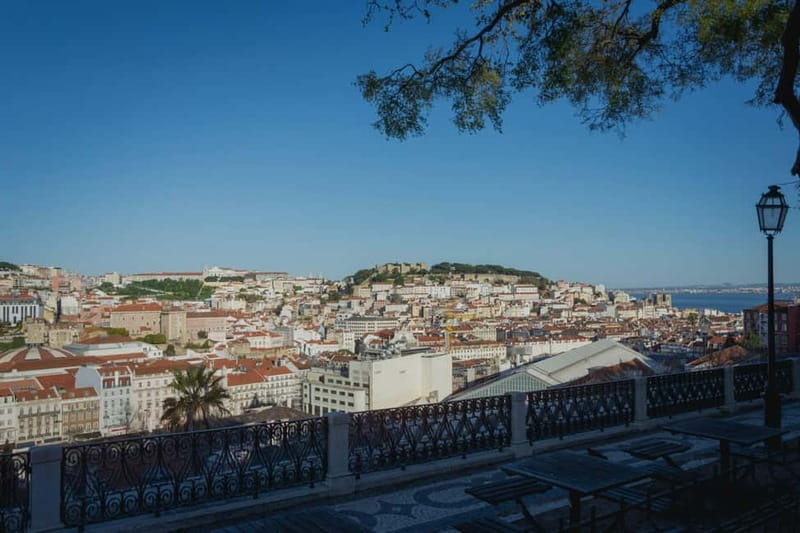
Next comes the Miradouro de São Pedro de Alcântara, with a focused photo stop. This is a smart use of time because a good viewpoint teaches you how Lisbon is stacked.
From above, you can start to recognize the city’s layers and how neighborhoods sit at different levels. That matters later when you walk around on your own and want to orient quickly. One of the practical benefits of this stop is that it turns the rest of the walk into something you can later repeat without a guide.
It’s also ideal for people who like quick wins. You don’t need to hunt for a viewpoint after the tour, because you’ll already have one of Lisbon’s most useful angles on your radar.
Carmo Convent Ru ruins: Lisbon’s 1755 Earthquake in Stone
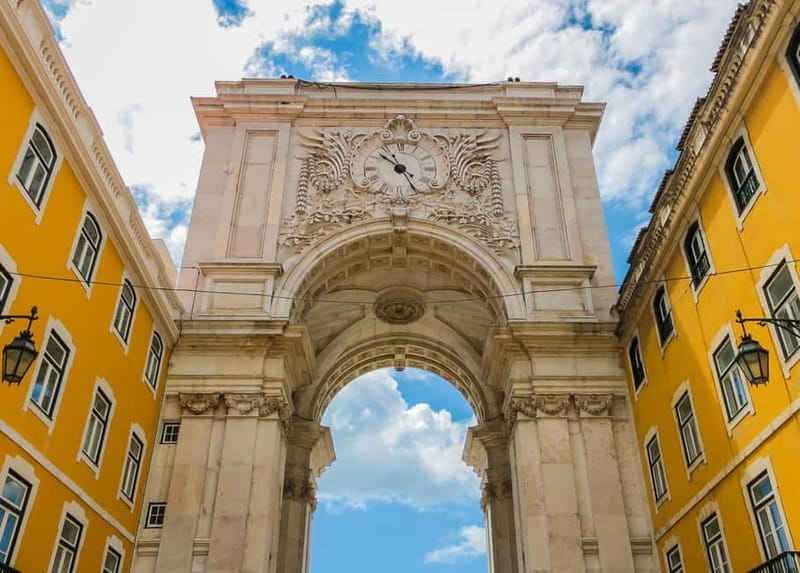
The Carmo Convent ruins are where the tour slows down in a good way. You get a guided stop here, and the focus is on the 1755 earthquake and what that disaster left behind.
What makes this stop powerful is that it’s not a staged museum moment. It’s a ruin you can read with your eyes—walls, gaps, and the sense of something interrupted. Your guide connects that physical reality to Lisbon’s resilience, and you start to see how rebuilding shaped the city’s identity.
If you like history that you can touch, this is one of the best moments in the whole itinerary. And if you prefer stories that explain why a place looks the way it does, the Carmo ruins do exactly that.
Santa Justa Lift Area: Rooftops, Views, and the Idea of Lisbon’s Verticality
After the Carmo stop, you’re led toward the Santa Justa Lift area. You’ll have a photo stop for the views of Lisbon rooftops, but you’re not required to pay for the lift itself during the tour.
That distinction matters. The tour gives you the visual payoff, so you can decide later if you want to add paid entrance for a closer experience. If you’re budget-minded, this is a comfortable compromise: you still get the classic Lisbon look without automatically spending more.
Also, the area helps you understand Lisbon’s vertical logic. The city’s structure is part of the character, and even a quick rooftop view makes that clearer than a flat map.
Baixa de Lisboa and Baixa Pombalina: Rebuilt Streets After Disaster

Walking through Baixa de Lisboa and Baixa Pombalina is where you see the practical side of recovery. After the earthquake, Lisbon’s rebuilding created grand architecture and streets that feel deliberately planned.
You’ll hear how this rebuilding wasn’t just about repairing damage; it was about reshaping a city’s future. When you’re walking along the streets, it’s easier to understand why the design stands out. The straight lines and formal layout become part of the story, not just background scenery.
A tour like this is especially useful if you tend to get lost in neighborhoods. Here, Baixa acts like a reference point. Once you’ve walked it with context, you’ll have an easier time linking other areas of Lisbon to what you learned.




Bairro Alto: Seafarers, Explorers, and Everyday Culture

Then you move toward Bairro Alto, a historic district filled with charm and tradition. The time here includes a walk segment, plus the guide’s storytelling.
This is where the Age of Discovery themes get tied to place. You’ll hear about sailors and explorers who set off on daring voyages, and how Lisbon’s ambition was connected to the ocean. Bairro Alto fits that story because it’s a neighborhood people associate with energy, culture, and living history.
If you enjoy hearing how different eras overlap in the same streets, Bairro Alto is a good match. You’re not just hearing about ships and empires; you’re walking through a district where the city’s later cultural life still feels close to the surface.
The Carnation Revolution and the Salazar Years

One of the tour’s strengths is that it doesn’t stop at older legends. It brings you into the 20th-century story of Portugal’s political life.
You’ll learn about life under the Salazar dictatorship and then how the peaceful Carnation Revolution of 1974 restored democracy to Portugal. The route makes this easier to grasp because you’re not hearing this as distant textbook history. You’re hearing it while moving through neighborhoods that have watched change over generations.
This part works best if you’re the kind of traveler who likes the human angle: how governance and freedom affect daily life, even when you don’t see it in a monument.
The Best Part: The Guides Who Make It Click
The experience is guided, and the guide quality shows. In particular, I’d call out the recurring strengths from what different guides do well: clear explanations, friendly energy, and enough time to look around rather than rushing everyone along.
Guides like Natalia, Nuno, and Antonio are highlighted for different reasons. Natalia’s approach stood out for keeping the intro short and focused on what matters most, plus giving time to explore and sample local drinks along the way. Nuno is remembered for being cheerful and explaining everything clearly. Antonio is praised for making sure the group had time for photos, speaking clearly so everyone could hear, and providing practical tips on where to go next.
Even if you don’t know Portuguese history in advance, this kind of guiding helps. It turns landmarks into a sequence you can follow in your head.
Price and Value: What $4.72 Buys You in Lisbon
At about $4.72 per person, this tour is priced like a bargain. The value isn’t that it includes every paid attraction. It doesn’t. The value is in the guided walking structure plus insider direction that helps you continue after the tour.
You get an expert English-speaking local guide and recommendations on where to eat, drink, and explore in Lisbon. For many visitors, that’s where the money quietly gets saved. A guided introduction can help you avoid the most time-wasting choices on your own.
Also, you’re paying for clarity. The guide ties together Praça do Comércio, Carmo ruins, Baixa Pombalina, Bairro Alto, and the viewpoint stops with the major historical turning points. If you’ve ever wandered a city for hours and realized you saw the sights but didn’t understand the story, you’ll appreciate what this format does.
Timing, Shoes, and What to Expect Day-of
The tour runs for 2 hours, rain or shine. That’s a comfortable length for people who want a serious start without turning the day into a full marathon.
Bring comfortable shoes. Lisbon’s streets ask for it, and this itinerary includes walking segments plus brief guided or photo stops. If you’re hoping for a slow, sit-down pace, you might find it feels a bit quick, because the structure is designed to cover multiple neighborhoods and viewpoints.
Paid attraction entry isn’t included, so if you want to go inside specific places, you can decide later. The tour itself is designed to keep the paid parts optional.
Should You Book This Lisbon Iconic Landmarks Tour?
I’d book it if you want a strong orientation in a short time. This one is especially good as a first or second day activity because it links the big historical moments to the layout of the city. The mix of Praça do Comércio, Carmo Convent ruins, Baixa Pombalina, Bairro Alto, and viewpoint stops gives you both meaning and a usable mental map.
I would not prioritize it if you want extended time at a single landmark or you need wheelchair access. For everyone else, it’s an efficient way to learn Lisbon’s main stories without spending the whole trip indoors or hopping between unrelated places.
FAQ
What is the starting point of the tour?
The tour starts at Praça do Comércio, by the statue.
How long is the walking tour?
The duration is 2 hours.
What languages are the guides available in?
The tour is offered with live guides in Spanish and English.
Is food or drink included?
No, food and drinks are not included. You can add them separately.
Are paid attractions included?
Entrance to paid attractions is not included. The tour includes photo stops and guided viewing, and you can choose to pay for specific sights afterward.
Is the tour wheelchair accessible?
No. The tour is not suitable for wheelchair users.