REVIEW · MADEIRA
Madeira Surf Classes in Portugal
Book on Viator →Operated by Calhau Surf School · Bookable on Viator
Your first board starts with local tide know-how. Calhau Surf School’s Madeira surf initiation is built around daily sea and tide checks, so you’ll meet at Rua da Praia and then get matched to the conditions for your level. Coaches like Rodolfo and Filipe are part of the team that makes safety and quick progress feel like the point of the day.
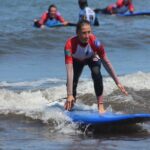
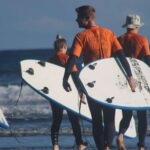
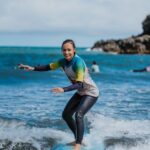
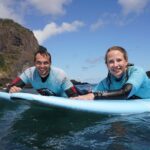
Two things I love: the surf gear + photos package, and the hands-on coaching in the water. You get a surfboard and surf suit, plus insurance and a photo set (when weather allows and the session runs as planned). Instructors such as Jonathan, Alan, and Orlando focus on feedback while you’re trying waves, not just standing on shore watching.
One consideration: the lesson time and even the beach can change based on tide and sea conditions. The exact meeting time and spot get confirmed 1 day ahead by WhatsApp, so if you’re a brand-new beginner, be ready to communicate your comfort level early—especially if conditions look bigger than you expected.
In This Review
- Key highlights
- Madeira surf classes that don’t feel rushed
- Price and what you’re really paying for ($84.33)
- Meeting at Rua da Praia: simple start, tide-driven finish
- What happens during the 2 hours in the water
- 1) Getting ready on the beach
- 2) Surf fundamentals you can actually use
- 3) Staying with you for the whole instruction window
- 4) Photos while you’re doing the hard part
- Beach and spot changes: what they mean for your learning
- Who this surf initiation is best for
- What to bring (and what to plan for after)
- Small details that shape the whole day
- Value check: is it worth $84.33?
- Should you book Madeira Surf Classes with Calhau Surf School?
- FAQ
- How long is the surf class, and how much time is the lesson?
- What’s included in the class price?
- Do I need to bring my own surf gear?
- Where do we meet, and does it end nearby?
- How will I know the exact meeting time and where to go?
- Is the class taught in English?
- What happens if weather is poor?
- Can I cancel for a full refund?
Key highlights
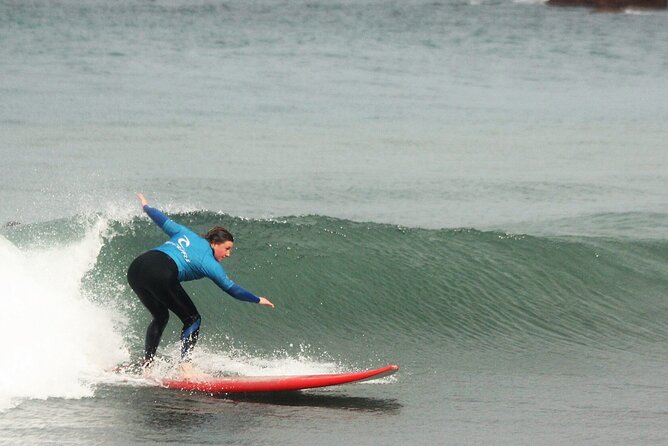
- Guaranteed board time from your first class, with coaching built for your surf level
- Small group size (max 6) so you get more individual attention in the water
- 2 hours of instruction inside a total ~3-hour activity window
- Tide-and-weather driven logistics, with possible beach changes for safer waves
- What’s included: surfboard, surf suit, insurance, and photos (weather permitting)
- Names you might see on the team: Rodolfo, Filipe, Augusto, Jonathan, Alan, Orlando, and Braulio
Madeira surf classes that don’t feel rushed
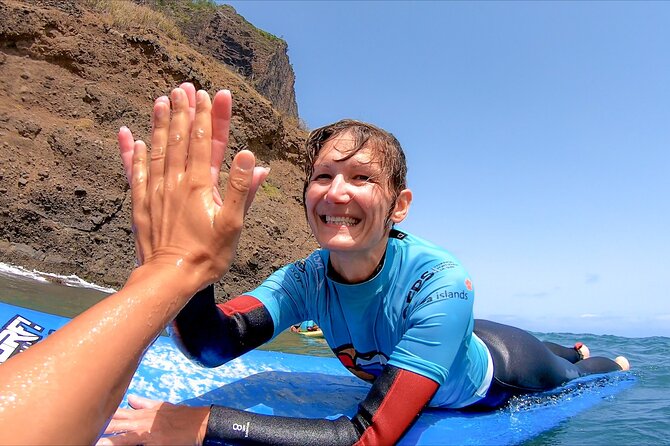
Madeira can be dramatic—ocean cliffs, shifting weather, and swells that don’t follow a neat schedule. That’s exactly why this surf class works so well. The plan is not fixed in stone. The meeting time and even the beach can be adjusted based on sea conditions and tide, so you’re more likely to surf what’s actually working that day rather than what sounded good on paper.
Calhau Surf School’s “surf initiation” is pitched as safe and fun, with real instruction aimed at helping you surf better, not just catch a few foam hits. The big promise to remember is that you’ll be on a board during your first class. That turns a first surf from a maybe-thing into a do-thing.
If you’re traveling in Madeira for a mix of experiences—levadas, viewpoints, and a beach day—this class is a focused burst. It’s not a half-day production that eats your whole afternoon. It’s about 3 hours total, with 2 hours of lesson time, which is a solid ratio.
A few more Madeira tours and experiences worth a look
Price and what you’re really paying for ($84.33)
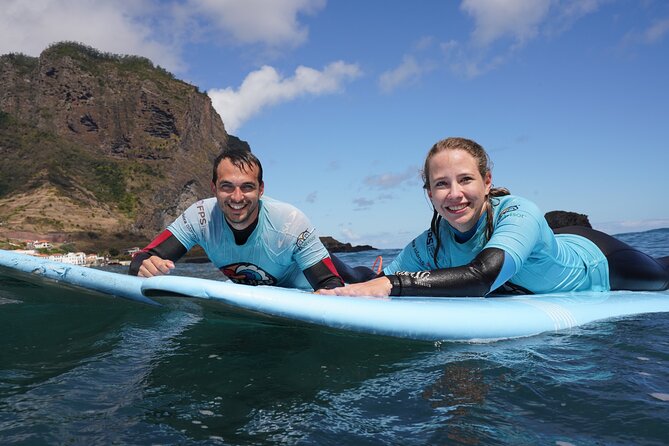
At $84.33 per person for a ~3-hour activity (with ~2 hours of actual instruction), this sits in the “reasonable value” zone for a hands-on sport lesson. The key is what’s included.
You get:
- Surfboard
- Surf suit
- Insurance
- Photos (as long as weather allows and there’s no technical problem)
- A guide
That matters more than it sounds. Renting gear for surf days can quietly add up, and with this you don’t have to plan for towels, suits, or board logistics. Photos are another underrated part of the value. Surf is hard to document yourself, and these shots can be your proof that you actually stood up and didn’t just paddle angrily.
What you don’t get:
- Private transportation
- Snacks
So if you’re relying on public transit or you’re far from the meeting point, factor in time (and budget) to get there. Also bring water (it’s listed for you to bring), and plan to eat after. This is an active lesson, and the ocean doesn’t care that you’re hungry.
Meeting at Rua da Praia: simple start, tide-driven finish
Your start point is Rua da Praia, R. da Praia, 9225, Portugal, and the activity ends back at the meeting point. The opening hours run daily from 8:00 AM to 6:30 PM, which gives you options during a Madeira stay.
Here’s the practical twist: you won’t always know the exact beach and time in advance. Confirmation of the surf class time and meeting details is done 1 day ahead by message on WhatsApp, because tide and sea conditions change every day. That’s a smart way to avoid a common surf-school problem—showing up ready to surf only to have the “conditions” turn out wrong.
It can also mean the beach location may change due to sea conditions. That’s not a downside on its own. In surf, “perfect” conditions are rare. It’s better to adjust plans for safer waves and better learning conditions than to force the original spot.
One more detail that helps: you receive confirmation at booking time, but the final day-of specifics come the next day. In other words, check your WhatsApp message promptly so you don’t show up at the right place at the wrong moment.
What happens during the 2 hours in the water
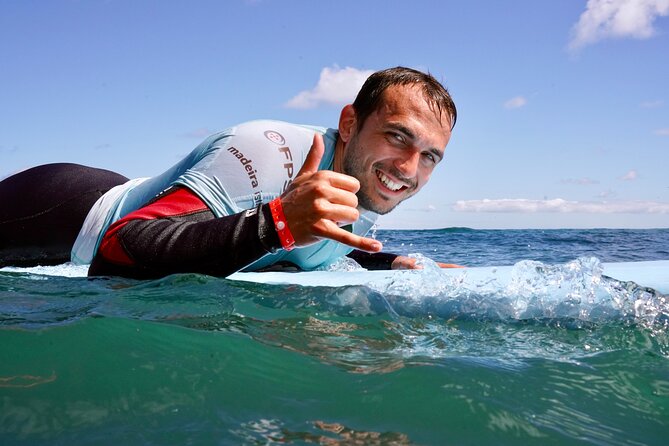
The promise of this class is simple: you choose surf initiation, and you’ll be guided into surfing in a safe, fun way. The goal is not just to see if you can get through one wave. The instruction is designed to help you become a better surfer, with a program suited to your level.
So what does that look like in practice?
1) Getting ready on the beach
You arrive, get suited up in your surf suit (provided), and you’ll start with a safety and technique briefing. Expect them to explain what to do, what to avoid, and how to handle the basics before you get out there.



2) Surf fundamentals you can actually use
The class structure is built around real beginner-to-improver progress: board control, paddling, timing, and the pop-up mechanics that separate flailing from standing.
Multiple instructors are part of the coaching team (names you may see include Filipe, Augusto, Jonathan, Alan, Orlando), and the focus is active support while you’re learning. You should feel like you’re not just dropped into the water and left to figure it out.
3) Staying with you for the whole instruction window
A strong part of the experience is that coaching doesn’t vanish once you’re wet. The intention is to have instructors watching and giving feedback during the full two hours. That’s one of the biggest differences between a lesson and a board rental with a few tips.
4) Photos while you’re doing the hard part
Braulio is mentioned as the photo person in the team, and photos are included as long as weather allows. Surf is fast. Having pictures taken on your behalf is worth something. It also helps you remember what you tried, even when your brain is busy shouting over the noise of the ocean.
Beach and spot changes: what they mean for your learning
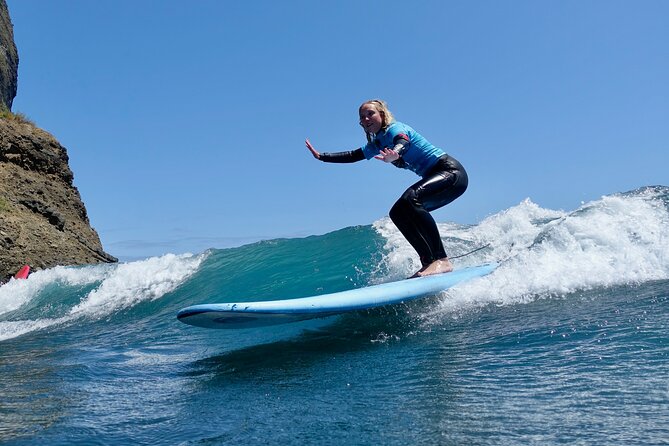
Because conditions drive everything, you might not surf the same exact shoreline each time. You could also surf in different Madeira areas depending on the day’s plan.
In the same school setup, people have done sessions in Machico and Porto da Cruz, and those spots can feel different because the waves behave differently. That variety is useful. Even if you’re only there for one class, you’ll often get a wave pattern that matches the day’s conditions better than a fixed-plan approach.
The one caution is this: wave size and strength can change day to day. That’s not a “bad school” issue—it’s just the ocean. Still, you should match your expectations to the day’s real conditions.
If you’re a true beginner, here’s what I’d do:
- Tell the instructor clearly that it’s your first time (and whether you feel confident swimming).
- If you feel overwhelmed, flag it immediately rather than powering through.
- Watch how quickly the nearest coach responds to concerns in the water.
Most of the time, the school’s approach is tightly focused on safety and active instruction. But surf classes still rely on real-time judgment, and that’s where communication from you helps.
Who this surf initiation is best for
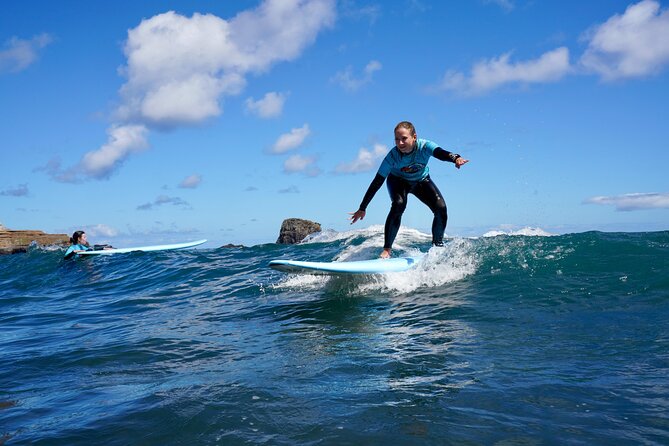
This activity is described as suitable for most people, which is great for travelers who want a new activity without a huge learning curve. English is supported, which helps a lot when you’re trying to translate surf technique words while waves are hitting.
Where it really shines:
- First-timers who want structure and an instructor staying close
- Beginners moving up who want technique adjustments rather than trial and error
- People who want a short, intense activity that fits a Madeira itinerary
If you’re intermediate or advanced, the class still aims to support improvement with a program suited to your level. That means you’re less likely to feel like you’re stuck waiting for the basics.
One practical tip: if you know you’ll learn fastest with one-on-one attention, consider asking whether smaller coaching attention is possible in your session format. The school already caps group size at 6, which is a good start, but you can still ask what your options are if your goal is faster progress.
What to bring (and what to plan for after)
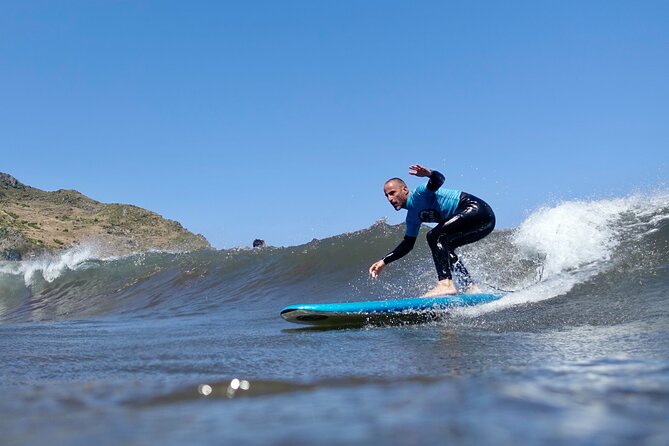
The provided gear is a big help, but you still need to show up ready.
Bring:
- Swimsuit/bikini to put under the surf suit
- Beach towel
- Sunscreen
- Water
That list is small, but it’s the difference between feeling comfortable and spending the rest of the day dealing with discomfort. Sunscreen especially matters in Madeira—even when the sun hides behind clouds, the water and wind can still leave you cooked.
After the surf session, you’ll probably want a proper meal and time to recover. Two hours of paddling and balance work is legit exercise, even if you only stand up for a second at a time.
Small details that shape the whole day
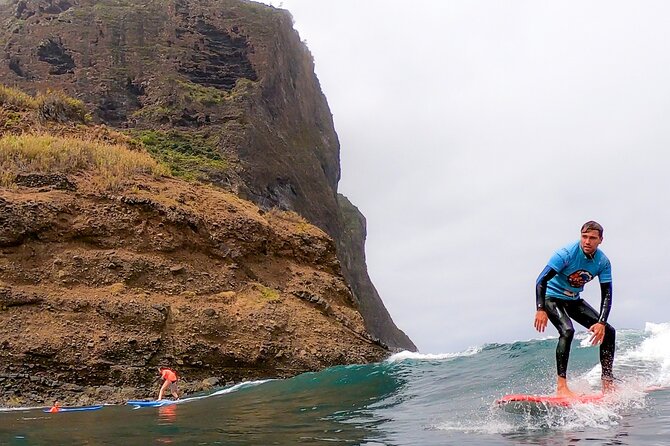
A few things you should know because they affect how the lesson feels:
- Mobile ticket: You’ll want your phone battery charged enough for the ticket.
- Insurance included: That’s part of the value and helps you relax into the experience.
- Service animals allowed: If you rely on one, that’s helpful to know.
- Timing flexibility: The ocean drives the schedule, so keep your afternoon flexible enough to absorb a beach change.
Also, you’ll be with a maximum of 6 people. Smaller groups usually mean less time waiting and more time practicing—especially important when waves are coming in sets and you need coaching cues quickly.
Value check: is it worth $84.33?
For me, the “worth it” answer comes down to what you avoid.
You avoid:
- Surf board and wetsuit rental logistics
- Basic safety and technique guesses
- Paying extra for instruction time that actually happens in the water
You get:
- Gear
- Insurance
- A guide
- Photos (when weather permits)
At $84.33, you’re paying for an organized, safety-first surfing entry with documentation built in. The price also matches the reality that you’re getting about 2 hours of active coaching, not just a quick warm-up.
The only time I’d hesitate is if you’re locked into a schedule where you cannot handle potential tide-driven changes to time or location. Surf is weather-dependent, and this school confirms details by WhatsApp the day before for a reason.
Should you book Madeira Surf Classes with Calhau Surf School?
Yes, I’d book it if you want a beginner-friendly surf experience that takes the ocean seriously and still aims for fun. The best reasons to go are the included gear and insurance, the two hours of coaching time, and the small group size that keeps you from feeling like a number.
Book with extra care if:
- You’re brand-new and very nervous about wave size
- You need strict timing and can’t react to WhatsApp changes
- You’re counting on transportation, since private transportation isn’t included
If you do book, message them clearly about your experience level early. Then show up with your swimsuit-under-suit plan, towel, sunscreen, and water. When the tide cooperates, you’ll leave with that rare feeling of having learned something real in just one session.
FAQ
How long is the surf class, and how much time is the lesson?
The total activity is about 3 hours, and the instruction lesson time is about 2 hours.
What’s included in the class price?
The class includes a surfboard, a surf suit, insurance, a guide, and photos (photos may not be provided if weather doesn’t allow or if there’s a technical problem).
Do I need to bring my own surf gear?
No—you’re provided the surfboard and surf suit. You should bring your own swimsuit/bikini to wear under the suit, plus a beach towel, sunscreen, and water.
Where do we meet, and does it end nearby?
You meet at Rua da Praia, R. da Praia, 9225, Portugal, and the activity ends back at the meeting point.
How will I know the exact meeting time and where to go?
The confirmation of the time and place is sent 1 day in advance via WhatsApp. The schedule depends on sea conditions and tide, and the beach may change.
Is the class taught in English?
Yes, the class is offered in English.
What happens if weather is poor?
This experience requires good weather. If it’s canceled due to poor weather, you’ll be offered a different date or a full refund.
Can I cancel for a full refund?
Yes. You can cancel for a full refund if you cancel at least 24 hours before the experience start time. If you cancel less than 24 hours before, the amount paid is not refunded.