REVIEW · LISBON
Historical Walking Tour of Lisbon
Book on Viator →Operated by Vibrant City Tours · Bookable on Viator
Lisbon’s story starts on a mosaic floor. This Historical Walking Tour of Lisbon strings together landmark squares and streets where you’ll connect big events—from early settlement hints to the 1755 earthquake—and still end with a practical city-view break.
I especially like how the route hits the core areas people want first (Rossio, Rua Augusta, Terreiro do Paço, Chiado). I also like the tour’s guide-style focus, with name-checked storytelling talent such as Logan, Nuno, Bruno, Kiara, Constanca, and Andre showing up repeatedly in real feedback. One thing to think about: expect a lot of walking on cobblestones and hills, so comfy shoes are not optional.
In This Review
- Key highlights to look for
- Rossio Square to Praça da Figueira: the story begins where people still walk
- Rua Augusta: watch Enlightenment ideas show up in plain sight
- Terreiro do Paço (Praça do Comércio): Discovery-era drama, then rebuild
- Chiado and Carmo: poets, the oldest bookstore idea, and the 1974 coup tie-in
- Santa Justa Elevator viewpoint: your practical Lisbon tips finish
- Price, pace, and group size: why this feels like a bargain
- Should you book this Historical Walking Tour of Lisbon?
- FAQ
- FAQ
- How long is the Historical Walking Tour of Lisbon?
- Where does the tour start?
- Where does the tour end?
- Is the tour offered in English?
- What is included in the price?
- Are there admission tickets for the stops?
- What is the group size?
- Is free cancellation available?
- Does the tour require good weather?
Key highlights to look for
- Rossio Square’s floor details set the tone right away, with the earliest city presence mentioned early on
- Five free, major squares (Rossio, Figueira, Comercio, Chiado, Carmo) keep you out of ticket lines
- Rua Augusta with Enlightenment architecture lessons you can spot as you walk
- Convento do Carmo and the 1974 Carnation Revolution connection, tied to the 1755 earthquake story
- Elevador de Santa Justa viewpoint break plus guide tips on food and viewpoints for your remaining days
Rossio Square to Praça da Figueira: the story begins where people still walk
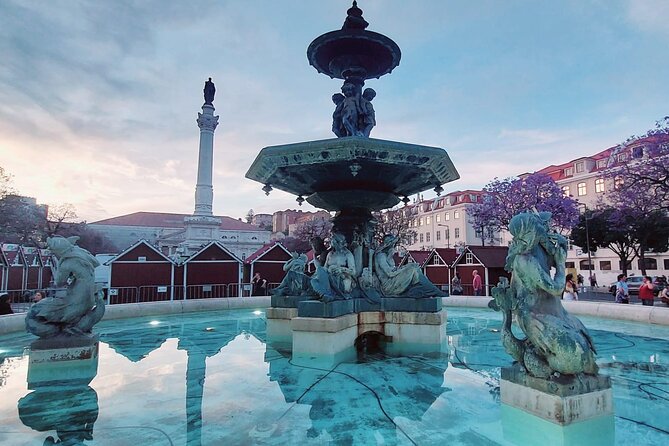
You start at Praça do Rossio (Praça Dom Pedro IV), a central square that feels like a natural “front door” to downtown Lisbon. Early on, the guide brings your attention to the intricate floorwork and uses it to talk about the city’s earliest inhabitants, with an eye on how Lisbon’s identity formed long before the modern postcard map.
Right after that, you move on to Praça da Figueira. This is where history gets sharper. The square sits near the area where a major public hospital once stood, later destroyed in the 1755 earthquake. From there, the guide ties the setting to political power struggles—especially battles fought over the Portuguese crown against neighboring forces. It’s a good moment to get your historical compass, because these two stops explain Lisbon’s layers: city planning and power, not just buildings.
Why this works for you: it’s not random sightseeing. The guide uses these locations like chapters. And because the stop times are short (about 15 minutes each), you keep momentum without feeling stuck in one spot.
The main watch-out: the ground can be uneven, and both Rossio and the surrounding downtown streets tend to lead into gentle climbs. If you’re even slightly unsure about walking comfort, lace up before you arrive.
You can also read our reviews of more walking tours in Lisbon



Rua Augusta: watch Enlightenment ideas show up in plain sight
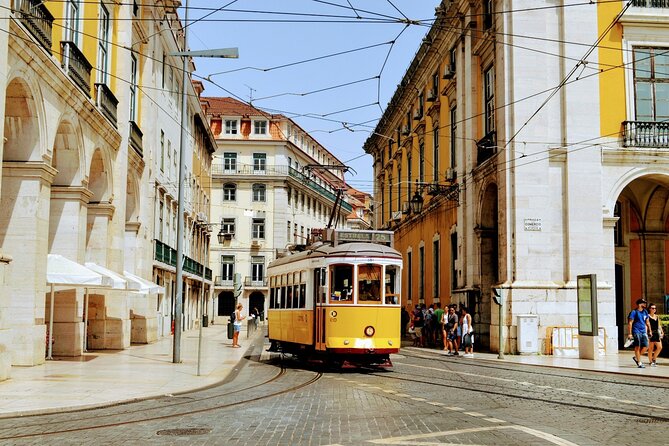
After those squares, you walk Rua Augusta, Lisbon’s emblematic central street—the main artery people use to cross from the older core toward the larger waterfront-style spaces. This part is where the tour shifts from “big backstory” into “architecture you can actually see.”
The guide focuses on how the Age of Enlightenment influenced Rua Augusta’s architecture. You’ll likely notice the way the street feels designed and orderly compared with older, more winding parts of Lisbon. Even if you don’t think of yourself as an architecture person, the payoff is that the explanation gives you a framework: not just what the street looks like, but why it looks that way.
Practical value: when you understand the logic behind the rebuilding and design choices after major events, you stop reading Lisbon as a pile of sights and start seeing it as a timeline. That makes the rest of your self-guided wandering easier, because you’ll know what to look for.
A small planning note: this is a walk section, not a long sit-and-listen moment. If it’s hot out, bring water and take short pauses when the guide stops at corners. One review-style tip that keeps showing up: sunscreen and a water bottle help a lot.
Terreiro do Paço (Praça do Comércio): Discovery-era drama, then rebuild
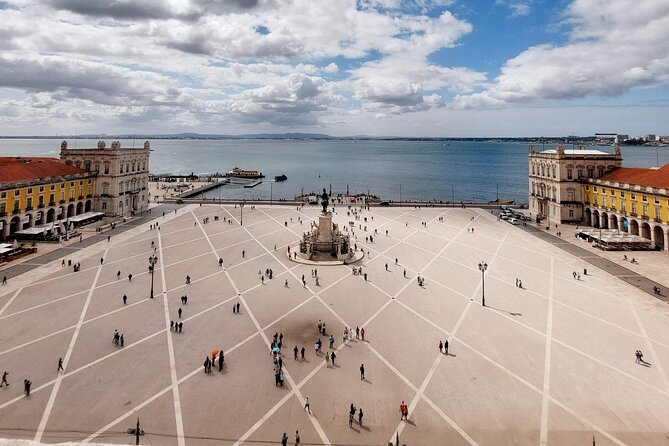
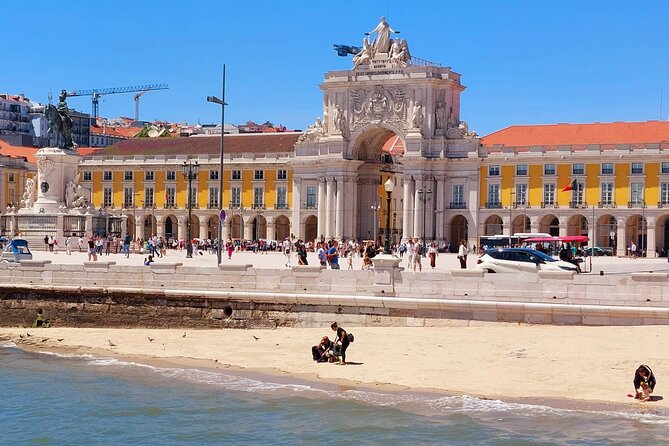
Next is Praca do Comercio (Terreiro do Paço), Lisbon’s main square—an obvious crossroads where the city’s story keeps expanding outward. Here, the guide talks about how the square served as an entry point to Lisbon “for millennia,” and then connects that role to the Age of Discovery, the 1755 earthquake, and the rebuilding effort.
What I like about this stop is the balance. You get the glamour side (Portugal’s outward-looking, voyage-driven era), but the guide also grounds it with the reality of catastrophe and recovery. That combination helps you understand why the city you walk today feels both proud and scarred, like it carries memory in its street plan.
Time-wise, you’re in this stop for about 30 minutes, longer than most other stops. That extra time matters here because the place is wide and you’ll need space to listen and still orient yourself. It’s also a good moment to take photos without feeling rushed.
If you have a short attention span, this is still worth it. The tour keeps the story anchored to what you’re looking at—the square’s “arrival” feeling and why rebuilding efforts changed what people built and how they built it.
Chiado and Carmo: poets, the oldest bookstore idea, and the 1974 coup tie-in
Then the tour moves into Chiado, Lisbon’s art district. This is where the experience becomes less about earth-shaking events and more about culture-in-motion: cafes, theaters, bookshops, and a creative, late-day energy. The guide connects the neighborhood to poets and writers, and you’ll also have a chance to visit the oldest bookshop in the world (or at least the tour’s featured bookstore stop tied to that claim).
This is a great break for you if you like slowing down. Even though the total tour is under three hours, Chiado gives you that “stop, breathe, and look around” feeling without turning it into a long detour.
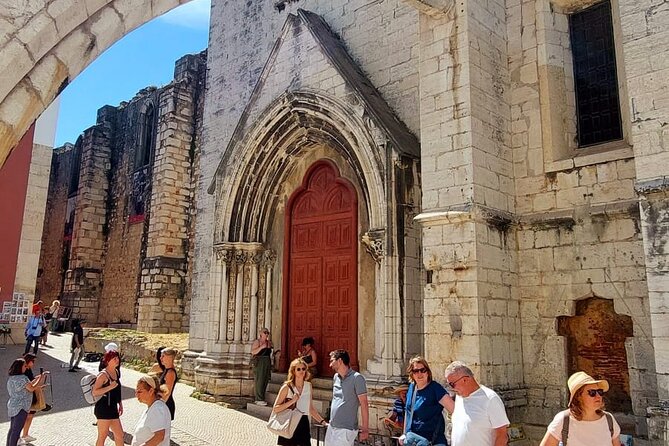
After Chiado, you head to Largo do Carmo, which centers on Convento do Carmo. This is the stop with the most dramatic emotional hook. The building is described as the second oldest in the city, and the guide explains how it barely resisted the devastating 1755 earthquake. That’s the setup for a second major story thread: the site being used for emblematic social events, including the 1974 Carnation Revolution—often described (in tour telling) as the coolest coup in the world.
One reason I think this pair of stops is smart: Chiado shows Lisbon as it tries to make art and ideas part of everyday life. Convento do Carmo then reminds you that revolutions and rebuilding are also part of everyday life here, just earlier in the timeline.
If you want to remember Lisbon, don’t just store photos in your phone. Store images with story meaning: the bookstore area for culture, Convento do Carmo for survival and change.
Santa Justa Elevator viewpoint: your practical Lisbon tips finish
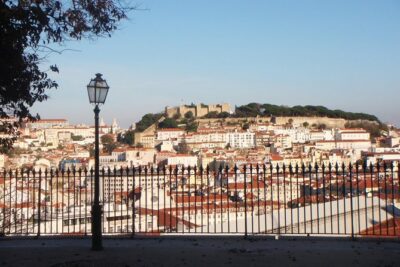
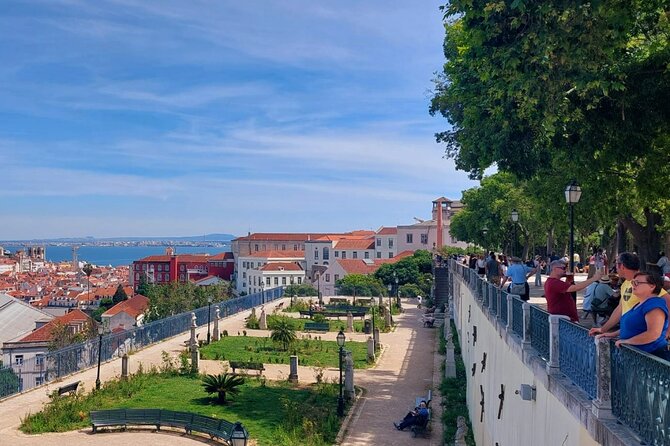
Finally you reach Elevador de Santa Justa, where the tour shifts from “history lesson” into “useful next steps.” The big value is the bird’s-eye view of downtown Lisbon. You get a mental map of how the city climbs and curves—exactly the kind of perspective that helps you plan what to do after the tour.
This is also where the guide shares hand-picked suggestions for making the most of your stay, including food to try and viewpoints to seek out. And because it’s near the end (about 15 minutes for this segment), it lands at the right time: you’re ready to turn information into a plan.
What this means for you: after the tour, you’ll be better at choosing what matches your interests. If you’re the type who wants viewpoints, you’ll know where to aim. If you’re food-first, you’ll have a short list without guessing.
Quick reality check: even though the tour ends with a viewpoint, you still need to be ready for stairs and slopes around central Lisbon. Reviews often call out the uneven cobblestones. So plan for that and move at your own pace.
You can also read our reviews of more historical tours in Lisbon






Price, pace, and group size: why this feels like a bargain
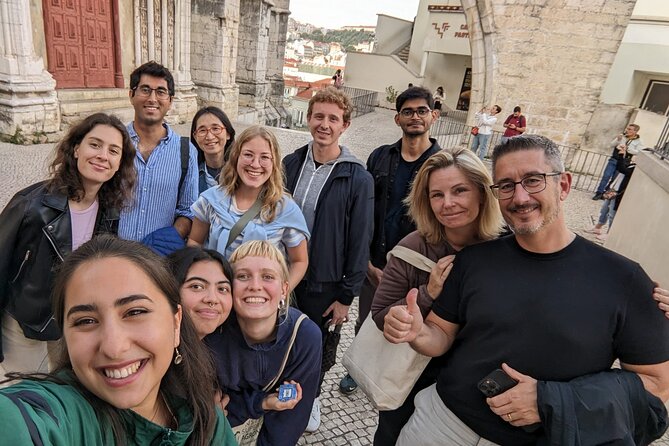
At $3.62 per person for a tour that runs about 2 hours 45 minutes, you’re paying primarily for guided interpretation rather than expensive admissions. The itinerary lists free admission at each main stop, which matters because it keeps the experience straightforward: more time listening, less time budgeting for ticket add-ons.
The pace is also designed for learning without fatigue. With a maximum of 20 people, you’re less likely to feel like you’re swallowed by a giant group, and it’s easier for a guide to answer questions. Confirmation is received at booking, and you’ll get a mobile ticket, which reduces last-minute friction.
Language is English, and the tour is described as a fit for most participants. Still, I’d treat this as a walking-focused activity. If your ideal sightseeing day is mostly sitting, you might feel the walking.
Should you book this Historical Walking Tour of Lisbon?
Book it if you want a fast, story-driven orientation to central Lisbon. This is especially good for first-timers who want the key squares covered with a guide who can connect sights to events (and who will answer questions, based on the guide feedback you’ll see for Logan, Bruno, Nuno, Kiara, Constanca, Antonio, and Andre).
Skip it or choose a different style if you dislike uneven sidewalks, long hill walks, or you want lots of museum time. This one is about street-level understanding and walking connections.
My call: if you wear comfy shoes and want Lisbon explained in a way that sticks, this tour is a strong value—and a smart start for the rest of your days.
FAQ
FAQ
How long is the Historical Walking Tour of Lisbon?
The tour lasts about 2 hours 45 minutes.
Where does the tour start?
It starts at Rossio Square, Praça do Rossio, 1100-200 Lisboa, Portugal.
Where does the tour end?
It ends at the Carmo Archaeological Museum, Largo do Carmo, 1200-092 Lisboa, Portugal, in the upper part of downtown.
Is the tour offered in English?
Yes, the tour is offered in English.
What is included in the price?
It includes a professional guide and hand-picked suggestions to enjoy Lisbon, plus you receive a mobile ticket.
Are there admission tickets for the stops?
The stops listed in the itinerary note admission ticket free.
What is the group size?
The tour has a maximum of 20 travelers.
Is free cancellation available?
Yes. You can cancel up to 24 hours in advance for a full refund. If it’s canceled due to poor weather, you’ll be offered a different date or a full refund.
Does the tour require good weather?
Yes. The experience requires good weather, and there’s a weather contingency if it gets canceled for that reason.