REVIEW · LISBON
Belém Walking Tour & Lisbon’s Riverside Treasures
Book on GetYourGuide →Operated by Sandemans New Europe - Portugal · Bookable on GetYourGuide
Belém feels like a compass rose. On this guided walk, you’ll connect Belém Tower and Jerónimos Monastery to Portugal’s Age of Discoveries, and it’s a solid mix of big monuments plus street-level context. I especially like how the guide turns stone landmarks into stories you can picture, and how you move along the Tagus instead of just stopping for photos. One thing to plan for: the tour shows you the tower area, but entrance inside the Belém Tower isn’t included, so if that’s a must for you, budget extra time and tickets.
This is a 2.5-hour, rain-or-shine walking tour through Lisbon’s riverside district, starting at Praça Afonso de Albuquerque. You’ll see the famous riverside views near the bridge, then work your way toward UNESCO sites that symbolize Portugal’s maritime ambition. Guides in previous groups, like Jamie, Patrick, Antonio, and Rita, are repeatedly praised for being energetic and able to explain how the world got connected from this small corner of Portugal.
In This Review
- Key Points You’ll Care About
- Belém’s Big Theme: Portugal’s Age of Discoveries, Made Walkable
- Where It Starts: Praça Afonso de Albuquerque and Getting Oriented Fast
- The Tagus Waterfront Stretch and Bridge Views (Plus Some Real Perspective)
- Monument to the Discoveries: Where the Story Gets Big
- Photo Stops That Teach You How to Read Belém
- Jerónimos Monastery: Manueline Architecture Meets Maritime Ambition
- Belém Tower: UNESCO Icon, With One Important Limitation
- Guide Style: Why People Mention Names Like Jamie and Rita
- Price and Value: Is $30 Worth It?
- Practical Tips for a Smooth Walk (So You Can Focus on the Story)
- Should You Book This Belém Walking Tour?
Key Points You’ll Care About
- UNESCO sights without a frantic sprint: you get the big hits in a focused walking route
- Stories that link Vasco da Gama and Henry the Navigator to real places
- Manueline architecture, pointed out where you can actually see it at Jerónimos Monastery
- A Tagus waterfront route that helps the geography make sense
- Expect a lot of walking, with tours sometimes running a bit past 2.5 hours
- Belém Tower entry is extra if you want to go inside
Belém’s Big Theme: Portugal’s Age of Discoveries, Made Walkable
The best part of this tour is how quickly it gives your brain a map. You’re not just looking at famous buildings. You’re learning why Belém matters as the launching point for Portugal’s early global ambition, and how the Tagus River became the launchpad for that story.
The Monument to the Discoveries and the nearby symbols are the emotional “why” of the day. The UNESCO stops then give you the “what”—the world-class architecture tied to that period. And because you walk between these places, the history lands as geography, not just dates.
If you love Lisbon but find museum tickets and long lines too heavy on your schedule, this is a practical alternative. It’s also a good reset day activity if you’re arriving fresh and want to understand what you’ll be seeing afterward.
You can also read our reviews of more walking tours in Lisbon



Where It Starts: Praça Afonso de Albuquerque and Getting Oriented Fast
Your tour begins at Praça Afonso de Albuquerque, and the meeting point matters more than people think. You’ll want to arrive a few minutes early and look for the guide with the red umbrella.
In some past groups, there was a moment of confusion when the guide wasn’t easy to spot exactly as described. The fix is simple: if you don’t see the red umbrella right away, ask quickly around the square rather than walking in circles. Being on time also helps your guide keep the route smooth.
From the start, you’re set up for a big visual clue: the Tagus Riverfront. That means the tour isn’t just cultural. It’s also spatial, and it helps you understand how Belém sits along Lisbon’s water.
The Tagus Waterfront Stretch and Bridge Views (Plus Some Real Perspective)
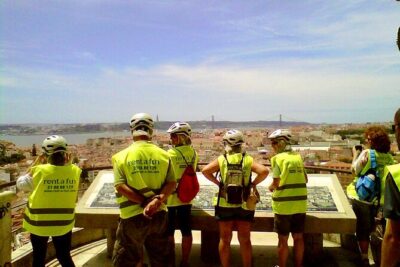
Early on, you’ll pass the Ponte 25 de Abril area for a quick sightseeing moment. Then the route shifts along the waterfront, where the river is right there—close enough that you can feel how “water first” this district was.
This part is great for anyone who struggles with history tours that only talk. Here, you’re seeing the same river the stories are tied to. It’s easier to remember names like Vasco da Gama and Henry the Navigator when your mind can attach them to the geography.
One practical note: because it’s mostly walking, you’ll want comfortable shoes. The tour is designed for movement, not slow sightseeing. And yes, it can run a little over the listed 2.5 hours, so plan your next stop with a little buffer.
Monument to the Discoveries: Where the Story Gets Big
The Monument to the Discoveries is one of the most powerful “anchor” moments on this walk. It’s built to be looked at, but the guide’s job is to make it understandable.
You’ll learn about the Portuguese “Age of Discoveries” and how a small country managed to project power and influence across the globe. The names and themes you hear here are the ones you’ll keep hearing in different forms as the tour moves toward UNESCO sites.
This is also where you’ll start connecting symbolism to real events—Portugal’s maritime push, the people involved, and the broader idea that these voyages weren’t random. They were part of a determined strategy shaped by battles, events, and remarkable figures.
Photo Stops That Teach You How to Read Belém
Between the major monuments, you’ll hit several stops that look like quick breaks but actually carry meaning.
At the Padrão dos Descobrimentos, you’ll get another burst of context around exploration and the people tied to it. Next comes the Rose Compass, a reminder of how navigation tools and belief systems shaped what sailors thought was possible.
Then there’s the Empire Square Garden area, where the walk keeps momentum while the guide keeps tightening the story. These aren’t just “look here” moments. They’re designed to help you connect the pieces—so when you see the UNESCO architecture, you understand the why behind the style and the era.
If you’re the type who usually skips statues and turns away from plazas, I’d still encourage you to stay present here. The guide’s explanations are what make these stops feel like part of one coherent narrative.




Jerónimos Monastery: Manueline Architecture Meets Maritime Ambition
Jerónimos Monastery is the tour’s strongest “architecture + era” pairing. You’ll get an exterior photo stop focused on Portuguese Manueline architecture—an artistic style closely tied to the Age of Discoveries mindset.
This is a key moment because it moves beyond ships and explorers into how those ambitions became visible in stone. Even if you’re not an architecture nerd, the guide’s pointing-out helps you notice details instead of just admiring a big building from far away.
I like that this stop is treated as a story chapter. You’re not stuck reading plaques. Instead, the guide ties the monastery to the same Portugal that built ships, pushed exploration, and made global reach part of its identity.
Belém Tower: UNESCO Icon, With One Important Limitation
Of course, you’ll see the Belém Tower, a UNESCO World Heritage Site and one of Lisbon’s most recognizable riverside symbols. It’s the kind of monument where even a quick look feels meaningful, especially after the guide has framed it in the Age of Discoveries context.
There’s one important catch for your planning: entrance inside the Belém Tower is not included. That matters because the tower interior can be the part that turns a good visit into a must-do for some people.
So here’s my practical advice. If you specifically want to go inside, treat this tour as the best way to understand the tower first, then plan a separate ticket/time window to enter it. If you’re happy with views, photos, and the guide’s explanations, you’ll still get a lot out of this stop.
Also keep in mind that timing can vary by group. On some departures, the focus may shift to keep the day moving. You don’t want to realize too late that you wanted the inside access more than you expected.
Guide Style: Why People Mention Names Like Jamie and Rita
The walking and the monuments are the framework, but the guide is what changes the experience from seeing to understanding.
In past groups, guides like Jamie, Patrick, Antonio, and Rita are singled out for detailed explanations and genuine passion. Guides such as Sophia and Chico have also been described as high-energy, making geography and history feel connected instead of heavy.
One small but useful takeaway from those comments: you’ll enjoy this tour more if you engage. Ask a question. Pay attention to the guide’s “why this matters” phrasing at each stop. The story is built to be active, not passive listening.
And if you’re worried about finding the guide at the start, aim to be early at Praça Afonso de Albuquerque. The red umbrella is the system. Use it.
Price and Value: Is $30 Worth It?
At about $30 per person for a 2.5-hour guided walking tour, the value depends on what you want from Belém.
You’re paying for a live guide and a structured route that hits major highlights: the UNESCO sites (Jerónimos Monastery and the Belém Tower area), plus the Monument to the Discoveries and several context-rich stops. For most people, that’s the sweet spot: you get meaning with minimal hassle.
What you do not get is the Belém Tower entrance. If you assume the tour includes entry, you might feel shorted later. But if you treat this as a guided orientation and history primer, it’s an efficient use of time.
It’s also a good deal if you’re trying to avoid decision fatigue. Instead of piecing together which sights matter most, the guide gives you a clear sequence that makes the Age of Discoveries theme click.
Practical Tips for a Smooth Walk (So You Can Focus on the Story)
A few small choices will make the day easier.
- Wear shoes you can walk in for a while. This is not a sit-and-watch tour.
- Bring a rain layer even if the morning looks fine. The tour runs rain or shine.
- If you don’t have a travel card, budget €3.20 for a transport ticket.
- Expect that the route can shift slightly if the guide customizes it for the group.
- If you’re traveling with kids under 13, note that children can go free with valid ID.
- The tour isn’t wheelchair accessible, so plan accordingly if mobility is a factor.
If you’re also planning food, be aware that some guides have arranged a sweet stop like pastéis de Belém in earlier departures. It’s not listed as a guaranteed inclusion, so I wouldn’t build the whole day around it, but it’s a possibility worth keeping an eye out for.
Should You Book This Belém Walking Tour?
Book it if you want a guided, history-on-foot introduction to Belém’s UNESCO icons and Portugal’s maritime ambition. It’s especially good for first-time visitors who want context quickly, and for people who like learning while walking rather than spending the day waiting in lines.
Skip or pair it with extra planning if you know you need to go inside the Belém Tower and you don’t want to manage separate tickets/timing. The tour itself is built to teach you what the places mean, not to solve every logistics puzzle.
For most travelers, this tour is a smart use of a half-day slot. You’ll leave with Belém’s monuments connected into one story—and with a better sense of why Lisbon’s waterfront is more than just scenery.