REVIEW · LISBON
Small-Group Alfama Walking Tour
Book on Viator →Operated by My Lisbon Tours · Bookable on Viator
One hill at a time, Lisbon makes sense fast. This small-group Alfama walking tour links major viewpoints with old churches and real neighborhood streets, so you get history you can actually picture. I loved the sweeping miradouro views (Graça and the Nossa Senhora do Monte area) and the stop-by-stop mix of churches, viewpoints, and local life. One thing to consider: the start area is very hilly, and the tour is not recommended if you struggle with steps or uneven ground.
With a maximum of 8 travelers, you’ll get a guide who can answer questions without racing the clock. Most of the planned sights have free admission for the time you’re there, which helps keep the total trip cost reasonable. I also like that the tour uses a mobile ticket and that it’s offered in English, with a professional local guide leading the history and culture parts.
In This Review
- Key highlights worth looking forward to
- Why this $39.50 Alfama tour feels like a good deal
- Meeting at Miradouro da Graça: where Lisbon “clicks” into place
- Iglesia e Convento da Graça: old Lisbon’s religious spine
- Charming terraces and trade-union activism in the same neighborhood walk
- Igreja de São Vicente de Fora: Lisbon’s patron saint in stone
- Feira da Ladra (Thieves Market): a flea market with built-in character
- National Pantheon: exterior views without the full ticket price
- Into Alfama: everyday life, Fado connections, and viewpoint breaks
- Igreja de São Miguel and the earthquake-era story you can see
- Lisbon Cathedral and Church of St. Anthony: optional interiors and key saints
- Ending at Praça do Comércio: the walk finishes by the water
- Who should book this Alfama walking tour (and who should skip it)
- Should you book? My take
- FAQ
- How long is the Small-Group Alfama Walking Tour?
- Where do you meet and where does the tour end?
- Is the tour offered in English?
- What is included in the tour price?
- Is admission included for the main sights?
- When is the Feira da Ladra included?
- Is this tour suitable for everyone?
Key highlights worth looking forward to
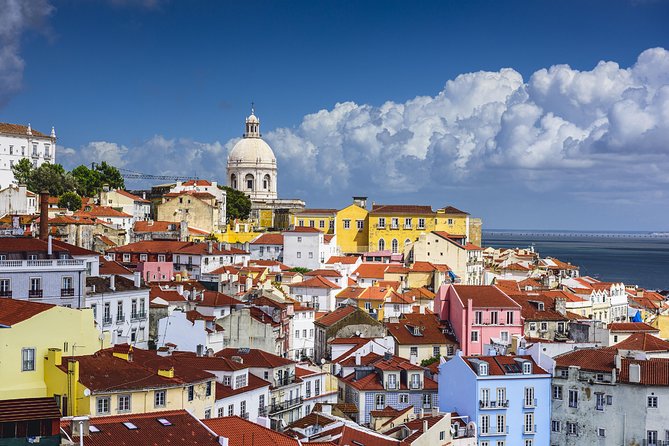
- Miradouro da Graça viewpoints that quickly show you where everything sits in Lisbon
- Alfama’s everyday streets plus a clear explanation of the neighborhood’s culture and daily rhythms
- Feira da Ladra (Thieves Market) on Tuesdays and Saturdays, for browsing local finds
- Historic churches with real context, including places connected to Lisbon’s patron saint and Augustinian monks
- Fast photo stops at Pantheon and multiple viewpoints, without turning the day into a museum sprint
Why this $39.50 Alfama tour feels like a good deal
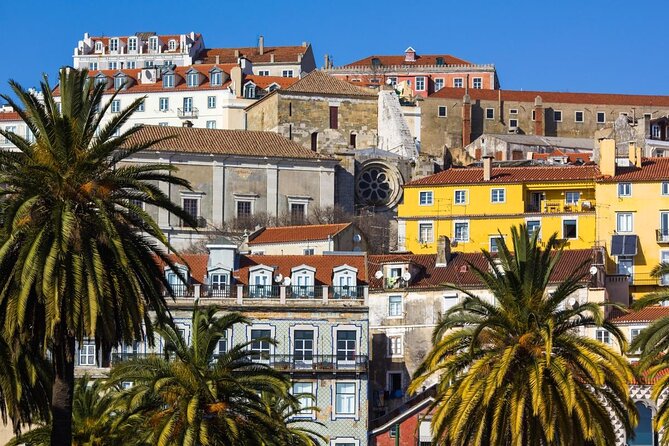
At $39.50 for about 3 hours, you’re paying for three things that add up quickly on your own: a local who knows the place, time-savings in planning a tight route, and access to a route that hits several high-value stops without fuss.
What makes the price feel fair is the mix: viewpoints (where Lisbon’s design and geography matter), churches (where Portuguese history is written into stone), and Alfama’s street texture (where you actually see how the neighborhood functions). Most stops also have free admission for the time listed, so you’re not constantly paying small entry fees as you walk.
Also, the group size is capped at 8, and that matters. In Alfama, you’re often stuck in narrow lanes where it’s easy to get lost or separated. A smaller group means your guide can keep everyone together and still slow down for questions.
You can also read our reviews of more walking tours in Lisbon



Meeting at Miradouro da Graça: where Lisbon “clicks” into place
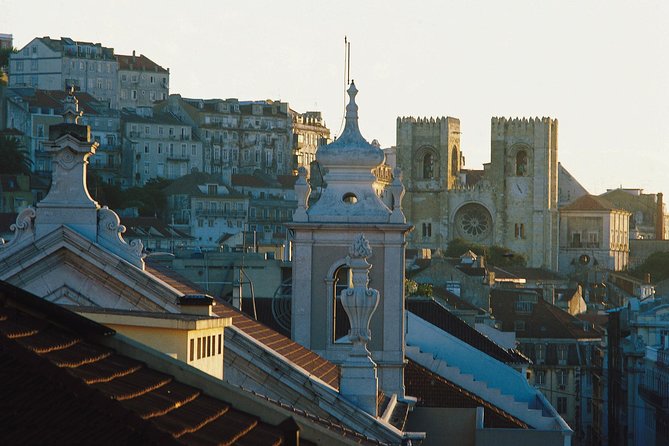
You meet at Miradouro da Graça (Calçada da Graça, 1100-265 Lisboa). Even if you’ve seen Lisbon photos before, this is the moment where the city’s layout starts to make sense.
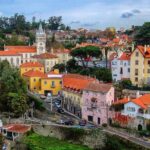
From here, the tour points you toward the big landmarks and the big story: the view includes the Castle of Saint George, the historic district of Mouraria, and the Tagus river. That’s not just scenery. It’s a mental map for the rest of the walk. Once you’ve seen the river and the hill-to-hill structure, Alfama stops feel less random.
Logistically, yes, this meeting spot is in a hilly neighborhood. One review noted the walk up to the meeting location is very steep, and the tour itself is mostly downhill with steps. If you’re not sure you’re up for that initial climb, you’ll be happier using a taxi or other local transport to get to Miradouro da Graça first.
Iglesia e Convento da Graça: old Lisbon’s religious spine
After the welcome and a short intro, the route moves to Igreja & Convento da Graca, one of Lisbon’s oldest churches and convents. The key detail here is the continuity: it was home to Augustinian monks until 1834.
Why this stop works on a walking tour: churches and convents in Lisbon aren’t just pretty buildings. They’re a shortcut to understanding who held power, how communities were organized, and what life looked like before modern Lisbon reshaped the map.
Expect a quick, respectful pause rather than a long museum-style visit—about 10 minutes here. That’s perfect if you want context without losing the rest of the day’s momentum.
Charming terraces and trade-union activism in the same neighborhood walk
At some point in the route you’ll get a pause for a smaller street scene—think terraces covered with bougainvillea and other flowers. It’s the kind of visual detail you usually only notice when you slow down for photos or when a guide points it out and tells you what the area is like at street level.
Then comes a different side of Lisbon: the history of trade union activism in the city. This is one of those moments that makes a walking tour more than a highlight reel. It connects Alfama and nearby districts to real social change, not only to legends and viewpoints.
If you like your Lisbon with a little politics and people-history, this is the kind of stop you’ll remember later. And if you prefer scenery-first, these pauses still work because you’re not stuck in long speeches—just enough time to understand why the neighborhood developed the way it did.
Igreja de São Vicente de Fora: Lisbon’s patron saint in stone
Next, you visit Igreja de Sao Vicente de Fora (about 10 minutes). This church matters because it’s dedicated to Lisbon’s patron saint, and the tour ties that dedication to the city’s wider identity.
This is also a good chance to learn how Lisbon’s religious landmarks helped form civic identity. In other words: the church isn’t only a place of worship. It’s also part of how Lisbon explains itself.
Admission is listed as free for this stop, so you can keep your budget steady while still getting real context.



Feira da Ladra (Thieves Market): a flea market with built-in character
On Tuesdays and Saturdays, the tour adds Feira da Ladra, one of Lisbon’s oldest flea markets, also known by the marketing nickname Thieves Market. The time for this portion is about 15 minutes.
What to expect in practice: you’re not being sent to a huge shopping mission with hours of browsing. Instead, it’s a quick taste of the market atmosphere, the kind of place locals drift through for secondhand items, oddments, and bargains.
If you’re the type who likes to peek behind postcard Lisbon, this stop is a nice contrast to the churches and viewpoints. Alfama’s street life and Portuguese daily routines aren’t all museums and miradouros.
National Pantheon: exterior views without the full ticket price
You’ll also have an exterior visit to Portugal’s National Pantheon. The time here is short (about 5 minutes) and the ticket is not included, so you’ll simply admire the monumental presence from outside.
This works well on a walking route because you still get the scale, and you’re not forced into adding a separate indoor plan. If you later decide you want the inside, you can choose it based on your energy level that day.
Into Alfama: everyday life, Fado connections, and viewpoint breaks
The heart of the tour is Alfama (about 30 minutes). Instead of only pointing at sights, the guide helps you understand the neighborhood’s everyday life—how people live here, how the streets shape movement, and why Alfama has its reputation.
A highlight of this portion is that you don’t just hear about Fado in theory. There’s also a brief stop for the neighborhood’s connection to Fado music (you’ll get an exterior visit tied to that theme). This matters because Alfama’s music reputation can feel vague until someone connects it to place, community, and tradition.
Then you’ll work in another viewpoint stop: Miradouro de Santo Estevao (about 5 minutes). Think tiny streets, hill views, and that classic Lisbon feeling where every turn seems to offer another angle. It’s a quick hit, not a long linger, so it keeps the tour moving while still giving you the “wow” moments.
Igreja de São Miguel and the earthquake-era story you can see
Next is Igreja de Sao Miguel (about 5 minutes). This one is special because it’s a church that survived the earthquake of 1755.
That’s not a trivia fact. It’s a way to understand why Lisbon looks the way it does—how disasters changed architecture, rebuilding strategies, and what the city chose to preserve. When a guide points out earthquake survival, you start noticing which parts of the city look older and why.
Admission for this stop is listed as free, so again, you get history without an extra cost.
Lisbon Cathedral and Church of St. Anthony: optional interiors and key saints
The tour includes Lisbon Cathedral, but the interior visit is not included. You get an opportunity for a detailed interior tour only if you pay separately (the data lists admission not included). This is one of those decision points you should think about before you go: do you want to spend extra time and money inside today, or would you rather keep the walking rhythm?
Finally, you visit Church of St. Anthony (about 15 minutes). This church is built on the site where Saint Anthony was born. That detail gives the stop a concrete meaning, not just architectural interest.
For cost control: admission is listed as free for this stop, so your optional spending is mostly limited to the cathedral and the National Pantheon interior if you choose to add them.
Ending at Praça do Comércio: the walk finishes by the water
The tour ends at Praça do Comércio. If you’ve walked Lisbon’s hills all morning, finishing by this wide riverside square feels like a reset button. You get open space, a sense of scale, and an easy place to connect to transit.
One review specifically noted the tour ended in a well-known place by the water. That tracks with how Praça do Comércio functions in Lisbon: it’s central, it’s flat-ish compared to the hills you climbed earlier, and it’s a friendly landing zone.
Who should book this Alfama walking tour (and who should skip it)
This tour is a great match if you want:
- A short, focused route that strings together viewpoints, churches, and Alfama street life in about 3 hours
- Small-group attention (max 8 travelers) so questions don’t get ignored
- A guide-led version of Lisbon where history connects to what you’re seeing on the ground
- The chance to browse the Feira da Ladra on Tuesdays and Saturdays
I’d be cautious if:
- You have difficulty walking or trouble with steps. Even when the route is mostly downhill, you’ll still encounter stairs and uneven ground.
- You hate hills in general. You might be okay during the walk but stressed about getting to the meeting point.
If you’re traveling solo, this kind of tour often works especially well because you get structure and conversation without needing to share group plans all day. If you’re with family, the tour data says children must be accompanied by an adult, but age guidance beyond that isn’t listed.
Should you book? My take
Yes—book it if you’re aiming to understand Alfama in a few hours. The value comes from the shape of the experience: viewpoints that set context, churches that add meaning, and Alfama street time that gives Lisbon a human scale.
Skip or plan carefully if your mobility is limited, or if you don’t want a steep start before you even begin. Otherwise, this is a strong use of time in Lisbon—especially on a day when Feira da Ladra is running.
FAQ
How long is the Small-Group Alfama Walking Tour?
It lasts about 3 hours.
Where do you meet and where does the tour end?
You meet at Miradouro da Graça (Calçada da Graça, 1100-265 Lisboa, Portugal) and the tour ends at Praça do Comércio (1100-148, Portugal).
Is the tour offered in English?
Yes, it is offered in English.
What is included in the tour price?
The tour includes local taxes, a local/professional guide, a tour escort/host, and a small-group walking tour.
Is admission included for the main sights?
Most stops list admission as free, including Miradouro da Graca, Igreja & Convento da Graca, Igreja de Sao Vicente de Fora, Feira da Ladra, Alfama, Miradouro de Santo Estevao, Igreja de Sao Miguel, and Church of St. Anthony. National Pantheon exterior is included, but the ticket is not included, and the Lisbon Cathedral interior is not included.
When is the Feira da Ladra included?
Feira da Ladra, also promoted as the Thieves Market, is included on Tuesdays and Saturdays.
Is this tour suitable for everyone?
It’s near public transportation and most travelers can participate, but it is not recommended for travelers with difficulty walking.