REVIEW · LISBON
Lisbon Sunset Sailing Tour with White or Rosé Wine and Snacks
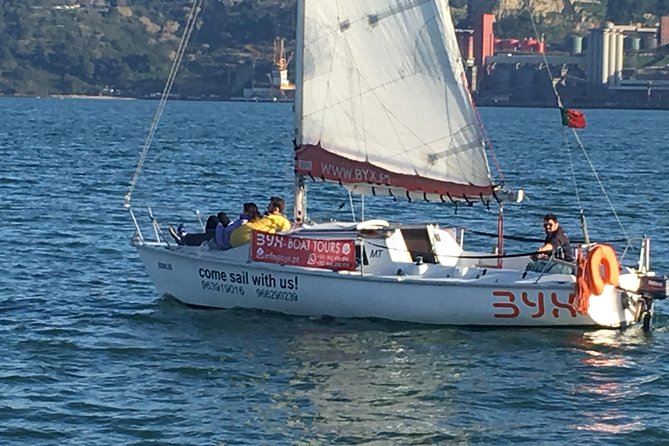
Book on Viator →Operated by BYX - Best Yacht Xperience · Bookable on Viator
That sunset hits different from the Tagus. This small-group sail is built around sunset timing, leaving about two hours before the sun goes down so you get more river views than the usual quick cruises. Your guide ties what you’re seeing to Portugal’s past while you relax with drinks and snacks.
What I like most is the mix of easy relaxation and real context. You’re not stuck listening to a lecture; you’re moving past landmarks, and the history comes out in small, human stories from crew members you might meet like Vasco and Fernando (who keep the vibe up), or Manuel and Miguel (who share details with a good sense of humor).
One thing to keep in mind: you’re on a small sailboat, so comfort can be basic and onboard seating is limited. If you hate cold wind or need a restroom, this may be the wrong kind of luxury for you, even though the views and atmosphere are usually spot-on.
In This Review
- Quick takeaways
- Entering the Tagus at sunset: why this sail works
- The 3:30 pm departure: getting more river than the rush-hour crowd
- Ponte 25 de Abril: the bridge you’ll understand faster from the water
- Cristo Rei from across the Tagus: a giant statue with real context
- Belém’s Torre de Belém: why the waterfront is so photogenic
- Padrão dos Descobrimentos: the “frozen caravel” monument
- MAAT and the Tejo Power Station connection: modern Lisbon from the river
- Royal palace and the Tagus-facing museum garden: art without rushing
- Wine, snacks, and the food reality on a small boat
- The crew and the vibe: stories, music, and photo stops
- What to pack: wind chill, rain, and the lack of big-boat comforts
- Price and value: what $50.91 buys you in Lisbon time
- Should you book this sunset sailing tour?
- FAQ
- FAQ
- What’s the duration of the Lisbon sunset sailing tour?
- Where does the tour start and end?
- How many people are on the boat?
- What language is the tour offered in?
- Is wine and snacks included?
- What happens if the weather is bad?
- What’s the cancellation policy?
- Can children or service animals join?
Quick takeaways
- Up to 10 people keeps it personal and photo-friendly at the rail
- Tagus sunset timing gives you a bigger slice of the river than short cruises
- Wine + Portuguese snacks (often vinho verde, with cheese and/or chouriço) sets a relaxed tone
- Landmark history from the crew turns the big sights into a story you remember
- Weather matters and wind can get chilly fast once the sun drops
Entering the Tagus at sunset: why this sail works
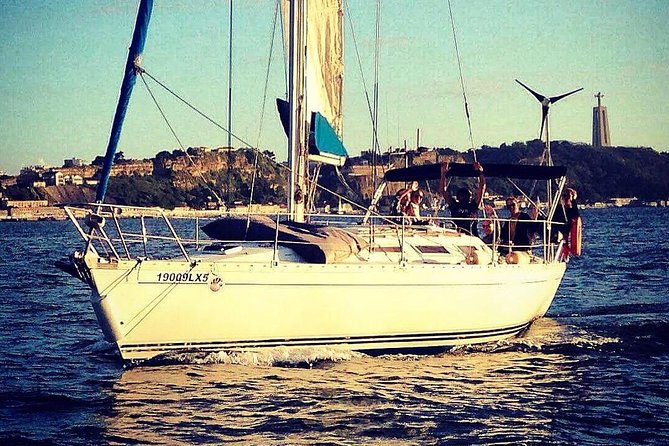
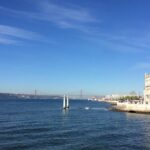
Lisbon sunsets are famous for a reason, but the Tagus River changes the whole mood. From the water, you’re not weaving through tour groups or waiting behind buildings—you’re floating in front of Lisbon’s shoreline, with the city spread out like a map you can walk later.
This trip is also “small by design.” With a maximum of 10 travelers, you get space to look, take photos, and actually hear your guide. That matters when you’re seeing big landmarks like the 25th of April Bridge and the Belém waterfront, where details are easy to miss from land.
And the timing is smart. Instead of rushing right to the moment the sun disappears, the sail starts roughly two hours before sunset, so you get golden light for the big views plus a second wave of atmosphere as the sky turns dramatic.
You can also read our reviews of more boat tours in Lisbon



The 3:30 pm departure: getting more river than the rush-hour crowd
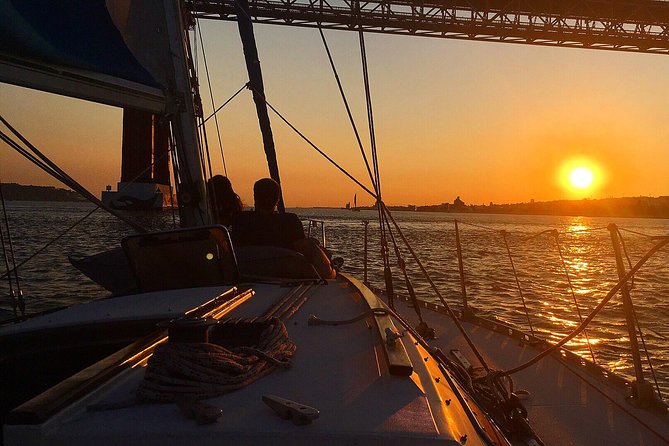
The scheduled start is 3:30 pm, and the tour is timed to line up with sunset. Practically, that means you’re not sprinting through Lisbon’s streets at peak crowd hours trying to catch a view.
You also benefit from the “two-phase” experience: first you cruise past the city’s structures in clearer daylight, then you settle into the slower, cooler part of the evening. Several people love this because it makes the trip feel like a proper event, not just a quick photo stop with a drink.
One more practical note: good weather is required. If skies don’t cooperate, you’ll be offered a different date or a full refund, so you’re not stuck with a ruined plan.
Ponte 25 de Abril: the bridge you’ll understand faster from the water
Your first major landmark is the Ponte 25 de Abril, a sweeping suspension bridge that connects Lisbon to Almada across the Tagus. From the deck, you see how massive it is without needing to crane your neck between buildings and traffic.
It also helps that your guide frames what you’re looking at. The bridge was built in 1966 by the American Bridge Company, was formerly known as Ponte Salazar, and was renamed in 1974 to commemorate the Carnation Revolution. That’s the kind of detail that makes a landmark feel less like a random photo background.
As you pass, the view isn’t only about the bridge itself. You also get a sense of the river’s scale and direction—useful if you plan to explore the south bank after your sail.
Cristo Rei from across the Tagus: a giant statue with real context
Next comes Cristo Rei (Christ the King), on the Almada side of the river. It’s a striking Catholic shrine and monument, inspired by Rio’s famous Christ the Redeemer statue, but taller in its own way at about 110 meters.
From the boat, you get a cleaner perspective on its height and position. Instead of seeing it from one angle on land, you see it in relation to the river bends and Lisbon’s skyline, which makes the scale click.
This is also a moment where the guide’s storytelling really earns its keep. Your crew can connect the monument to the broader cultural and religious landscape of Portugal, so it doesn’t feel like a sightseeing checkbox.
Belém’s Torre de Belém: why the waterfront is so photogenic
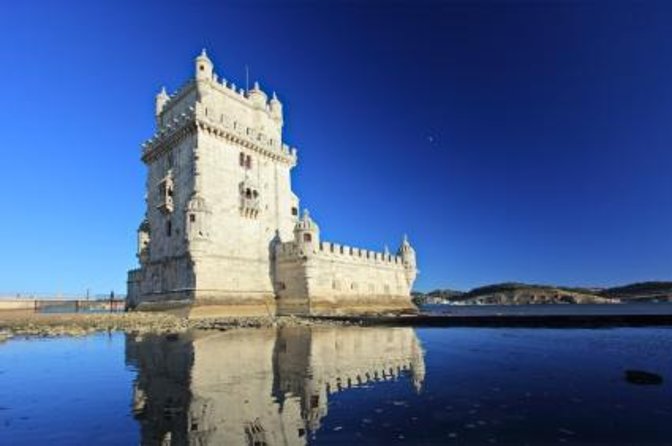
When the sail reaches Belém, you’ll see Torre de Belém, one of Lisbon’s most iconic symbols. It started life as a lighthouse idea and later took on a defensive role under King Manuel I, shifting from navigation to protection.
From water, the tower sits in a very different setting than it does in photos taken from the promenade. You’ll likely notice the way it lines up with the river mouth and the changing light over stone.
If you like photography, this is a good stop to slow down. You’re not trying to beat other tour groups into position, and you can take your time with the tower framed against the river.
You can also read our reviews of more wine tours in Lisbon



Padrão dos Descobrimentos: the “frozen caravel” monument
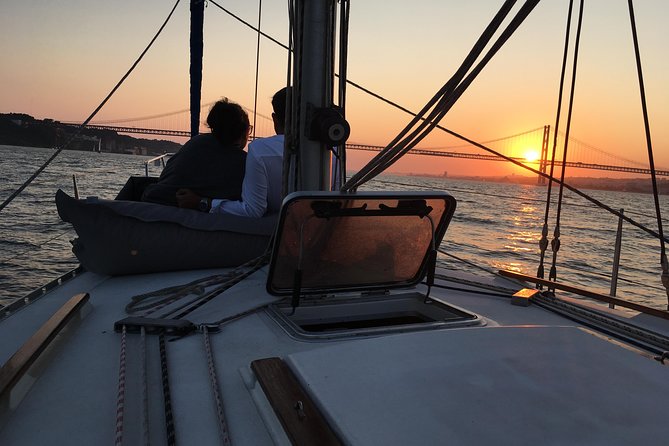
Sailing onward brings you to the Padrão dos Descobrimentos, a limestone monument that looks like a ship frozen mid-swell. It was inaugurated in 1960 to mark the 500th anniversary of Henry the Navigator’s death, and it’s 56 meters high.
This is a landmark that’s easier to appreciate when someone explains the figures and placement. At the prow is Henry the Navigator, and behind him are Portuguese exploration names such as Vasco da Gama, Diogo Cão, and Fernão de Magalhães (Magellan), plus other key figures.
You’ll probably feel two things at once here: the grandeur of the monument and the complicated story behind exploration. That’s why having a guide matter—at least you’ll understand what you’re seeing rather than only admiring the shape.
MAAT and the Tejo Power Station connection: modern Lisbon from the river
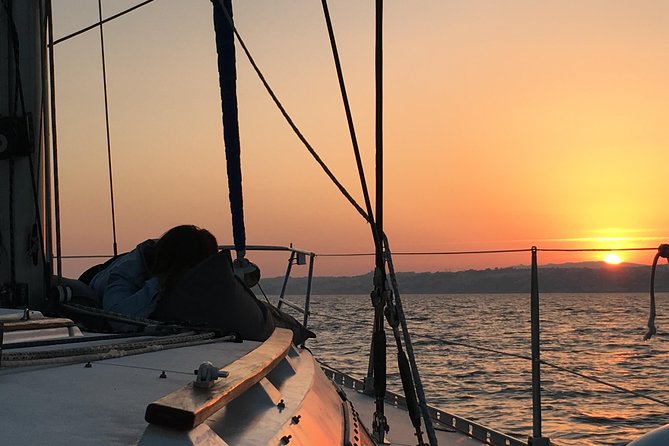
After the classic monuments, you’ll see MAAT, a Lisbon cultural project focused on Art, Architecture, and Technology. The museum sits on the riverfront west of the center, and its placement is part of the design story.
MAAT is built to connect visually and conceptually with the nearby Tejo Power Station, one of Portugal’s prominent industrial architecture examples from the first half of the 20th century. Even if you don’t step inside any museum, just seeing this pairing from the deck tells you a lot about how Lisbon reuses space and shapes new culture on old infrastructure.
This section is a nice tempo change. The sail moves from Portuguese exploration icons to a “what Lisbon is building now” moment, so your evening doesn’t feel stuck in the past.
Royal palace and the Tagus-facing museum garden: art without rushing
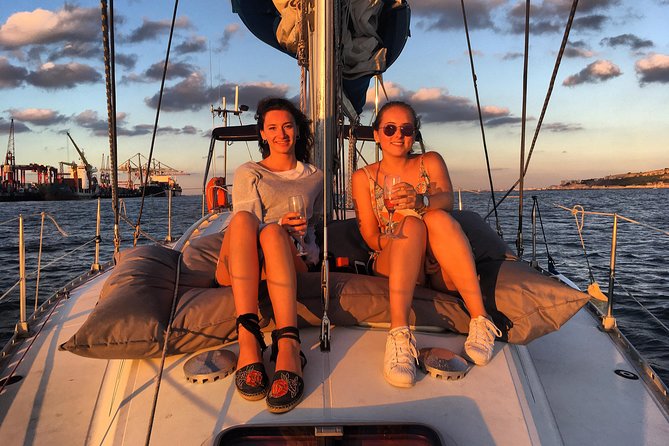
The itinerary also includes a pass by two big cultural draws that sit near the Tagus.
First, there’s a neo-classical palace from the first half of the 19th century, chosen as a royal residence when D. Luís I became king and married D. Maria Pia of Savoy. The palace was closed at the proclamation of the Portuguese Republic in 1910, then reopened as a museum in 1938. Now it’s a place for important ceremonies, so it still has official weight beyond being a pretty building.
Then comes a major museum housed in a 17th-century palace, connected to a former 16th-century Carmelite convent and a surviving Baroque chapel. The setting includes a garden overlooking the Tagus, which is a big part of the appeal if you decide to return later.
This museum’s collection also focuses on Portugal’s links with different peoples from overseas, including decorative pieces from Africa, India, and China. You’ll also see mention of carved ivory, silks, and Namban art such as Japanese screens and lacquerware—meaning you get more than European art lessons; you get trade and contact stories.
Even without going ashore, these stops help you build a smarter plan for the rest of your trip.
Wine, snacks, and the food reality on a small boat
The tour includes beverages, plus snacks that often include Portuguese cheese and/or chouriço, paired with wine. Many people describe the wine as vinho verde, and the vibe tends to be relaxed and convivial—glasses stay available, and the board is set for easy conversation.
One caution: a couple of people noted that the specific white or rosé choice wasn’t always what they expected. So if wine color is a dealbreaker for you, don’t treat this as a guaranteed rosé-only experience. The upside is that the wine is still part of the atmosphere, and the snacks are usually enough to keep you comfortable on the water.
Diet needs can sometimes be handled with care. I’ve seen mention of a vegan-friendly board and also at least one story where dietary information didn’t translate smoothly onboard. My practical advice: put restrictions in writing at booking, and also remind the crew when you meet them. Small sailboats run on people talking, and clear communication helps.
The crew and the vibe: stories, music, and photo stops
This is one of the strongest parts of the experience. People consistently highlight friendly crew energy and a guide who explains what you’re seeing in a way that sticks. You may hear funny, well-paced stories, and you’ll probably get asked a question or two as the group settles in.
There’s also often music during the sail, which makes it feel more like a laid-back evening with friends than a classroom outing. With up to 10 people, the social tone tends to be easy—you can chat, or you can quietly watch the river do its thing.
If you’re celebrating (honeymoons and last-night Lisbon trips pop up a lot), this is a good match because it doesn’t feel rushed. It’s also a nice way to decide what you want to explore later: after you’ve seen the city from the Tagus, you’ll know which parts deserve a second visit on foot.
And yes, you might get lucky with wildlife. One person even mentioned seeing dolphins, which is the kind of bonus that turns a nice trip into a memorable one.
What to pack: wind chill, rain, and the lack of big-boat comforts
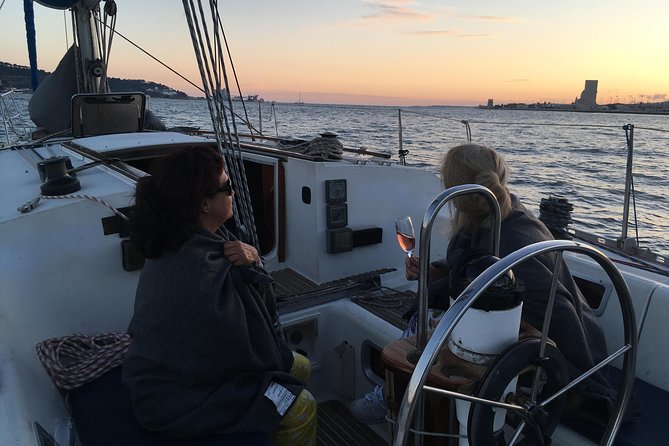
A sailing sunset sounds romantic, but the practical truth is that wind gets real. Even when the day is warm, once the sun drops you can feel cold fast. Bring a light jacket or windbreaker, and if you sail in shoulder seasons, pack something warmer than you think you need.
Rain is also a possibility. Some people started with cloudy or rainy conditions and ended up with a beautiful sunset, so I recommend a compact rain layer. Even if it looks fine on land, the river weather can shift.
Now for the small-boat reality check: this is not a big yacht with lots of plush seating. At least one person noted that there’s no bathroom onboard, and that seating is limited—some folks ended up with mostly hard deck options. So if comfort is your top priority, come ready for a more basic, outdoorsy setup.
If you get motion sickness easily, remember it’s a sailboat. Most people describe a smooth ride, but waves and wind can change the feel.
Price and value: what $50.91 buys you in Lisbon time
At $50.91 per person for about 2 hours, you’re paying for three things at once: access to the river views, a guided explanation, and drinks/snacks. Lisbon has lots of free viewpoints, but you can’t get this kind of perspective without being on the water.
The value gets better because the group is capped at 10. That means your guide can actually talk to you, and you’re not standing behind a crowd trying to find a clear line of sight to Torre de Belém or the bridge.
You’re also not spending half the evening commuting around town. You start at Izanagi (Doca de Santo Amaro) and return there, so it’s a straightforward plan for a night when you want to slow down.
If you’re on a tight schedule, this is a smart use of time. Do it early enough in your trip that the tour helps you choose what to explore next, or do it near the end as a calming capstone.
Should you book this sunset sailing tour?
I’d book it if you want a relaxed sunset with a real Lisbon “from the river” view, and you like your history with a human guide instead of a formal lecture. The small group size and the mix of big landmarks plus modern riverfront stops make it feel like more than just pretty scenery.
Skip it or think twice if you’re very sensitive to cold wind, need onboard restroom access, or want lots of comfortable seating. This is a small sailboat experience, so your comfort expectations should match the boat.
FAQ
FAQ
What’s the duration of the Lisbon sunset sailing tour?
It runs about 2 hours.
Where does the tour start and end?
It starts at Izanagi (Doca de Santo Amaro), Doca de Santo Amaro Armazém 0, and ends back at the meeting point.
How many people are on the boat?
The tour has a maximum of 10 travelers.
What language is the tour offered in?
It’s offered in English.
Is wine and snacks included?
Yes. Beverages are included, and snacks are provided (often Portuguese cheese and/or chouriço, paired with wine).
What happens if the weather is bad?
The tour requires good weather. If it’s canceled due to poor weather, you’ll be offered a different date or a full refund.
What’s the cancellation policy?
Free cancellation is available up to 24 hours before the experience’s start time for a full refund.
Can children or service animals join?
Children must be accompanied by an adult. Service animals are allowed.