REVIEW · LISBON
Lisbon: Private Guided Tour by Electric Tuk Tuk
Book on GetYourGuide →Operated by Battuta Experiences · Bookable on GetYourGuide
Lisbon’s hills meet quiet electric wheels. This private tour lets you cover major neighborhoods, viewpoints, and landmarks in an electric tuk-tuk—so you get the angles and stories without paying the full price in steep walking. You’ll ride cobbled lanes, pause for photos, and learn why Lisbon feels different block to block.
I love how the guides turn place names into a story you can picture later. Whether your guide is Sergio (rainy-day pro) or Filipa (great sense of Lisbon’s layout), you get clear context—earthquakes, neighborhoods, and daily life—while you’re moving through the city rather than just standing still.
One thing to consider: the tour is marked as wheelchair accessible, but it’s also listed as not suitable for wheelchair users, plus it’s not recommended for children under 7 or pregnant women. Also, the streets can be loud and bumpy, so the ride isn’t built for fragile comfort.
In This Review
- Key Things I’d Pay Attention To
- Electric Tuk-Tuk Lisbon: Why This Ride Works
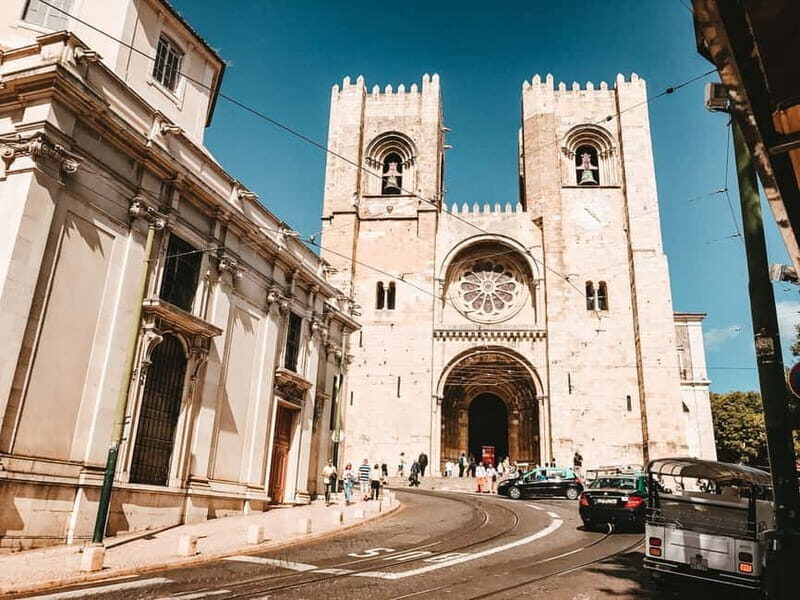
- The Start at Rossio Square and Lisbon Cathedral
- Portas do Sol and Senhora do Monte: The Viewpoint Payoff
- Graça and Alfama’s Maze: Narrow Streets, Real Atmosphere
- Casa dos Bicos and Ribeira das Naus: City Craft Meets River Views
- Praça Luís de Camões, Bairro Alto, and Principe Real: Walking Less, Seeing More
- Miradouro de São Pedro de Alcântara and Largo do Carmo: Best Angles, Short Walks
- Belém and Pastéis de Belém: The Sweet End That Feels Like a Reward
- How Long 2–4 Hours Really Feels
- Price and Value: Is $166 Worth It?
- Comfort, Noise, and Practical Tips That Matter
- Who This Tour Suits Best (and Who Should Rethink It)
- Should You Book This Lisbon Private Electric Tuk-Tuk Tour?
- FAQ
- What’s included in the Lisbon private electric tuk-tuk tour?
- How long does the tour last?
- Where does pickup happen?
- What neighborhoods and landmarks do you pass or stop at?
- Which languages are available for the live guide?
- Who is this tour not suitable for?
Key Things I’d Pay Attention To
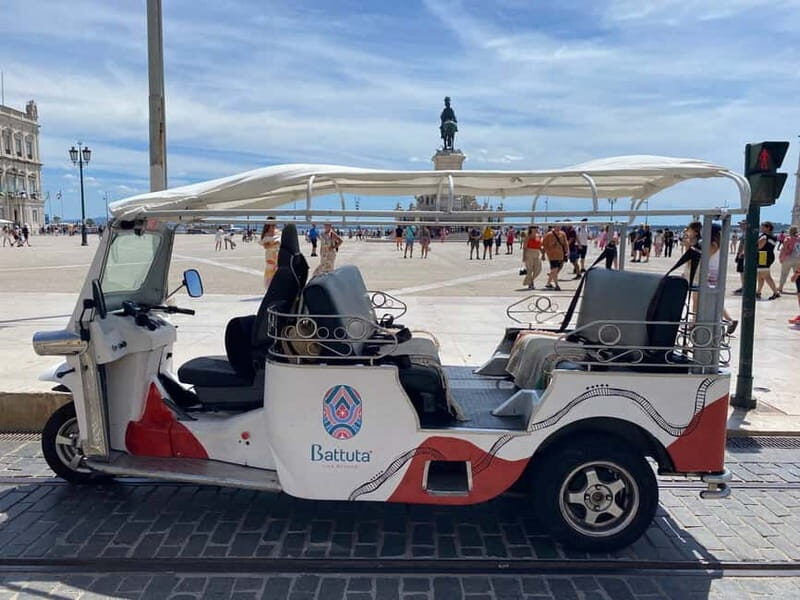
- Electric tuk-tuk on steep streets: easier than walking when your legs hit “Lisbon-mode hills.”
- Local guide storytelling: you’re not just collecting photos; you’re learning why things look the way they do.
- Photo stops at big viewpoints: Portas do Sol, Senhora do Monte, and São Pedro de Alcântara are built in.
- A route you can shape to your interests: your guide can aim more toward history, photos, or food stops.
- Bairro Alto and Praça Luís de Camões: you’ll get the livelier center without tiring stair-grinding.
- Belém plus Pastéis de Belém: the sweet payoff often comes during the Belém portion.
Electric Tuk-Tuk Lisbon: Why This Ride Works

If you’ve ever tried to “just walk it” in Lisbon, you already know the problem: great viewpoints, short distances, and then… steep slopes that keep going. This is the antidote. You get the city’s drama—narrow streets, hills, and views—while sitting in a vehicle that’s quiet for an electric ride and made to move through areas cars can’t.
The other big win is how private pacing changes the whole feel. On a solo or small-group tour, you can linger at a viewpoint for one more photo, move faster through a stretch you’re not into, or spend extra time where your guide’s story is really clicking. Guides often tailor the commentary to the group—one guide even delivered in two languages for a multi-language group.
That said, you should expect real Lisbon conditions. The road surfaces can be bumpy, and street noise can be loud, so if you’re hard of hearing, you may miss pieces of the narration while traffic and pedestrians do their thing.
You can also read our reviews of more guided tours in Lisbon



The Start at Rossio Square and Lisbon Cathedral
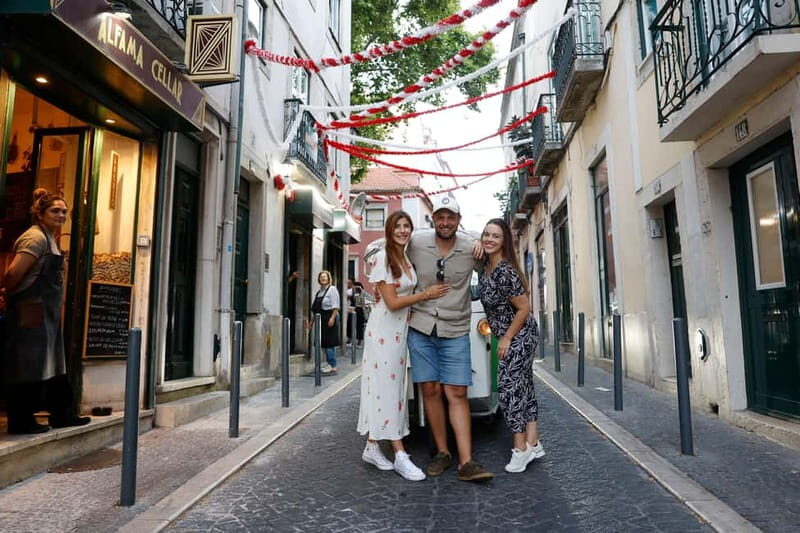
Most tours like this begin in the center for a reason: Rossio Square is a good “map moment.” You start your orientation with Lisbon’s central pulse, then you move toward the older core. Passing by Rossio helps you understand where neighborhoods connect, especially if you’re only in town for a short stay.
From there, you pass Lisbon Cathedral. Even as a pass-by stop, it matters because it anchors you in the historic layers of the city. Lisbon’s center can feel like a single postcard until someone explains how the neighborhoods grew, shifted, and survived major events—especially the way later development fills in around older structures.
You’re not standing in one place waiting for a lecture. You’re building context while you ride, which is what makes this format useful on day one.
Portas do Sol and Senhora do Monte: The Viewpoint Payoff

This tour treats viewpoints like planned events, not accidental photo moments. You’ll stop at Portas do Sol Terrace, then later reach Miradouro da Senhora do Monte for another big viewpoint walk-and-photo window.
Portas do Sol is a classic because it frames the city’s geography. Lisbon looks built on tiers, like neighborhoods are stacked and connected by slopes, not straight streets. When you’re up there in a short window, you can actually see the logic of where you’ll be riding next.
Senhora do Monte is the kind of viewpoint that makes you understand why Lisbon is famous for panoramas. The air is often busy with photographers, but the stop itself is short enough that you don’t get drained before you’ve even moved into Alfama and Graça.
Tip from how the ride tends to feel: wear shoes you trust on uneven ground. You’re doing quick walking segments after stops, and Lisbon doesn’t do perfectly flat sidewalks.
Graça and Alfama’s Maze: Narrow Streets, Real Atmosphere

This is where the tour earns its keep. Graça and Alfama aren’t just pretty neighborhoods; they’re a lesson in how Lisbon actually functions at street level. You’ll glide past the Graça Historic District and then get into the vibe of Alfama with a series of photo moments and short walking stretches.
When you ride through Graça, you get that maze effect—the way narrow streets curve, climb, and sometimes feel like they end at a wall until they open again. Alfama hits even harder because of its historic density and the way everyday life spills right onto the street.
If you’re short on time, this is the moment where a guided tuk-tuk beats independent roaming. On your own, you can spend half a day going the wrong direction, then end up exhausted before you find the angles you wanted. Here, the guide’s sense of routing helps you see more while staying comfortable.
You’ll also pass by the Monastery of São Vicente de Fora. Even if you don’t go inside, the stop works because it signals the neighborhood’s deeper layers and gives you a landmark your brain can file away. That matters when you’re later trying to place what you saw.
Casa dos Bicos and Ribeira das Naus: City Craft Meets River Views

After Alfama’s narrow streets, the tour transitions toward the river area. You’ll pass Casa dos Bicos, a building that’s hard to miss because it looks like it wears its design on the outside.
From there, you reach Ribeira das Naus. This is a smart shift in scenery. It’s not just another photo stop—it’s a change of pace. Lisbon’s riverfront gives you a different angle on the city’s layout and explains why Lisbon became such a trading and seafaring hub.
Even if you don’t pause long, you’ll feel the geographic swing: hills to water, tight streets to broader sightlines. It’s a good reset before the tour heads back toward the lively central neighborhoods.
You can also read our reviews of more private tours in Lisbon





Praça Luís de Camões, Bairro Alto, and Principe Real: Walking Less, Seeing More
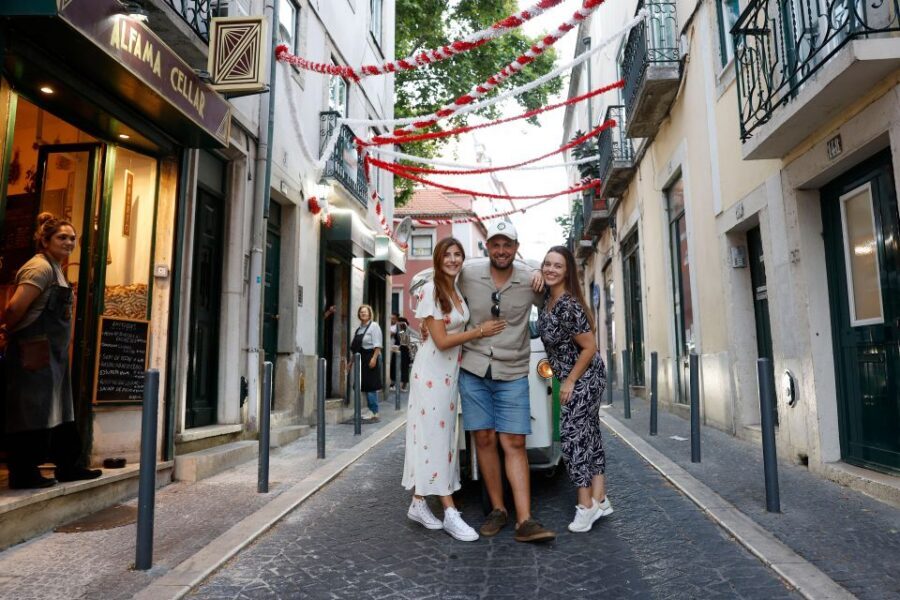
You’ll reach Praça Luís de Camões, then continue toward Bairro Alto. This part is ideal if you want the Lisbon many people imagine—streets that feel social, historic squares, and the sense that the city is alive beyond the viewpoints.
Bairro Alto can be steep on foot, which is exactly why the tuk-tuk matters. You still get the neighborhood feel without spending your energy climbing between bars, shops, and viewpoints. And because the tour is private, you can ask your guide to focus more on sights than on small talk—or flip it if you’d rather understand how locals live.
Next comes Jardim do Principe Real, giving you a breath of green and space. Reviews and real-world guides tend to treat this as a moment to slow down, look around, and connect the earlier history stops to the way Lisbon flows today.
Miradouro de São Pedro de Alcântara and Largo do Carmo: Best Angles, Short Walks

The tour finishes with more of Lisbon’s signature angles. You’ll stop at Miradouro de São Pedro de Alcântara and later visit Largo do Carmo Square.
Miradouro stops are where Lisbon really becomes “Lisbon.” This isn’t just about height. From these spots, the city’s street network and tiered neighborhoods make sense. You’ll see why Lisbon’s hills aren’t just an obstacle—they’re part of the view-making system.
Largo do Carmo Square rounds out the day with a classic central feel. It’s a good place to wrap your head around the route you just rode: how you traveled from the center into the older neighborhoods and back out again.
If you’re thinking ahead: after this tour, you’ll be better able to choose what to revisit on foot and what to skip.
Belém and Pastéis de Belém: The Sweet End That Feels Like a Reward
The tour is set up to reach Belém, especially for its monuments and the famous custard tarts. Belém is one of the easiest places to make your first Lisbon trip feel “complete,” because it signals Lisbon’s larger story beyond the older inner-city quarters.
The star here is Pastéis de Belém—the custard tarts with the secret-recipe story. Even if you’ve tasted similar pastries elsewhere, this is one of those Lisbon anchors that turns your day into a memory you can actually hold onto.
Important practical note: museum entries aren’t included, but food and drinks can be purchased during stops. If you want the tarts (and you probably do), plan around the time it takes to buy and eat them without rushing.
How Long 2–4 Hours Really Feels

The duration range is 2 to 4 hours, and you’ll feel the difference instantly. A shorter ride tends to compress the viewpoints and core neighborhoods. A longer ride gives your guide more room to adjust—like adding an extra viewpoint photo moment or shifting emphasis from Alfama’s story to Bairro Alto’s central energy.
Either way, you’re getting a “first orientation” tour: seeing major neighborhoods, learning the structure of the city, and collecting a handful of landmarks you can navigate toward later.
One heads-up from real ride conditions: on a hot day, the tuk-tuk helps more than you’d expect, since you’re not constantly stopping and starting uphill. On a rainy day, the experience can still work well as long as your guide keeps moving through the plan and gives you photo stops without overexposure to weather.
Price and Value: Is $166 Worth It?
At $166 per person, this isn’t the budget option. You’re paying for three things that usually cost you time and energy if you DIY:
1) Access and routing. The vehicle can handle small streets and steep segments.
2) A guide who connects dots. Instead of learning only what you see, you learn why Lisbon looks the way it does.
3) Private pacing. You’re not competing with a crowd for the best photo angle or the most helpful answer.
When guides tailor the route—like spending less time in Alfama if you’re staying there, or adding extra stops if you want Belém—you’re getting value that a generic “drive-and-stop” tour doesn’t always deliver.
In short: if you want a smooth introduction to Lisbon without turning your vacation into an uphill workout, the price starts to make sense fast.
Comfort, Noise, and Practical Tips That Matter
Electric tuk-tuks generally feel more comfortable than older-style ones, and you’ll likely appreciate the smoother ride compared with random street-level trams and long walking days. Still, Lisbon roads are Lisbon roads: expect bumps.
Here are the practical things I’d do before you go:
- Bring water. Some segments are hot, and you may spend short time walking at viewpoints.
- Plan on photo time. The tour includes multiple photo stops—use them.
- Don’t stress over hearing every word. Street noise can be loud, so it helps to see the guide as both storyteller and navigator.
- Wear grippy shoes. Quick walks to terraces can be slippery or uneven.
- No smoking in the vehicle. It’s explicitly not allowed.
On the people side, guides seem to be a huge part of the experience. Many named guides—Sergio, Filipa, Luis, Victor, Dominique, and João—are described as personable and flexible, with a sense of humor and a focus on getting you comfortable and informed. Some guides even provide extra care when a situation happens, like chilly conditions or small physical issues during the day.
Who This Tour Suits Best (and Who Should Rethink It)
This tour fits best if you want:
- A high-efficiency first day in Lisbon
- Great views without marathon walking
- A local guide to explain Lisbon’s structure—neighborhoods, landmarks, and how major events shaped the city
It may not be the best match if you:
- Have mobility limits that make short walks difficult (the tour is marked wheelchair accessible, but it also says it’s not suitable for wheelchair users—confirm before you book)
- Are traveling with children under 7
- Are pregnant (not recommended per the tour info)
If you’re the type who loves “see it first, then explore later,” this is a smart start.
Should You Book This Lisbon Private Electric Tuk-Tuk Tour?
I’d book it if you want to hit the main Lisbon neighborhoods—Alfama, Graça, Bairro Alto, viewpoints, and Belém—without turning your day into an endurance event. The guides’ ability to tailor the route, plus the consistent photo-stop structure, makes it a strong option for a short stay or for travelers who don’t want to spend half the trip figuring out streets.
I’d hesitate only if you have accessibility concerns that need certainty, or if you hate vehicles on bumpy cobbles and prefer fully sedentary sightseeing.
FAQ
What’s included in the Lisbon private electric tuk-tuk tour?
The tour includes hotel pickup and drop-off, transportation on an electric tuk-tuk, and a live local guide. Sightseeing is included, but museum entrance fees and snacks are not included.
How long does the tour last?
It runs for 2 to 4 hours, depending on the option you select and local availability.
Where does pickup happen?
Pickup is included with the tour in Lisbon. The meeting instructions say to look for a tuk-tuk with the Battuta logo on it.
What neighborhoods and landmarks do you pass or stop at?
You’ll see Rossio Square and Lisbon Cathedral, stop or walk briefly at viewpoints and terraces like Portas do Sol and Miradouro da Senhora do Monte, explore areas such as Graça and Alfama, and include time around Bairro Alto and Praça Luís de Camões. The route also reaches Belém for monuments and Pastéis de Belém.
Which languages are available for the live guide?
The guide operates in English, Portuguese, Spanish, French, German, and Italian.
Who is this tour not suitable for?
The tour info says it’s not suitable for children under 7, pregnant women, and wheelchair users. It also states smoking is not allowed in the vehicle.