Lisbon tastes better when you walk it. This 3-hour small-group food-and-wine tour hits multiple classic Portuguese stops, including a three-wine tasting with cheese and the kind of local food you’d actually order again. You also get a guide who explains what you’re eating in plain language, so it’s not just sampling—it’s learning what makes Lisbon’s food tick.
I especially like how the tour moves at a relaxed pace across five different venues, mixing hearty savories with sweet classics. The tastings also come with drink pairings along the way—so even if you’re not a wine person, you’ll still have a lot to sip and snack on.
One thing to consider: the experience runs on real restaurants, and plans can shift with weather and availability. On busy holidays or when a place has an issue, you may get substitutions or a slightly different flow than the standard route.
In This Review
- Key highlights worth your attention
- A 3-hour food-and-wine sprint through Lisbon’s lanes
- What you’ll eat: bifana, pica-pau, pastel de nata, ginjinha, and more
- Praça Luís de Camoes: bifana and beer to start strong
- Rua da Misericórdia: pica-pau and green wine pairing
- The wine-and-cheese phase: three Portuguese wines with context
- Rua do Loreto: pastel de nata with coffee to reset
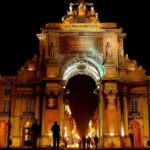
- Praça Dom Pedro IV: ginjinha to close the night
- Small group size (max 12) and why it affects your experience
- Price and value check: what $102.52 buys you
- Who this tour suits best
- Tips to get the most from the tasting route
- If plans shift: weather, holidays, and stop substitutions
- Should you book this Lisbon food-and-wine tour?
- FAQ
- How long is the Lisbon Food and Wine Tasting Tour of Hidden Gems?
- How much does the tour cost?
- How many people are in the group?
- Is the tour offered in English?
- Where does the tour start and end?
- Is alcohol included?
- What tastings are included during the tour?
- Does the tour include a mobile ticket?
- Can the menu change during the tour?
- What if I have dietary restrictions?
- What’s the cancellation window?
Key highlights worth your attention
- Bifana + beer to start strong at Praça Luís de Camões
- Pica-pau + a homemade green wine stop that focuses on the local order
- Three Portuguese wines paired with an array of cheeses mid-tour
- Pastel de nata + coffee to end the sweet half of the night
- Ginjinha (cherry liqueur) as a classic final sip at the end point
- Max 12 people keeps the vibe friendly and easy to ask questions
A 3-hour food-and-wine sprint through Lisbon’s lanes
This is a practical, hands-on way to get your bearings fast in Lisbon. The tour is built around five eating stops, spread over a short walking route, with drink pairings that keep the pace moving. Expect about 3 hours from start to finish, led in English, and designed for small groups of up to 12.
What makes this style of tour useful is the balance: you get Portuguese favorites (the ones you’ve heard of), plus a few less obvious places where locals tend to go. Instead of loading you with facts you’ll forget, the guide connects the dots between ingredients, regional habits, and what people actually order.
It’s also an easy tour to place on your itinerary. If you’re arriving in Lisbon and want a first-night activity that doesn’t feel like a performance, this fits. You’ll eat enough to feel satisfied, and you’ll leave knowing what to hunt for on your own later—especially in the areas around Bairro Alto and the broader downtown core.
You can also read our reviews of more food & drink experiences in Lisbon

What you’ll eat: bifana, pica-pau, pastel de nata, ginjinha, and more
Portuguese food can seem simple on paper, but the details matter. Here’s what you should plan to taste during the tour’s stops:
- Bifana: a marinated pork sandwich served warm. It’s one of Lisbon’s most iconic street foods.
- Pica-pau: small pieces of seasoned beef or pork served with crusty bread.
- A tutored wine tasting: three Portuguese wines plus cheeses, so you taste with context instead of guessing.
- Pastel de nata: the custard tart with a crisp, flaky crust.
- Ginjinha: Lisbon’s famous sweet cherry liqueur to close things out.
Drink pairings are part of the point. You’ll have local Portuguese beer with the sandwich stop, and a wine pairing shows up again later. At the dessert stage, coffee is also mentioned as the pairing choice, which is smart—coffee cuts sweetness and helps you reset between flavors.
If you’re the type who wants to leave Lisbon knowing what you actually ate, this tour does that. You won’t just collect a checklist. You’ll taste the logic behind the local “why,” from pork-and-beer comfort to tart-and-coffee sweetness.
Praça Luís de Camoes: bifana and beer to start strong
Your tour starts at Praça Luís de Camões. This is a good location to begin because it’s easy to reach and it sets the tone: get something hot and salty on board early, then keep walking.
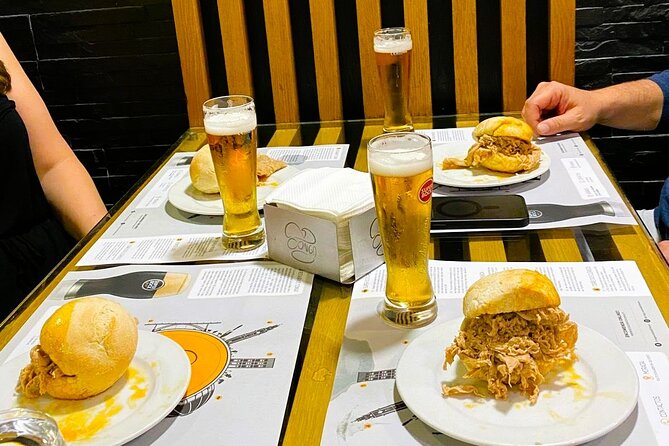
The first food stop is bifana: thinly sliced, marinated pork tucked into a sandwich, usually served fast and eaten standing or sitting close by. It’s the kind of dish that tastes like Lisbon moves on coffee and sandwiches—simple, but very real.
You’ll also get a crisp local Portuguese beer pairing here. That matters because the salt and fat from pork works with beer’s clean refreshment. If you’re worried about feeling heavy too soon, that beer-and-bifana combo is a nice balance before the next walking segment.
Practical note: early stops can be busy, especially around holidays. If you’re sensitive to crowds, just go in expecting a lively lunch-hour energy rather than a quiet tasting room.
Rua da Misericórdia: pica-pau and green wine pairing
The next savory stop is around Rua da Misericórdia. Here you’ll taste pica-pau, which is bite-sized seasoned beef or pork, typically served with crusty bread to soak up the flavor.
The tour also pairs the dish with a specific style of drink: a homemade Portuguese green wine. That pairing is doing real work. Green wine tends to have a crisp, light feel, so it doesn’t fight the savory seasoning. It keeps the plate from feeling too heavy as you move from one venue to the next.
What I like about the way this stop is described is that it’s focused on the food itself. You’re not just being shown a famous name. You’re eating something Lisbon-typical in a way that lets you taste the seasoning and texture (and then compare that later with what you try in the wine-and-cheese portion).
Small caution: portions and seating can vary by restaurant. If you prefer longer sit-down meals, this won’t be your slow-food night. But if you want street-food comfort with good guidance, this stop is a strong match.
The wine-and-cheese phase: three Portuguese wines with context
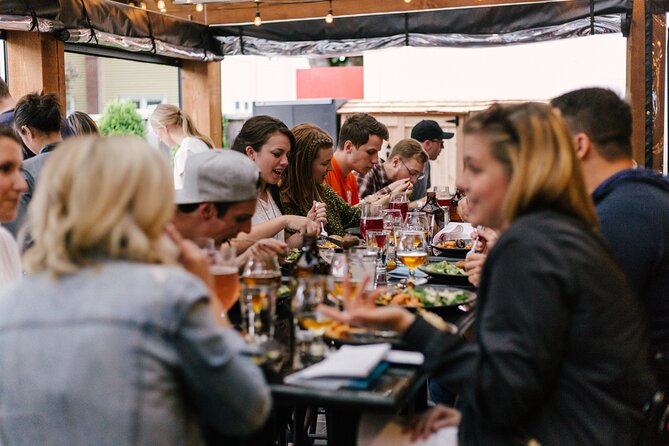
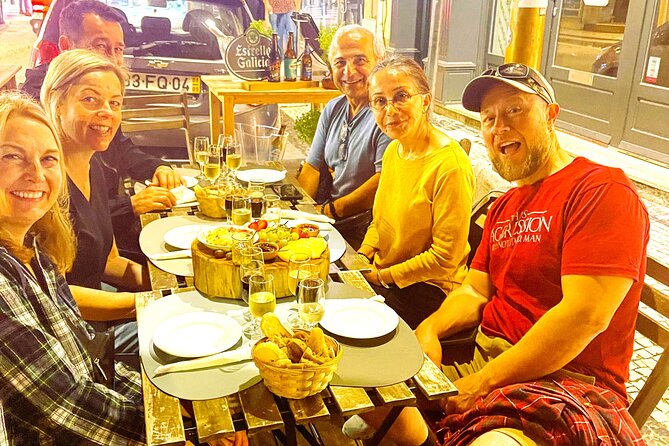
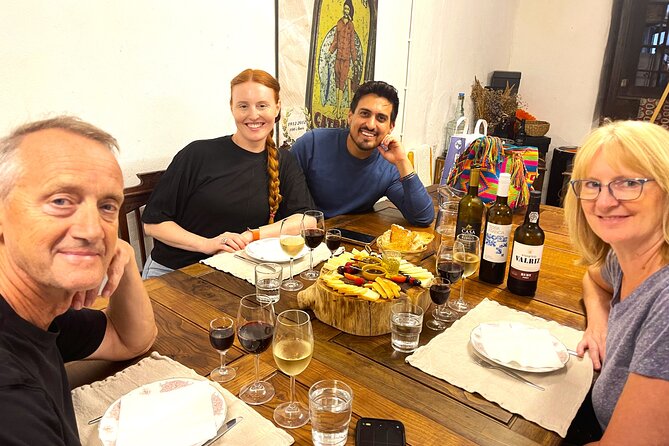
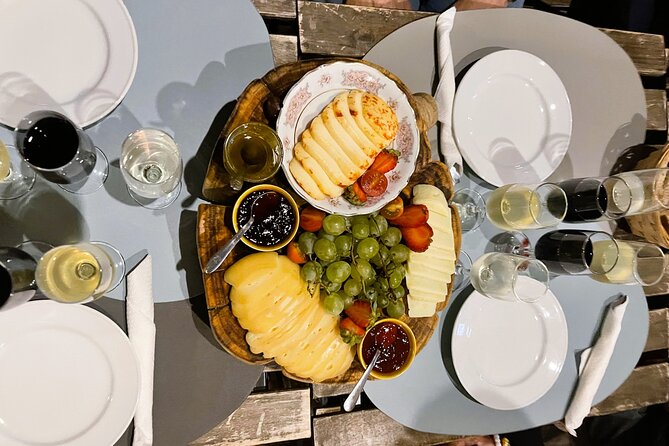
Mid-tour is the signature tasting moment. You’ll sample three distinct Portuguese wines along with an assortment of cheese, guided by your host so you know what you’re tasting and why it pairs with what you just ate.
This is where the tour earns its “tasting” label. A random wine sip is fine; a guided tasting changes your ability to order later. You’ll get practice identifying differences—often in acidity, dryness, and fruit notes—without needing a wine textbook.
Why the cheese matters: it turns the tasting into a flavor comparison exercise. Cheese has fat and salt, which makes wine flavors read differently. That can help you learn quickly what kind of wine you actually enjoy, not what you think you should enjoy.
Also, this stop is a great place to ask questions while you’re seated. Many guides include quick explanations about Portuguese wine culture as it relates to the dishes you’ve been eating, so you end up with a usable mental map of Lisbon’s flavors.
A few more Lisbon tours and experiences worth a look


Rua do Loreto: pastel de nata with coffee to reset
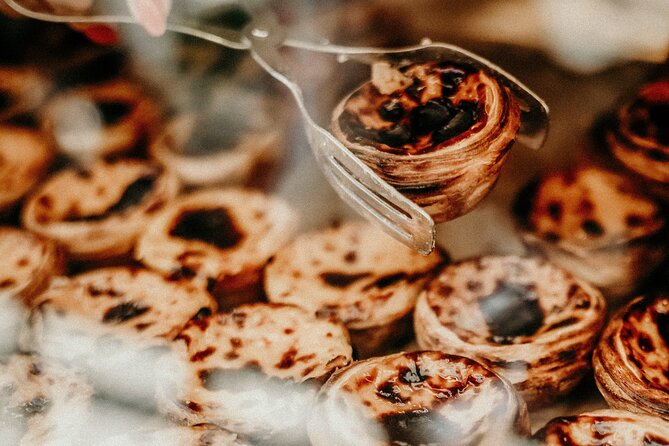
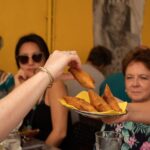
After the savory section, you switch to dessert at Rua do Loreto. The centerpiece is Pastel de Nata—a custard tart with a crisp, flaky crust. It’s the kind of food that shows up everywhere in Portugal, but what you’re really tasting is the contrast: warm pastry shell versus creamy custard center.
The tour also includes coffee pairing as part of the sweet stop. That’s a smart pairing because coffee cuts through sugar and helps your palate stay awake for the last part of the route.
A quick heads-up: dessert stops can feel fast, because the plan is to keep you moving. If you want to linger, ask your guide if you can take a minute or two to slow down after the first few bites. Most guides are used to setting expectations and then giving you enough time to enjoy the tastings without rushing.
If you’ve never had a fresh pastel before, this is a good moment to do it. If you have, it’s still a good stop because you’ll taste how different versions handle sweetness and crust crispness.
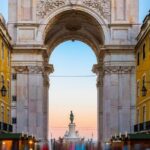
Praça Dom Pedro IV: ginjinha to close the night
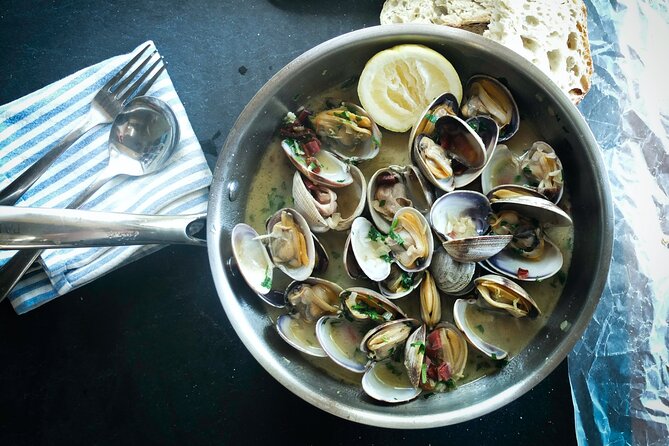
You finish near Praça Dom Pedro IV with Ginjinha, Lisbon’s sweet cherry liqueur. It’s small, strong, and sugary—in other words, exactly the kind of final sip that makes the whole night feel complete.
Ginjinha is more than dessert-in-a-cup. It’s a cultural marker. Finishing with it gives you a Lisbon-specific ending rather than a generic “tour ends at a café” wrap-up.
Timing matters here. If you’ve been walking and snacking for a while, the ginjinha works as a last flavor punch. It also helps you remember the night’s arc: pork-and-beer, seasoned meat with bread, wine-and-cheese lessons, custard-and-coffee sweetness, then cherry liqueur.
When a tour leaves you with a distinct final taste, you’re more likely to remember what you liked and seek it out again when you’re wandering on your own.
Small group size (max 12) and why it affects your experience
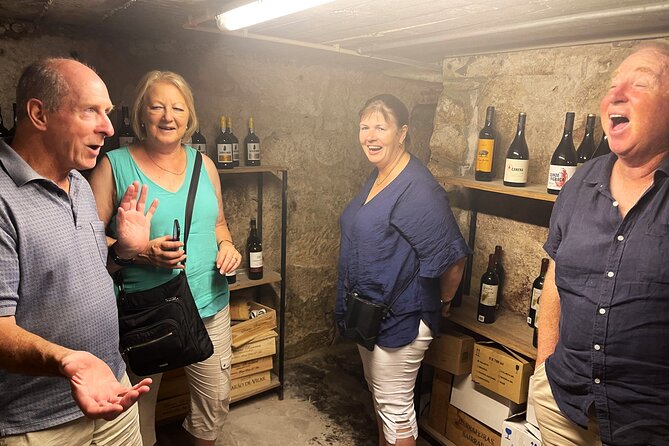
A limit of 12 travelers isn’t just a nice-to-have number. It tends to change how the guide can handle questions, substitutions, and the flow between stops. In a smaller group, you’re more likely to get direct attention instead of being one voice in a crowd.
It also affects pacing. Restaurants are real places with real seating, and groups feel that reality. With fewer people, your guide can usually manage timing better: getting you seated for the wine stop, coordinating quick bites at the sandwich and pica-pau places, and keeping everyone together.
The names you might run into also suggest a consistent effort toward friendliness and food focus. Some guides mentioned include Paulina, Susanna, Polina, Mario, Eliane, and Adianna. (You may also see other guides, of course.) Across these names, the pattern that comes through is a mix of food talk plus city tips, and a willingness to adjust if the weather is awkward.
Price and value check: what $102.52 buys you
At $102.52 per person, you’re paying for a guided tasting route, multiple food stops, wine tastings, and drink pairings. The value isn’t only in the price tag—it’s in what’s included during a tight 3-hour window.
Here’s what you’re essentially buying:
- Multiple tastings across five venues
- Beer and wine pairings (including wine tasting with cheese)
- Key Portuguese items most visitors want to try: bifana, pica-pau, pastel de nata, and ginjinha
When prices feel high, it’s usually because a tour under-delivers. This one avoids that trap by stacking different categories of food rather than just repeating the same snack. You get a savory arc, then dessert, then a proper final liqueur.
Also, you get English guidance, which matters for comprehension. If you’re visiting Lisbon for the first time, understanding what you’re eating is part of the value. Otherwise it becomes “I ate a sandwich and drank wine,” which is still fun, but less useful.
If you’re coming with an adventurous appetite and want Lisbon flavor without planning restaurant hop logistics yourself, the value looks pretty reasonable.
Who this tour suits best
This tour suits you if you want:
- A first or second day Lisbon activity
- Portuguese food classics plus a guide’s explanation
- Wine tasting that feels approachable (three wines and cheese, not a long seminar)
- A manageable walk with stop-by-stop tastings
You might want to look elsewhere if you:
- Hate any walking between stops (the route is still a route)
- Need a very strict dietary plan without being able to communicate it in advance
- Prefer fine-dining sit-down courses where you can slow down for long stretches
It’s also a good fit for couples and small groups. People mention feeling like they’re hanging out with a friend rather than being shoved into a big group script—which is exactly what smaller sizes usually help with.
Tips to get the most from the tasting route
A few practical things can make the night smoother:
- Tell your dietary needs before the tour. The booking process includes a place for special requirements, and this is the best way to prevent last-minute scramble.
- Arrive hungry but not starving. You’ll be eating multiple items, including a dessert stop and liqueur, so pace your appetite.
- Use water between stops if you drink alcohol. It helps you stay comfortable during walking segments and keeps your tasting senses clearer.
- Ask one good question at the wine-and-cheese stop. If you want one takeaway, make it about what wine style you like and how to order it later.
Also, keep an eye on timing. The tour is designed for about three hours, and it follows a set start and end area. On days with unusual crowd levels or restaurant hiccups, you may notice a slightly different tempo. That doesn’t automatically mean a bad tour—it just means flexibility helps.
If plans shift: weather, holidays, and stop substitutions
Lisbon can throw curveballs: rain, heat, and holiday crowds. The tour itself notes that the itinerary and menu can change based on locations, availability, weather, and other circumstances.
I actually think that’s a fair reality for food tours in the real world. Restaurants run on schedules, not on websites. The important part is how quickly a guide adapts. One review experience mentions a guide adjusting for poor weather by choosing options that allow more indoor seating and less walking. That’s the kind of flexibility you want to see.
Still, here’s the practical takeaway: if you booked this as a strict time block for dinner plans, keep a little buffer afterward. If you’re in Lisbon during a major holiday or a high-demand day, don’t treat every stop like a guaranteed museum exhibit. Expect good food, and be ready for small changes in venue or flow.
Should you book this Lisbon food-and-wine tour?
If you want an easy, high-reward way to eat Portuguese food, drink wine, and learn what matters—this is a strong choice. I’d book it if you like classic bites (bifana, pica-pau) and you enjoy structured tastings that still feel casual, not stuffy.
I’d think twice if your schedule is inflexible or if you have complex dietary restrictions and haven’t used the booking notes to communicate them clearly. Also, if you dislike alcohol completely, note that the tour includes alcoholic beverages for adults, and you should plan accordingly.
For most first-time visitors who want a fun night that also teaches them how to order and what to look for later, this is the kind of tour that pays off fast.
FAQ
How long is the Lisbon Food and Wine Tasting Tour of Hidden Gems?
It lasts about 3 hours.
How much does the tour cost?
The price is $102.52 per person.
How many people are in the group?
The tour has a maximum of 12 travelers.
Is the tour offered in English?
Yes, it’s offered in English.
Where does the tour start and end?
It starts at Praça Luís de Camões, 1200-243 Lisboa, Portugal, and ends at Praça Dom Pedro IV, 1100-193 Lisboa, Portugal.
Is alcohol included?
Alcoholic beverages are included for adults.
What tastings are included during the tour?
You’ll taste Portuguese favorites including bifana, pica-pau, three types of Portuguese wine with cheeses, pastel de nata (with coffee mentioned as a pairing), and ginjinha.
Does the tour include a mobile ticket?
Yes, a mobile ticket is included.
Can the menu change during the tour?
Yes. The itinerary and menu can change based on locations, availability, weather, and other circumstances.
What if I have dietary restrictions?
There is a special requirements section during booking where you can mention dietary restrictions.
What’s the cancellation window?
You can cancel up to 24 hours in advance for a full refund.