REVIEW · LISBON
Lisbon: Alfama District 2.5-Hour Walking Tour
Book on GetYourGuide →Operated by Sandemans New Europe - Portugal · Bookable on GetYourGuide
Alfama is Lisbon’s slow burn. In just 2.5 hours, you get a guided walk through the streets tied to the 1755 earthquake, plus viewpoints from St. George’s Castle and Senhora do Monte, and you end at Lisbon Cathedral. I especially like the way the route mixes stories with movement, so it feels like Lisbon instead of a lecture. One drawback to plan for: this is hilly and not wheelchair accessible, so sturdy shoes matter.
Two things I really like: you learn how Alfama survived when the rest of Lisbon didn’t, and you also hear how fado grew from the district’s mix of communities and emotions. The tour also brings you close to the major landmarks you’re likely to want anyway, so it’s a fast way to get oriented. If you’re expecting paid-entry sightseeing, note that site entrances aren’t included, so you may need to decide what’s worth paying for separately.
You’ll meet your guide at Praça do Comércio, then head into Alfama’s narrow lanes where stone, prayers, and old Lisbon textures still feel present. Some guides are known for keeping things lively and practical, and you can end up with useful fado and food recommendations along the way. If you’re not keen on walking on cobbles and climbing, you’ll still see a lot, but you’ll feel every step.
In This Review
- Key highlights worth your time
- Entering Alfama: Why this 2.5-hour loop feels like Lisbon
- Starting at Praça do Comércio: Meeting your guide and getting oriented fast
- Alfama on foot: Earthquake survivor streets, Moorish corners, and fado context
- São Jorge Castle photo stop: Turning a climb into real city views
- Miradouro da Senhora do Monte: A high viewpoint with a payoff
- Church and cathedral finale: Lisbon Cathedral and Church of St Anthony
- Price and pacing: Is $30 good value for a Lisbon intro?
- Who should book this Alfama walking tour, and who might skip it
- Should you book it or not
- FAQ
- How long is the Lisbon Alfama Walking Tour?
- Where do I meet the guide, and where does the tour end?
- What’s included in the price?
- Are entrance fees to sites included?
- Does the tour include a stop at St. George’s Castle?
- Is this tour good for learning about Portuguese fado?
- Is the tour wheelchair accessible?
- Can kids under 13 join for free?
- Can I cancel for a refund?
Key highlights worth your time
- 1755 earthquake survival stories that explain why Alfama feels different from the rest of the city
- St. George’s Castle photo stop with serious views and that sun-bleached wall vibe
- Fado history in the streets, not just in a classroom
- Miradouro da Senhora do Monte viewpoints for skyline and river perspectives
- Lisbon Cathedral + Church of St. Anthony to close with architecture and faith
- A guide-led pace that keeps the group moving (and often turns into real conversation)
Entering Alfama: Why this 2.5-hour loop feels like Lisbon
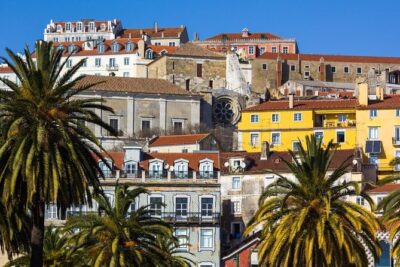
Alfama is one of those neighborhoods where Lisbon’s layers show up fast. You walk through lanes shaped by older empires, past corners that feel Moorish, and into squares where the city seems to remember its past. The big idea of this tour is simple: you don’t just see monuments, you understand why this part of Lisbon endured—especially after the Great Earthquake of 1755, when Alfama was the only area to survive.
That earthquake detail matters because it changes how the district feels. When a neighborhood survives a disaster that reshaped everything else, it keeps a thread of continuity—people return, memories stay, and the architecture (and the stories around it) don’t reset.
The tour also ties Alfama’s mood to fado. You’ll hear how the music grew from the district’s mix of cultures and faiths, and how its themes of longing and loss connect to the way people carried on through hardship. It’s not fancy marketing; it’s a street-level way to understand why fado sounds the way it does.
And because it’s scheduled as a walk (not a van tour), you’ll actually experience the physical character of Alfama: narrow turns, sudden sightlines, and hills that force you to look up at the city.
You can also read our reviews of more walking tours in Lisbon



Starting at Praça do Comércio: Meeting your guide and getting oriented fast
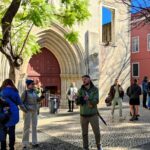
You begin at Praça do Comércio, one of Lisbon’s big open spaces right by the Tagus River. Meeting here helps: you’re grounded in a recognizable point before you slip into Alfama’s tight maze. Your guide meets you by a monument in the square, wearing a red T-shirt and holding an umbrella with the local partner’s name.
This first transition is more useful than it sounds. In Lisbon, it’s easy to feel turned around. Starting in the open square gives your brain a reference point, so later, when you’re higher up near viewpoints or heading toward the cathedral, you can place what you’re seeing.
Timing is built around short segments: you walk, you stop for photos or key sights, then you keep moving. That rhythm is a big part of why this tour works as a first introduction. You don’t get stuck standing in one place for long stretches, even though there are scenic pauses.
Alfama on foot: Earthquake survivor streets, Moorish corners, and fado context
This is the core of your walk. You’ll spend the first major stretch moving through Alfama’s narrow streets and ornate squares. The tour frames Alfama as a living witness to Portugal’s shifts—empire, collapse, and the pressure of rebuilding. You’ll also connect Alfama to its deeper roots, with mentions of Roman foundations and Moorish street character.
Here’s what I think makes this stop so valuable: the guide doesn’t treat history like wallpaper. Instead, you get specific reasons why places exist and why the district has its particular emotional tone. That’s where fado comes in.
Fado isn’t sold as background music. You learn how it’s tied to the district’s communities—how different languages, cultures, and religions contributed to a local sense of togetherness, and how that community carried grief, pride, and everyday life in the same voice. If you’re planning a night out in a fado house, this kind of context helps you listen with your brain engaged, not just your feet tired.
Practical note: expect cobblestones and hills. Even the most enthusiastic route still climbs. If you’ve got soft soles, swap them for walking shoes with grip. One tour guide won’t fix a slip on slick stones.
São Jorge Castle photo stop: Turning a climb into real city views
Next comes São Jorge Castle, mostly approached as a photo stop rather than a full museum visit (entrance isn’t included). Still, the castle walls and elevated position are the whole point. As you get higher, the city opens up—tiles, rooftops, and church domes spread out, while the river area becomes easier to recognize.
You’ll likely feel the ascent more than you expect, which is why the tour keeps the climb gentle. That matters because you want to arrive ready to look, not out of breath and counting stairs. Once you reach the viewpoint zone, you can take photos that actually explain Lisbon’s shape: where Alfama sits, how the city climbs, and how the Tagus connects the whole scene.
If you’re the type who likes to understand geography as you go, this stop helps. It’s one thing to read about Lisbon’s hills. It’s another to stand at a high wall and see how steep streets funnel toward the view.
Drawback to keep in mind: because entrance tickets aren’t included, you may not get the same depth as a full castle visit. If you’re a deep-detail history person, you may want to add a paid visit later after this orientation walk gives you the big picture.
Miradouro da Senhora do Monte: A high viewpoint with a payoff
After the castle stop, the route heads to Miradouro da Senhora do Monte, a classic Lisbon viewpoint. This is where you can really reset your eyes. From up here, you can read Lisbon’s sprawl: neighborhoods stacking over each other, the river’s line, and the way the city’s elevation changes your sense of distance.
The reason this works in a 2.5-hour tour is because it’s timed to keep your energy. You’ve already learned the district’s story, and now you look outward. That shift—from history on the ground to city scale above—makes the whole experience click.
It also gives you a practical advantage. Once you’ve seen where the steep streets lead, it’s easier to plan the rest of your day without constantly guessing which direction you’re facing. In a city like Lisbon, that saves time and helps you avoid the kind of accidental backtracking that can turn a fun afternoon into a slog.



Church and cathedral finale: Lisbon Cathedral and Church of St Anthony
You finish at Lisbon Cathedral, with a stop at the Church of St. Anthony included somewhere along the way. This ending matters because it shifts the focus from panoramic views back to specific architecture and place.
Cathedrals can feel distant if you show up after sunset with tired legs. Here, the cathedral ending gives you a sense of arrival: you’ve already climbed and looked and learned, and now you’re closing with a strong landmark that anchors Lisbon’s spiritual and cultural identity.
And the St. Anthony stop adds a nice texture. Even without going deep into paid entry spaces, these churches help you see Lisbon as more than viewpoints and photo angles. You catch the ornament, the stone character, and the feel of a city where faith and everyday life have shared the same streets for a long time.
If you want to go inside, you’ll need to handle entrances yourself since they’re not included. Still, even an outside look can help you appreciate what you’re seeing later if you choose to return.
Price and pacing: Is $30 good value for a Lisbon intro?
At $30 per person for a 2.5-hour walk with a local guide, I’d call this strong value for an orientation-style experience.
Why? Because you’re not just paying for walking. You’re paying for:
- a guide who explains why Alfama survived and what that changed in real life
- fado context tied directly to the neighborhood you’re standing in
- multiple major waypoints (castle viewpoints, a high miradouro, and a cathedral finish)
- a pace that keeps you engaged instead of freezing you in one spot
The reviews highlight guides who keep the group moving and make the time feel purposeful. Names that come up in past departures include Teresa, Antonio, Rita, Fred, Raquel, Pascal, Yuri, Jorge, Kike, and Edwardo. While your guide may be different, that pattern tells you what to expect: an energetic local approach and a focus on understanding the district, not just collecting stops.
What you should account for: entrances and museums are not included, so the full cost of a day can grow if you choose to add site tickets on top. Also, this is a walking tour with hills, so comfortable shoes are part of the real budget.
Who should book this Alfama walking tour, and who might skip it
This is a great fit if you:
- want a first-time introduction to Alfama that connects streets to stories
- care about Portuguese culture and want fado context in the places that shaped it
- like viewpoints but don’t want a long day spent in transit
- enjoy guided walking with a human voice explaining details as you see them
You might skip it if:
- you need a fully wheelchair-accessible route (it’s not wheelchair accessible)
- you hate steep climbs or you’re unlikely to handle uneven cobblestones comfortably
- you’re looking for guaranteed museum interior time, since entrances aren’t included
If you’re traveling as a couple, solo, or with friends, this format works well. It’s also a good “start of trip” plan because it helps you understand how Lisbon sits on its hills and river geography before you branch out to other neighborhoods.
Should you book it or not
Book this tour if you want the fastest path to understanding why Alfama feels like the emotional and cultural heart of Lisbon. The mix of earthquake survival, fado context, and high viewpoint stops gives you both story and skyline in one short window.
Skip or reconsider if you’re sensitive to hills or uneven ground, or if you specifically want paid-entry monument time as part of the tour. In that case, a more accessible route or a tour that includes entrances might fit better.
If you book, do two smart things: wear grippy shoes, and bring the mindset of a listener. Alfama rewards attention, and a good guide can turn these streets into a meaningful route instead of just a scenic walk.
FAQ
How long is the Lisbon Alfama Walking Tour?
It lasts about 2.5 hours.
Where do I meet the guide, and where does the tour end?
Meet your guide at Praça do Comércio by the monument. The tour ends at Lisbon Cathedral.
What’s included in the price?
The tour includes a local guide.
Are entrance fees to sites included?
No. Entrance to sites or museums is not included.
Does the tour include a stop at St. George’s Castle?
Yes. You’ll have a photo stop at São Jorge Castle.
Is this tour good for learning about Portuguese fado?
Yes. The tour includes fado music history as part of the Alfama walking experience.
Is the tour wheelchair accessible?
No. The tour is not wheelchair accessible.
Can kids under 13 join for free?
Yes. Children under 13 go free of charge.
Can I cancel for a refund?
You can cancel up to 24 hours in advance for a full refund.