REVIEW · LISBON
Half Day Historical Walking Tour about the Slave Trade in Lisbon
Book on Viator →Operated by My Lisbon Tours · Bookable on Viator
Lisbon has a darker map. This half-day historical walking tour puts the slave trade where it belongs—in the streets that helped shape Portugal’s Age of Discovery. You’ll walk old-town corners with a clear, factual guide story, tracing how slavery touched commerce, religion, and daily life in Lisbon.
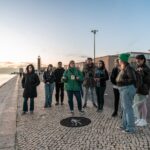
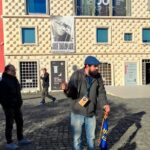
Two things I especially like: the small group size (max 8) keeps it conversational, and the tour stays grounded in exact places (not vague slides), with the guide answering questions and using supporting visuals as you go. It also ends up feeling more honest than most “discovery-era” sightseeing.
One consideration: it’s a heavy topic, and the walk is only “moderate,” not effortless. If you have walking difficulties, this may be more than you want to take on.
In This Review
- Key things to know before you go
- Why this Lisbon tour reframes the Age of Discovery
- Largo do Chafariz de Dentro: meeting point and theme set
- Alfama: the oldest neighborhood’s many civilizations and slavery
- Campo das Cebolas: where a future monument connects memory
- Praca do Comercio (Terreiro do Paco): the commercial heart and colonial trade
- Baixa, Rossio, and Restauradores: daily life of enslaved captives
- Igreja de S Domingos: when religious organizations intersected with slavery
- Largo do Carmo and the 25 April Revolution: the colonial empire’s shift
- Pace, shoes, and what to bring for a 3-hour walk
- Price and value: what $39.78 buys you in Lisbon
- Who should book this tour, and who might not
- Final call: should you book the Slave Trade Historical Walking Tour?
- FAQ
- How long is the Slave Trade in Lisbon historical walking tour?
- Where does the tour start and where does it end?
- Is the tour in English?
- How much does it cost?
- What’s included in the price?
- Are food and drinks included?
- Is there a limit on group size?
- What should I know about cancellation?
Key things to know before you go
- Max 8 people means you can ask questions without feeling rushed
- 3 hours of walking through central Lisbon makes history feel physical
- Alfama + Baixa connect medieval-to-modern themes of power and commerce
- Planned monument site at Campo das Cebolas points to ongoing public memory
- Igreja de S Domingos shows how religious institutions interacted with enslaved people
- Rui Fernandes (your guide) is known for clear, evidence-based explanations
Why this Lisbon tour reframes the Age of Discovery
Most Lisbon tours spotlight voyages, castles, and viewpoints. This one focuses on the human cost behind the same big story. You’ll see how Portugal’s global expansion wasn’t only maps and ships—it was also forced labor, trade networks, and systems that benefited people in power.
What makes this experience genuinely useful is the way it links centuries together. You don’t just get a single timeline you forget the next day. You get a sense of how slavery and racial hierarchy were explained, practiced, and financially woven into Lisbon’s life.
You’ll also come away with a different kind of cultural understanding. Lisbon is full of layers—Roman, Islamic, European Christian—and this walk helps you see how slavery shows up across those layers, not as a side note. For many people, that’s the real eye-opener.
You can also read our reviews of more walking tours in Lisbon


Largo do Chafariz de Dentro: meeting point and theme set

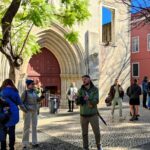
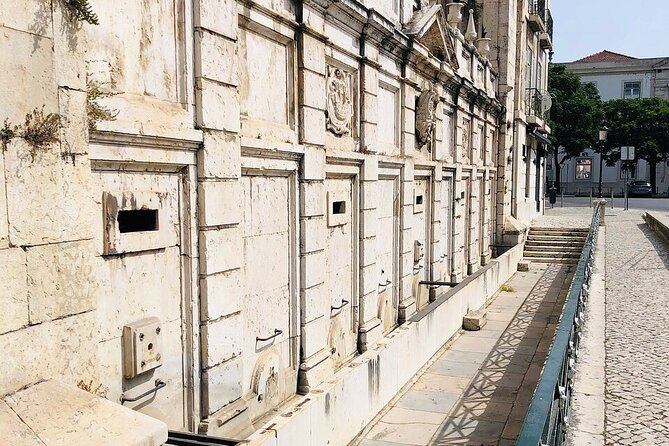
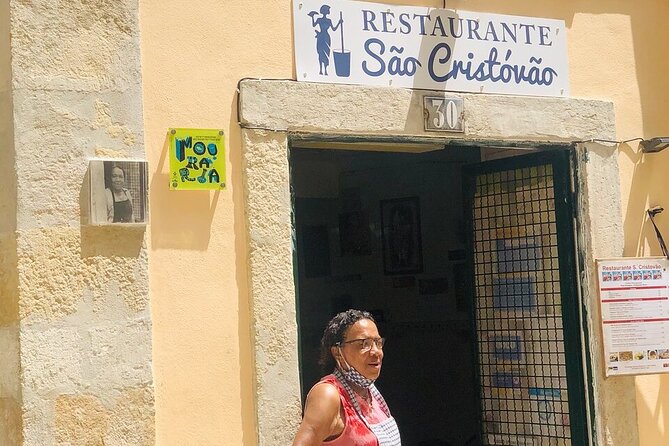
You start at Largo do Chafariz de Dentro 30 (1100-605 Lisboa), where the guide sets the tone right away. This first step matters. It helps you understand what you’re about to see—why these stops connect to the slave trade and what kinds of evidence to watch for in the built environment.
Expect an intro that frames the big theme: Lisbon’s role in the broader Atlantic world, but also the earlier foundations that made slavery possible. The goal isn’t to overwhelm you with dates. It’s to get your bearings so the later neighborhood stops make sense.
This stop is short, about 10 minutes, and it’s basically your warm-up. If you’re the type who likes to ask questions early, this is when you’ll get the best momentum for the rest of the walk.
Alfama: the oldest neighborhood’s many civilizations and slavery
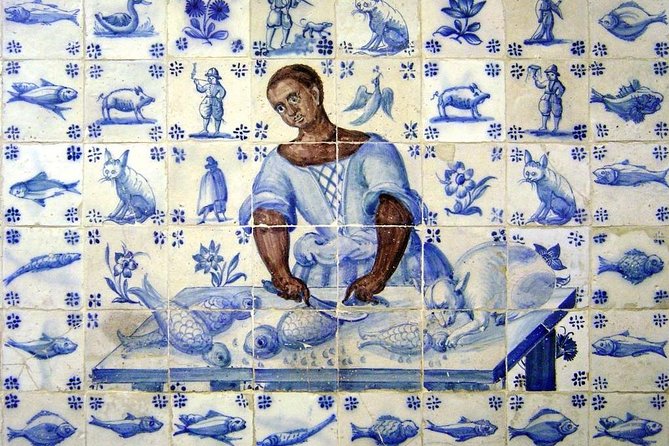
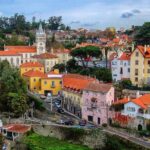
From the start, the story moves into Alfama, Lisbon’s oldest neighborhood. Here, the tour doesn’t treat slavery as a single “event.” It describes how different civilizations that lived in Portugal—ranging from Romans to Moors—had ways of practicing slavery. Then it brings you forward to the Portuguese involvement in the Atlantic Slave Trade in the mid-15th century.
The value of this stop is place-based context. Alfama’s streets are part maze, part history lesson. When the guide ties the neighborhood to themes of power and exploitation, it changes how you see the area. Suddenly, you’re not just admiring architecture—you’re learning how people’s lives were shaped by systems that also traveled across oceans.
A practical note: Alfama is an “old streets” kind of area. Even if the tour is described as moderate walking, give yourself comfortable footwear and a slow pace. The payoff is that you learn the neighborhood in motion, not from a bus window.
Campo das Cebolas: where a future monument connects memory
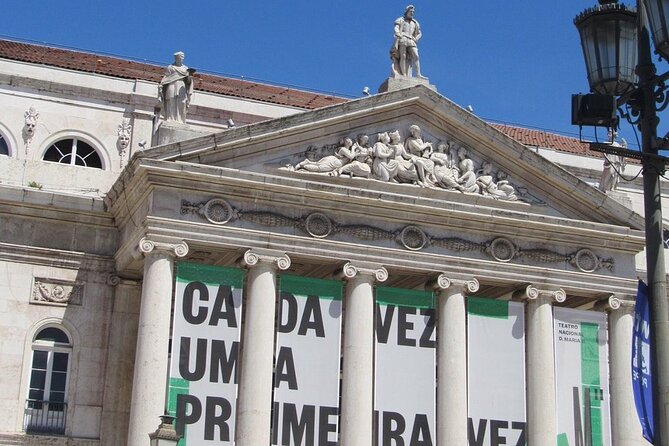
Next comes Campo das Cebolas, a stop that feels especially meaningful because it’s about what Lisbon chooses to remember. This is where a monument to the victims of the Slave Trade will be erected in the future.
Even though the monument isn’t there yet, the stop still works. It shows that public memory is evolving, and it gives you a moment to reflect on victims who weren’t centered in older narratives. In a way, it bridges the past with the present—without turning history into a vague feeling.
This stop is only around 10 minutes, so don’t expect a long lecture. Think of it as a pause to recalibrate, then move on with the rest of the story still in your head.
Praca do Comercio (Terreiro do Paco): the commercial heart and colonial trade
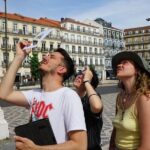
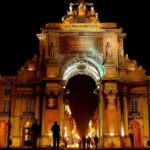
You then head to Praca do Comercio (Terreiro do Paco), the commercial heart of Lisbon. This is where the tour connects the slave trade to colonial trade—how human commodification fit into the systems that made commerce run.
This stop helps you understand something important: slavery wasn’t only an evil practiced by individuals. It was organized through trade relationships, shipping, ports, and money. In other words, it sat inside the “normal” economy of the city, alongside other imports and exports.
You’ll also get a clear sense of how Lisbon’s geography supported those networks. Being there makes the lesson easier to grasp. It’s hard to keep history abstract when you’re standing near spaces built for movement of goods—and people were trafficked through the same global pathways.
Time on this stop is about 15 minutes, long enough for the main connections without dragging you out of the flow.
You can also read our reviews of more historical tours in Lisbon




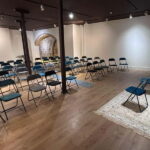

Baixa, Rossio, and Restauradores: daily life of enslaved captives
After the waterfront-commercial focus, the tour moves into Baixa, Rossio, and Restauradores. This is one of the most impactful segments because it turns away from policy and trade, and looks at day-to-day reality.
The walk here focuses on enslaved captives who lived in Lisbon—from Africa and around the globe. This is where the story becomes more human-scale. Not because it gets sentimental, but because it tries to show what captivity meant inside a real city setting.
Expect this portion to last about 30 minutes. That extra time makes sense. You’re absorbing a lot: how networks worked locally, how power showed up in neighborhoods, and how global slavery had local consequences.
If you like learning through specific examples, this is where the guide’s question-handling really matters. You’ll get more chances to ask for clarification and evidence, especially since the group size stays small.
Igreja de S Domingos: when religious organizations intersected with slavery
Then you’ll visit Igreja de S Domingos, where the focus shifts to religion and how enslaved captives interacted with religious organizations.
This stop is important because it complicates the story in a way that feels real. You don’t just hear that slavery existed. You hear how institutions claimed moral authority while living inside the same social system that benefited from enslavement.
The stop is about 10 minutes, but don’t treat it as “brief and forgettable.” Even short stops can change your thinking if the guide makes clear links between belief, authority, and social practice.
If your goal is to see Lisbon beyond the postcards, this is the kind of moment that helps the city’s story feel whole—and unsettling in the most honest way.
Largo do Carmo and the 25 April Revolution: the colonial empire’s shift
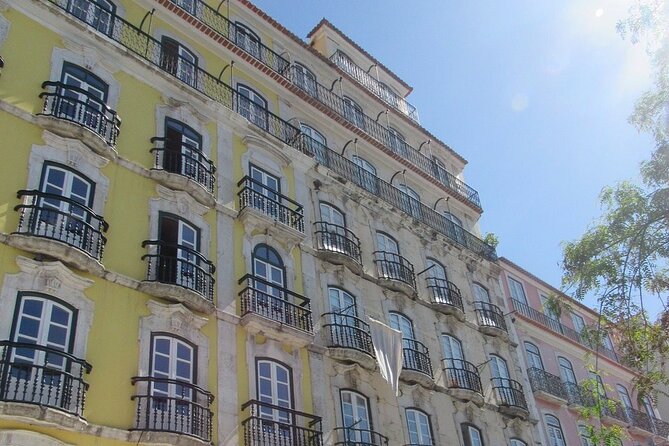
The final major historical stop is Largo do Carmo. Here, the tour connects the slave trade and Portugal’s colonial power to the 25th of April coup and revolution. The guide then discusses how the Portuguese colonial empire’s demise played out in the mid-1970s.
This ending matters because it shows that history doesn’t stop at abolition. Even after major political shifts, the effects of colonial rule and racial hierarchy don’t disappear overnight. You get a sense of how modern Lisbon was shaped by decisions made across centuries.
This stop is around 15 minutes, which is enough time to land the final idea: understanding Portugal’s past isn’t just about looking backward. It helps explain why certain social dynamics persist.
The tour ends in the Largo do Carmo area at 1200-092 Lisboa, giving you a clear finish point before you head to dinner or your next sight.
Pace, shoes, and what to bring for a 3-hour walk
The tour runs about 3 hours and is described as moderate physical fitness. It’s not pitched as a marathon, but it’s also not a sit-everywhere experience.
Here’s what I’d plan for:
- Wear comfy walking shoes. Old Lisbon streets can be uneven.
- Bring a bottle of water, especially if it’s warm. Food and drinks aren’t included.
- If you need accessible routing, this may not be your best match since walking difficulties can be an issue.
The good news: it’s a guided walk, so you’re not stuck figuring out where to go next. You’re also close to public transportation, which helps if you want to start near the meeting point and finish near your next plan.
Also, this tour uses a mobile ticket and is offered in English. Confirmation happens at booking time, so you can usually keep things simple.
Price and value: what $39.78 buys you in Lisbon
At $39.78 per person, this isn’t the cheapest Lisbon walk. But it’s also not priced like a theme-park experience. For me, the value comes from three things:
First, the small group size (max 8). That price only makes sense if you’re getting real interaction, not just following a guide down a sidewalk.
Second, the guide focus. The tour includes a professional guide plus local taxes. That matters here because the subject is sensitive and complex. You want someone who can explain the connections clearly and answer questions without hand-waving.
Third, the structure. You’re not paying for generic talking points. You’re paying for a planned route through Largo do Chafariz de Dentro, Alfama, Campo das Cebolas, Terreiro do Paco, Baixa/Rossio/Restauradores, Igreja de S Domingos, and Largo do Carmo—all tied to one theme.
If you’re the kind of traveler who likes history that changes how you view a place, this cost is fair for what you get.
Who should book this tour, and who might not
This tour is a strong fit if you want Lisbon’s story without sugarcoating. It’s also a great choice if you’re okay with a topic that’s emotionally heavy but presented with respect and clear facts.
I’d especially recommend it if:
- You already plan to see Alfama and want a deeper explanation of what shaped the neighborhood.
- You like short stops with a focused theme instead of a long museum day.
- You want a guide who can handle questions. Many people come away saying they felt their questions were answered directly.
I might skip it if:
- You’re looking for a lighter, purely scenic walk.
- Walking is tough for you, since the tour isn’t designed around minimal walking.
Final call: should you book the Slave Trade Historical Walking Tour?
If you’re curious about how Portugal’s global expansion connects to Lisbon’s streets, you’ll likely find this tour worth your time. The route is compact, the theme is specific, and the small group size helps the experience feel serious and human.
Just be ready for the subject matter. This isn’t a casual history stroll. It’s a focused walk through places tied to slavery, commerce, religion, and colonial power—and it asks you to look at Lisbon with clearer eyes.
If that’s your kind of travel, book it. If you need a vacation that avoids hard truths, pick a different Lisbon walk.
FAQ
How long is the Slave Trade in Lisbon historical walking tour?
It runs about 3 hours.
Where does the tour start and where does it end?
It starts at Largo do Chafariz de Dentro 30, 1100-605 Lisboa, and ends at Largo do Carmo, 1200-092 Lisboa.
Is the tour in English?
Yes, it’s offered in English.
How much does it cost?
The price is $39.78 per person.
What’s included in the price?
The tour includes local taxes and a professional guide.
Are food and drinks included?
No, food and drinks are not included.
Is there a limit on group size?
Yes, the tour has a maximum of 8 travelers.
What should I know about cancellation?
Free cancellation is available if you cancel up to 24 hours in advance for a full refund. If you cancel less than 24 hours before the start time, the amount paid is not refunded.