REVIEW · LISBON
Full Day Lisbon Tour with Local Guide in Private Eco Tuk Tuk
Book on Viator →Operated by Eco Tuk Tuk - Portugal · Bookable on Viator
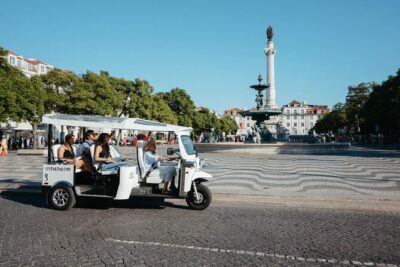
Lisbon’s hills make this the smart way to see it. You get a private eco tuk tuk loop with photo stops and a real guide-style explanation of how the city works. I like that it’s electric and runs with comfort in mind (including rain wind covers), not just for show.
Two parts I really appreciate: you stop for the original Pastéis de Belém and you still get a proper overview of Lisbon’s neighborhoods without playing “bus hop” all day. I also like the way guides such as Guilherme and Tiago tell the stories—history with jokes, not a lecture.
One drawback to plan around: most stops are quick photo-and-look breaks, so if you want long museum time, this tour is more of a getting-oriented-and-seeing-the-sights day than a slow deep dive.
In This Review
- Key things you should know before you go
- Electric Tuk Tuk Lisbon: Faster Sightseeing, Less Hill Pain
- The Tagus River Start: 25th April Bridge Views That Frame the Day
- Pastéis de Belém: The One Stop You’ll Care About (And Why It’s Worth Skipping)
- Jerónimos Monastery: Manueline Style and UNESCO Proof Lisbon Was Built Big
- Belém Tower Garden and the Portuguese Empire Story in Stone
- Monument to the Discoveries: A Fast Stop With Big “Ships Left Here” Energy
- MAAT and River-Front Lisbon: Modern Architecture Meets the Old Port City
- Cais do Sodré, Ribeira Market, and Pink Street: Food and Fado in One Drive
- Chiado: Old Cafés, Book History, and the Center That Feels Like Lisbon
- Bairro Alto: Narrow Streets, Fado Venues, and a Day-to-Night Change
- Baixa and Praça do Comércio: The Downtown Grid Rebuilt After 1755
- Sé de Lisboa and Alfama View Roads: When Lisbon Gets Old Fast
- Miradouro da Senhora do Monte: One of Lisbon’s Classic Skylines
- São Vicente de Fora, National Pantheon, and the Alfama Water Stop
- How Long You’re Really On Site (And Why That’s Not Necessarily Bad)
- What You Pay For: Value in a Private, Electric, Line-Skipping Day
- Should You Book This Eco Tuk Tuk Lisbon Tour?
- FAQ
- How long is the Lisbon Eco Tuk Tuk tour?
- Is this tour private, or do I share it with strangers?
- Does the tour include visiting Pastéis de Belém and skipping the line?
- Are tickets for Jerónimos Monastery and Belém Tower included?
- Is hotel pick-up included?
- Is transportation electric?
- What if the weather is bad or I need to cancel?
Key things you should know before you go
- Skip the long line at Pastéis de Belém and get your custard tart time without wasting the day.
- Electric tuk tuks with blankets and protective covers so a breezy river day doesn’t ruin your plans.
- UNESCO Belém hits in a tight route (Jerónimos, Belém Tower area, and Discovery-era monuments).
- Classic viewpoints by popular “miradouros” including Portas do Sol and Senhora do Monte for skyline photos.
- Your guide shapes the pacing so you’re not stuck in traffic gridlock or doing unnecessary walking.
- Private by design: your group rides together, with up to 4 passengers per tuk tuk.
Electric Tuk Tuk Lisbon: Faster Sightseeing, Less Hill Pain
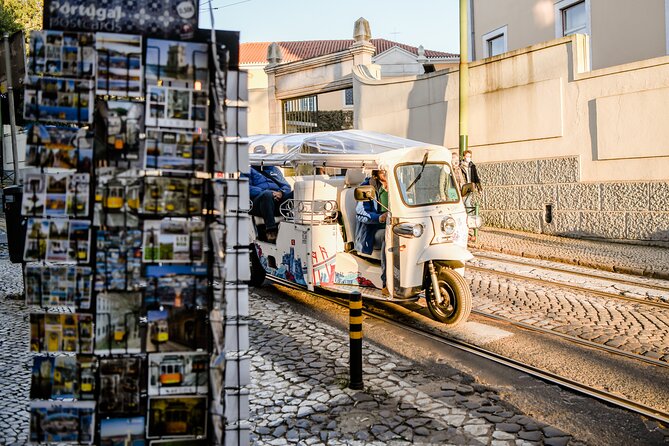
Lisbon looks small on a map. In real life, it’s all steep streets, weird angles, and hills that keep changing your route. That’s exactly why this private tuk tuk format works. You’re not trying to “power walk” between major sights. You’re rolling between them, then hopping off for short, well-timed looks.
The vehicle matters too. This is a 100% electric and sustainable tuk tuk, and the operator provides blankets and protective covers against rain and wind. Lisbon weather loves to switch moods—sun to mist to wind—so having that taken care of is a big comfort win.
You’ll also feel the “private” part quickly. If your group wants photos, your driver builds in stops where you can actually pull in and shoot, instead of stopping in places where you can’t get a good angle. If your group moves slower (stairs, cobblestones, mobility needs), drivers are set up to help you get on.
If you’re traveling with kids, this can be a surprisingly good option. The tour is designed to keep you moving, and you get frequent “wow” moments without a long slog. Just note the age/weight rules: minimum age is 2, and there’s a minimum mandatory weight of 9 kg.
You can also read our reviews of more guided tours in Lisbon


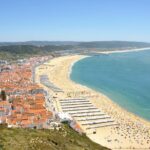
The Tagus River Start: 25th April Bridge Views That Frame the Day
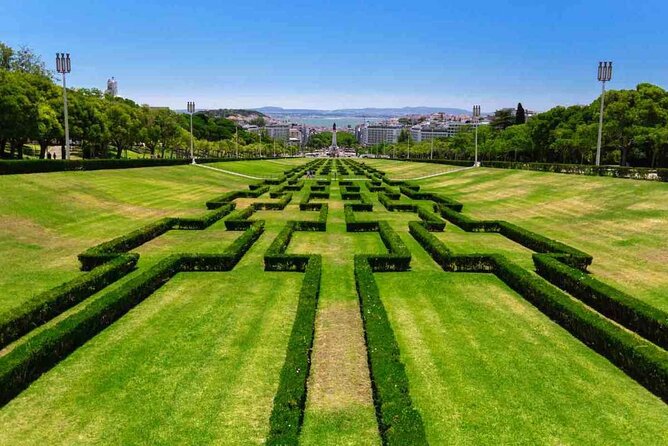
You begin with a ride along the Tagus River. This isn’t just a scenic warm-up. It sets the geography of Lisbon in your head. You’ll see the 25th April Bridge—the suspension bridge from 1966—often compared to San Francisco’s Golden Gate because of the similar color vibe.
This is the kind of first stop that helps you understand why Lisbon was built where it was: the city grew toward the water, and the water is still where the action and views live.
It’s also a smart way to “reset your bearings” quickly. Even if it’s your first day, you’ll leave this early segment with a mental map: river front, bridge line, and the way neighborhoods spill up the hills behind it.
Pastéis de Belém: The One Stop You’ll Care About (And Why It’s Worth Skipping)
Then you’re on to Pastéis de Belém, the place you’ve heard about: the original custard tart, made famous since 1837. The tour positions it correctly—this isn’t just dessert, it’s a cultural landmark.
Here’s what you’re getting value-wise:
- You skip the long line, which is the whole point when you only have a few hours.
- You get a tight, focused stop (about 10 minutes), which keeps the rest of the route from turning into a rushed blur.
- The tour frames it with context: the tarts are tied to monks from the Hieronymites Monastery in the past.
I’d treat this stop as your “Lisbon flavor checkpoint.” If you only do one food moment that locals and history-minded visitors take seriously, make it this.
Practical tip: pastries are best when eaten soon after purchase. Plan to buy, eat, and then roll—don’t let it become a “later snack” that goes stale in your bag.
Jerónimos Monastery: Manueline Style and UNESCO Proof Lisbon Was Built Big
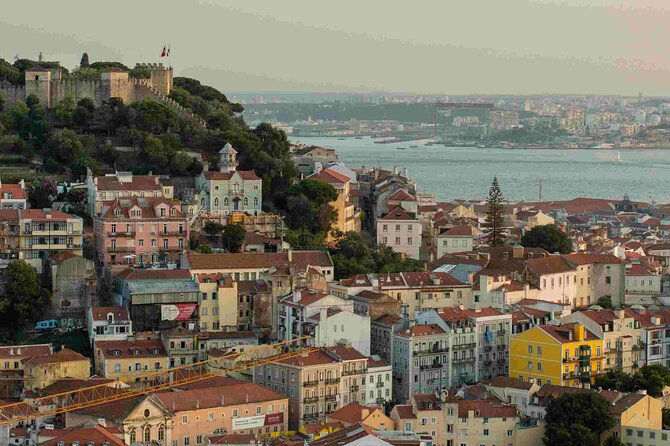
After the sweets, you move into the world of Portuguese discoveries architecture with Jerónimos Monastery. This is where Lisbon’s grand style shows up as stonework and detail.
A few things to look for:
- The Manueline architecture style, which is dramatic and ornate.
- The timing: construction started in 1501 and took about a century to complete.
- The UNESCO context: it was classified as a World Heritage Site in 1983.
This stop is around 15 minutes. That’s not enough time to “study” it like an architecture seminar. But it’s enough to see why people call Lisbon a city of details—even when you’re short on time.
A good mindset here: don’t try to read every carving. Instead, focus on the overall feel: it looks like a monument built for an age when Portugal was sailing farther than anyone at home wanted to imagine.
Admission isn’t included for this one, so if you’re budgeting, factor that in.
Belém Tower Garden and the Portuguese Empire Story in Stone
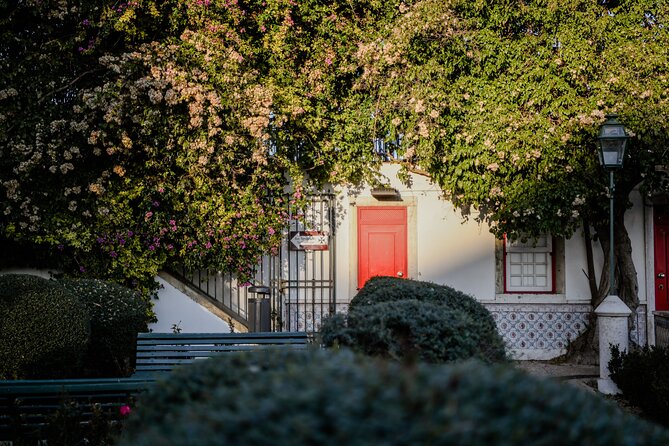
Next up: the Belém Tower Garden area. You’re looking at a UNESCO World Heritage Site tied to Portugal’s overseas empire period. Belém Tower itself is a 16th-century fortification with a dual role—fortress and ceremonial gateway.
This is another stop where the tour’s timing is the point. You get the “why it matters” context while you’re there, without being stuck for hours. The time on site is about 15 minutes, and admission isn’t included.
What I like: the tour doesn’t treat Belém as one museum block. It threads it through the broader story of departures and arrivals—Lisbon as a port city, not just a viewpoint city.
You can also read our reviews of more private tours in Lisbon





Monument to the Discoveries: A Fast Stop With Big “Ships Left Here” Energy
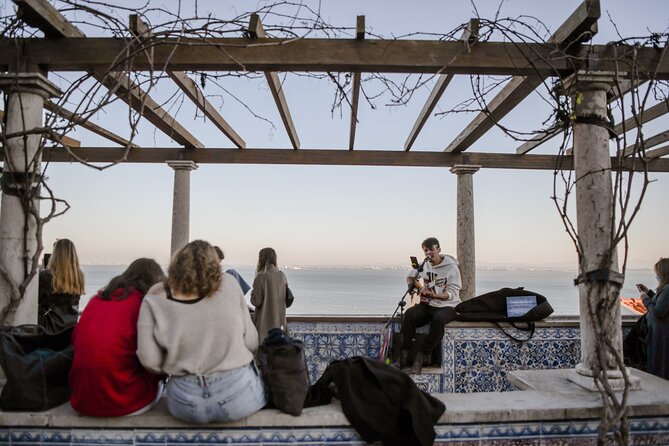
Along the river route is the Monument to the Discoveries. The tour places it at the kind of shoreline where ships once departed for trade and exploration toward India and the Orient.
You’ll learn the basic historical anchor:
- It was built between November 1958 and January 1960.
- It celebrates the fifth centennial of Infante Henry the Navigator’s death.
This is a short stop (about 10 minutes), but it works well as a photo-and-orientation moment. You’ll leave it knowing what you’re looking at and why it’s positioned where it is—because ships needed a departure line, and Lisbon built one.
MAAT and River-Front Lisbon: Modern Architecture Meets the Old Port City
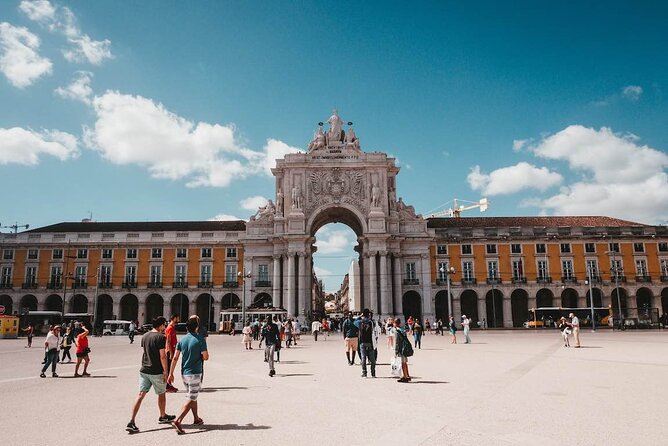
The tour then includes a stop near the Museum of Art, Architecture and Technology (MAAT). You’ll get the quick visual hit described as a wave-like front building along the Tagus. The museum opened in 2016, and there’s also a thermoelectric power station nearby.
Even if you don’t go inside (the tour timing suggests you likely won’t have a long museum session), this stop helps you see Lisbon as a city that’s still building, not just preserving.
It’s also a good “breather” moment between the heavier historic sights of Belém and the more urban neighborhood feel later in the day.
Cais do Sodré, Ribeira Market, and Pink Street: Food and Fado in One Drive
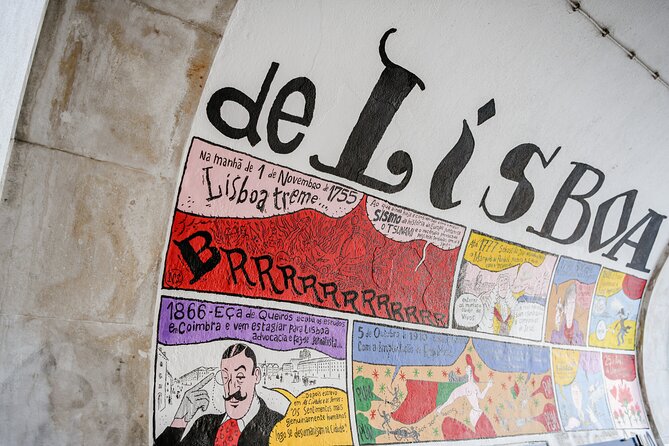
After the Belém arc, you head toward Cais do Sodré, a riverside district known for nightlife and restaurants. It’s a different Lisbon mood: less grand stone, more street-level energy.
The tour highlights:
- Ribeira Market, a 19th-century market with a food court feel and lots of stall choices for international dishes and Portuguese specialties.
- Pink Street, where you can find bars and places to hear fado.
- Ribeira das Naus promenade, a river walk people like when the weather is warmer.
This part is useful even if you don’t plan to eat during the tour. You’ll get a feel for where to go later the same day for a casual meal, and you’ll know which areas have the vibe you’re looking for.
If you do want snacks, this is your best “maybe” stop—because it’s about food and wandering options, not formal sightseeing checklists.
Chiado: Old Cafés, Book History, and the Center That Feels Like Lisbon
Then comes Chiado, one of Lisbon’s central, fashionable neighborhoods between Baixa and Bairro Alto. This area is famous for classic places and culture stops, including:
- Café A Brasileira
- Livraria Bertrand, often cited as the world’s oldest operating bookstore
- São Carlos Theater
This is the kind of Lisbon neighborhood that helps you transition from the port-and-monument story into the city-as-a-living-place story.
If you like people-watching (or window shopping), Chiado is the sweet spot. You can stroll around these anchors and feel like you’re in the Lisbon that looks good in photos—but it also stays functional for real-life browsing.
Bairro Alto: Narrow Streets, Fado Venues, and a Day-to-Night Change
Next: Bairro Alto. It sits on one of Lisbon’s seven hills, with narrow cobblestone streets and a mix of bars, restaurants, and boutique shops.
Even if you’re not aiming for nightlife, this stop is helpful because it shows how Lisbon’s social life works:
- Fado music venues cluster here
- The late-day mood shifts later into an active evening scene
The tour gives you a short 10-minute window. Use it to spot the streets and decide whether you want to return after dinner for a bar crawl vibe—or to simply enjoy a quick taste of how steep Lisbon gets.
Baixa and Praça do Comércio: The Downtown Grid Rebuilt After 1755
Now you move to Baixa, Lisbon’s downtown heart. The tour frames it as the city’s commercial and architectural center, rebuilt after the 1755 earthquake. You’ll hear about the way the Marquis of Pombal transformed the area into a planned street grid.
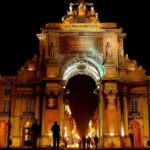
The biggest anchor here is Praça do Comércio (formerly Terreiro do Paço). It’s one of Europe’s largest squares, bordered by 79 arches, right by the Tagus. If you only get one “big square” view of Lisbon today, make it this.
You’ll also see Lisbon’s “showpiece” downtown elements referenced through the area:
- Arco da Rua Augusta
- Santa Justa Lift
This is another segment where the tuk tuk shines. It brings you close, then saves you from unnecessary walking in the hottest part of the day or the most crowded street zones.
Sé de Lisboa and Alfama View Roads: When Lisbon Gets Old Fast
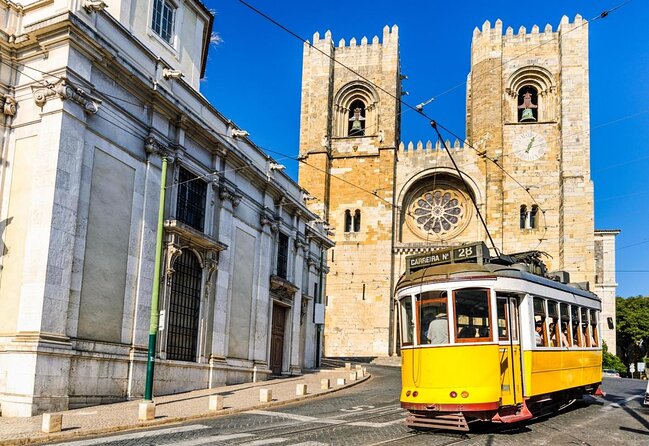
The route includes Sé de Lisboa (Saint Mary Major of Lisbon), the city’s metropolitan cathedral. Construction began in 1148, and it’s described as one of Lisbon’s oldest churches.
Then you swing toward the Alfama-side viewpoints, with a key stop at Largo das Portas do Sol. This square is famous for panoramic views covering the Tagus River, Baixa Pombalina, and Castelo de São Jorge.
These viewpoint stops are short, but they’re the right kind of short. They help you understand Lisbon’s layout in seconds:
- river below
- city layers in the middle
- castle or higher neighborhoods above
If you’re sensitive to walking on uneven stone, this is one of the best parts of the tour. You get the “height advantage” without hauling yourself up every hill.
Miradouro da Senhora do Monte: One of Lisbon’s Classic Skylines
One of the most memorable moments is Miradouro da Senhora do Monte, in the Graça neighborhood. This viewpoint is often treated like a must-see because it gives you wide, dramatic panoramic coverage of Lisbon and the river.
The tour provides about 10 minutes here, with admission-free access. Use that time wisely:
- Take your photos first
- Then slow down and just watch the city move
- Check the angle you want for your next Lisbon day (you’ll understand where to stand when you come back)
Graça also has an authentic-feeling neighborhood vibe compared with the biggest tourist cores, with narrow streets and local community energy. You’ll notice it most because it feels more lived-in than staged.
São Vicente de Fora, National Pantheon, and the Alfama Water Stop
The tour rounds out with more historic high-ground sights:
- Monastery of São Vicente de Fora (called de fora because it was outside the city walls at the time)
- National Pantheon of Portugal, located in the Church of Santa Engrácia
- Chafariz de El-Rei, described as Lisbon’s first public ornamental fountain (built in the 13th century using groundwater sources)
These are not “one-hour museum” stops. They’re quick, meaningful context stops. If you’ve ever visited Lisbon and felt like you kept hearing names but not connecting them, this portion helps tie them together into a coherent story of faith, power, and daily life.
How Long You’re Really On Site (And Why That’s Not Necessarily Bad)
Here’s the deal with a route like this: most sights get about 10–15 minutes. Pastéis de Belém is roughly 10 minutes, while several historic sites are also around that range.
Is that short? Yes. But it can be the difference between seeing five major areas and seeing only one because you got stuck inside ticket lines, tram routes, or walking hills you didn’t plan for.
If you want to pick your priorities, do it like this:
- If you care most about food and photos: Pastéis de Belém is your main “sit down” moment.
- If you care most about architecture: Jerónimos and Belém-related stops do the heavy lifting.
- If you care most about panoramas: Portas do Sol and Senhora do Monte are your best bets.
Also remember: the route can change due to street closures or demonstrations, and your tour might be reduced if you arrive late (it can be cancelled if delay exceeds 15 minutes, with no refund).
What You Pay For: Value in a Private, Electric, Line-Skipping Day
At $17.12 per person, this tour looks almost too good on paper. But the value isn’t just the price—it’s what’s included and what’s avoided:
- A private vehicle for your group
- 100% electric transport
- A guide who connects neighborhoods and historical eras
- photo stops that are already planned
- skipping the long line for Pastéis de Belém
The biggest “hidden value” is time. Lisbon can eat time fast—traffic, walking, and the mental load of figuring out where to go next. This tour removes a chunk of that stress.
The trade-off is what you give up: admissions aren’t included for some major sites (like Jerónimos and Belém Tower areas), and the stops are brief. If you’re the type who wants to linger, you’ll likely want to come back on another day.
Also note one logistical thing: the tour doesn’t include hotel pick-up and drop-off. It ends back at the meeting point, unless you’re booking a 3- or 4-hour option where cruise port pickup may be offered (message you to choose between specific pickup points).
Should You Book This Eco Tuk Tuk Lisbon Tour?
Book it if you want:
- an efficient first-day orientation around Belém + central Lisbon + viewpoints
- a private ride that saves your legs from Lisbon’s hills
- the one must-do food stop at Pastéis de Belém without waiting in line
Skip or reconsider if:
- you’re hoping for long, slow visits inside multiple museums
- you prefer fully self-directed wandering without set photo stops
- you’re not comfortable meeting at the designated point (since hotel transfers aren’t included)
From what I see works best, this is a strong choice for a short stay or a first full day. Guides in this operation tend to make the route feel easy—like someone is handing you the keys to the city, not just a checklist of places.
FAQ
How long is the Lisbon Eco Tuk Tuk tour?
It’s listed as 1 to 4 hours (approx.), depending on which option you choose.
Is this tour private, or do I share it with strangers?
This is a private tour/activity, meaning only your group participates.
Does the tour include visiting Pastéis de Belém and skipping the line?
Yes. You’ll stop at Pastéis de Belém, and the tour includes skipping the long line. The admission ticket for this stop is noted as free.
Are tickets for Jerónimos Monastery and Belém Tower included?
No. The tour information lists Jerónimos Monastery admission as not included, and Belém Tower Garden admission as not included as well.
Is hotel pick-up included?
Hotel pick-up and drop-off are not included. The tour starts and ends back at the meeting point. For 3- and 4-hour options, there is also cruise port pickup available at selected points.
Is transportation electric?
Yes. The tour uses a 100% electric and sustainable vehicle.
What if the weather is bad or I need to cancel?
Tours run in rain or heat. For cancellations, you can cancel up to 24 hours in advance for a full refund; within 24 hours, the payment isn’t refunded.