REVIEW · LISBON
Belém District and the Salazar Dictatorship Legacy – Private Walking Tour
Book on Viator →Operated by Lisbon Art & Soul · Bookable on Viator
Belem gets political, fast. This private walking tour ties the waterfront monuments to the 1940 Portuguese World Exhibition and the daily reality shaped by Salazar’s Estado Novo, with a private guide and Salazar-era context that makes the stonework mean something. I love how the route turns big landmarks into specific answers, like who those explorer figures were and why some explanations are oddly hard to find. I also love the photo-friendly pacing, helped along by a professional photographer guide.
One thing to think about: it’s still a street walk. You’ll cover a lot of ground for about 3 hours, and if you want long sit-down time inside major sites, you’ll likely need to plan extra hours on your own.
Key highlights worth planning for
- A street-level “Estado Novo” story focused on what the 1940 exhibition left behind, not just a simple facts tour
- Private guiding by Luís Maio style, with answers that go past dates into everyday life and propaganda choices
- Photo-friendly flow with a professional photographer guide and lots of chances to stop and look
- Key monuments plus the awkward gaps (where signage and context feel missing)
- Weather-proof attitude: the guide adjusts when it’s hot or pouring rain
- An ending that finishes in the Belem Tower gardens, so you naturally get back to the waterfront mood
In This Review
- Belem’s dictatorship legacy, explained without a lecture hall
- What you get for $33.55 on a private, photo-guided walk
- Route basics: start at Belem River Station and finish by Torre de Belem
- Afonso de Albuquerque Square: the Discoveries vibe meets 1940 rebranding
- Vasco da Gama Garden: what remains of older Belém
- Mosteiro dos Jerónimos: late Gothic splendor with a propaganda shadow
- Praca do Imperio: the 1940 Exhibition hub in flowerbeds and fountains
- Padrão dos Descobrimentos: carvings, symbolism, and why explanations feel missing
- Museu de Arte Popular: an odd modernist detour that adds political context
- Torre de Belém Garden: the Discoveries icon plus Restelo after 1940
- Weather, pacing, and how to get the best version of this tour
- Who should book this Belem and Salazar legacy walk?
- Should you book this tour?
- FAQ
- How long is the Belem District and Salazar Dictatorship Legacy private walking tour?
- Is this a private tour?
- What are the start and end points?
- What language is the tour offered in?
- Are admissions included for the stops?
- What should I wear for the tour?
- Is there parking, and is it included in the price?
- What’s the cancellation policy if weather is bad?
Belem’s dictatorship legacy, explained without a lecture hall

If Lisbon is a postcard, Belem is the page where somebody wrote footnotes in pen. This tour uses the waterfront’s most famous monuments and the 1940 Portuguese World Exhibition as a doorway into Portugal’s Salazar dictatorship—how it shaped public life, what it wanted people to admire, and what got smoothed over.
What I like most is the rhythm. You’re not stuck with a list of dates. Instead, you move from square to square and learn how the regime borrowed the prestige of the Age of Discoveries to brand itself as timeless and inevitable. And since the storytelling is built around visible details—letters, carvings, paving design—you get a kind of clarity that feels practical when you’re standing in front of the object.
The guide I’m referencing here, Luís Maio, also keeps it human. In the same walk, he’ll connect the exhibition to questions about women’s roles, artistic credits, and even the absurdities of stage-managed history. That’s not just political history trivia; it’s the reason the neighborhood feels different from other Lisbon sights.
What you get for $33.55 on a private, photo-guided walk
At about $33.55 per person for roughly 3 hours, you’re paying for two things that usually cost more separately: guided interpretation and customized pacing. This isn’t a “big bus” model. It’s a private walking tour where only your group participates, and there’s also a professional photographer guide along for photo-friendly stops.
You’ll also see why the price feels reasonable once you consider what’s included versus what isn’t. The tour includes the guiding team and the walking route. It does not include food, drinks, or hotel pickup/drop-off, and there’s a note about a parking fee that can apply at check-in (so if you’re driving, plan for that extra cost).
Value-wise, the best part is how the tour helps you read Belem. When you finish, you’re not just able to say what you saw. You’re able to explain what the regime was trying to project—and what parts of that story survive in public space.
You can also read our reviews of more walking tours in Lisbon



Route basics: start at Belem River Station and finish by Torre de Belem
This walk starts at Belem River Station on Av. Brasília (Av. Brasília, 1300-598 Lisboa) and ends at Torre de Belem Garden (Av. Brasília, 1400-038 Lisboa). That matters because the sights are naturally clustered on foot. You’re not crisscrossing Lisbon with long transit gaps.
You’ll also be near public transportation the whole way, which helps if you need to rethink timing. One extra practical tip: wear shoes you can trust for uneven outdoor surfaces and long stretches. You’re outdoors for most of the experience, and even when weather changes, the plan stays grounded in the area.
Departure options include morning or afternoon, so you can choose based on your heat tolerance or museum plans. If you want to go beyond the tour and see interiors properly, keep the rest of your day flexible in Belem after the walk.
Afonso de Albuquerque Square: the Discoveries vibe meets 1940 rebranding
You kick off at Afonso de Albuquerque Square, a place that sets the tone fast. It’s where you see how Belem’s “Discoveries period” imagery gets repainted in the 1940 exhibition era. The square frames the story: Portugal isn’t presented as a country with messy politics and competing voices. It’s staged as a single proud arc.
The guide’s approach here is smart for your brain. Instead of treating the monument world as separate chunks, he links them—how the regime used recognizable symbols (exploration, empire, national greatness) to make its message feel inherited rather than chosen.
You might find yourself noticing things you would normally skip: visual patterns, how the space directs your attention, and how the square connects to the waterfront story you’ll keep hearing for the next hour. There’s no ticket needed at this stop, so you’re not wasting time on entry lines.
Vasco da Gama Garden: what remains of older Belém
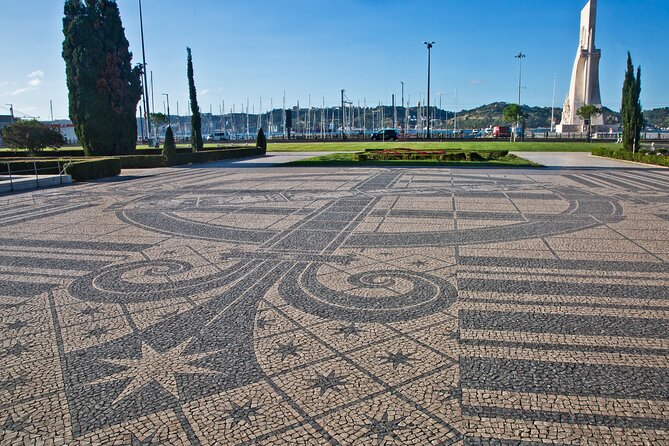
From the grand “Portugal-as-empire” messaging, you shift into something more grounded at Vasco da Gama Garden. This is where you’re pointed toward what older Belem looked like—or at least what’s left of it.
I like this contrast because it keeps the tour honest. The 1940 exhibition is loud. This stop reminds you that Belem existed before it and didn’t just appear for the cameras. The guide uses the gap between past and present to talk about what gets preserved, what gets rebuilt, and what gets replaced in the name of official memory.
It’s a short stop (around 15 minutes), which works well in a 3-hour window. You get the idea without burning time, and then you move on to the bigger monument moments.
Mosteiro dos Jerónimos: late Gothic splendor with a propaganda shadow
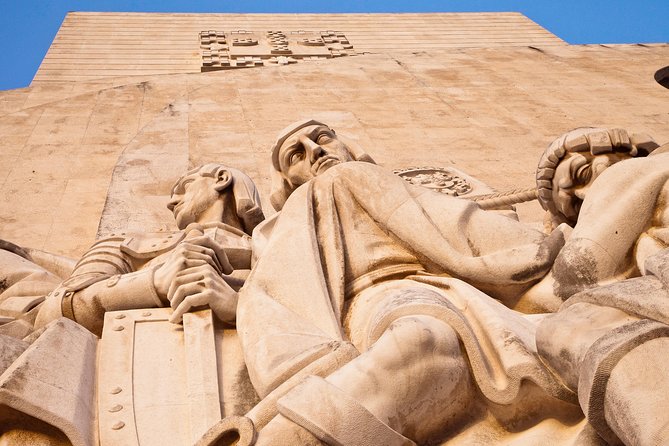
Next is Mosteiro dos Jerónimos, one of Lisbon’s heavyweight sites. You’ll look at the facade and also spend time with interior spaces as part of the tour’s route, with explanations aimed at both historical and symbolic meaning.
Here’s the key value for you: the tour doesn’t treat Jerónimos like a pure architecture stop. It ties the building’s grandeur to how the 1940 exhibition world leaned on grand religious and historical imagery to make the story feel spiritually validated. The result is that you’re not just admiring stone—you’re learning how regimes use reverence.
This stop can be a “pace test.” If you’re the type who wants to linger over carvings and altars for a long time, you may wish you had more minutes here. That’s why I recommend planning extra independent time in Belem after the walk, so you’re not forced to choose between interpretation now and full-on site time later.
You can also read our reviews of more private tours in Lisbon






Praca do Imperio: the 1940 Exhibition hub in flowerbeds and fountains
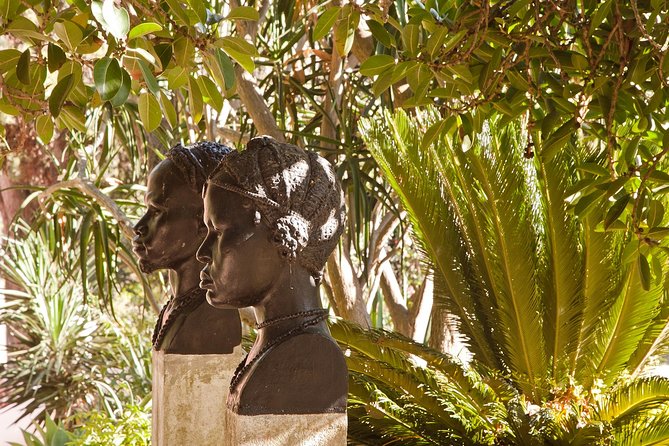
At Jardim da Praca do Imperio, you get the “showpiece square” energy of the Portuguese World Exhibition. This is where the 1940 story turns into physical set design: the heraldic flower beds, a monumental fountain, and the seahorse details that help the site feel theatrical and curated.
What I appreciate here is the guide’s explanation style. He doesn’t just name features. He connects them to what the exhibition wanted visitors to feel—pride, awe, and a sense of national destiny. In dictatorship-era messaging, emotion is the delivery system.
This stop is brief but memorable (about 20 minutes). You’ll get time to stand in the right places, absorb the scale, and understand why the site still carries that “official stage” vibe even decades later.
Padrão dos Descobrimentos: carvings, symbolism, and why explanations feel missing
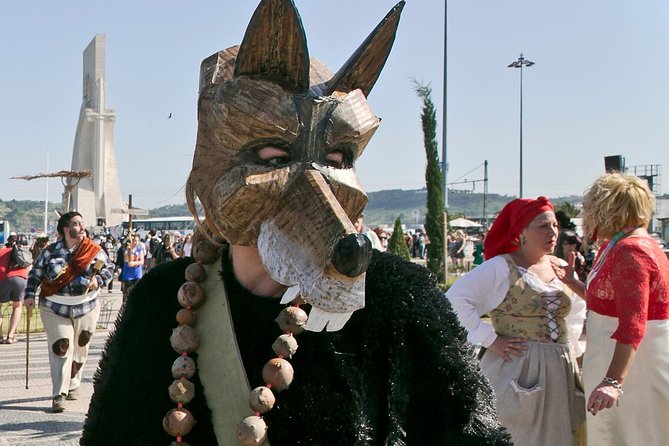
Then comes the big icon: Padrao dos Descobrimentos. The guide uses it as a centerpiece to connect the Discoveries narrative with the 1940 exhibition’s political ideology. You also get a stop that’s all about how the ground itself tells the story, including a wind rose covering the pavement near the monument.
If you’ve ever looked at a statue and wondered what you’re not being told, this part is for you. One of the standout themes from guide-style answers is attention to the carved explorer figures—who they are and what their placement and presentation communicates. There’s also discussion around why you don’t always see clear markers explaining what you’re looking at.
This stop can be visually intense, but the tour keeps it organized. You’ll walk around, pause, and let the guide map meaning onto details so you leave feeling like you finally “read” the monument instead of just seeing it.
Museu de Arte Popular: an odd modernist detour that adds political context
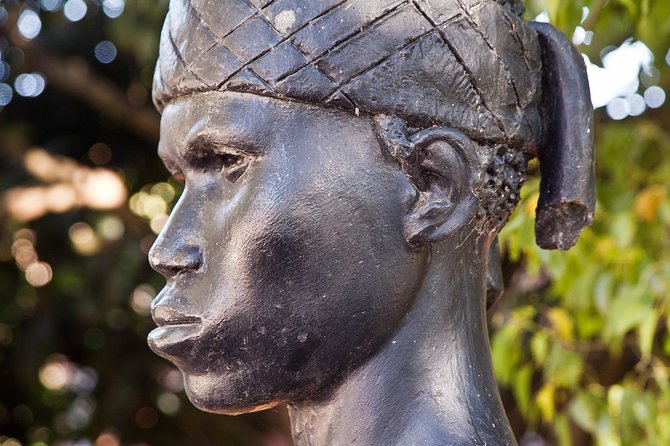
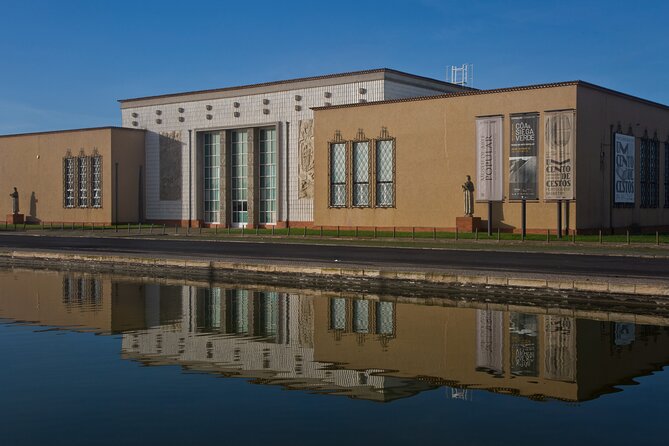
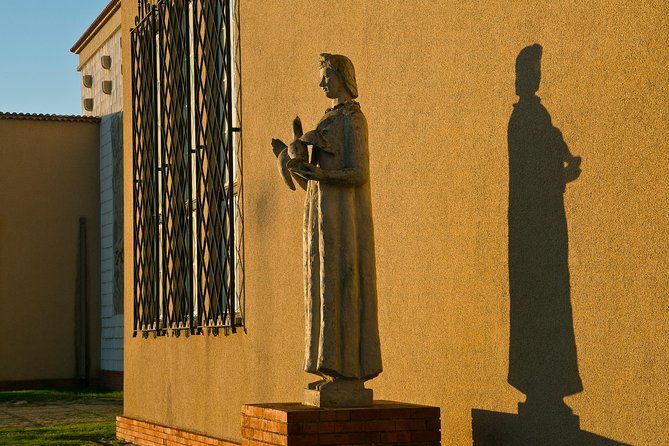
Not every part of Belem feels like it belongs to the Age of Discoveries. The tour includes Museu de Arte Popular, described as an oddity of modernist Lisbon—short and sharp at about 10 minutes.
Even if you don’t fall in love with the museum space, this is a clever strategy. It shows you that Belem isn’t only about grand monuments and 1940 spectacle. It’s also a place where modern Lisbon left its own marks, creating a layering effect between “official past” and “present-day identity.”
Think of it as a tonal palate cleanser. You go from imperial symbolism to something more contemporary and strange. That contrast helps the dictatorship legacy feel like a living influence, not just a historical exhibit.
Torre de Belém Garden: the Discoveries icon plus Restelo after 1940
You wrap in the Torre de Belém Garden, with one foot in the Discoveries age and the other in what happened around the 1940 exhibition. This finish matters because it’s not just a monument goodbye. It’s a reminder of how the neighborhood evolved after the exhibition period, including how upper-class areas like Restelo developed in the wake of that renewed attention.
You’ll also feel the waterfront mood here. It’s quieter than the biggest square moments, and it gives you a chance to digest what you learned. The guide’s explanations help you see the tower as more than an iconic silhouette. It becomes part of the exhibition-inspired story—how the regime used the past as a prop for its present.
Since the tour ends right there in the tower garden area, you can easily keep exploring on your own. You don’t have to backtrack.
Weather, pacing, and how to get the best version of this tour
Outdoor tours succeed or fail based on how they handle real life. This one has a practical edge: the guide adapts when conditions change, including heavy rain and very hot days. The pacing also seems designed to keep you comfortable, with time spent where you can stand less and listen more.
So do yourself a favor and show up ready. Bring a light rain layer even if the forecast looks fine. If it’s sunny, plan for hydration and take advantage of shade whenever the guide suggests it.
Also keep your expectations aligned with the format. This is a walking interpretation tour. It’s not a slow museum day. You’ll get meaningful context, but if you want full deep-time reading inside major sites, schedule extra time after.
Who should book this Belem and Salazar legacy walk?
This tour is a strong match if you:
- Want the Belem waterfront story explained in a way that connects the 1940 exhibition and Salazar-era propaganda
- Like walking tours that answer questions you actually have—like what the carvings mean and why some context is harder to find
- Enjoy photography-friendly pacing, helped by a professional photographer guide
- Prefer a private format, especially when it’s just two people and you still want the full attention of the guide
You might skip or supplement if you:
- Want a purely postcard route with minimal politics
- Are hoping for long inside time at major sites during the 3 hours
- Don’t want to spend time thinking about dictatorship-era choices and public messaging
Should you book this tour?
Yes, if you want Belem to make sense beyond the famous views. This is one of the better-value ways to understand why the area looks the way it does—because you’re learning how the 1940 exhibition staged national identity and how that legacy still shapes what you see today.
Book it when you can pair it with extra time afterward. Add a full visit to Jerónimos or nearby museums on your own, and you’ll get the best of both worlds: guided meaning now, and unhurried exploration later.
FAQ
How long is the Belem District and Salazar Dictatorship Legacy private walking tour?
It runs for about 3 hours.
Is this a private tour?
Yes. It’s a private walking tour, and only your group will participate.
What are the start and end points?
It starts at Belem River Station (Av. Brasília, 1300-598 Lisboa) and ends at Torre de Belém Garden (Av. Brasília, 1400-038 Lisboa).
What language is the tour offered in?
The tour is offered in English.
Are admissions included for the stops?
The listed stops show admission as free, and each stop in the route is marked as free admission.
What should I wear for the tour?
The dress code is smart casual. Wear clothing suitable for walking outdoors.
Is there parking, and is it included in the price?
The tour price does not include a parking fee, which is payable at tour check-in.
What’s the cancellation policy if weather is bad?
There’s free cancellation up to 24 hours in advance for a full refund, and the experience requires good weather. If it’s canceled due to poor weather, you’ll be offered a different date or a full refund.
If you tell me your travel dates and whether you prefer morning or afternoon, I can suggest a tight follow-on plan for Jerónimos and the rest of Belem so this tour fits cleanly into your day.