REVIEW · LISBON
Walk Lisbon Like a Local: Bairro Alto & Downtown Experience
Book on Viator →Operated by Discover Lisbon · Bookable on Viator
Lisbon has a talent for surprise on foot. This 2.5-hour stroll threads together Bairro Alto and downtown landmarks, with history you actually remember because it’s tied to what you’re walking past. It starts in Rossio, works uphill through the old city’s layers, and ends at a classic viewpoint where the city feels close enough to touch.
Two things I like a lot: first, the route is short but packed, so you get a real sense of the neighborhood without burning your whole day. Second, the guide storytelling sticks to specific places, from the ornate Rossio station portals to the legends around Camões and Saint Roque.
One thing to consider: Bairro Alto involves steady steps on uneven streets. You don’t need to be an athlete, but a moderate fitness level helps, especially if you’re traveling with tired legs.
In This Review
- Key highlights you’ll feel on this walk
- Getting your bearings: Rossio to Bairro Alto without getting lost
- Praça Dom Pedro IV: your starting point for Lisbon’s central vibe
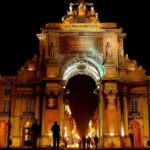
- Estação do Rossio: Neo-Manueline romance in a working train station
- Praça Luís de Camões: where poetry turns into identity
- Bairro Alto: walls, plague, and Saint Roque in the same neighborhood
- Largo do Carmo: Nuno Álvares Pereira’s vow in a church-convent setting
- Miradouro de Santa Catarina: a simple ending with real payoff
- Price and value: $3.60 for a guided walk with free stops
- Should you book this Bairro Alto and downtown walking tour?
- FAQ
- How long is the walk?
- Where does the tour start and end?
- Is the tour in English, and how big is the group?
- Do I need to pay for the stops?
- What type of ticket do I get?
- What if I need to cancel?
Key highlights you’ll feel on this walk
- Rossio Station’s Neo-Manueline façade with intertwined horseshoe portals you can’t ignore
- Camões Square and the OS LUSÍADAS connection to Portugal’s sea-route story
- Bairro Alto’s plague-era setting tied to Saint Roque and a changing neighborhood
- Largo do Carmo and the vow by Nuno Álvares Pereira in 1385
- A viewpoint finish at Miradouro de Santa Catarina for an easy ending with payoff
Getting your bearings: Rossio to Bairro Alto without getting lost
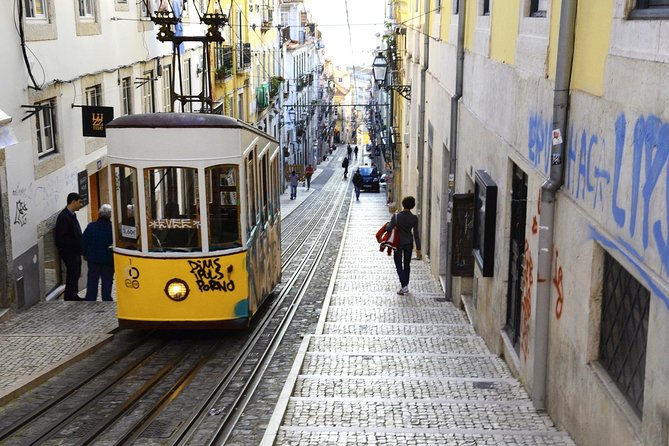
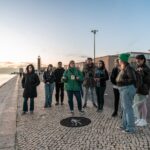
This tour is designed for first-timers who want direction, not just wandering. You start at Praça Dom Pedro IV, in the Rossio area (1100-200 Lisboa). From there, the walk naturally funnels you toward the heart of Bairro Alto, with stops that act like landmarks in a map you can feel under your feet.
The pace is friendly. Each stop is timed (think about 15 to 30 minutes), so you’re not stuck listening for too long at once. And because the plan is built around walking segments between places, you’ll be learning the city while getting your bearings, not after the fact.
What makes the route work well is the way it connects Lisbon’s “why” to Lisbon’s “where.” For example, the streets of Bairro Alto aren’t introduced as random hills and stairs. They’re explained as an area that grew due to major historical forces—discoveries, walls, epidemics, and religious life. That mindset changes how you see every corner. You stop thinking of Lisbon as postcard scenes and start noticing how each place fits into a larger story.
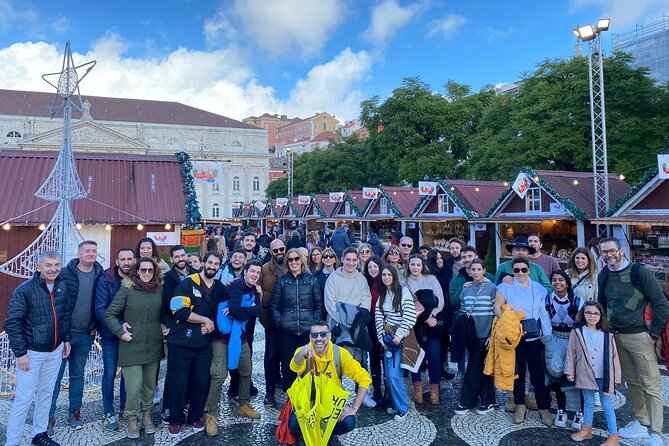
It’s also helpful that this is capped at 30 travelers. Smaller groups mean fewer bottlenecks near viewpoints and entrances, and you’re more likely to hear the guide clearly as you move.
You can also read our reviews of more walking tours in Lisbon



Praça Dom Pedro IV: your starting point for Lisbon’s central vibe
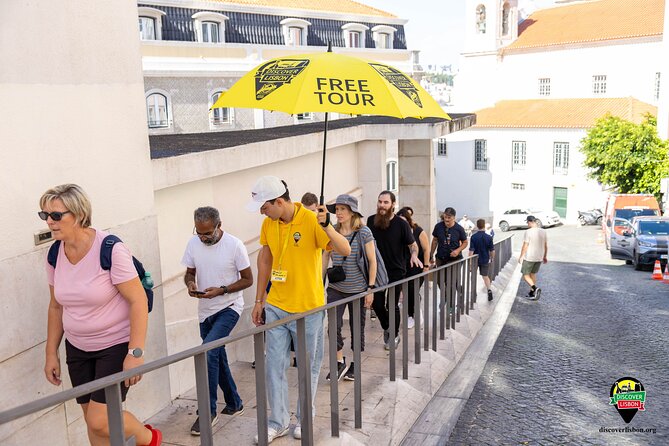
Your tour begins at Praça Dom Pedro IV, one of the city’s big squares and a logical launchpad for exploring on foot. This is the kind of place where you can orient yourself quickly: you’re in a central zone, with multiple paths radiating out, and it makes sense to start here if you’re trying to understand downtown Lisbon before you climb into the older neighborhoods.
What’s smart is that your route doesn’t treat Rossio as a dead starting line. It’s the first thread in the day’s theme: Lisbon’s urban growth. You’re setting up to see how the city expanded and reshaped itself around major routes and institutions.
If you’re the kind of traveler who likes to arrive with a plan, this beginning helps. You’re not guessing which direction to go, and you’re not forcing your feet to do the work of figuring out Lisbon’s layout. You just follow the guide, hit key places, and by the time you reach Bairro Alto, you already understand why it sits where it does.
Practical tip: wear comfortable shoes with grip. Even though the tour is only 2.5 hours, the ground can be rough, and you’ll want traction for any step-heavy moments later in the route.
Estação do Rossio: Neo-Manueline romance in a working train station
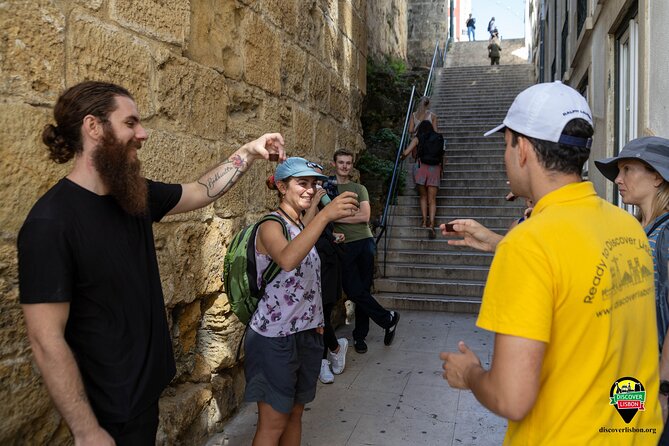
One of the most memorable stops is Estação do Rossio, a station that looks more like a temple than a typical transit hub. It was commissioned by the Portuguese Royal Railway Company, designed between 1886 and 1887 by architect José Luís Monteiro, and completed in 1890. That timeline matters because it explains the style choice: the station leans into a Romantic recreation of the Manueline tradition.
Here’s what you’ll notice right away: the station’s Neo-Manueline façade, especially the two intertwined horseshoe portals at the entrance. Even the wording around the entrance ties it to the idea of “central station,” but the look is what makes it memorable—ornate, dramatic, and very Lisbon.
You’ll also learn the station wasn’t just decorative. It connected Lisbon to the region of Sintra, tying this spot to real movement in Portugal’s everyday life, not just tourism.
Why this stop is valuable on a walking tour: it’s a break from the hill-and-church rhythm. You get architecture with function. And because it’s part of Rossio’s central square setting, it reinforces what you’re learning about Lisbon as a city of routes—trains, roads, and urban expansion.
Praça Luís de Camões: where poetry turns into identity
Next comes Praça Luís de Camoes, named for the national poet Luís de Camões. The guide connects him to Portugal’s big sea narrative through his epic poem, OS LUSÍADAS, which describes Vasco da Gama’s discovery of the sea route to India.
There’s also a detail that makes the name feel real instead of museum-dust: Camões is said to have lost one eye in a battle in Ceuta. When you hear that kind of fact, you start treating this square as a living monument, not a random street corner.
The other takeaway is linguistic. The influence of OS LUSÍADAS is so strong that Portuguese is sometimes referred to as the language of Camões. That’s the kind of cultural fact that helps you understand why Lisbon loves to name places for people who shaped the national story.
If you like to look at cities through culture, this stop is a good mid-walk anchor. It’s short (around 30 minutes total for the stop time), but it gives your brain a theme to hold onto while you move upward into older parts of town.
Bairro Alto: walls, plague, and Saint Roque in the same neighborhood
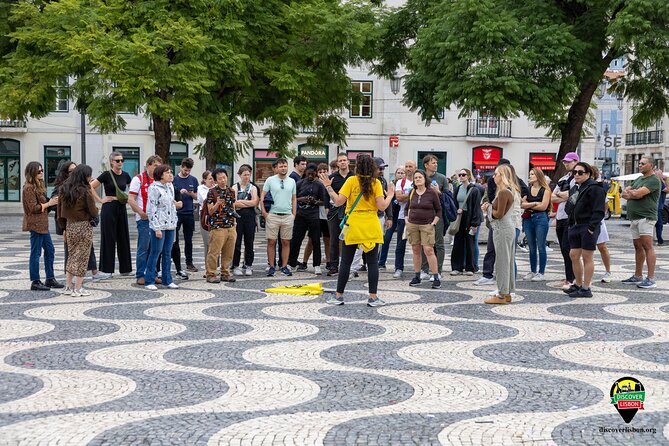
When you reach Bairro Alto, you stop seeing it as just nightlife streets and start seeing it as an urban outcome. The tour explains that in the late 15th century Lisbon was packed with people from all over the world due to the discovery era. Growth created pressure to enlarge the city center.
You also get a fascinating look at how the city’s entrances and boundaries shifted over time. Today, you’ll hear about Camões square as an entrance area from earlier city days. You’ll also connect this to older city defenses: the Fernandine wall and the door of Santa Catarina. After the earthquake, that area relates to two churches you’ll hear named: Encarnação and Loreto.
Then the story turns darker, which is exactly why it’s memorable. The tour places a cemetery for black plague victims in this area. During demographic upheaval and the arrival of the plague, the less fortunate and sick moved closer to the church linked to the area.
And this is where the legend becomes a clue to the neighborhood’s structure. In 1506, King Manuel I requested a relic of Saint Roque from Venice and placed it in a hermitage near the cemetery. An urban plan followed, designed to receive these residents as the population shifted. So the geography you see today—churches, streets, where people gathered—can be understood as a response to real fear and real need.
What I like about how this stop is handled: you get cause-and-effect. It’s not “here’s a hill.” It’s “here’s why this hill mattered.” If you’re walking solo, this also helps you feel connected. You’re not just watching other people move; you’re understanding why the neighborhood exists.



Largo do Carmo: Nuno Álvares Pereira’s vow in a church-convent setting
Largo do Carmo is another free stop that feels like a time machine. The church and convent were built in 1389, tied to a vow by Nuno Álvares Pereira, a general who helped King John repel Castilian troops in 1385 at the Battle of Aljubarrota.
Here’s the story logic: Pereira vowed to build what he believed would be the world’s most beautiful church if the Portuguese came out victorious. They did, so he funded the Carmelite church and convent. After completion (in 1423), he joined the Carmelite order and spent the rest of his life at the convent.
This is a strong stop for two reasons. First, the tour doesn’t just name him; it gives you the cause. Second, it frames a religious place as something built out of political events and personal decisions. That makes the architecture feel intentional instead of decorative.
Time-wise, it’s shorter here (about 15 minutes). That’s actually helpful. You get enough context to look closely, but you’re not stuck in a long sit-down when you still have walking ahead. If you’re the type who likes to step into quiet corners for a moment, this stop works well.
Miradouro de Santa Catarina: a simple ending with real payoff
The tour ends at Miradouro de Santa Catarina (1200-262 Lisboa). A viewpoint finish is smart because it gives you a natural emotional landing. After the stories and the climbs, you get open air and a wide view—your brain finally gets to relax and absorb the city’s layout.
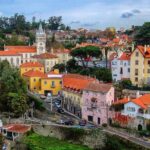
Even if you’re not the biggest “photo person,” you’ll likely feel the payoff here. Bairro Alto’s streets can be hard to picture from far away, but from a viewpoint you can connect the dots. You understand the hill geometry and how downtown and older neighborhoods relate.
This also gives you practical options after the tour. You’ll be in a place where you can keep moving, grab food nearby, or simply take your time before continuing your day.
If you want an extra bit of usefulness: plan a little buffer at the end. Don’t schedule something stressful right after. Let the viewpoint finish be the reset it’s meant to be.
Price and value: $3.60 for a guided walk with free stops
At $3.60 per person for about 2 hours 30 minutes, this tour is priced like a good deal, not a premium add-on. The real value isn’t only the cost—it’s that the stops are admission free (at least for the locations covered during the walk), so you’re not hit with extra fees mid-route.
You also get an expert local guide, and the focus is on stories and legends tied to the exact places you see. That matters because it turns your walk into information you’ll keep, not just scenery you’ll forget when you’re back home.
The tour is also offered in English and uses a mobile ticket, which is easy if you don’t want paper hassles. With a maximum of 30 travelers, it’s not crowded in a way that ruins the experience.
One small note: entry to the Santa Justa elevator is not included. That’s not a negative if your goal is to walk and learn. Just know you’re not buying your ticket to a big elevator payoff. The payoff here is the narrative route and the viewpoint finish.
Should you book this Bairro Alto and downtown walking tour?
If you want a short, guided way to understand Lisbon’s structure—Rossio to Bairro Alto—this is a great fit. I’d especially recommend it if you like learning through place-based stories: a station façade with real architectural dates, a poet whose name shows up in the city’s identity, and a neighborhood shaped by walls and plague-era life.
Skip it only if you already planned to focus on elevator rides or if you struggle with steady uphill walking on uneven streets. Otherwise, it’s a smart use of a half-day: guided, mostly free at the stop level, and ended with a viewpoint where you can actually see what you learned.
FAQ
How long is the walk?
It’s about 2 hours 30 minutes.
Where does the tour start and end?
You start at Praça Dom Pedro IV, 1100-200 Lisboa and end at Miradouro de Santa Catarina, 1200-262 Lisboa.
Is the tour in English, and how big is the group?
The tour is offered in English, and the maximum group size is 30 travelers.
Do I need to pay for the stops?
The stop locations on this walk are listed with free admission tickets. Entry to the Santa Justa elevator is not included.
What type of ticket do I get?
You receive a mobile ticket.
What if I need to cancel?
Cancellation is free if you cancel at least 24 hours before the experience start time for a full refund.