REVIEW · LISBON
Sintra Cascais 4×4 Land Rover Photo Panoramic Private Tour
Book on Viator →Operated by Yellow Cab TT Tours, Unipessoal, Lda. · Bookable on Viator
4×4 drives turn postcards into daydreams. This private Sintra and Cascais Land Rover outing is built for big views and easy pacing, with hotel pickup and off-road photo moments along the way. You’ll hop from sea cliffs to hilltop sanctuaries and back down to beaches, with a route that’s flexible to your timing.
I like that the day blends the famous names with the quieter corners. You’re not stuck only in one place or doing one long line-up; instead, you get a steady rhythm of ocean outlooks, park stops, and classic town wandering.
One thing to think about: the schedule moves fast between lots of short stops. If you want slow, linger-by-licking-ice-cream pacing, you may find some photo breaks a bit brief.
In This Review
- Key highlights worth your attention
- Why a Land Rover 4×4 is the smart way around Sintra-Cascais
- Estoril-to-Cascais coastal vibe: royalty, casinos, and old intrigue
- Guincho Beach: dunes, cliffs, and water-sport energy
- Peninha Sanctuary: a hilltop pause above the Atlantic
- Cabo da Roca and the lighthouse at the edge of continental Europe
- Ulgueira, Adraga, and Colares: park villages between mountain and Atlantic
- Praia da Guincho area beaches: saltwater pools and dinosaur footsteps
- Azenhas do Mar: the white-and-blue cliffs everyone tries to photograph
- Quinta da Regaleira: the Millionaire’s palace and symbolic gardens
- Sintra Historic Center: cobblestones, shops, and Travesseiros
- Sintra National Palace: mixed styles and the famous chimneys
- Moorish Castle and Pena Palace: fortress views to romantic architecture
- Getting the most out of an 8-hour private day
- Should you book the Sintra Cascais 4×4 Photo Panoramic Private Tour?
- FAQ
- How long is the Sintra Cascais 4×4 Land Rover photo tour?
- Is hotel pickup and drop-off included?
- Is this a group tour or private?
- What language is the tour offered in?
- Are tickets included for all stops?
- What’s not included in the price?
- What are the tour hours?
- Can I cancel for a full refund?
Key highlights worth your attention
- Hotel pickup door-to-door so you can skip the first-stress part of Sintra day planning
- Land Rover 4×4 tracks that help you reach scenic coast corners without fighting parking
- Photo-heavy viewpoints like Guincho, Peninha, and Cabo da Roca, designed for dramatic sea views
- Historic mix in Sintra from the National Palace to the romantic Pena Palace and the Moorish Castle area
- Coastal nature stops across beaches and park villages between the mountain and the Atlantic
Why a Land Rover 4×4 is the smart way around Sintra-Cascais
Sintra and the coast south and west of Lisbon can look close on a map. In real life, getting between viewpoints, beaches, and hilltop monuments can take time because roads twist and parking fills quickly near the most popular stops.
This is where the Land Rover 4×4 format helps. The tour is designed around quick repositioning and photo stops, including dirt-road driving mentioned in the experience highlights. That matters because you’re spending the day seeing places, not wrestling logistics.
Also, since it’s private, you’re not sharing the route with a bunch of people whose pace is different from yours. Guides can adjust timing and stops, so you can lean more toward viewpoints, towns, or monument time depending on what you care about most.
Finally, the stops are mostly outside or in manageable chunks. That’s a practical way to handle Sintra’s crowds and steep walking without turning your whole day into one long queue.
You can also read our reviews of more private tours in Lisbon



Estoril-to-Cascais coastal vibe: royalty, casinos, and old intrigue
The day starts with a coast story that goes beyond postcards. Estoril rose as an international tourist spot early in the 20th century, with one of the biggest and oldest casinos in Europe. In the era when Portugal stayed neutral during World War II, the area drew royalty, businessmen, and intelligence services.
One of the names tied to this atmosphere is Ian Fleming, who later wrote the James Bond novels. Even if you’re not a Bond superfan, it’s a useful lens: this stretch of shoreline has long been a playground for outsiders and a refuge for insiders.
Then you roll into Centro Histórico de Cascais, the town people often call the Portuguese Riviera. Cascais became a summer base for Portugal’s royal family in the late 19th century, including King Luis I and the royal household. During and after World War II, the seaside role deepened as European royals and deposed monarchs sought safety in Portugal’s neutrality.
In about 45 minutes here, I’d keep expectations simple: stroll the older streets, enjoy the seaside feel, and grab a coffee or snack before heading toward the more dramatic coast.
Guincho Beach: dunes, cliffs, and water-sport energy
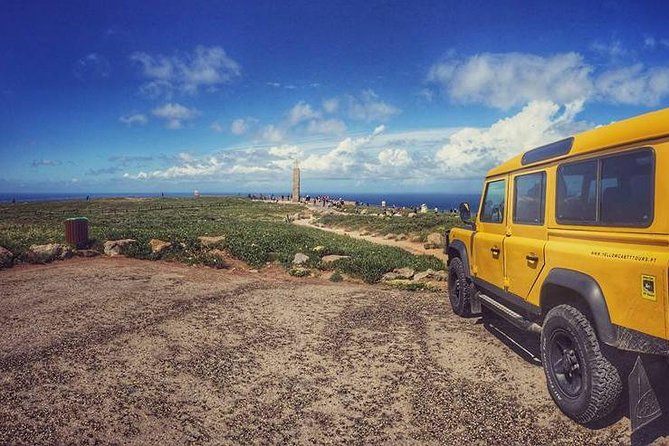
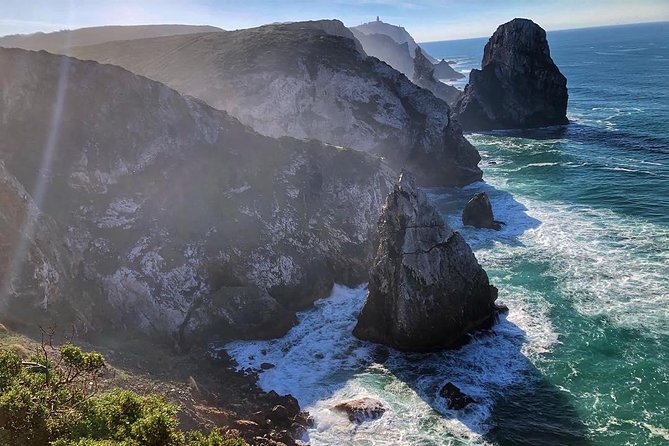
Guincho Beach is one of those places where nature sets the mood fast. It sits next to the Sintra mountains, and the mix of special location and weather makes it a favorite for surfing and kite surfing.
The big draw is the viewpoint: ocean, dunes, and cliffs packed together into one wide panorama. Even if you’re not into sports, the area feels alive because you’re watching wind and waves do their thing.
This stop is short, so treat it like a photo-and-look-around moment rather than a long beach session. If it’s windy (often the case on this coast), bring something light to block gusts and have your camera or phone ready for quick shots.
Practical tip: if you want the best photos, arrive ready to stand, shoot, and reset quickly. The scenery is dramatic, so you’ll naturally want multiple angles.
Peninha Sanctuary: a hilltop pause above the Atlantic
Next up is the hilltop Santuario da Peninha, with views over ocean and countryside. Peninha is tied to early Christian roots in Portugal, where a small hermitage existed on these hills long before the modern sanctuary became what it is today.
This stop is designed as a viewpoint break. Fifteen minutes is enough to catch the view, take a few photos, and get your bearings on how Sintra’s hills relate to the ocean.
What I like about this stop is the way it changes the day’s texture. You go from coastal beach energy to a higher perspective where you can see the region’s layout. It’s the kind of pause that makes the rest of the route feel more connected, not just like separate stops thrown together.
If you’re sensitive to heights or wind, take it slow near the edges. The setting is beautiful, but the Atlantic can be strong up top.
Cabo da Roca and the lighthouse at the edge of continental Europe
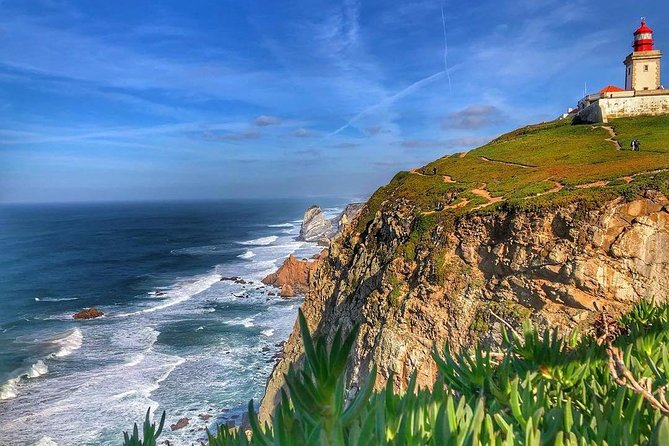
Farol do Cabo da Roca is the westernmost point of continental Europe, and it’s the sort of place where your brain instantly goes: so that’s the end.
Portuguese poet Luís de Camões described the moment where land ends and the sea begins, and the viewpoint here makes that idea physical. You also get the lighthouse, described as the most important one in the area and visible from the outside.
This stop works well if you like dramatic “big sky” locations. You’re getting cliffs, ocean, and a strong sense of scale, all in about half an hour.
Because it’s a cliff edge location, conditions can change quickly. If visibility is poor due to fog or low clouds, don’t panic. Ask your guide how the view looks right then, and focus on what you can see rather than the idea of what you hoped to see.






Ulgueira, Adraga, and Colares: park villages between mountain and Atlantic
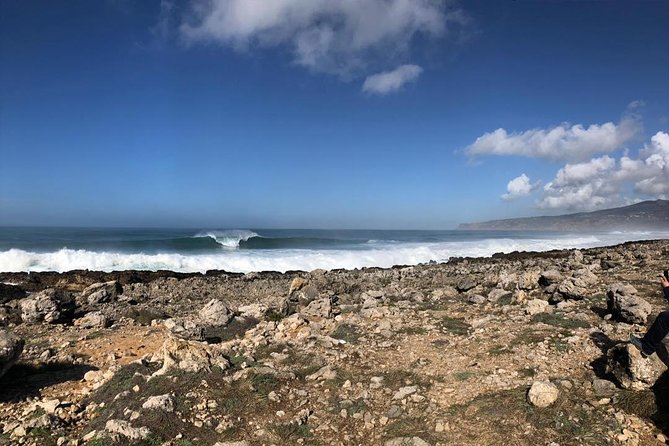
Sintra-Cascais Natural Park isn’t just a backdrop. The tour weaves through it using small villages and beach access roads, which helps you feel how the region functions in daily life, not only as a monument checklist.
You’ll pass Ulgueira, a village near Colares inside the Natural Park area, tucked between Sintra Mountain and the Atlantic Ocean. It’s known for maintaining a rural environment and for those bright lighting conditions that make the area feel particularly photogenic.
Then there’s Praia da Adraga, hidden by rocky cliffs. It’s reached by a winding road through the protected landscape of Sintra, and the spot comes with local legends and a “mystical” feel. Time here is short, so your best move is to focus on the cliff-hugging views and the mood of the coastline rather than trying to do a full beach day.
After that, the tour includes a colorful town near the ocean with Arabic-linked name origins (possibly meaning mosque, with no surviving evidence of an actual mosque). This place keeps a tradition of a weekly farmers market, plus local festivities honoring Nossa Senhora da Graça after the first Sunday of October, lasting eight days.
This cluster of stops is where the tour feels most authentic, because you’re not only looking at famous monuments. You’re seeing everyday landscapes shaped by the park and the coastline.
Praia da Guincho area beaches: saltwater pools and dinosaur footsteps
The tour’s beach sequence has two standout moments that mix sports, unusual geography, and a bit of prehistoric trivia.
First comes a large sandy stretch used for surf and bodyboarding competitions. Nearby, you’ll find one of the biggest saltwater pools in Europe, over 100 meters long. That detail alone is enough to make the stop memorable, because most coastal towns don’t have a giant saltwater pool as a landmark.
Then there’s the dinosaur connection: fossils can be found on the cliff, including a sequence of eleven dinosaur footprints. The key here is that the “dinosaur feet” angle is tied to cliff areas, so keep your eyes open and follow your guide’s direction for safe viewing spots.
After that, you move to Praia das Maçãs, often called the apples beach. The name is said to come from rotten fruits falling from nearby farms into the Colares stream. It’s a beach that also attracts surfers across the year.
These stops are also where practical footwear matters. Coast edges, paths, and uneven ground can make rushed walking feel tiring. Wear shoes you trust.
Azenhas do Mar: the white-and-blue cliffs everyone tries to photograph
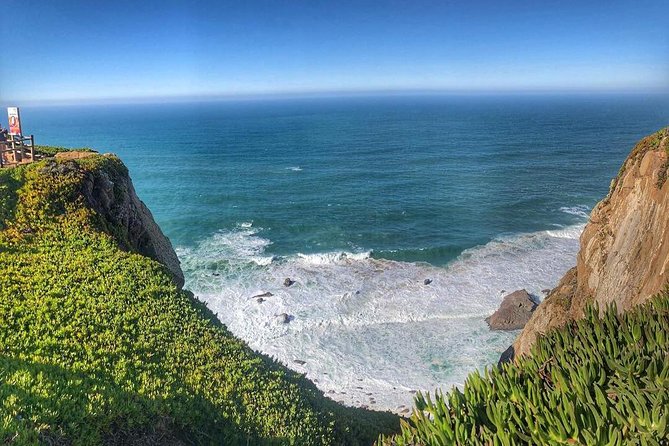
Azenhas do Mar is the kind of place that looks like it belongs in a movie set. It’s a white-and-blue village perched over the sea, and it’s known for those cliffside views that people chase again and again.
It’s basically a mission: get your photos fast, then take a moment to just stand there and watch the ocean moving below. The tour gives you about 15 minutes, which is tight enough that you should treat it like a photo sprint with a calm finish.
If you’re the type who loves quick, high-impact viewpoints, this is one of the stops that delivers.
Quinta da Regaleira: the Millionaire’s palace and symbolic gardens
Sintra is famous for palaces, but this stop is different because it’s a mix of palace, chapel, and a symbolic park.
You’ll see a romantic palace and chapel with Neo-Manueline architecture, plus a luxurious park featuring lakes, grottoes, wells, fountains, and a large variety of constructions. It’s commonly known as the Palace of Monteiro the Millionaire, tied to António Augusto Carvalho Monteiro.
What makes this place interesting is the deliberate layer of symbols: alchemy, Masonry, the Knights Templar, and Rosicrucians are all referenced in the estate’s design. Even if you don’t read symbolism like a scholar, the effect is that you keep noticing details as you walk.
This stop is a great match for travelers who want something more theatrical than standard palace rooms. It’s also a good counterbalance after all the cliff viewpoints, because here you’re exploring an enclosed, landscaped world.
Sintra Historic Center: cobblestones, shops, and Travesseiros
Next comes Centro Histórico de Sintra, a classic old-village feel with cobbled streets, traditional shops, and cafés. Sintra’s historic core is part of a World Heritage Cultural Landscape and keeps the colors and architecture associated with Portugal’s monarchy era, when it became a summer destination.
This is a smart place to reset during the day. In about 45 minutes, you can slow down, browse a bit, and plan what monument stop you want to prioritize.
And yes, I recommend you plan a sweet break. Traditional treats highlighted include Travesseiros and Queijadas, which are the kind of pastries that make the town feel like more than just a corridor between ticket gates.
Sintra National Palace: mixed styles and the famous chimneys
Sintra National Palace is one of the iconic landmarks you’ll see from far away, thanks to the two imposing chimneys from the kitchen.
Historically, it began as a residence for a Moorish governor. Later, after Christian conquest led by Afonso Henriques, it became a royal residence. The present palace reflects building campaigns across different centuries, creating a blend of Gothic, Manueline, Moorish, and Mudéjar styles.
This stop is about 45 minutes, and it’s noted as the main palace in the historical center that you can visit during your time in Sintra village. Admission for this one is not included in the tour package price, so it’s worth factoring that into your budgeting.
If you want an efficient palace experience before heading to the larger, more time-and-walking demanding settings, this stop can be a great middle step.
Moorish Castle and Pena Palace: fortress views to romantic architecture
The day finishes with two high-impact monuments that pull you in totally different directions.
First is the Moorish Castle, described as built around the 8th century during Muslim Iberia. It served as the central defensive place in a largely agricultural territory, needed to protect the population. After Lisbon’s conquest by D. Afonso Henriques, the castle surrendered voluntarily to Christian forces, and the ruler entrusted it to local inhabitants, granting privileges through the foral system.
This is history you can feel in the placement: stone, elevation, and defensive logic. It’s also a good viewpoint stop if you like sweeping panoramas more than museum-style details.
Then comes Pena Palace, set atop Sintra Mountain. It reuses an abandoned 16th-century monastery site and reflects King Ferdinand II’s love for his wife and for Portugal’s cultural heritage. The architecture is mid-19th century and described as a colorful masterpiece of romantic architecture, with an immense and luxurious garden setting.
This is where the day’s “wow” factor peaks. Even without studying every style label, the palace’s bold look and garden setting make it easy to understand why it’s such a signature place in Portugal.
Keep in mind the tradeoff: since your day is packed, you’ll want to choose your priorities inside Pena. If you try to see everything equally, you’ll end up tired. Pick a route, take your best photos, and leave time for the garden mood.
Getting the most out of an 8-hour private day
This tour is built for variety: towns, beaches, viewpoints, and a couple of major palace stops. That means you should pack like a day with frequent quick exits: comfortable shoes, a light layer for wind, and a flexible mindset about how long you’ll spend in each place.
If you’re chasing photos, treat the order like this: viewpoint stops first, monuments next. It’s easier to enjoy the palaces when you’ve already gotten your big sea panorama shots earlier.
The other practical win is pace control. This kind of private tour tends to feel calmer because you can ask for a quick adjustment. In the experience, guides such as Tiago and Thiago have been singled out for being exceptional with stories and flexible timing, and Paula is described with a fun, laughing energy. The names matter less than the pattern: the best days happen when your guide works with you, not against the clock.
Should you book the Sintra Cascais 4×4 Photo Panoramic Private Tour?
Book it if you want a day that mixes coast drama with Sintra’s palace circuit, without the hassle of arranging transport on your own. The private Land Rover 4×4 format is especially good for photo lovers, people who enjoy viewpoints like Guincho, Peninha, and Cabo da Roca, and anyone who prefers walking in smaller chunks rather than committing to one massive monument day.
Skip or reconsider if you’re trying to do Sintra at a slow pace. With many short stops plus major palace visits, the schedule can feel tight. Also, if you’re mostly interested in only one monument, you might prefer a more focused plan so you can spend extra time where you care most.
If you like variety and want the coast-mountain contrast in one clean day, this is a strong fit.
FAQ
How long is the Sintra Cascais 4×4 Land Rover photo tour?
It runs for about 8 hours.
Is hotel pickup and drop-off included?
Yes. Pickup from your Lisbon-area hotel and drop-off are included.
Is this a group tour or private?
It’s private. Only your group participates.
What language is the tour offered in?
The tour is offered in English.
Are tickets included for all stops?
Many stops list admission as free, but Sintra National Palace admission ticket is not included.
What’s not included in the price?
Lunch and tips are not included.
What are the tour hours?
Tours run Monday through Sunday from 8:30 AM to 5:00 PM.
Can I cancel for a full refund?
Yes. Free cancellation is available up to 24 hours in advance for a full refund.