REVIEW · LISBON
Private Eco Tuk Tuk Tour of Lisbon’s Center Essential Landmarks
Book on Viator →Operated by Cronotours · Bookable on Viator
Lisbon looks different at every turn, and this route is built for that. You get a private eco tuk tuk ride with planned stops at the city’s best viewpoints and landmark churches, plus a hit of included ginja liqueur. I like the mix of sweeping views (especially the miradouros) and big cultural anchors like Lisbon Cathedral and the Jesuit church of São Roque. One thing to keep in mind: a few key sights may cost extra on site (plan for the €11 per person entrance fee), and the overall timing is tight—so it helps to like short photo stops.
This is also the kind of tour that’s easier than it sounds. You’re not trying to “win Lisbon” on foot; you’re cruising between places like Alfama viewpoints, Chiado, and Baixa, with just enough time at each stop to absorb the vibe. With a private group (up to 5) and English support, it’s a solid value if you want the highlights without burning half your day navigating buses.
In This Review
- Key Reasons This Lisbon Eco Tuk Tuk Tour Works So Well
- Price and Value: What You Pay and What You’ll Likely Spend Extra
- Your Starting Point at Av. da Liberdade 3 and How the Tour Timing Feels
- Lisbon Cathedral (Sé): The City’s Oldest Church as Your First Big Stop
- Alfama Views at Miradouro das Portas do Sol and Miradouro da Senhora do Monte
- São Vicente de Fora: A 17th-Century Monastery Complex With Real Architectural Weight
- Panteão Nacional (Santa Engrácia): When You Want the Extra Entrance Worth It
- Chiado Around Rua Garrett and Praça Luís de Camões: Shopping, Theater, and Café Shade
- Igreja de São Roque: The Earliest Jesuit Church in the Portuguese World
- Miradouro de São Pedro de Alcântara and Bairro Alto: Views Plus That Steep Street Feeling
- São Bento Palace and Parliament Area: Lisbon’s Political Center Connection
- Parque Eduardo VII: A Central Park With a Greenhouse Detail You Might Not Expect
- Baixa After 1755: Neoclassical Lisbon Around Commerce and Rossio
- Who This Tour Suits Best (And Who Might Want Something Else)
- Practical Tips to Make the Most of It
- Should You Book This Lisbon Private Eco Tuk Tuk Tour?
- FAQ
- How long is the private eco tuk tuk tour?
- What’s the group size?
- Is the tour offered in English?
- Is pickup available from hotels?
- What’s included in the price?
- What entrance fees should I expect?
- Where does the tour start and end?
- Do I need a printed ticket?
- What happens if the weather is bad?
- FAQ
- Is free cancellation available?
- Can service animals join?
Key Reasons This Lisbon Eco Tuk Tuk Tour Works So Well
- Private and up to 5: your group sets the pace, and you won’t feel rushed by other people’s schedules.
- Miradouro-first sightseeing: hilltop views of Alfama and Bairro Alto are part of the plan, not an afterthought.
- Classic landmark variety: you hit Romanesque roots at Lisbon Cathedral, major religious sites, and Lisbon’s political center area.
- Chiado + bookstores + cafés: you get the shopping and theater energy near Rua Garrett and Praça Luís de Camões.
- Included ginja liqueur: a small perk that makes the tour feel more like a local Lisbon moment.
- Easy logistics compared to public transit hopping: pickup can be arranged at your hotel lobby or door, and the tour returns to the meeting point.
Price and Value: What You Pay and What You’ll Likely Spend Extra

At $95.86 per group (up to 5), you’re paying for a private ride that compresses a lot of Lisbon center highlights into a short 1 to 2 hour window. That can be great value if you’re traveling with 2–5 people, because the cost isn’t per head—it’s per group.
What’s included is practical and enjoyable: ginja liqueur is part of the experience. Also, you’ll get an English guide and a mobile ticket, so you’re not stuck printing paperwork or digging through confirmations.
Here’s the main “budget” consideration: entrance fees for museums and churches are not included, with a stated estimate of €11 per person paid directly on site. The big one called out is the Panteão Nacional (Santa Engrácia / National Pantheon). So before you go, decide whether you want to pay for that stop versus treating it as a quick exterior look.
You can also read our reviews of more private tours in Lisbon



Your Starting Point at Av. da Liberdade 3 and How the Tour Timing Feels
The meeting point is Av. da Liberdade 3, 1250-147 Lisboa. Pickup is offered, and they can meet you at the lobby or at the hotel door, depending on what’s convenient. If your pickup location needs an update, it has to be sent by email, phone call, or text message.
Timing matters on this kind of Lisbon route because most stops are designed as “short and meaningful.” You’ll spend about 10 to 15 minutes per major stop—long enough for photos and a sense of the place, not long enough to linger for a full deep visit. That’s a good fit if you’re the type who wants to keep moving and collect highlights in one morning or afternoon.
Lisbon Cathedral (Sé): The City’s Oldest Church as Your First Big Stop
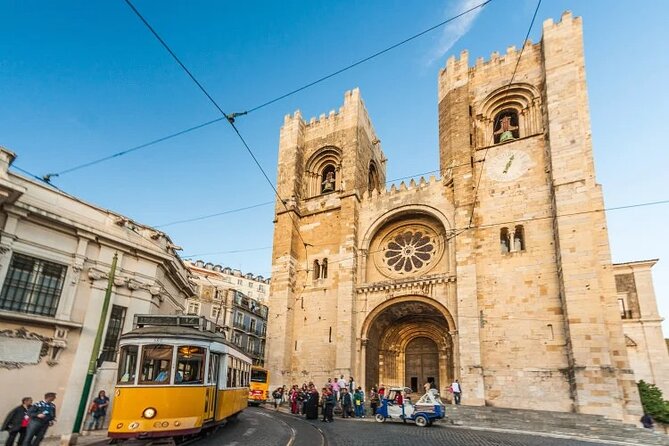
Your tour begins at Lisbon Cathedral, officially the Cathedral of Saint Mary Major, known as the Sé. It dates to 1147, and that age shows. This isn’t a decorative detour—it’s a true historical anchor in the center of Lisbon’s identity.
Expect about 10 minutes here, with admission ticket free. In a short time, you can still clock why it matters: this is the oldest church in the city, which makes the building a kind of physical timeline. If you like seeing how Lisbon layers centuries on top of each other, this first stop gives you a reference point before the viewpoints and later churches start to blur together.
Alfama Views at Miradouro das Portas do Sol and Miradouro da Senhora do Monte
Then the tour does what Lisbon is best at: it gives you height and wide angles.
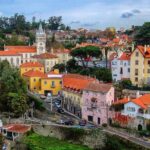
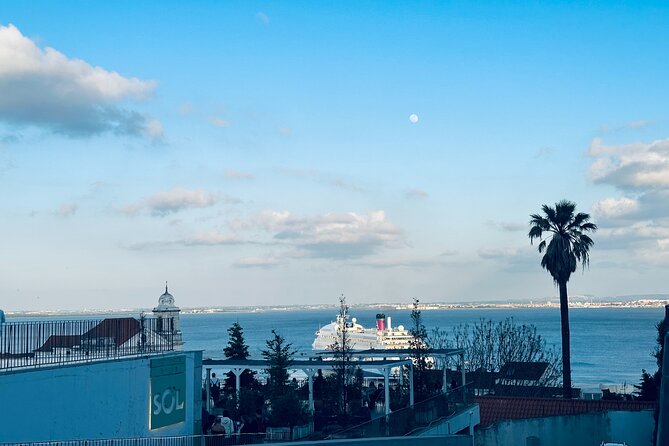
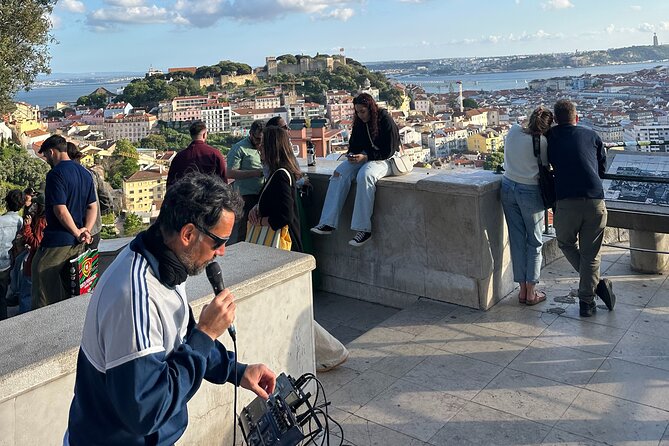
At Miradouro das Portas do Sol, you get panoramic views over the traditional Alfama neighborhood—famous for those red-roofed houses and the church spires that punctuate the skyline. You’ll have about 15 minutes, which is enough to find a good photo spot, look for the patterns of streets below, and understand why Alfama is so visually iconic.
Next comes Miradouro da Senhora do Monte, described as the highest point in the neighborhood and located in a churchyard. You’ll get another 15 minutes. This is a useful follow-up because you’re comparing two viewpoint “styles” in one tour: one more associated with Portas do Sol’s classic angles, and the other from the upper viewpoint that makes Lisbon’s sprawl feel more understandable.
Practical note: these stops are in Lisbon’s hillier areas, and even short viewpoint stops often mean some stairs or uneven ground. If that’s a concern for you, wear shoes you can walk in comfortably.
São Vicente de Fora: A 17th-Century Monastery Complex With Real Architectural Weight

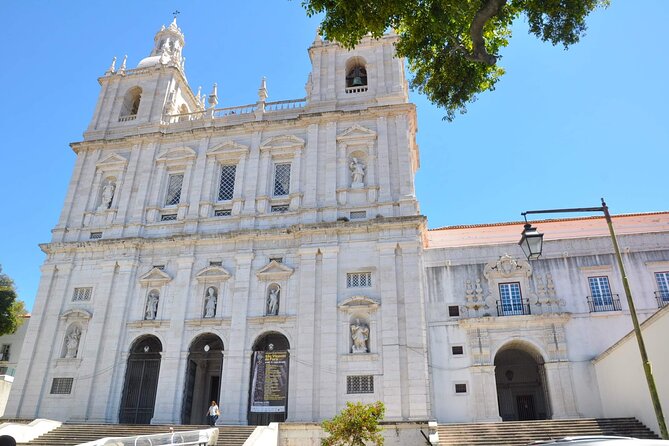
From the views, the tour shifts into religious and architectural substance at Igreja de São Vicente de Fora. This 17th-century church and monastery complex is described as one of the most important in Portugal, and it’s especially known for its mannerist buildings.
You’ll spend around 10 minutes here. That short window is actually smart: you don’t need hours to appreciate the shift in tone from the viewpoint energy to a more formal, historical setting. If you’re the kind of traveler who enjoys how Lisbon’s religious architecture reflects power and patronage, this is one of the stronger stops on the route.




Panteão Nacional (Santa Engrácia): When You Want the Extra Entrance Worth It
The Panteão Nacional is the National Pantheon in Lisbon, tied to the former Church of Santa Engrácia. It’s a 17th-century monument and it’s where important Portuguese personalities are buried.
This stop is called out as admission not included. You should plan on the €11 per person entrance fee if you want to go inside. The value here depends on what you prefer:
- If you like national stories and the idea of a site that formalizes memory, it’s likely worth paying.
- If you’re aiming to keep costs down, you can still use the time to orient yourself and decide on the spot.
Either way, it works as a mid-tour reset: after viewpoints and monastery stops, this is Lisbon’s “names and nation” moment.
Chiado Around Rua Garrett and Praça Luís de Camões: Shopping, Theater, and Café Shade
Then you roll into Chiado, Lisbon’s shopping and theater hub. You’ll hear Rua Garrett mentioned for shopping, plus the famous Bertrand Bookstore that dates to the 1700s.
You’ll also be near Praça Luís de Camões, with the statue of the 16th-century poet. This area is popular for alfresco dining, and the square is shaded by ancient jacaranda trees. The history goes even deeper than the cafés: it stretches from before 1755 to the Carnation Revolution, so even the street-energy here is tied to major Lisbon turning points.
Expect quick stops, around the time window of the rest of the tour. So your “move” in Chiado is to absorb the vibe, take a photo of the bookstore or the square, and maybe grab a snack if you’re hungry—without turning this into a long shopping session.
Igreja de São Roque: The Earliest Jesuit Church in the Portuguese World
At Igreja de São Roque, you get one of the key Jesuit landmarks in Portugal. It’s described as the earliest Jesuit church in the Portuguese world and one of the earliest Jesuit churches anywhere. The building served as the Society’s home church in Portugal for over 200 years.
You’ll have about 10 minutes. That’s enough to appreciate why it matters: Jesuit churches often have a strong sense of intention—places built not just for worship, but for a message. If you’re interested in how religious orders shaped education and culture in Portugal, this is the kind of stop that adds context to Lisbon’s “why” behind the buildings.
Miradouro de São Pedro de Alcântara and Bairro Alto: Views Plus That Steep Street Feeling
Next up is Miradouro de São Pedro de Alcântara, a sizable landscaped terrace with a fountain. You’ll get about 15 minutes here, and it’s set up perfectly for the “Lisbon theater of views” effect—big sightlines, a calm pause, then back into motion.
The description also points you toward Bairro Alto: you can wander steep cobbled streets and connect the view with the neighborhood energy. If you’re into the experience of riding Lisbon’s funiculars, the Bica Funicular is mentioned as a way to keep seeing the city from a different angle.
And yes, São Roque Church is part of this area’s story too, which makes the stop chain feel logical: viewpoints tell you what Lisbon looks like, then the churches and terraces tell you how Lisbon built its spiritual and cultural identity.
São Bento Palace and Parliament Area: Lisbon’s Political Center Connection
After the hill views and neighborhood feel, the tour moves into Lisbon’s political core with São Bento Palace, seat of the Assembly of the Portuguese Republic. This matters because it links Portugal’s modern governance to a much older building.
The palace was originally constructed in 1598 as a Benedictine monastery. After the Liberal Wars, it was dissolved—another example of Lisbon repurposing major sites instead of starting over. Even with limited time, this stop gives you a sense of scale: Lisbon isn’t just churches and viewpoints. It’s also administration and national decision-making.
Parque Eduardo VII: A Central Park With a Greenhouse Detail You Might Not Expect
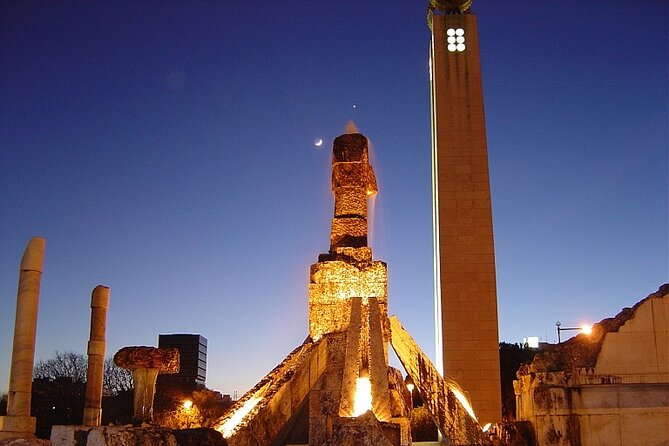
Parque Eduardo VII is Lisbon’s central park, named as a tribute to English monarch Edward VII. The park design is described as having a central grass strip flanked by long Portuguese paved walkways, dividing the park into two tree-lined zones.
But what makes it more than just a park stop is the greenhouse area on the northwest corner, built on the site of an old basalt quarry. It’s described as having exotic plants, streams, waterfalls, palm trees, and a Hot Greenhouse with tropical birds and cacti.
You’ll spend about 10 minutes. That’s short, but the payoff is that it’s a different side of Lisbon center: you get a break from stone and church façades, and a reminder that Lisbon’s microclimate supports serious plant life.
Baixa After 1755: Neoclassical Lisbon Around Commerce and Rossio
Finally, the tour ends with Baixa, Lisbon’s historic heart and commercial center. This is where Lisbon shows the consequences of rebuilding: the neoclassical architecture was built after the 1755 earthquake, and it surrounds Commerce and Rossio squares.
The pedestrianized streets are lined with bustle, so even if your stop time is short, you’ll feel the city’s daily rhythm. Neoclassical design here helps you “read” the street grid. It’s one of the easiest places to understand how Lisbon wanted to be modern after disaster—cleaner lines, open squares, and a layout built for movement.
Who This Tour Suits Best (And Who Might Want Something Else)
I think this tour is a strong match if you:
- Want a fast, efficient way to cover major central landmarks in 1 to 2 hours
- Like viewpoint time built into the schedule, not just when you happen to wander into it
- Prefer a private group experience with up to 5 people
- Enjoy religious architecture and Lisbon’s big historical eras (from 1147 to later transformations)
It might be less ideal if you:
- Want long museum-style visits (this route is short per stop)
- Hate paying extra entrance fees for churches or national monument interiors
- Need a lot of time to linger in one place before moving on
Practical Tips to Make the Most of It
- Build your plans around weather. This experience requires good weather, and if it’s canceled due to poor weather, you’ll be offered a different date or a full refund.
- Wear comfortable shoes. Even with tuk tuk transport, Lisbon’s viewpoints and older streets can be uneven.
- Decide early if Panteão Nacional is a must. If it is, set aside the extra €11 per person entrance fee so you don’t have to decide at the last moment.
- If you’re getting pickup, make sure you send any pickup location updates in time (email, phone, or text). The tour can meet you at the lobby or at the hotel door.
Should You Book This Lisbon Private Eco Tuk Tuk Tour?
Yes—if you want Lisbon center highlights without the stress of self-guided hopping, this tour makes a lot of sense. The private setup (up to 5), the targeted stops (Sé, major viewpoints, São Roque, Chiado, Baixa), and the included ginja liqueur add up to a fun, efficient way to get oriented.
I’d book it especially if you like mixing views with landmarks and you’re comfortable with short stops. If you’re planning to spend most of your time inside museums or churches, pair this with at least one longer, single-site visit on another day.
If you want, tell me your travel dates and who’s in your group (age range, mobility needs, interests like churches vs viewpoints vs food). I can suggest how to time this tour with the rest of your Lisbon day.
FAQ
How long is the private eco tuk tuk tour?
The tour runs about 1 to 2 hours.
What’s the group size?
It’s private, and the price is per group of up to 5 people.
Is the tour offered in English?
Yes, the tour is offered in English.
Is pickup available from hotels?
Pickup is offered, and you can be picked up at the hotel lobby or at the hotel door.
What’s included in the price?
Alcoholic beverages, specifically ginja liqueur, are included.
What entrance fees should I expect?
Entrance fees for museums and churches are not included, with an indicated cost of €11.00 per person paid directly on site.
Where does the tour start and end?
It starts at Av. da Liberdade 3, 1250-147 Lisboa, Portugal, and ends back at the meeting point.
Do I need a printed ticket?
No. You’ll receive a mobile ticket.
What happens if the weather is bad?
This experience requires good weather. If it’s canceled due to poor weather, you’ll be offered a different date or a full refund.
FAQ
Is free cancellation available?
Yes. You can cancel up to 24 hours in advance for a full refund.
Can service animals join?
Yes, service animals are allowed.