REVIEW · LISBON
Discover Alfama with the Exterior View of São Jorge Castle
Book on GetYourGuide →Operated by Discover Lisbon · Bookable on GetYourGuide
Lisbon’s real soul is hiding in Alfama. This 150-minute walking tour mixes Fado culture and street-level history with a string of lookout moments, including Miradouro Portas do Sol and an exterior view of São Jorge Castle.
I especially like the way the guide connects the neighborhood’s survival through the 1755 earthquake to what you see today—tiles, churches, and those stair-step streets. The other big win is the viewpoint stops: you get the Tagus and a sea of terracotta roofs in a way that feels earned, not rushed.
The main drawback: it’s hilly. You’ll want comfortable shoes and you’ll benefit from taking water breaks when the path turns steep. Also, monument entry isn’t included, so if you want to go inside everything, plan for extra tickets.
In This Review
- Key things you’ll notice on this Alfama walk
- Rossio Square start: getting your bearings fast in 150 minutes
- Alfama’s survival story: why it feels older than the rest of Lisbon
- Fado on UNESCO: how music culture shows up in the streets
- Azulejos, old churches, and monument stories you can actually see
- Miradouro Portas do Sol: the viewpoint that makes you slow down
- São Jorge Castle exterior: seeing the power without the ticket hassle
- Walking tips for steep Alfama: make the 150 minutes feel easy
- Price and value: why $1.77 can still make sense
- Who should book this Alfama walk (and who may not love it)
- Should you book Discover Alfama with São Jorge Castle exterior views?
- FAQ
- Where does the tour start?
- How long is the experience?
- What language is the live tour guide?
- What is included, and what isn’t?
- What should I bring?
- Is there a cancellation option?
Key things you’ll notice on this Alfama walk
- Alfama’s story goes beyond postcards, anchored in how the neighborhood endured the 1755 earthquake.
- Fado isn’t treated like trivia; you’ll hear why it matters and how it connects to everyday Lisbon.
- Miradouros deliver the goods, especially Miradouro Portas do Sol with sweeping city-and-river views.
- Azulejos set the mood as you pass old facades and church exteriors.
- Old churches and monument history add context without turning the walk into a lecture.
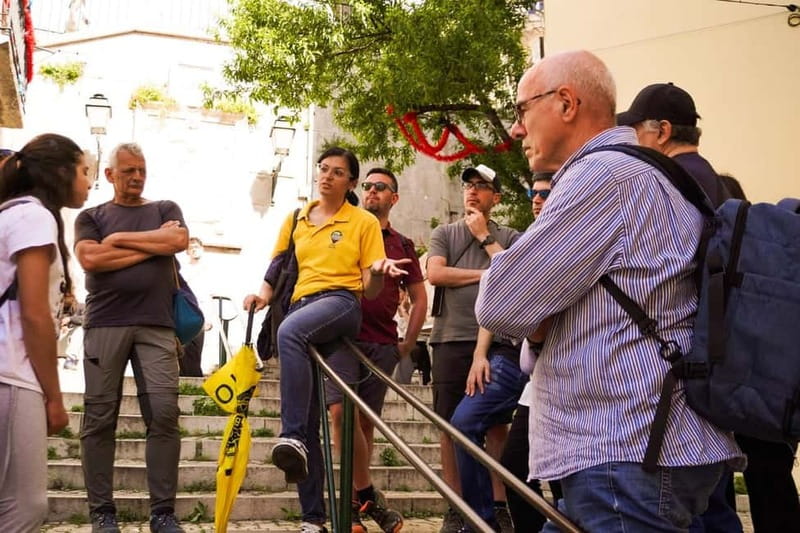
- English guides like Valeria and Andy have shown up with humor and quick answers to questions beyond the route.
Rossio Square start: getting your bearings fast in 150 minutes
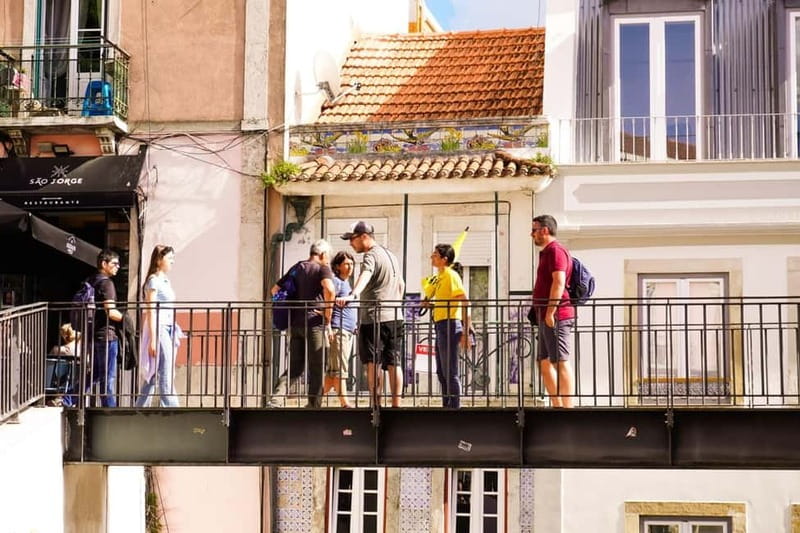
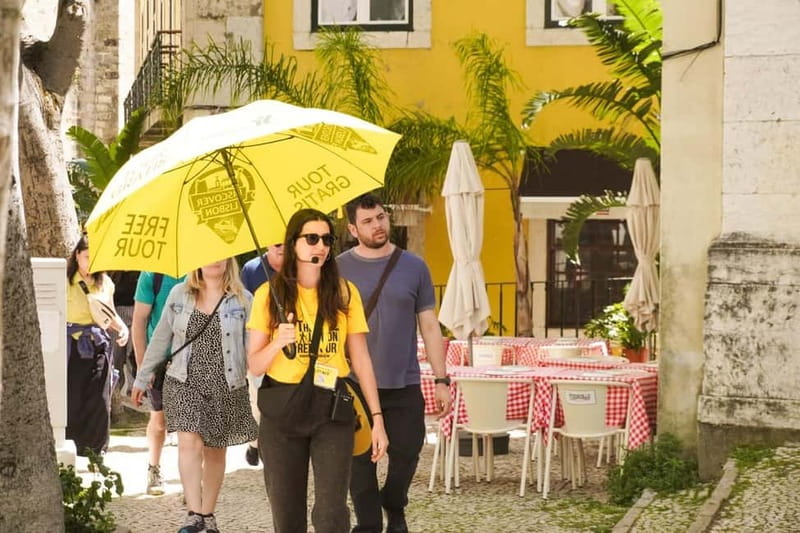
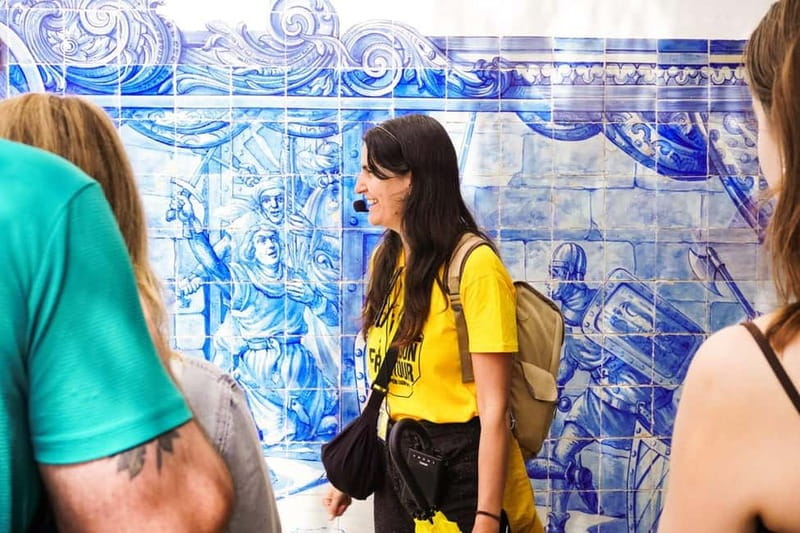
Your walk begins at Rossio Square, near the statue in the middle of the plaza. Look for the team with a yellow umbrella and yellow hoodie or t-shirt. From there, you’ll head through key parts of central Lisbon before the route turns into the slower, more winding feel of Alfama.
I like this setup because it helps you orient quickly. Rossio is an easy landmark. Then the tour gradually changes the pace and terrain, so by the time you reach the tight alleys, you’re already thinking in Lisbon’s “up-and-down” rhythm rather than fighting it.
One fun detail: the activity notes say to bring your best costume. I don’t know how strict that is in practice, but even if it’s more playful than official, it signals that this isn’t a purely stiff, museum-style outing. You’ll likely move with a bit of lightness, which matters on a walking tour that lasts about 2.5 hours.
And yes—this is a walking experience. Transportation back and forth isn’t included, so plan to arrive a little early, then stay focused on the route once you’re inside it.
You can also read our reviews of more tours and experiences in Lisbon.

Alfama’s survival story: why it feels older than the rest of Lisbon
Alfama gets called one of Lisbon’s oldest neighborhoods for a reason. The tour frames it in a very practical way: it’s one of the few areas that was not destroyed in the 1755 earthquake, which means you’re still walking through a living patch of city fabric rather than an entire rebuild on top of a blank slate.
That single fact changes how you experience the streets. When you’re on those steep lanes and suddenly you see a church facade decorated with timeworn details, you’re not just staring at decoration—you’re reading history in layers. You also understand why locals still treat the area like home, not just a scenic district for photos.
There’s also the origin story. Alfama’s name traces back to the Arabic Al-hamma, meaning hot fountains or baths. That detail gives the neighborhood an extra dimension. You start noticing how Lisbon’s different eras overlap here—Moorish-era language echoes, Portuguese religious architecture, and the everyday life that continues alongside it.
This is the kind of context that makes the walk feel purposeful. You’re not only checking off viewpoints; you’re learning why the neighborhood looks the way it does and why it survived when so much else didn’t.
Fado on UNESCO: how music culture shows up in the streets
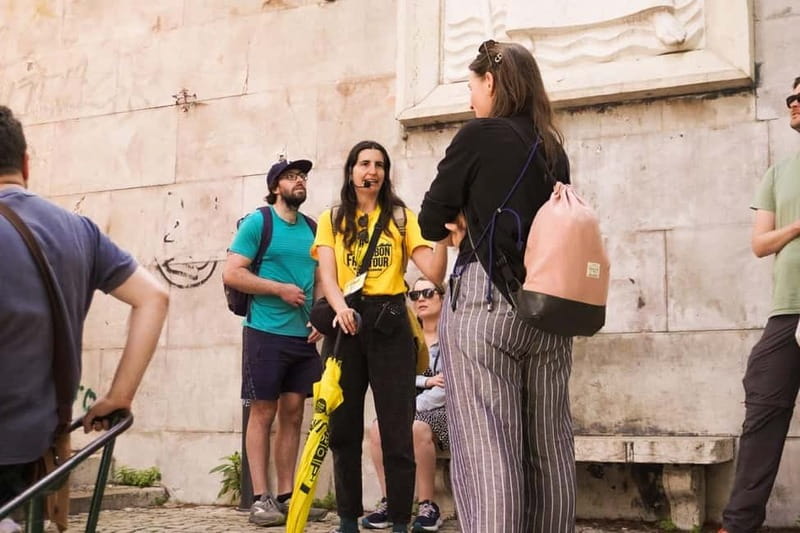
Fado gets UNESCO attention, but the real point for me is what UNESCO can’t capture: how the music connects to place. This tour aims to explain Fado music, which is on UNESCO’s world heritage list, by placing it in the neighborhood’s mood and history.
Instead of treating Fado like a museum category, you’ll hear it as part of daily Lisbon identity—something tied to the way people gather, talk, and remember. Alfama’s tight lanes and old stairways create natural “sound corridors.” Even when you’re not hearing music constantly, the tour’s story nudges you to see why Fado fits here: the setting is intimate, emotional, and rooted in local life.
I like that the guide also keeps the topic connected to what you’re walking past. If you want a tour that teaches you how to notice things—tone, tradition, and the role of music—this one has that approach.
And if you’re hoping for deep musical instruction, temper expectations. The tour data points to historical and cultural insights, not a full music workshop. Still, it’s a strong way to leave Alfama knowing why Fado is more than a stage performance.
Azulejos, old churches, and monument stories you can actually see

Alfama is famous for its visual language, and the tour leans into it—especially azulejos (those painted ceramic tiles that show up on walls and facades like they were installed just yesterday, even when they weren’t).
As you move through the neighborhood, you’ll also get history of famous monuments and visits to old churches. The key advantage here is that you don’t have to guess what you’re looking at. The guide adds the why behind the what: what these religious spaces represent, how they connect to past Lisbon life, and how the neighborhood’s endurance after 1755 shaped what survived.
One practical consideration: entry to monuments isn’t included. That means you’ll mostly be seeing churches and monuments from the outside, plus whatever stops the guide builds around view points or quick exterior context. If you want to go inside, you might need to pay separately.
Still, exterior-focused church visits can be satisfying. On a hilly walk, you’ll often see more variety without burning time in ticket lines. And with the storytelling layer, even a facade becomes a mini lesson.
Miradouro Portas do Sol: the viewpoint that makes you slow down
The tour includes a stop at Miradouro Portas do Sol, one of the classic Lisbon miradouros. This is where the experience shifts from “history and architecture” to “wow, look at that.”
What you’re aiming to see is a broad sweep of terracotta roofs and the Tagus River, framed by Alfama’s hills. The best part is that you’re not viewing Lisbon from a single sterile platform. You’re standing in the neighborhood’s own geography, which makes the city feel real instead of flattened.
I recommend treating this moment like a breather, not a quick photo stop. Take a slow scan: rooftops first, then water, then the way streets climb and disappear into the city’s layers. The guide’s explanations help you connect what you see to what you’ve already walked through—especially the neighborhood’s survival and the way Alfama developed its identity around its terrain.
One more practical thought: miradouros can get windy and crowded, depending on the day. Wear layers if you’re visiting in cooler months, and keep your footing careful on the uneven ground.



São Jorge Castle exterior: seeing the power without the ticket hassle
The tour’s title includes an exterior view of São Jorge Castle, and that matters. You get a sense of the fortress presence—the scale and the historic “built on a hill” logic—without turning the day into a logistics puzzle.
I like exterior castle views because they often give you the biggest payoff per minute. You can orient yourself with Lisbon’s topography. Then, as you look back over Alfama, you understand why people built defenses here and why the neighborhood’s lanes feel like they were shaped by the slope.
This also pairs nicely with the earthquake context. When you know Alfama survived major destruction, you can better imagine how the castle’s role shifted over time—from defensive stronghold to enduring symbol and viewpoint anchor.
If you’re the type who loves fortress structures, you’ll appreciate the outside look. If you’d rather go inside and do every official step, this tour won’t replace that plan—but it sets you up well before you decide what else to tackle.
Walking tips for steep Alfama: make the 150 minutes feel easy
Because this is a hillside neighborhood, the tour’s success depends on comfort. Bring comfortable shoes—not just “okay walking shoes,” but shoes with grip that can handle slick stone and steep steps.
Also bring water. Even on shorter hikes, the combination of sun and climbing can catch you off guard. The tour duration is about 150 minutes, so you’re not out all day, but you are continuously active.
Pace is the other big factor. The best way to enjoy Alfama is to let the guide set rhythm while you focus on micro-moments: an azulejo panel, a church facade, a sudden opening to the river. Don’t try to power-walk to “beat” the hills. That approach makes you miss what makes the neighborhood special.
If you’re choosing this tour with mobility limits, pay attention to the fact that the route is walking-heavy and built around historic viewpoints. The data doesn’t list accessibility details, so if you have concerns, it’s worth asking the provider ahead of time.
Price and value: why $1.77 can still make sense
At around $1.77 per person, this is priced extremely low. That can feel suspicious until you look at what the tour actually provides: an expert guide plus historical and cultural insights over about 150 minutes of guided walking. The money isn’t going into transportation, and monument entry isn’t included, so the cost structure is basically paying for interpretation and time.
There’s another practical reality: guides work for tips, especially when pricing seems bargain-level. In one past session with an English guide named Andy, he asked participants at the end to drop in a hat with what the tour was worth. Even if you’re not able to follow that exact method, the point is simple: if you feel the guide gave you value, reward that directly.
So how do you judge whether it’s worth it? For me, the value equation is:
- You get storytelling that helps you understand what you’re seeing.
- You get viewpoint stops (including Miradouro Portas do Sol).
- You get context for major history (especially the 1755 earthquake survival theme).
- You’re walking in the oldest part of Lisbon without needing to navigate every turn alone.
That’s a strong value bundle for the money, as long as you’re comfortable with the walking and the fact that entry fees aren’t part of the deal.
Who should book this Alfama walk (and who may not love it)
This experience is a great fit for you if:
- You want Alfama’s history connected to what you can see on the street.
- You like cultural context, especially around Fado and UNESCO recognition.
- You’re comfortable with uphill walking and want miradouros views without planning a route yourself.
It may not be ideal if:
- You want a tour focused on inside monument tickets. Entry isn’t included, so you’ll mostly be doing exteriors.
- You dislike hills. Alfama is steep, and this is built around that terrain.
- You’re expecting a long, museum-style deep lecture. This is a walking tour with guided insight, not a full-day classroom.
English speaking works well for most visitors. And if you like guides who can handle questions beyond the stops, past English guides such as Valeria and Andy have been praised for knowledge and friendliness.
Should you book Discover Alfama with São Jorge Castle exterior views?
If your goal is to understand Alfama fast—why it looks the way it does, why Fado matters, and how the 1755 earthquake shaped what endured—then yes, book it. You’ll get a guided route that links streets, churches, tiles, and viewpoints into one coherent story.
Just go in with the right expectations: you’re paying for a guide and interpretation, not for transportation or monument entry. Wear good shoes, bring water, and plan to walk slowly where the hills demand it.
If you want a Lisbon day where you feel the city’s layers instead of only taking photos, this is the kind of tour that delivers.
FAQ
Where does the tour start?
The meeting point is Rossio Square, near the statue in the middle of the square. The team will be easy to spot with a yellow umbrella and a yellow hoodie or t-shirt.
How long is the experience?
The duration is 150 minutes.
What language is the live tour guide?
The live tour guide speaks English.
What is included, and what isn’t?
Included: an expert guide and historical and cultural insights. Not included: entry to monuments and transportation to/from the meeting point.
What should I bring?
Bring comfortable shoes and water.
Is there a cancellation option?
Yes. Free cancellation is available if you cancel up to 24 hours in advance for a full refund.