REVIEW · LISBON
Lisbon: Morning of Equestrian Art with Lusitano Horses
Book on GetYourGuide →Operated by Book N Tour · Bookable on GetYourGuide
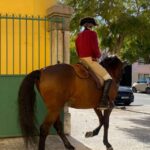
Two hours of 18th-century horse training in Lisbon. This morning at the Portuguese School of Equestrian Art focuses on Pure Blood Lusitano horses—warm-up routines, rider exercises, and rehearsals that you only see when the handlers and riders prepare for the higher-level gala work. I like how the program respects each horse’s rhythm and physical needs, so it feels like training first, performance second.
What really won me over is the behind-the-scenes angle: you watch not just the movements, but the care that goes into them at the Henrique Calado Riding Ring. Then, you get to connect the dots with an audio guide (English, French, Portuguese) while the riders work in period costume with engaging historical music in the background.
One consideration: if you’re expecting a nonstop show with lots of dramatic spectacle, this is more like an equestrian rehearsal session. The schedule runs in a tight morning window (11am to 1pm), and the training flow can feel repetitive if you arrived with a very different expectation.
In This Review
- Key things I’d bet you’ll notice
- Why Lusitano training feels different in Lisbon
- The morning window that actually matters: 11am to 1pm
- Nora Patio vs Henrique Calado Riding Ring: your photo plan
- What you’ll see: warm-ups, resourcefulness, and rider work
- Behind the curtain: handlers care for the horses
- Audio guide + period music: turning motion into meaning
- Price and value: why about $17 can make sense
- Practical logistics that actually affect your experience
- Ticket check: don’t rely on the GetYourGuide voucher
- Bring the basics
- Photography rules
- Where to get help
- Who should book this and who might skip
- Should you book Morning of Equestrian Art with Lusitano Horses?
- FAQ
- How long is the Lisbon Morning of Equestrian Art?
- What does the ticket cost?
- What’s included with the entry?
- Are headphones included?
- What languages are available for the audio guide?
- Can I use my GetYourGuide voucher at the entrance?
- Where can I take photos and videos?
- What should I bring to the activity?
- Is the experience wheelchair accessible?
- What is the cancellation policy?
Key things I’d bet you’ll notice
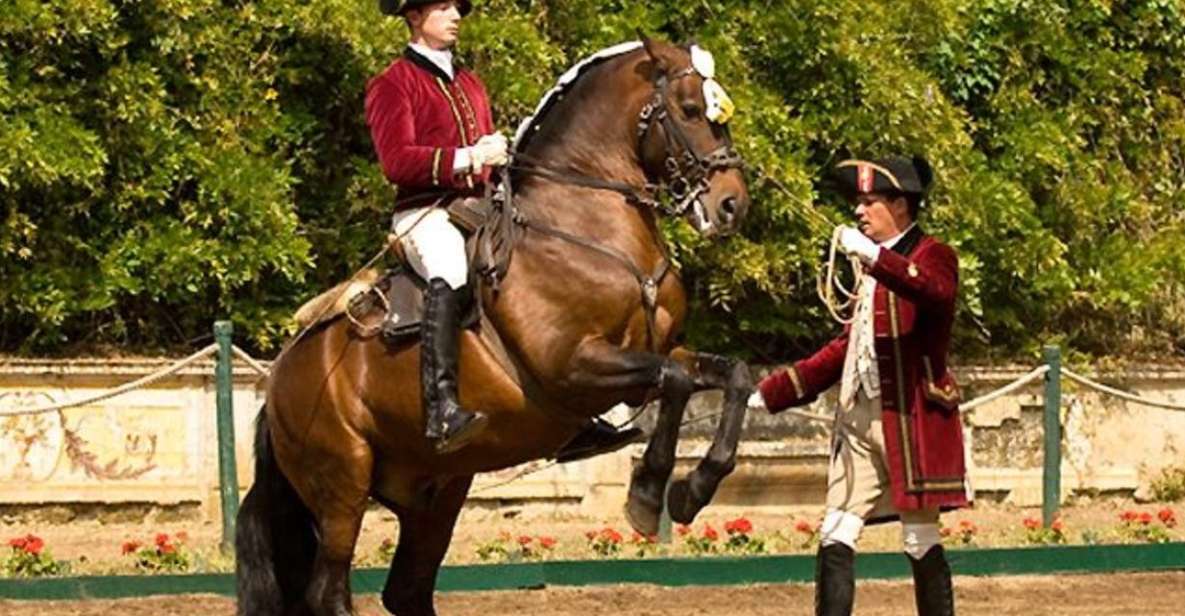
- Lusitano warm-ups that explain the why, not just the wow
- Riders in period costume practicing controlled, measured exercises
- Two viewing areas (Nora Patio and Henrique Calado Riding Ring) with different photo rules
- An audio guide in three languages to keep the choreography clear
- Handlers and routine care that make the training feel humane and deliberate
- Price-to-time value for a specialized cultural performance setup
Why Lusitano training feels different in Lisbon
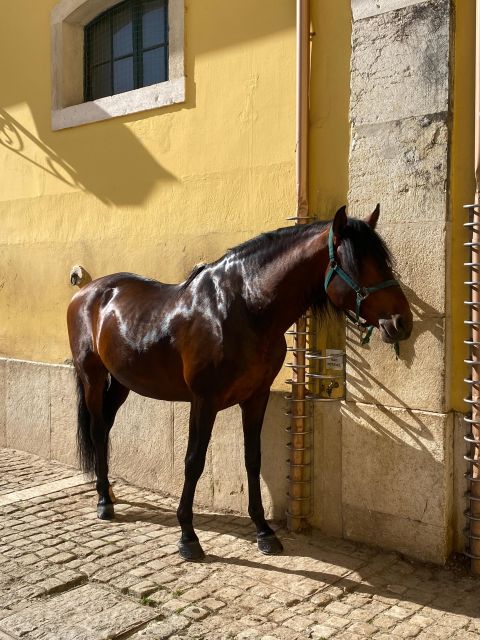
If you’ve seen dressage before, you might expect polished movements and big emotional framing. This experience gives you something rarer: a look at how a tradition trains its horses with patience, structure, and constant attention to health and rhythm.
The Lusitano horse is Pure Blood, and the program is built around that identity. You’re not just watching animals run through a set piece; you’re seeing a working system—warm-up and resourcefulness exercises guided by riders in period costume. The whole point is to prepare for the high level of the Portuguese School’s gala show work, so the morning has that “precision practice” energy you can feel.
And because you’re in Lisbon, this lands differently than a tourist-friendly arena show. It’s staged around authentic equestrian culture, tied to a stud farm connection (Alter Real Stud Farm is referenced in the program), and it’s presented as a living craft rather than a quick performance.
A few more Lisbon tours and experiences worth a look
The morning window that actually matters: 11am to 1pm
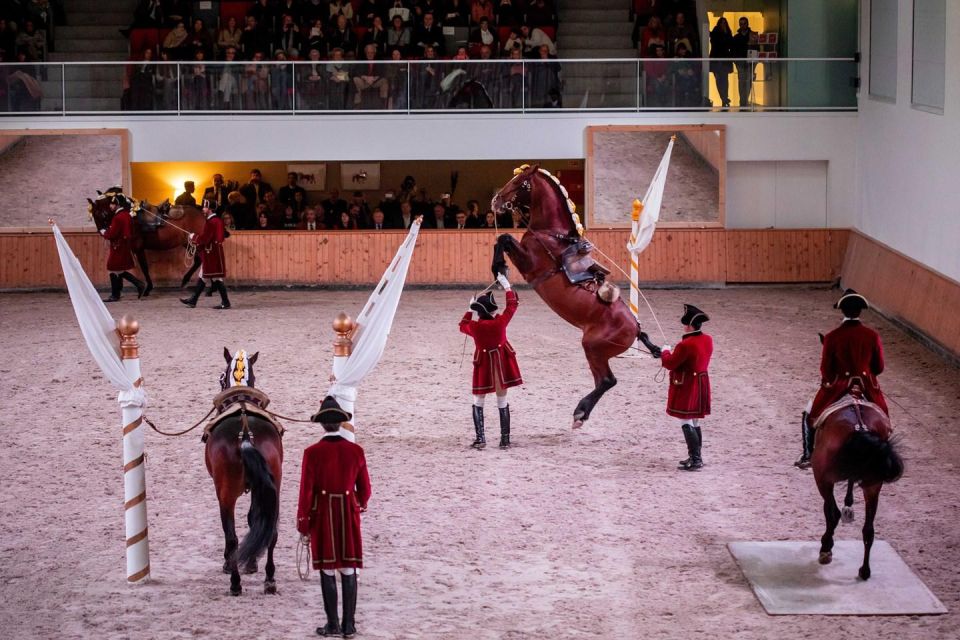
This activity runs from 11am to 1pm, but the best time to visit is 11am to 12:30pm. That matters because the morning is paced around training and rehearsals across the main spaces on site. If you go closer to the edges of the time window, you might miss a chunk of the warm-up rhythm and the most informative flow of the day.
Plan to arrive with a relaxed mindset rather than a “grab the highlights and leave” plan. The value here is in watching the warm-up session and the sequence of exercises unfold gradually, with handlers caring for the horses along the way. The morning format is designed to teach you how the training works, not to cram everything into a short, flashy sequence.
Also note the real-world pace: this isn’t listed as an all-day program, so you’ll want to schedule your other Lisbon plans around a two-hour-plus block on location.
Nora Patio vs Henrique Calado Riding Ring: your photo plan
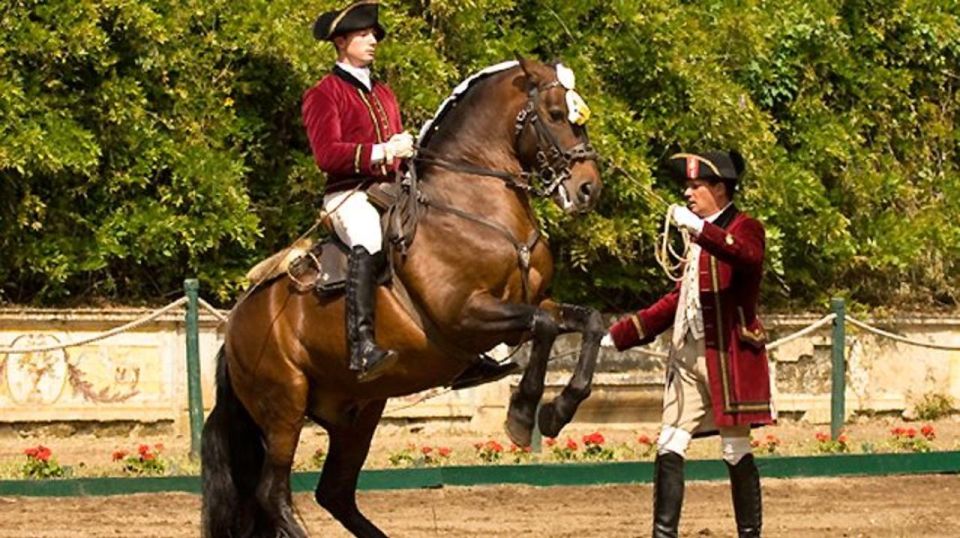
One thing that surprises people is the split between the Nora Patio and the Henrique Calado Riding Ring. They’re both part of the experience, but the rules aren’t the same—and knowing that early will save you from frustration.
Here’s the practical setup:
- In the Nora Patio, photographs and videos are allowed as long as you don’t use flash.
- In the Henrique Calado Riding Ring, photos and videos are not allowed.
So if photography is important to you, aim to do your shooting in the Nora Patio area only, and accept that the riding ring itself is off-limits for cameras. The safest move is to keep your phone ready but follow posted rules immediately when you move between areas.
Flash is also not allowed anywhere per the general rules. If you forget and try to capture a moment instinctively, you may get stopped. Think of this as a viewing experience that asks for respectful quiet in the ring.
What you’ll see: warm-ups, resourcefulness, and rider work
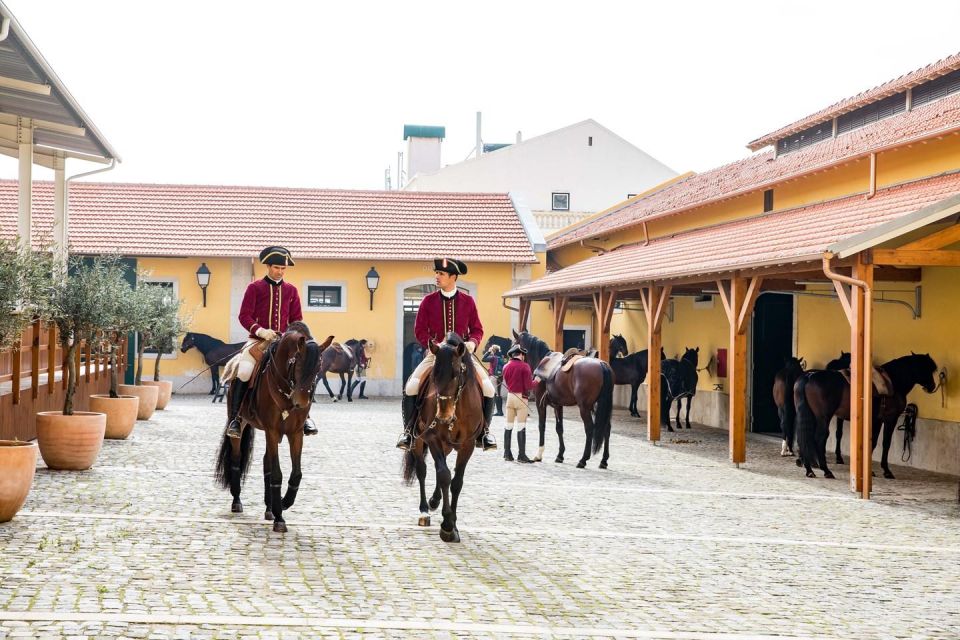
The core of the morning is watching training sessions that connect rhythm, health, and high-level performance readiness.
You can expect to see:
- Warm-up work and exercise routines performed by riders
- Resourcefulness exercises that show the horses learning to stay attentive and responsive
- Training that’s paced around the physical needs of each horse, so the work doesn’t feel rushed or generic
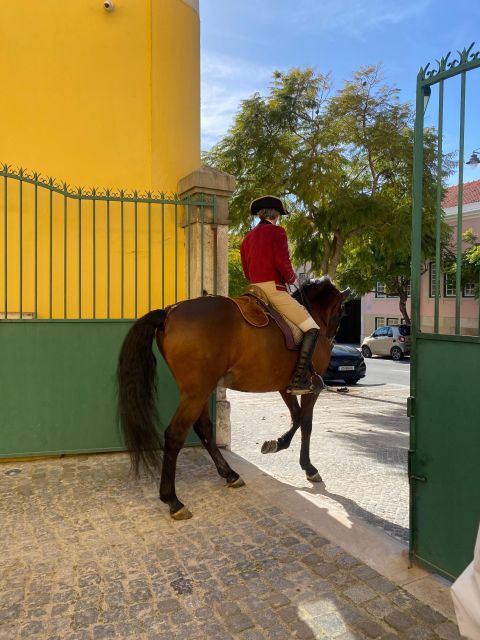
Riders are dressed in period costume, and the atmosphere is built with period-style music. That combination helps you see the choreography as more than modern equestrian movements. It’s presented as a reenactment of an 18th-century court vibe—especially as training happens in the Nora Patio and in the Henrique Calado Riding Ring.
What makes this valuable is that you’re not just watching the end result. You’re watching the steps that lead to that level of control: attention, balance, and how the training rhythm is set before any complex choreography appears.
Behind the curtain: handlers care for the horses
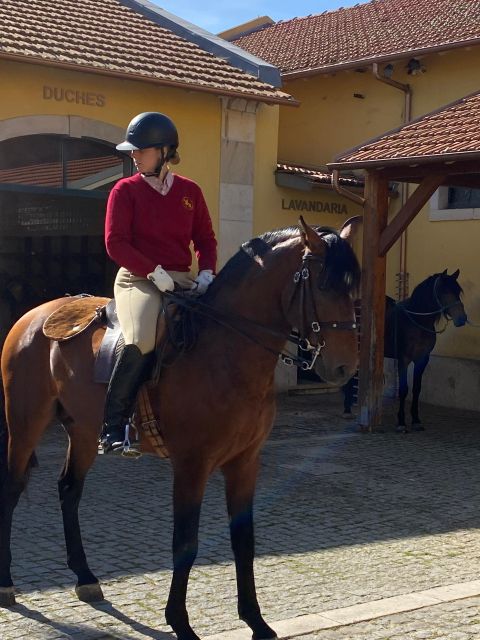
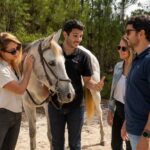
This is the part I’d recommend you pay attention to with your full focus. The program isn’t only about what the riders do. It also includes time watching behind-the-scenes care: handlers caring for the horses at the Henrique Calado Riding Ring.
That makes a difference for how you interpret everything you see next. When you understand that handlers are actively managing comfort, readiness, and routine care, you’re less likely to treat the work as a stunt and more likely to see it as skilled animal management.
Even if you aren’t an equestrian expert, you’ll pick up the intent quickly:
- Training is structured
- Work respects timing and recovery needs
- Horses are treated as athletes with day-to-day care requirements
This is also where the experience tends to feel “real” rather than staged for quick tourist viewing. It’s not just a performance curtain call—it’s an operational training morning.
A few more Lisbon tours and experiences worth a look




Audio guide + period music: turning motion into meaning
You get an audio guide included with language options: English, French, and Portuguese. Headphones are not included, so you’ll want to bring your own.
In practical terms, the audio guide helps when you’re watching complex work that doesn’t explain itself. Horse training movements can look similar if you don’t know what to listen for. Having the audio track keeps the choreography from becoming just a sequence of actions and turns it into something you can follow.
Pair that with period music in the spaces you visit, and the whole morning becomes easier to interpret. Even if you only catch part of the narration, the guide helps you connect:
- Warm-up purpose
- Rider exercise intent
- How the morning work supports the gala show level
One more tip: make sure your phone is charged before you arrive. The experience asks you to bring a charged smartphone, and the audio guide/ticket instructions are provided after booking.
Price and value: why about $17 can make sense
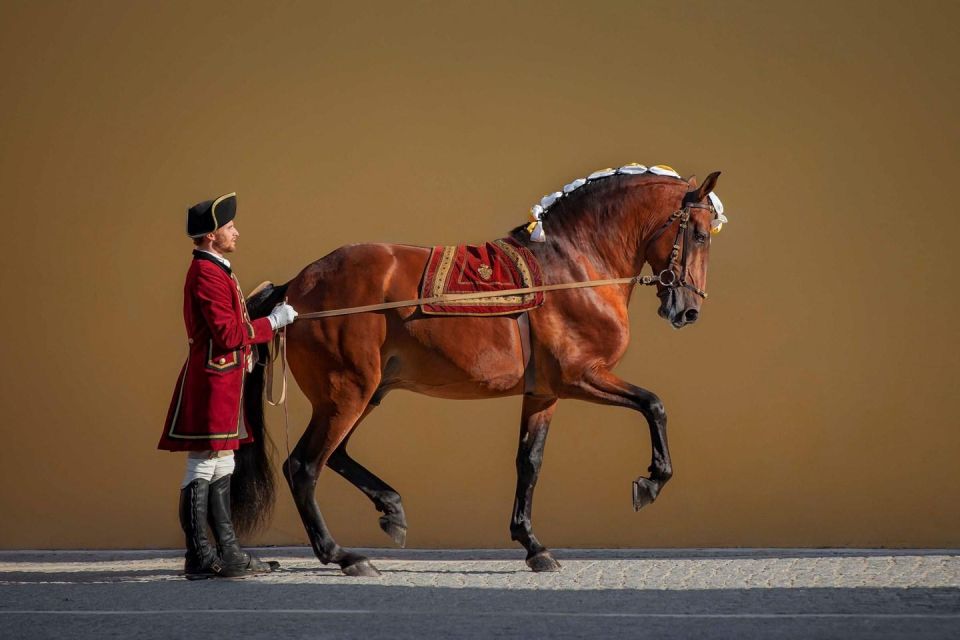
At $17 per person for a morning at a specialized equestrian training institution, value mostly comes down to what you’re buying: access to the training process.
Many horse-related tours are built around watching finished performances. Here, you’re watching daily training and rehearsals—the mechanics of becoming performance-ready. That kind of access is hard to replicate if you only visit a show at a later time.
You also get:
- Entry ticket
- Watching the daily training of Lusitano horses from the Alter Real Stud Farm context
- An audio guide
What’s not included is the stuff that can create friction if you’re unprepared: transport, food/drink, and headphones. Since the program itself is only a morning, you can treat it as a focused cultural activity rather than a full-day sightseeing plan. If you plan your day around it, the time cost feels reasonable.
Is it worth it for everyone? Not necessarily. If you want lots of spectacle and constant action, you may feel less satisfied. But if you like horses, precision, and seeing how training builds up to high-level work, the price-to-experience ratio looks strong.
Practical logistics that actually affect your experience
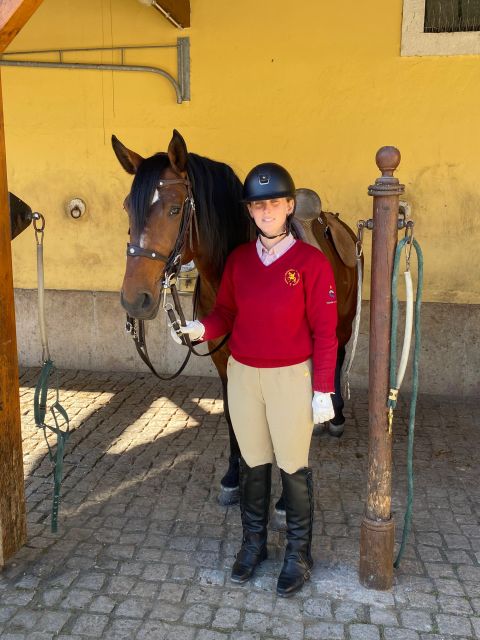
This is where you’ll either feel smooth or slightly annoyed.
Ticket check: don’t rely on the GetYourGuide voucher
The voucher you get (GetYourGuide) is not your ticket. You need to show your Book N Tour Ticket—not the GYG QR code or GYG voucher—at the reception desk.
Before you go, check for the email after booking that explains how to access and download your ticket and your Audioguide. If you don’t see it right away, check your spam folder.
Bring the basics
You’ll want:
- Comfortable shoes (you’ll be standing and moving between viewing points)
- Headphones (not included)
- Charged smartphone
- Internet access (for access/download instructions)
If you forget headphones, you may still watch, but you’ll miss a major piece of how the experience makes sense.
Photography rules
Plan around the rule split:
- Nora Patio: photos/videos allowed without flash
- Henrique Calado Riding Ring: no photos/videos
Where to get help
The notes I have don’t include a specific WhatsApp number or email address. If you need to contact someone, use the contact method included in the Book N Tour instructions you receive after booking.
Who should book this and who might skip
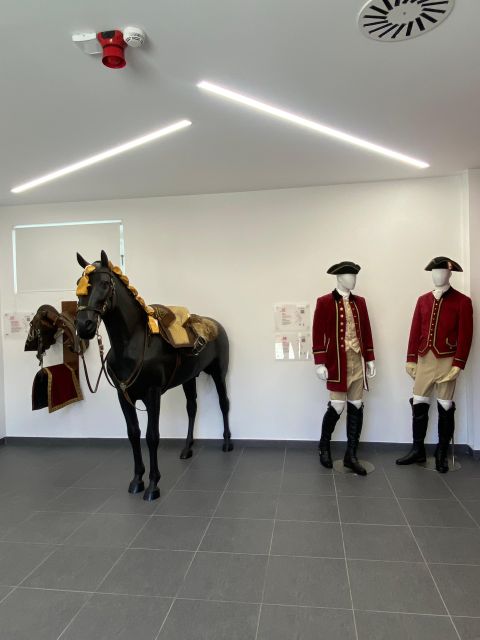
Book this if:
- You love horses and want to see training methods, not just a finished show
- You’re curious about Portugal’s equestrian heritage and want the Lusitano focus
- You like explanations and structure, which the audio guide supports
- You enjoy period atmosphere and historical music as context
Consider skipping if:
- You want a loud, fast, dramatic performance. This morning is training-focused and can feel like a rehearsal schedule.
- You dislike watching the same types of controlled exercises more than once as the morning progresses.
It can also help to arrive with realistic expectations: the best part is watching how the work is built, not only catching a single highlight moment.
Should you book Morning of Equestrian Art with Lusitano Horses?
If your idea of a great travel morning includes horses, controlled training, and learning what you’re seeing, I think you’ll enjoy this. The combination of Pure Blood Lusitano training, riders in period costume, period music, and an audio guide in multiple languages makes it more than a casual peek.
The main reason to hesitate is expectation-setting. This isn’t designed to be a nonstop show. It’s a cultural training window. If you come ready to watch, follow along, and let the morning flow, it’s a strong use of time in Lisbon.
FAQ
How long is the Lisbon Morning of Equestrian Art?
It takes place over a 1-day activity window, scheduled from 11am to 1pm (with 11am to 12:30pm described as the best time to visit).
What does the ticket cost?
The price is listed as $17 per person.
What’s included with the entry?
Included are the entry ticket to The Portuguese School of Equestrian Art, watching the daily training of Lusitano Horses (from the Alter Real Stud Farm), and an audio guide.
Are headphones included?
No. Headphones are not included, and you are advised to bring them.
What languages are available for the audio guide?
The audio guide is included in English, French, and Portuguese.
Can I use my GetYourGuide voucher at the entrance?
No. The GetYourGuide voucher is not your ticket. You must show your Book N Tour Ticket (not the GYG QR code or GYG voucher).
Where can I take photos and videos?
In the Nora Patio, photographs and videos are allowed without flash. In the Henrique Calado Riding Ring, photography and videos are not allowed.
What should I bring to the activity?
Bring comfortable shoes, headphones, a charged smartphone, and internet access.
Is the experience wheelchair accessible?
Yes, it is listed as wheelchair accessible.
What is the cancellation policy?
Free cancellation is available up to 24 hours in advance for a full refund.