REVIEW · PORTO
Porto Six Bridges Panoramic Cruise on the Douro River
Book on Viator →Operated by Living Tours · Bookable on Viator
Six bridges, one hour, big views. This panoramic cruise on the Douro River turns Porto and Gaia into a moving gallery, letting you spot landmark bridges from angles streets just can’t give you. It’s simple, scenic, and short enough to fit almost any day plan.
Two things I really like: the open ticket setup lets you pick a departure that works for your schedule, and you’ll pass under (and admire) all six bridges rather than just glancing at them from afar. A third bonus is how much you can accomplish for the money—this is a high-value “see it once” experience.
The one possible drawback: narration is pre-recorded and the audio quality isn’t equal everywhere on the boat. If you’re hoping to learn the city in depth from the commentary, you may feel the sound or timing isn’t perfect from your seat.
In This Review
- Key Points Before You Go
- How the Open-Ticket Douro Cruise Fits Your Day
- Price and Value: A Short Cruise That Still Delivers
- The Six Bridges Route: What Each Crossing Really Shows
- D. Maria Pia Bridge: Eiffel’s Iron Work Over Water
- Ponte Dom Luís I: Porto’s Iconic 19th-Century Landmark
- Ponte da Arrábida: The Reinforced-Concrete Arch Moment
- Ponte de São João: Replacement Bridge and Hidden Finds
- Ponte do Freixo: Furthest Upstream Crossing
- Ponte Infante Dom Henrique: The Newest Bridge Named for the Discoveries
- Porto and Gaia From the Water: The Photo Ops That Actually Work
- Commentary, Sound, and Seating: How to Get the Most Information
- Timing Your Cruise: Best Light, Best Flow, Few Headaches
- Who This Cruise Is For (and Who Might Want Something Else)
- Should You Book Porto’s Six Bridges Panoramic Cruise?
- FAQ
- How long is the Porto Six Bridges panoramic cruise?
- Are departures tied to one fixed time?
- Do boats leave from Porto only?
- Which bridges does the cruise pass?
- What is included in the ticket price?
- Will there be a guide or live commentary?
- What happens if weather conditions cancel the cruise?
Key Points Before You Go
- Open-ticket flexibility: board whichever vessel fits your time within the operating window, with departures from Porto and Gaia
- All six bridges, up close: you don’t just look at them—you go under them for real scale and detail
- UNESCO-listed river views: rolling hills and waterfront architecture read completely differently from the water
- Photo-friendly route: the bridges line up for shots with Porto on one side and Gaia on the other
- Seating affects the sound: inside seating often works better for listening than standing outside
- Short cruise, low commitment: about 50 minutes, ideal if you want something scenic without a long day
How the Open-Ticket Douro Cruise Fits Your Day
This is the kind of activity that’s built for real travel schedules, not perfect ones. You get an open ticket, so you can choose the vessel that matches your timing. Boats also depart from both sides of the river, so you’re not stuck arranging your whole day around one exact pier.
Once you’re on board, you can pick where you want to sit. Many boats have open-air and covered seating areas, which matters because you’ll either want sun and photos or shade and comfort. Either way, the pace is relaxed, with time to slow down and actually look.
The cruise runs daily, but the hours shift by season. In the warmer months (April–September) it’s open from 10:30am to 6pm, and in winter (October–March) it runs 11am to 4pm. That’s a big deal if you’re trying to avoid the hottest part of the day or fit it around dinner plans.
You can also read our reviews of more boat tours in Porto


Price and Value: A Short Cruise That Still Delivers
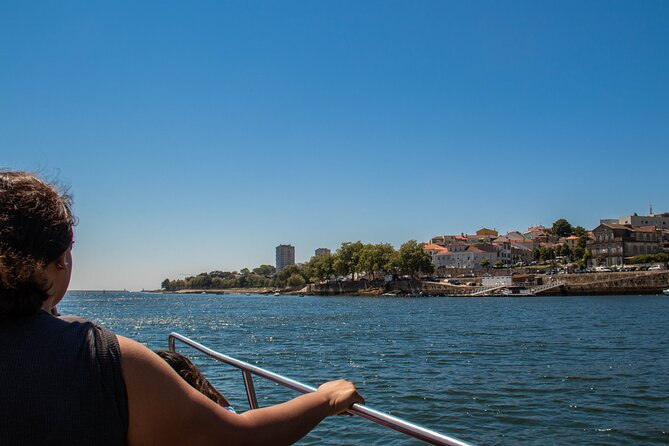
At about $21.69 per person for roughly 50 minutes, this isn’t a “once-in-a-lifetime” museum ticket. It’s a practical value play: you’re paying for convenience, a quick loop, and landmark views you can’t replicate without a boat.
Here’s the value math that makes sense in Porto: Porto is a walking city, but the river changes everything. For a little over an hour, you get a second “tour mode” that shows the same bridges and waterfront from a different plane—horizontal, not vertical. You can turn around later and keep exploring the city without feeling like you lost half your day.
Is it expensive? No. But it’s also not trying to be a deep lecture. If you want a long guided story with lots of stop-and-go explanation, you might feel this is a quick scenic ride. If you want a calm way to rack up photos and “aha” views, it’s a solid buy.
The Six Bridges Route: What Each Crossing Really Shows
This cruise is built around one main idea: the Douro River is the best bridge-viewing platform in the city. You’ll sail at a leisurely pace and pass the six bridges in sequence, including time underwater-level views and skyline moments.
Below is what each bridge contributes to the experience, and what you might notice when you spot it from the boat.
D. Maria Pia Bridge: Eiffel’s Iron Work Over Water
The D. Maria Pia Bridge is classified as a National Monument, and it’s a railway bridge designed by Gustave Eiffel. Once, it held the title of the largest iron arch bridge in the world, and it’s still treated like a signature piece of engineering.
From the water, you’ll see why the structure feels so dramatic. This is the kind of bridge that looks “busy” from the street, but from the river it turns into clear geometry—arcs, lines, and repeating spans that you can photograph cleanly.
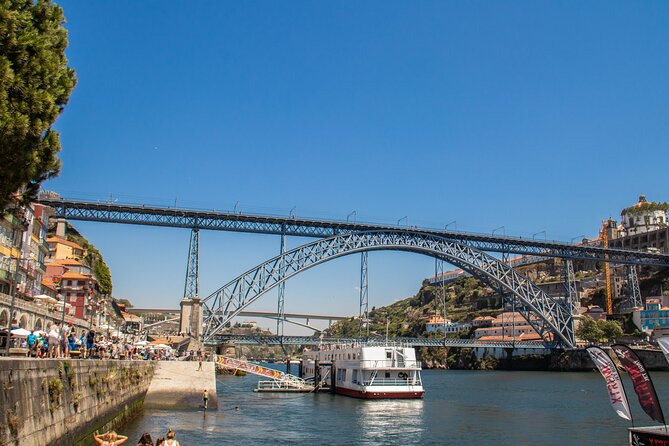
Ponte Dom Luís I: Porto’s Iconic 19th-Century Landmark
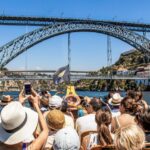
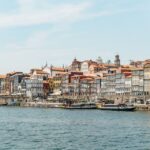
Next is the Ponte Dom Luís I, one of Porto’s true icons. It spans the Douro between Porto (north bank) and Vila Nova de Gaia (south bank), and it’s one of those bridges people talk about because the design is recognizable even before you read the name.
From the boat, it’s a scale lesson. You’ll be close enough to understand how it shapes both skylines, not just how it crosses the river. This is also a good moment to compare what’s on each side: Porto tends to feel more vertical and dense, while Gaia’s waterfront reads more layered.
Ponte da Arrábida: The Reinforced-Concrete Arch Moment
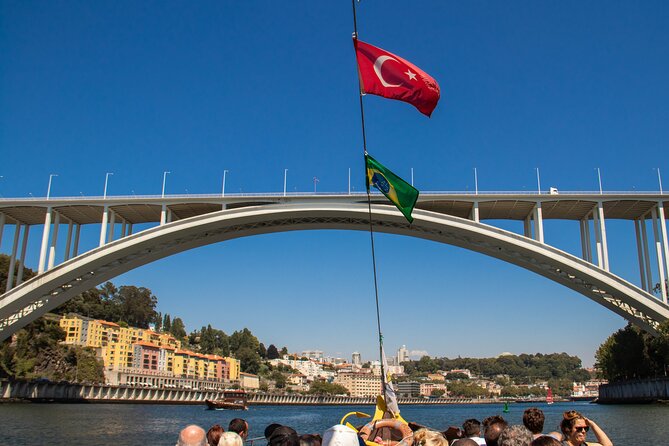
The Arrábida Bridge is an arch bridge built in 1963 as an alternative connection as traffic demands increased. What makes it technically memorable is that, at the time, it had one of the world’s largest reinforced concrete arches.
Seeing this from the water gives you a different kind of appreciation. Steel bridges can look delicate; concrete arches look heavier, sturdier, and more grounded. If you’re the sort of traveler who likes structure as much as sightseeing, this stop will feel extra satisfying.
Ponte de São João: Replacement Bridge and Hidden Finds
The São João Bridge was built to replace the D. Maria Pia Bridge. It has also become an important part of the Porto skyline, so it often shows up in photos and postcards from land.
One detail that makes it more than just a bridge: during its construction, archaeologists discovered remains of a Roman road and a medieval shipyard. Standing on the river isn’t going to put you in those layers of time, but it does explain why this area has long been a key crossing and work zone.
Ponte do Freixo: Furthest Upstream Crossing
The Ponte do Freixo was inaugurated in September 1995 and is the road bridge furthest upstream among the six. That position matters because it changes how the river looks behind it—less like a tight city canyon and more like an unfolding river corridor.
From the boat, that “farther upstream” feel can bring calmer views. Even though you’re still in the Porto/Gaia orbit, you get a sense that the river keeps going, not just turning into a postcard backdrop.
Ponte Infante Dom Henrique: The Newest Bridge Named for the Discoveries
Last is the Infante Dom Henrique Bridge, also known as the Infante Bridge. It’s the newest of the six road bridges connecting Vila Nova de Gaia and Porto, named for Infante Dom Henrique, a key promoter of the Portuguese expansion often called the Portuguese Discoveries.
This is another skyline-defining bridge, but what you’ll remember most is the contrast it creates across the set of six. You start with a famous iron bridge, move through iconic 19th-century engineering, then hit mid-century concrete, then 20th-century road-bridge developments. The route becomes a timeline you can feel in your photos.
Porto and Gaia From the Water: The Photo Ops That Actually Work
If you care about photos, this cruise is built for you. The bridges sit where you can photograph them with the city framing on both sides. You’ll also get the “long view” effect: stretches of waterfront and hillside that feel different from ground-level streets.
A few practical tips that improve results fast:
- Sit so you can shoot while the bridge approaches and during the pass. Don’t wait for the structure to be perfectly centered before you start taking photos.
- Use the cover strategically. If sun glare is strong, shade can help you keep your camera stable and see more detail.
- Think in two cities. Porto and Gaia aren’t just backgrounds; each side has a different visual rhythm. Try to capture both, not just the bridge.
Also, the boat operates at a leisurely pace, with time to admire the UNESCO-listed scenery. That isn’t just marketing talk. It means you can pause for a shot, look away from the lens, and still feel like you’re not racing the clock.
Commentary, Sound, and Seating: How to Get the Most Information
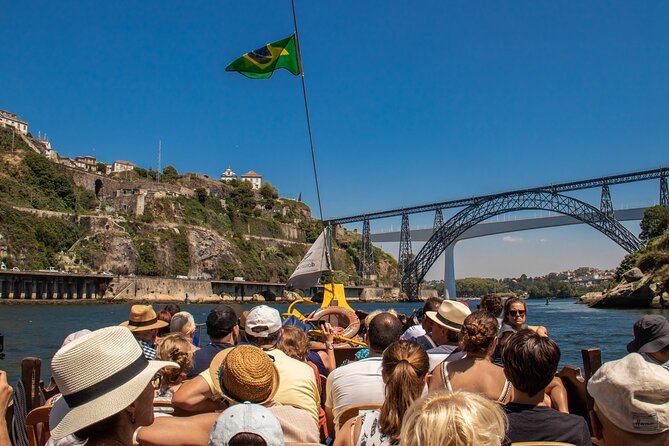
This is a panoramic cruise, not a private guided tour. You’re not guaranteed a live guide, and the narration you hear is typically recorded rather than a real-time conversation. That’s why your seating choice matters more than you might expect.
Here’s the pattern I’d plan around:
- If you want the best chance of hearing the narration, choose covered or indoor seating when available.
- If you’re outside for better airflow and sun, expect sound to be weaker. Several experiences reported that commentary was hard to hear from the front or when they were outside.
There’s also a common issue with recorded audio: timing. Some people found the audio could point out landmarks earlier or later than the boat actually reached them. If that would annoy you, don’t rely on the recording as your main source of bridge facts. Use the visuals and treat narration as a bonus.
A practical mindset that works well: use the cruise for what it does best—views and bridge scale—then let your land wandering handle the deeper history. You’ll end up happier, and you won’t feel like you missed an educational component.
Timing Your Cruise: Best Light, Best Flow, Few Headaches
The schedule is generous, and that’s a real advantage. With operating hours spread from morning into evening, you can pick a time that fits your energy and weather expectations.
For photos, you’ll often get better results earlier in the day when light is softer. If you’re sensitive to heat, choose a slot that avoids the peak sun window. The good news: since it’s only about 50 minutes, you’re not stuck for hours if the light isn’t perfect.
One more timing note: there’s a maximum of 100 travelers on board. That’s not tiny, but it usually keeps things manageable for photos, movement, and finding your seat. If you want the best view without shoulder-checking, arriving a little early helps you pick your spot.
Who This Cruise Is For (and Who Might Want Something Else)
This cruise is ideal if you want a quick win in Porto:
- you want landmark views without the long walk between bridges
- you want a calm break between neighborhoods
- you like architecture and engineering details as visual landmarks
- you’re traveling with limited time and want one activity that delivers
It can also be a good choice for first-timers because the set of bridges gives you immediate orientation. You’ll recognize parts of the skyline afterward when you’re back on land.
If you’re the type who expects a live guide explaining every bridge as you pass, you might feel less satisfied. The ride is panoramic and relaxed, but narration quality can vary based on seating and sound conditions. In that case, consider pairing this cruise with a walking tour or museum visit on land for the deeper context.
Should You Book Porto’s Six Bridges Panoramic Cruise?
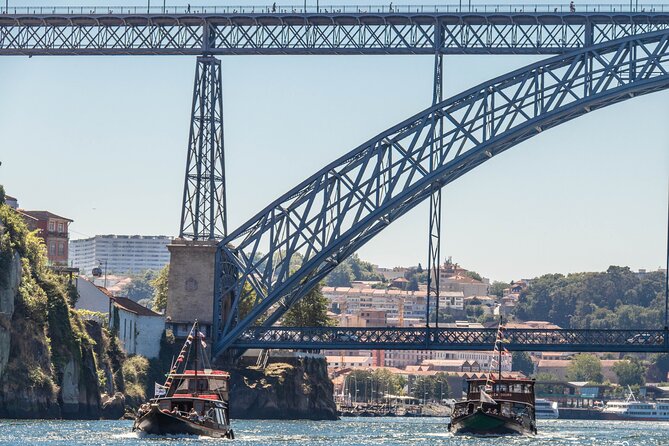
Yes, if your goal is views, bridge scale, and a low-stress sightseeing hit in a short window. For the price, the biggest value isn’t just the bridges—it’s the fact you get to see six of them in one continuous route, from water level, from Porto and Gaia at once.
I’d skip it only if you’re mainly chasing a live, highly detailed history lesson. This is a ride first, with recorded narration as a support. If that trade-off fits your style, book it, show up on time, and grab your best seat early so you don’t miss the views.
FAQ
How long is the Porto Six Bridges panoramic cruise?
The cruise lasts about 50 minutes.
Are departures tied to one fixed time?
Not necessarily. With open tickets, you can hop aboard whichever vessel fits within the operating window.
Do boats leave from Porto only?
No. Boats depart from both Porto and Vila Nova de Gaia.
Which bridges does the cruise pass?
The route includes the D. Maria Pia Bridge (railway bridge), Ponte Dom Luís I, Ponte da Arrábida, Ponte de São João, Ponte do Freixo, and the Infante Dom Henrique Bridge.
What is included in the ticket price?
The ticket includes the panoramic river cruise. Food and drinks are not included.
Will there be a guide or live commentary?
A live guide is not guaranteed. The experience is panoramic, and narration may be available, but recorded audio can vary in clarity depending on where you sit.
What happens if weather conditions cancel the cruise?
The cruise requires good weather, and it may be canceled for poor weather. If that happens, you’ll be offered a different date or a full refund.