REVIEW · LISBON
Lisbon: City Highlights Guided Walking Tour
Book on GetYourGuide →Operated by Hi Lisbon Walking Tours · Bookable on GetYourGuide
Lisbon’s center clicks fast on foot. This 150-minute guided walk takes you through Praça do Comércio and the Baixa/Chiado streets, with stories that connect big events to the buildings you’re seeing today. I like how the route mixes famous landmarks with small human details. I also like the way guides turn Lisbon politics, religion, and everyday traditions into clear, walk-along explanations.
You’ll get a practical intro to Lisbon’s layout and history in one go. The itinerary hits the major icons (like Augusta Street’s arch area) and then slows down for places such as São Domingos Church, plus memorials and old-school spots. One heads-up: the group size can run larger than you might expect, so plan for a busier crowd in the busiest streets.
If you want a calmer, quieter experience, this is still a good choice, just be ready to shoulder in a little when the route funnels through central Lisbon.
In This Review
- Key highlights to know before you go
- Starting at Praça do Comércio: your orientation point
- Baixa Pombalina and Chiado: the post-1755 story in the streets
- Augusta Street and the Rua Augusta arch area: walking into the postcard view
- Santa Justa Elevator and Rossio: engineering meets everyday life
- São Domingos Church: the stop people talk about afterward
- Jewish memorial and the layers of religious history
- Old-school Lisbon snacks and pass-by favorites
- Carmo and Camões: where beauty meets a slower pace
- Pace, weather, and how to make the most of 150 minutes
- Price and value: what $17 buys you
- The guide experience: why certain names keep showing up
- Should you book Lisbon: City Highlights Guided Walking Tour?
- FAQ
- Where is the meeting point?
- How long is the walking tour?
- How much does it cost?
- Is the tour in English?
- What landmarks will I see?
- What’s included in the tour price?
- What’s not included?
- What’s the cancellation policy?
- Are audio headsets provided?
Key highlights to know before you go
- Praça do Comércio start: an easy-to-find meeting point that anchors the whole walk
- Baixa Pombalina and Chiado: built after the 1755 earthquake and still the city’s core
- São Domingos Church: a standout stop with stories you’ll remember
- History in sequence: monarchy to dictatorship to revolution, tied to real places
- Old Lisbon food culture: you pass by places like Ginjinha and Brasileira Café
- Local guide tips: transport, what to see next, and where to eat are part of the deal
Starting at Praça do Comércio: your orientation point
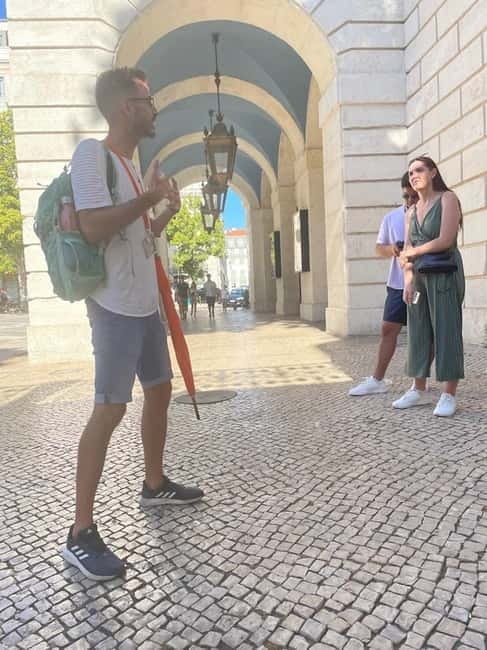
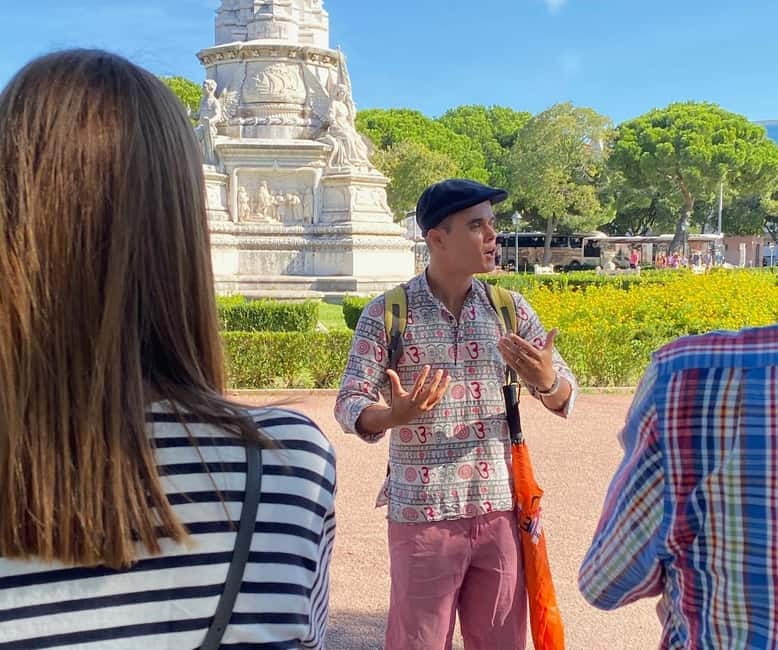
Most Lisbon tours start with a photo. This one starts with orientation. You’ll meet at Praça do Comércio, looking for your guide with an orange umbrella between the big arch and the statue in the middle. From there, you walk out into Baixa, the part of the city that acts like a roadmap.
This square is a good beginning because it sets scale. You’re not just seeing Lisbon—you’re learning how its center connects to everything else: streets, viewpoints, and key monuments. The guide also uses this start to frame Lisbon’s modern identity against the older layers underneath.
A nice bonus is that the walk is designed for a real pace. One guest noted it doesn’t feel physically intense, with only a few uphill bits. Still, you’ll be walking for about 2.5 hours, so wear shoes you can keep moving in for a long stretch.
You can also read our reviews of more walking tours in Lisbon



Baixa Pombalina and Chiado: the post-1755 story in the streets
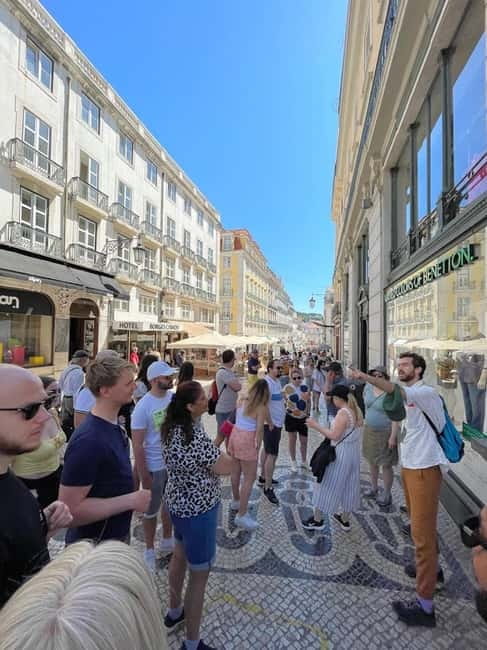
Once you’re moving, the tour threads you through the heart of Lisbon: Baixa Pombalina and Chiado. These areas are known for impressive buildings, major monuments, and crowds near the busiest corners—so expect lively streets, especially around the big sights.
Here’s what the guide makes click: these blocks took a huge hit in the 1755 Lisbon earthquake, then were rebuilt in the 18th century. You’ll hear how the city’s reconstruction helped Lisbon become described as Europe’s first earthquake-proof city. The point isn’t trivia for its own sake—it explains why the streets, facades, and layouts feel the way they do.
You’ll also connect Lisbon’s cultural life to its political history. The tour references shifts like the end of the monarchy, a capital change tied to a foreign country, the Jewish massacre, and later the country’s long dictatorship period and eventual revolution. When you hear these events while standing in front of the relevant structures, Lisbon becomes less like a list of sights and more like a story with chapters.
Augusta Street and the Rua Augusta arch area: walking into the postcard view
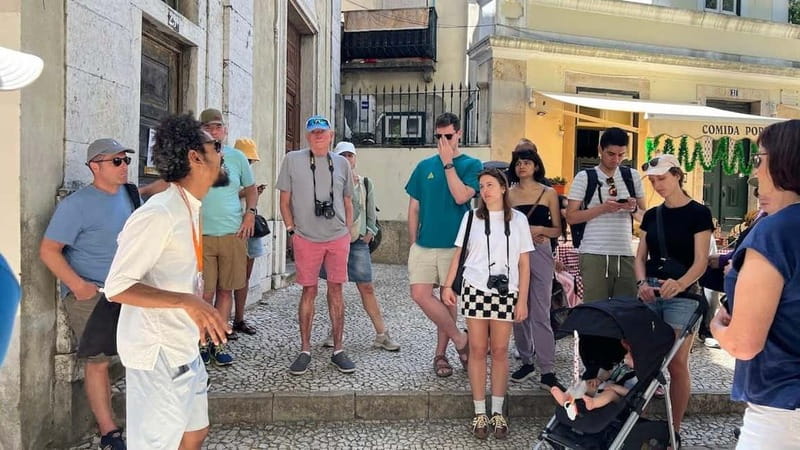
As you head through central streets, you’ll reach the Augusta Street zone and its famous arch. This is one of the most recognizable “center of Lisbon” photo areas, but it’s also useful for understanding how pedestrians flow in the city.
Why it matters on a guided walk: the guide uses these iconic points to explain what you’re actually looking at—street orientation, landmark placement, and how the city’s main routes connect. You’ll also get context for nearby stops, so when Santa Justa Elevator appears later, it feels like part of a sequence instead of a random attraction.
If you’re someone who likes to feel confident with directions after a first day, this stretch helps. It turns the map in your head from fuzzy into workable.
Santa Justa Elevator and Rossio: engineering meets everyday life
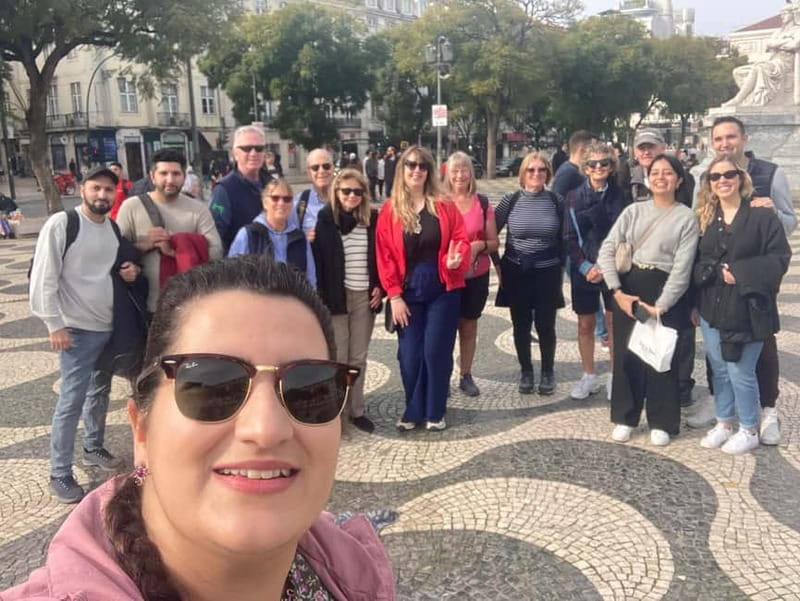
Next up are the views and landmarks around Santa Justa Elevator, followed by Rossio Square and the train station area. Elevator tours can feel like a one-stop attraction. Here, it’s treated as part of Lisbon’s center—how people move vertically, how neighborhoods connect, and why this area became so important.
Rossio is the kind of place where you can sense Lisbon’s momentum. Even if you don’t ride anything, the square and station area give you a feel for daily circulation—where locals pass through and where visitors naturally drift.
This is also where the guide’s style shows. Many guides on this route are praised for storytelling plus practical tips. Names that pop up in the guide lineup you might encounter include Samuel, Tiago, Jose, and Kate—with people often highlighting how guides keep the pace moving and the information easy to follow.
São Domingos Church: the stop people talk about afterward
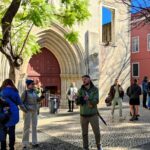
The tour’s signature wow moment is São Domingos Church (noted as one of the most unique churches in the world). It’s the type of place where a guide can make a building feel alive.
You’ll learn not just what the church looks like, but why it matters in the broader Lisbon story. One of the stronger comments across the guide experiences is that the guide tells the church’s story in a way that holds attention. In other words, you’re not just standing there reading labels—you’re getting the human reason the stop earns its reputation.
This is also a good example of how the tour balances fun with weight. Right after landmark beauty, you move into the tour’s darker historical threads—memorials and the religious/political shifts that shaped Lisbon.
You can also read our reviews of more guided tours in Lisbon




Jewish memorial and the layers of religious history
As you continue, the route includes a Jewish memorial stop. This part of the tour works best if you let the guide steer you away from simple one-line explanations and toward a bigger understanding of what happened and why it mattered.
The guide’s job here is to tie the memorial’s meaning to what you’ve already heard about Lisbon’s changes over centuries. Because you’re walking through the center, it’s easier to picture how these events shaped the city’s relationships and communities.
If you like history but hate long museum lectures, this is a format that can work. You’re moving, you’re looking at a specific place, and you’re hearing a clear connection.
Old-school Lisbon snacks and pass-by favorites
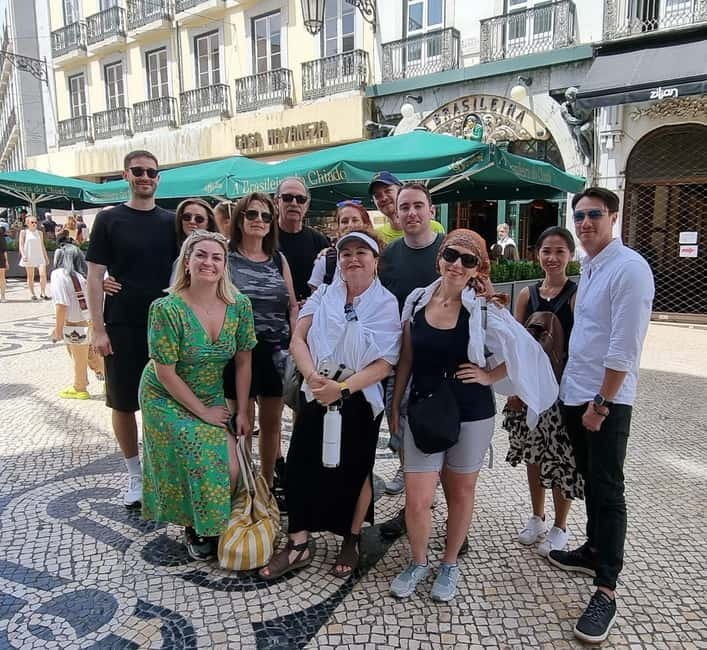
The tour also loops through familiar food-and-drink territory—even when you’re not stopping for a full meal. You’ll pass the original Ginjinha shop and also a Brasileira Café, plus local spots along the way such as Casa do Alentejo.
A key practical note: Ginjinha isn’t included. That’s fine. The value here is that the guide points you toward what to try and where. If you’re planning your first tasting day in Lisbon, this tour can act like a cheat sheet for where to go after.
There’s also a little “sprinkled tips” feel in how guides operate. Guides such as Claudia are praised for mixing history with humor and adding recommendations, while others like Walter and Klieber are described as giving lots of useful next-step ideas for sightseeing and food.
Carmo and Camões: where beauty meets a slower pace
Later, you’ll reach Carmo Square and Monastery of Carmo, then Camões Square. These stops tend to slow people down because the atmosphere feels different from pure street-and-arch sightseeing. The guide uses them to connect Portugal’s cultural identity and modern traditions to the physical center of the city.
Carmo in particular is a strong mid-to-late tour anchor. You’ve already gathered the political timeline, so you’re better prepared to notice how religious and cultural spaces sit among everyday Lisbon.
By this point, you’ll also have the guide’s broader “how to enjoy Lisbon” toolkit. Several guides are specifically praised for transport advice and for helping people decide what to do next after the walk ends.
Pace, weather, and how to make the most of 150 minutes
The structure is built for a smooth city intro: enough stops to cover major sights, without turning it into a two-day sprint. One person specifically said the walk has a pleasant pace with only some uphill bits. Another noted sunshine and rain, which is a reminder to plan for changing weather.
Practical approach for you:
- Start hydrated and bring a light layer. Lisbon weather can shift quickly in the center.
- Keep your eye on the guide’s group positioning. In central streets, it’s easy to get separated for a minute.
Also, expect a mix of group energy. The route passes popular central Lisbon spots, so your experience will depend on time of day and how the group flows through narrow corners.
Price and value: what $17 buys you
At $17 per person for about 150 minutes, the value comes from more than just “seeing sights.” You’re paying for:
- an expert local guide
- clear connections between Portuguese history, politics, and the city’s layout
- stops that include major landmarks plus story-heavy church and memorial sites
- practical recommendations for what to do after you finish
It’s the difference between walking past Lisbon and understanding why Lisbon looks the way it does. If you’re in town for a short time, this can compress a lot of effort into one morning or afternoon.
One note on audio: at least one guest wished the tour had audio devices (headsets) to hear the guide better. The tour language is English, and guides are often described as engaging and articulate, but if you know you struggle in noisy streets, keep that in mind and position yourself for best hearing.
The guide experience: why certain names keep showing up
A tour is only as good as the person telling the story. On this walk, the guide lineup you might encounter includes names like Samuel, Tiago, Walter, Kate, Jose, Claudia, Beatrice, and Natalia. The common thread is that guides are praised for making the history feel like a narrative, not a lecture.
You’ll see the style described in different ways:
- humor and engagement (people highlight funny, lively storytelling)
- clear pacing (enough info at each stop without rushing)
- useful advice beyond sightseeing, like where to eat and how to move around the city
If you’re booking your first guided walk in Lisbon, this kind of guide is exactly what you want. A good one helps you plan your remaining days with fewer guesswork decisions.
Should you book Lisbon: City Highlights Guided Walking Tour?
Book it if you want a smart first-day walk through Praça do Comércio, Baixa, and Chiado, with major landmarks like Augusta Street’s arch area, Rossio, and São Domingos Church tied to Lisbon’s real history. The price-to-time ratio is strong, and the guide-led stories are the main reason this tour tends to work.
Skip it (or choose a different format) if you dislike crowds or you want a super quiet, low-traffic experience. Also keep in mind there are no audio headsets mentioned, so you’ll rely on proximity and the guide’s voice in busy streets.
FAQ
Where is the meeting point?
Meet at Praça do Comércio. Look for the guide with an orange umbrella, between the big arch and the statue in the middle.
How long is the walking tour?
The tour lasts about 150 minutes (around 2.5 hours).
How much does it cost?
The price is $17 per person.
Is the tour in English?
Yes. The tour is offered with a live tour guide in English.
What landmarks will I see?
You’ll pass or visit sights such as Praça do Comércio, Augusta Street and its arch area, Santa Justa Elevator, Rossio Square and the train station area, São Domingos Church, a Jewish memorial, the original Ginjinha shop, Casa do Alentejo, Carmo Square and Monastery of Carmo, Brasileira Café, Camões Square, and more.
What’s included in the tour price?
Included: an expert local guide, about 2:30 walking tour, knowledge of Portuguese history and culture, and stories and fun facts.
What’s not included?
Ginjinha isn’t included (even though you’ll stop by the original shop). The listing also notes gratuites are not included.
What’s the cancellation policy?
You can cancel up to 24 hours in advance for a full refund.
Are audio headsets provided?
Audio devices are not listed as part of the experience. One guest specifically wished there were audio devices to hear the guide better.