REVIEW · LISBON
Lisbon: City Sightseeing Hop-On Hop-Off Bus Tour
Book on GetYourGuide →Operated by City Sightseeing Europe · Bookable on GetYourGuide
Three routes, one smart ticket. This is a practical way to stitch together Lisbon fast. Audio guidance helps you line up neighborhoods and sights, including UNESCO stops like Jerónimos Monastery and Torre de Belém, and the ticket can stretch for 48 or 72 hours so you can come back when it feels right. One watch-out: the buses run only until 5pm, so you’ll want your late-day plans ready.
You’ll start at Marques de Pombal Square, then choose your tempo. Lisbon is hilly, and the hop-on hop-off format is best when you treat it as transportation plus a built-in sightseeing loop, not a strict timeline.
In This Review
- Key things to know before you ride
- Marques de Pombal Square: where Lisbon starts to make sense
- Red Route: Jerónimos Monastery to Torre de Belém (plus the Belém museum cluster)
- Blue Route: Oceanário de Lisboa and the Parque das Nações side of town
- Green Route: narrow streets, Castelo de São Jorge, and viewpoint hunting
- Walking tours, night panorama, and optional boat time: upgrading your ticket
- Carmo to Miradouro S. Pedro de Alcantara (walking tour)
- Castle to Alfama (walking tour)
- Night Tour (panoramic bus)
- Boat Tour (when selected in your ticket option)
- Value math: is $38 really worth it in Lisbon?
- Timing and reliability: how to avoid the common hassles
- Know the end time
- Watch the frequency, especially at busy stops
- Don’t rely on stop announcements
- When you should choose Red vs Green vs Blue
- Who this Lisbon hop-on hop-off bus tour is best for
- Should you book City Sightseeing Lisbon?
- FAQ
- How long is the ticket valid?
- Where does the hop-on hop-off tour start?
- How many routes are included?
- What time do the daytime buses stop running?
- Does the ticket include a night tour?
- Are walking tours included?
- Is there an audio guide?
- Is it wheelchair accessible?
- Are there restrictions on pets or smoking?
Key things to know before you ride
- Marques de Pombal Square is the hub for all three routes, so it’s easy to reset your plan.
- Red Route hits Belém’s UNESCO pair: Mosteiro dos Jeronimos and Torre de Belém, plus MAAT and Padrão dos Descobrimentos.
- Blue Route adds modern Lisbon: Oceanário de Lisboa, Parque das Nações areas, and big museums like Museu da Água and Museu do Azulejo.
- Green Route is best for viewpoints and old hills: Castelo de São Jorge, Miradouro da Graça, and Panteão Nacional.
- Optional upgrades can change the math: some ticket versions include night panorama, walking tours, and even a boat tour and Zoo entry.
Marques de Pombal Square: where Lisbon starts to make sense
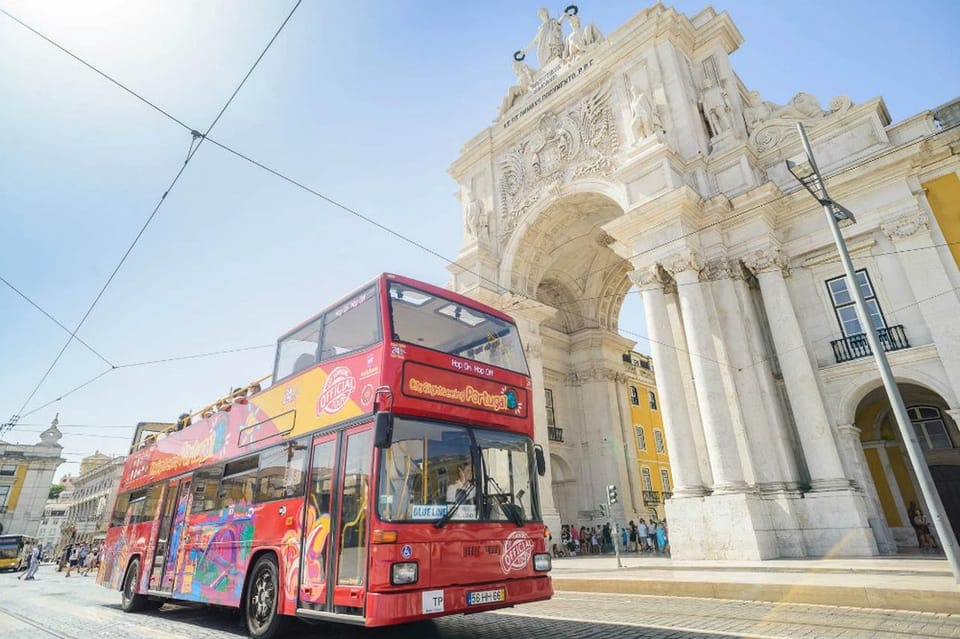
The tour starts at Marques de Pombal Square, and that matters more than it sounds. Lisbon’s neighborhoods don’t sit neatly next to each other, so having one central hub means you can hop on, travel across areas, and then jump off without losing the whole day to navigation.
This is also a good “first or second day” tour. You get a quick map in motion: you’ll see grand plazas, dense old streets, riverfront Belém, and the newer districts that feel more modern and open. Then you decide what deserves your best walking shoes later.
Tip: if you’re trying to cover the maximum ground, start early on your first day and use the flexibility on day two. The buses do not run late, so you’ll want your biggest sights wrapped before the final departures.
You can also read our reviews of more city tours in Lisbon



Red Route: Jerónimos Monastery to Torre de Belém (plus the Belém museum cluster)
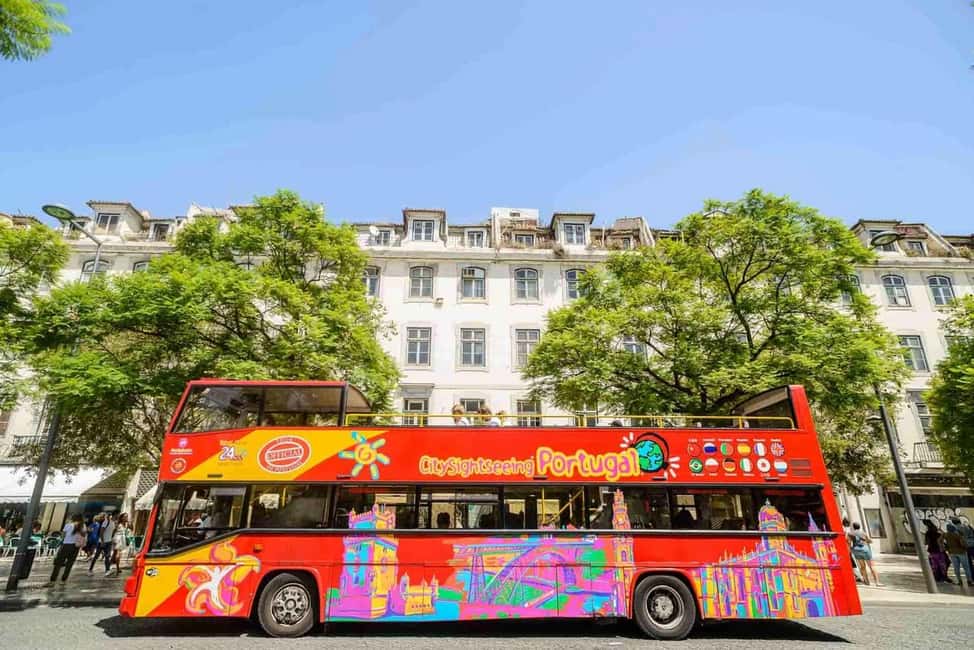
If you pick just one route to focus on, I’d steer you toward the Red Route. It threads together several “Lisbon postcard” moments plus the kind of stops that give you something to do even when you’re not in sightseeing mode.
Here’s the Red Route lineup in plain English, stop by stop, and what it’s good for:
- Principe Real: a pleasant jump-off area for strolling and soaking in views from a district that often feels calmer than the busiest center streets.
- Cais do Sodre: a useful connector stop when you want to bridge from central Lisbon toward river areas.
- Mercado Ribeira (Time Out Market area): ideal for a break. Even if you don’t buy much, it’s a good “food and people-watching” waypoint.
- Museu dos Coches: if you want a museum stop that’s not too far from the route loop, this is one of the clearest options.
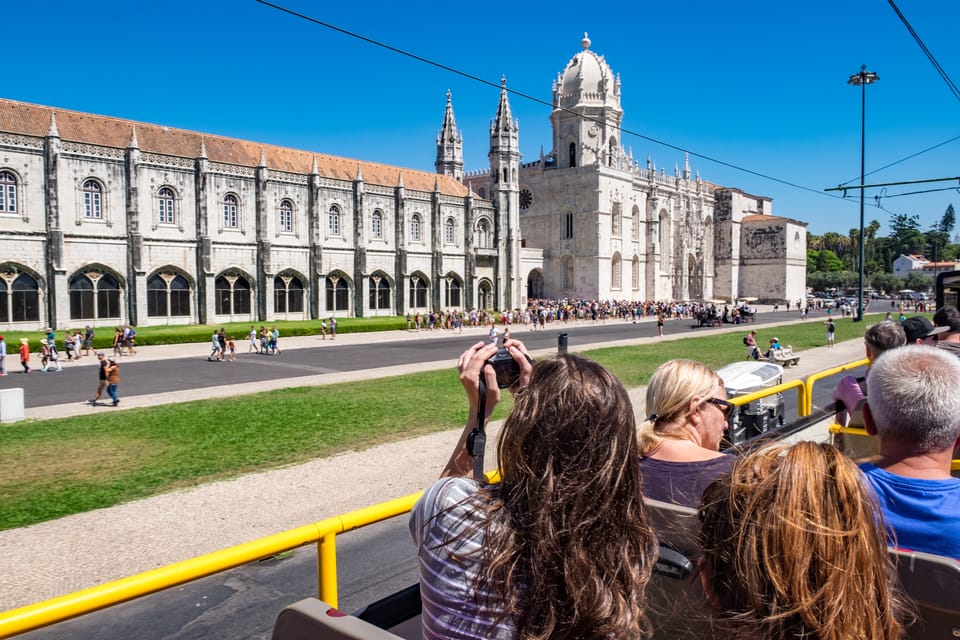
- Mosteiro dos Jeronimos (UNESCO): this is the big “save time by using the bus” stop. It’s a World Heritage site, and it’s in the Belém orbit where you’ll want to linger.
- Torre de Belém (UNESCO): pair it with Jerónimos. The bus makes this combo painless, then you can build your own pacing on foot.
- Padrao dos Descobrimentos: a strong visual marker for the Belém discoveries story.
- MAAT: a modern arts stop that gives you contrast after the older UNESCO buildings.
- Docas: good for riverside wandering and a calmer pace than the busiest streets.
- Basilica da Estrela: a standout cathedral stop that helps you mix architecture with the river-and-museum vibe.
Red Route runs on a clear schedule: first departure at 9:30am and last departure at 5pm, with a trip duration around 105 minutes and frequent departures. In practice, that means you can hop off for an hour, check another stop, then return without feeling trapped—if you watch the time.
One drawback to plan around: if you miss the late buses, you miss the end of the route. So don’t schedule your “must-see” that finishes right at 4:45pm.
Blue Route: Oceanário de Lisboa and the Parque das Nações side of town
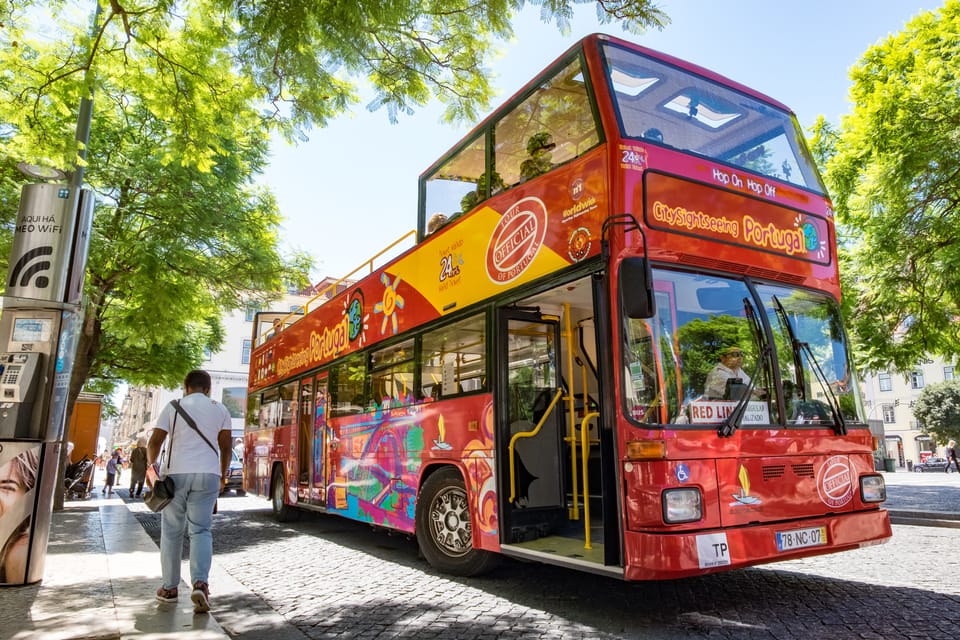
The Blue Route is for you if you want Lisbon’s newer face, especially around major museums and larger attractions. It also tends to be a good fit if you’re traveling with anyone who’s not obsessed with church façades and prefers a mix of indoor stops.
Key Blue Route stops include:
- Campo Pequeno: a city landmark area that’s handy for transit connections.
- Santa Apolonia: another central historic-adjacent stop that helps you transition toward other districts.
- Museu da Água: a smart choice if you want an indoor break from heat or rain.
- Museu do Azulejo: tiles, design, and visual culture sit here, and it’s a good “Lisbon looks different inside museums” moment.
- Poco do Bispo: a useful mid-route reference point.
- Oceanário de Lisboa: the big one. If you like aquariums or want something that doesn’t depend on daylight, this is the stop you’ll aim for.
- C. C. Vasco da Gama and Torre Vasco da Gama: shopping and city views in a more modern layout.
- Gare do Oriente: a major transport hub area, useful if you’re timing day trips.
- Jardim Zoológico de Lisboa: included in certain ticket versions, and it’s one of the best “this is why the bundle can pay off” stops.
- El Corte Ingles and Parque Eduardo VII: more large-store practicality and scenic access.
Blue Route runs with a first departure at 10am and last departure at 5pm, also about 105 minutes per loop. Frequency is set around every 40 minutes. That’s not bad, but in peak times you can still face full buses and longer waits, so I’d avoid assuming you’ll always get the next one.
Also, one practical note: there’s mention that narration can feel lighter than you’d hope, and stop announcements may not be super clear. So while the audio guide is useful, don’t rely on hearing every stop spoken aloud. Keep an eye on where you are, especially if you’re trying to time an indoor ticket.
Green Route: narrow streets, Castelo de São Jorge, and viewpoint hunting
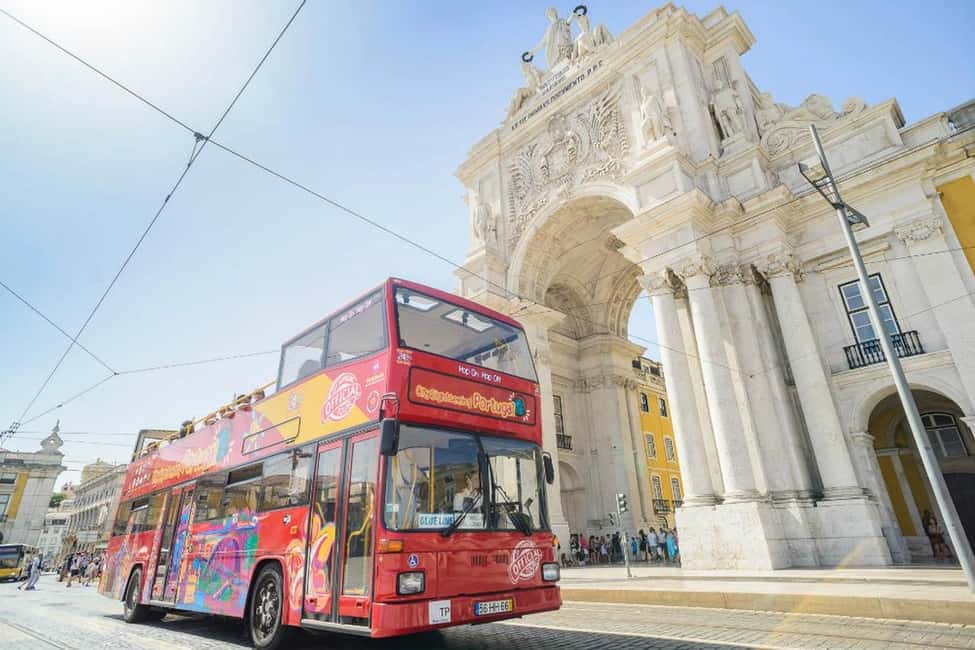
The Green Route is for Lisbon’s steep charm. It leans into classic neighborhoods and viewpoints, where you’re more likely to want to get off and walk in short bursts.
Green Route stops you’ll care about:
- Rua S. Bento – Parlamento: a recognizable landmark area that puts you near civic Lisbon.
- Principe Real and Bairro Alto: classic districts for wandering and snack breaks.
- Cais do Sodre: another connector toward central routes.
- Martim Moniz: useful for getting close to different street styles and snack options.
- Castelo S. Jorge (on the route list as Castelo S. Jorge): this is the old-city anchor. If you want the castle area, this is the route that gets you closest with less effort.
- Miradouro da Graca: a viewpoint stop. Expect you’ll want photos and a slow pause here.
- Panteao Nacional: a cathedral-like landmark stop that gives you an architecture focus.
- Feira da Ladra: good for market energy if you’re in town during market hours.
- Rua Palma – Praca da Figueira: a central meeting point feel, helpful for threading through the core.
- Restauradores – Terminal: a solid endpoint for reconnecting.
Green Route runs first at 10am and last at 5pm, about 105 minutes per loop and every 30 minutes. In one practical review theme, riders liked this route’s feel through narrower roads, but those roads also come with a tradeoff: it can be less “wheelchair-friendly.” The tour info is clear that Green Route buses are not suitable for wheelchair users, even though the overall system is labeled wheelchair accessible.
If you’re using a wheelchair or mobility device, I’d plan your day around the routes that work best for you and check with the operator about which stops and vehicles will be feasible. Don’t leave it to guesswork.
Walking tours, night panorama, and optional boat time: upgrading your ticket
One reason this tour can be more than just bus rides is the add-ons. Depending on the ticket option you choose, you can collect extra guided time without paying separately.




Carmo to Miradouro S. Pedro de Alcantara (walking tour)
This walking tour is listed as a 1-hour add-on. It meets at Stop 13 on the Red Line or Stop 2 on the Green Line, departing at 10am each day (as listed). It’s a good choice if you want a guided way into Lisbon’s viewpoints and stairs without trying to figure it out on your own.
Castle to Alfama (walking tour)
The other walking tour is also 1 hour, departing at 5pm and meeting at Stop 4 on the Green Route. This is the “golden hour into older Lisbon” style of upgrade, and it’s especially useful if you want your evening plans shaped around an actual route rather than wandering until your feet complain.
Night Tour (panoramic bus)
The Night Tour starts at 8pm from Stop 1 (Marques de Pombal) every day, for about 1 hour. It’s the only time window in the day that turns the bus into a night-view experience.
Boat Tour (when selected in your ticket option)
Some ticket versions include a boat tour. Even if you don’t love water activities, the logic is solid: it breaks up the city-walking loop and gives you a different perspective of Lisbon, especially if you’re spending multiple days here.
Upgrade value tip: the boat can be a great use of a hot day (or a day when you want less walking). It also pairs naturally with a Belém focus on the Red Route.
Value math: is $38 really worth it in Lisbon?
The base price is listed as $38 per person, valid for a tour ticket covering 48 or 72 hours. That’s where the value lives. Lisbon is spread out, and a hop-on hop-off system becomes “worth it” when it replaces expensive taxis and stressful bus transfers.
Here’s how I’d judge value, honestly:
- If you’ll do two days, you’re likely to reuse the system enough that it starts paying for itself.
- If you plan to hit UNESCO Belém and at least one museum-heavy area, you’re getting concentration of destinations rather than random wandering.
- If you add the options that include Jardim Zoológico de Lisboa entry, plus the boat and other walking/night components (for the appropriate ticket selection), the bundle can feel like more than transport.
A few extras that matter:
- Some ticket versions include 15% discounts at the Gulbenkian Modern Art Centre (listed for a 72-hour + walking + night option).
- Entry is included for Estádio da Luz and the Benfica Museum in a specific ticket bundle (48-hour + walking + night + boat).
- Some versions include an aperitif and 15% off at Fado & Food with your City Sightseeing ticket.
- Jardim Zoológico de Lisboa entry is included in the 48-hour + walking + night + boat option bundle.
These don’t change the sightseeing basics, but they can make your total spend feel more controlled.
One more note: this tour is widely booked, and the rating shown is 3.8 from 1220 reviews. That doesn’t mean it’s perfect, but it does mean the company likely knows how to keep the system running across busy seasons.
Timing and reliability: how to avoid the common hassles
This kind of tour lives or dies by timing. Luckily, the schedule is specific, so you can plan around it.
Know the end time
All three bus routes list last departure at 5pm. That’s early by European-city standards, especially in summer. If you want late dinners or nightlife, you’ll still enjoy them, but you’ll likely be on foot or by normal transit after the bus winds down.
Watch the frequency, especially at busy stops
Red Route frequency is every 30 minutes, Blue is every 40 minutes, Green is every 30 minutes. In peak periods, you can still run into long waits or packed buses. The best prevention is simple: use the bus first, then schedule your most time-sensitive indoor sights earlier.
Don’t rely on stop announcements
There’s a recurring theme that stop announcements may not be super clear. That’s why the audio guide is helpful, but it doesn’t replace paying attention. Keep an eye on the route, and if you have a way to check your position in real time, use it.
When you should choose Red vs Green vs Blue
- Choose Red if you’re prioritizing UNESCO Belém, riverfront time, and museum stops clustered together.
- Choose Blue for Oceanário and the modern, larger-attraction areas.
- Choose Green for the old steep-city feel: Castelo S. Jorge, viewpoints, and market energy.
Who this Lisbon hop-on hop-off bus tour is best for
This tour fits best if you want flexible structure. You’re not locked into one guided walk; you’re building your own day with a reliable loop.
It’s a strong match for:
- First-timers who need orientation fast.
- Families who want a low-stress way to cover different parts of the city.
- People who like having a “plan B” when weather hits, since museums and indoor attractions sit right on the routes.
- Anyone who wants both big monuments (Belém UNESCO) and smaller breaks (gardens, squares, and cathedrals listed in the tour description).
It’s less ideal if:
- You hate waiting for buses or you want a very late, all-day schedule.
- You want every stop to be narrated in depth, since the audio can be light and music can sometimes be louder than you expect.
- You need Green Route wheelchair access, since the route buses aren’t suitable for wheelchair users.
Should you book City Sightseeing Lisbon?
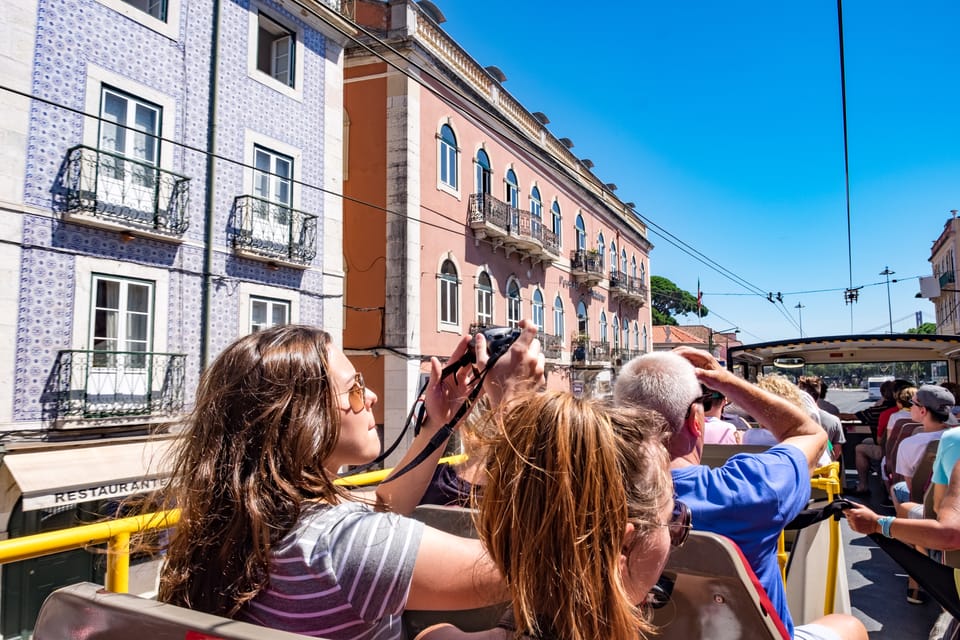
I’d book this if you’re doing 48 hours in Lisbon and you want maximum sightseeing per day without wrestling with transit maps. The UNESCO Belém pair on the Red Route is the biggest “yes” factor, and the option to add walking tours and night panoramas can turn the ticket into a full sightseeing framework.
I would think twice if your plan is built around late evenings and slow mornings. The buses end at 5pm, and you’ll need a different strategy after that. Also, if you’re very sensitive to crowded vehicles or missed stop timing, plan with a little buffer.
If you like building your own Lisbon day, using the bus as your spine, this ticket makes a lot of sense for the money.
FAQ
How long is the ticket valid?
Your City Sightseeing Lisbon ticket is valid for either 48 or 72 hours, depending on the option you select.
Where does the hop-on hop-off tour start?
The starting point is Marques de Pombal Square (Stop 1 on the routes).
How many routes are included?
You get access to three routes: Red, Blue, and Green, with more than 40 stops across them.
What time do the daytime buses stop running?
Red, Blue, and Green Routes all list the last departure at 5pm (with different first departures by route).
Does the ticket include a night tour?
A night-time panoramic bus tour is included if you choose the ticket option that includes it. It starts daily at 8pm from Marques de Pombal.
Are walking tours included?
Walking tours are included if you select the ticket options that include them: Carmo to Miradouro S. Pedro de Alcantara (10am) and Castle to Alfama (5pm).
Is there an audio guide?
Yes. The bus tour includes an audio guide in 13 languages, with headphones provided.
Is it wheelchair accessible?
The tour is listed as wheelchair accessible, but the Green Route buses are not suitable for wheelchair users.
Are there restrictions on pets or smoking?
Pets are not allowed, and smoking is not allowed.