REVIEW · LISBON
1 Guide 1 Tuk Tuk — Complete Historical Tour — True Local Guide
Book on Viator →Operated by Castles & Waves Tours · Bookable on Viator
Lisbon in four hours on a tuk tuk. This private loop mixes big-city history with killer viewpoints, with your driver steering through narrow streets and hills while an open-sided ride keeps photos easy. Lisbon’s viewpoints come thick and fast, guided by local detail from Gonçalo Seabra.
I especially like the way the tour turns a short visit into clear orientation. You get free entry moments at major sights (like Santa Justa and several churches), so you’re not spending your limited time hunting tickets and timings. And because it’s a private group, Gonçalo can adjust for your pace and interests—handy if you’re traveling as a mixed-age crew.
One possible consideration: the ride is open-sided, and the route is built around Lisbon’s steep streets and walking bits. If rain, heat, or mobility limits could be an issue for you, plan accordingly and pack like you’re going outdoors—not like you’re sitting in a museum.
In This Review
- Key highlights you’ll feel right away
- Why a colorful Mandala tuk tuk makes sense here
- Price and group value in plain terms
- The opening historical squares: Lisbon’s big turning points
- Elevador de Santa Justa viewpoint: a fast win for your camera roll
- Ginjinha Sem Rival: sweet break with local detective work
- Igreja de S Domingos: church time with plot twists
- Lisbon Cathedral (Sé de Lisboa): from sacred grounds to the first Portuguese church
- Church of St. Anthony: a birth room and a playful blessing
- Museu de Lisboa – Teatro Romano: how 1755 still shows up
- The miradouros: Santa Luzia to Portas do Sol, then Senhora do Monte
- Big churches and the patron saint clue you’ll remember
- Alfama for real: labyrinth streets, then the discovery-era square
- A practical way to time your day around this tour
- Who should book this tuk tuk tour (and who might not)
- Should you book?
- FAQ
- How long is the Lisbon tuk tuk historical tour?
- How many people are in a group?
- Is pickup available?
- What language is the tour offered in?
- What should I look for at the meeting point for pickup?
- Is there a cancellation window for a full refund?
Key highlights you’ll feel right away
- Private tuk tuk, up to 6 people, so you’re not stuck with strangers and their pace
- Open-sided vehicle for photos while you glide through tight lanes and steep hills
- Santa Justa viewpoint stop with a free platform visit at the top
- Miradouro route through Alfama viewpoints, from Santa Luzia to Senhora do Monte
- Church time that’s story-driven, including Igreja de S Domingos and Lisbon Cathedral
- Alfama short wander, for that real labyrinth feel instead of a drive-by
Why a colorful Mandala tuk tuk makes sense here
Lisbon is a city that punishes bad timing and random route planning. The hills are real, the streets get narrow quickly, and a lot of the best scenery sits just out of the easiest walking paths. This is why an open tuk tuk works well: it’s built for motion through the city, not for waiting in line all day.
The vehicle is easy to spot too. The operator says to look for a tuk tuk with colorful Mandalas, which matters when you’re trying to meet on time in an area where there’s plenty of traffic and similar-looking vehicles.
Your driver handles the traffic and the turns, while you handle the moment. You can lean for photos, spot landmarks you’d miss on foot, and still stop whenever the story changes. That’s the hidden value: the ride isn’t just transport. It’s part of the sightseeing.
You can also read our reviews of more guided tours in Lisbon


Price and group value in plain terms
The tour price is $432.50 per group, for up to 6 people, lasting about 4 hours. For Lisbon, that’s not a bargain price in the usual sense—but it often becomes good value when you’re comparing it to multiple separate tickets, taxis, and the cost of trying to cover this much ground on your own in a half day.
Here’s how I’d think about it for your budget:
- If you’re traveling as a group of 3–6, the cost per person drops fast compared to private car services.
- You’re paying for route planning through hills, timed stops, and a local guide who connects sights into a storyline.
- You also get multiple free visit segments built into the plan, which helps the math.
Also note the tour is private, meaning it’s only your group. That usually means more efficient stops—less time negotiating schedules with other parties and more time spent where you actually want it.
The opening historical squares: Lisbon’s big turning points
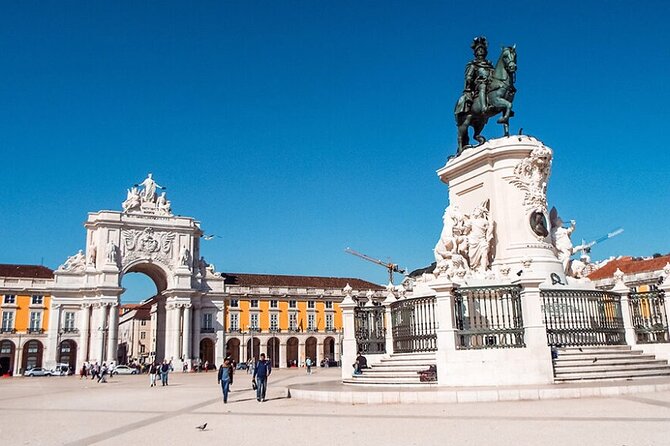
The tour begins with a historical square tied to major national moments—from the era remembered after Lisbon’s earthquake, to the end of the Portuguese dictatorship. Even if you already know the broad facts, this first stop gives you a mental map of why Lisbon looks the way it does: reconstruction, political change, and the constant reshaping of public space.
Then there’s a second square later that’s described as the oldest in the city, stretching from Roman-era limits northward until the earthquake. The point isn’t to memorize dates like a test. It’s to understand that Lisbon’s center isn’t one “old” layer—it’s many layers stacked on top of each other, and your guide helps you see that as you move.
If you like history that feels connected to what you see outside the window, these early squares set the tone. If you want pure scenery with minimal context, you might find this part a bit dense—though it’s still brief and designed to support the rest of the tour.
Elevador de Santa Justa viewpoint: a fast win for your camera roll

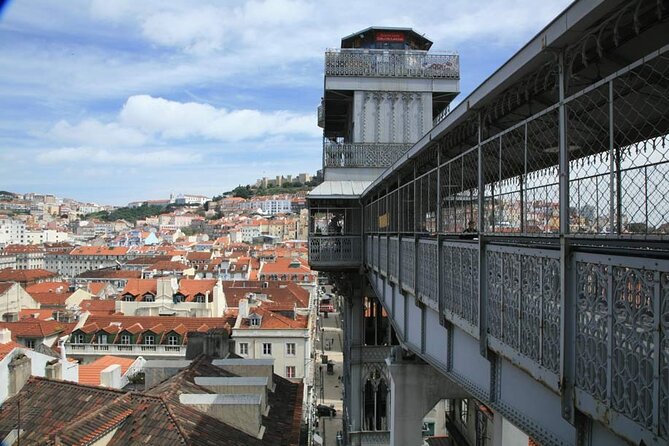
One of the best uses of a short schedule is a high viewpoint that gives you a clear overview. That’s exactly what the stop at Elevador de Santa Justa does. You get a free visit to the platform at the top, with time to look over downtown.
This viewpoint is practical in two ways:
- It helps you orient yourself. Once you see the layout from above, streets you’ll later walk through make more sense.
- It’s built for photos without requiring long hikes.
You’re only there for about 15 minutes, so it’s not a slow, drawn-out stop. The goal is quick clarity: see the city, then move on while the stories are fresh.
A small practical tip: because it’s a viewpoint, bring your best “steady hands” setup for photos—phone strap or a brace against railing if you’re shooting panoramas.
Ginjinha Sem Rival: sweet break with local detective work
Yes, this tour includes a stop for Ginjinha Sem Rival, a famous Lisbon ginjinha spot. It’s described as 133 years old and framed as a top choice where locals and the guide’s know-how meet.
The fun part isn’t just drinking it. The guide uses it as a quick comparison lesson: the tour mentions that right by Sem Rival there’s another place called A Ginjinha, and you can test your own taste.
This is one of those stops that makes the tour feel local rather than touristy. It’s short—about 10 minutes—and it doesn’t require you to commit to a full meal. You can treat it like a palate reset while the tour keeps moving through sights.
You can also read our reviews of more historical tours in Lisbon






Igreja de S Domingos: church time with plot twists
Next up is Igreja de S Domingos, and this is where the tour leans into “come see it in person” storytelling. The church is framed as unusual even among Roman Catholic churches, including connections to kingly baptisms and marriages, plus the Portuguese Inquisition.
You’ll spend about 20 minutes here. That duration is smart: long enough to feel the place and hear the key stories, short enough to avoid turning it into a lecture marathon.
A good way to enjoy this stop is to focus on what’s different. The tour’s pitch is basically that you’ve seen churches before—this one changes what you think a church experience can include. If you’re sensitive to crowds, go in ready to take it in quickly; Lisbon’s central church stops can draw foot traffic, even on short visits.
Lisbon Cathedral (Sé de Lisboa): from sacred grounds to the first Portuguese church
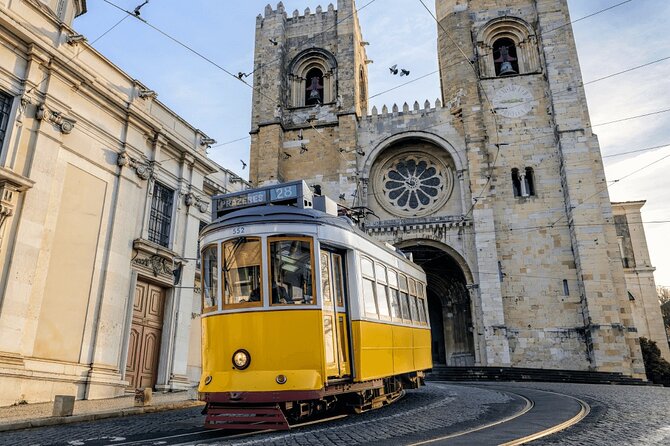
At Lisbon Cathedral, the plan is about depth in a compact time. You get around 5 minutes, which sounds short until you realize the stop is meant as a highlight: the first Portuguese church in town, built on grounds that have been sacred for roughly 2,000 years.
Even within a brief window, your guide’s job is to help you see the continuity. The cathedral site has hosted different temples over time. That layering is a Lisbon theme, and this is one of the clearest examples you’ll touch in just a half day.
Because the visit is short, you won’t get every detail—so don’t try to. Let the guide’s context give you the “why,” then use your eyes for the “what.”
Church of St. Anthony: a birth room and a playful blessing
If you want a stop that mixes sacred history with everyday human odds, this one does. The tour includes the Church of St. Anthony, described as the birthplace of Saint Anthony of Padua in Lisbon.
You’ll have about 15 minutes, with time to visit his birth room. The tour also mentions a playful moment: there’s a blessing for single visitors in hopes of finding the right partner. Even if you’re not superstitious, it’s a classic cultural stop—small, memorable, and quick.
This is also a good place to pause your legs. After hills and viewpoints, church stops are a chance to stand, look up, and absorb without constantly moving.
Museu de Lisboa – Teatro Romano: how 1755 still shows up
A lot of Lisbon’s identity comes from what happened in 1755, and this museum stop connects that earthquake-era story with older Roman roots. The tour visits Museu de Lisboa – Teatro Romano, where you can see how a building from around 2,000 years ago connects to Portuguese history and the earthquake.
You’ll have about 10 minutes—again, a highlight stop rather than a full museum session. The value here is the connection your guide makes: you’re not just seeing ruins or exhibits. You’re seeing how the past keeps steering the present.
If you like history but don’t want to spend a full day inside, this kind of museum visit is a good compromise: you walk away with a clearer storyline even if you don’t read every label.
The miradouros: Santa Luzia to Portas do Sol, then Senhora do Monte
This tour’s strongest visual run is the viewpoint stretch through Alfama.
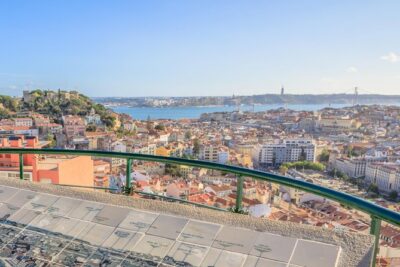
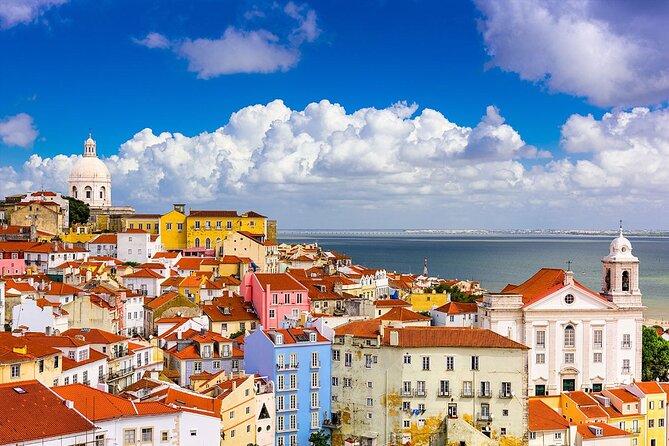
First is Miradouro de Santa Luzia (about 15 minutes). It’s described as the most photographed viewpoint in Lisbon, looking over Alfama’s rooftops. Then you move to Miradouro das Portas do Sol, the sister viewpoint, with about 15 minutes as well—more space, similar energy.
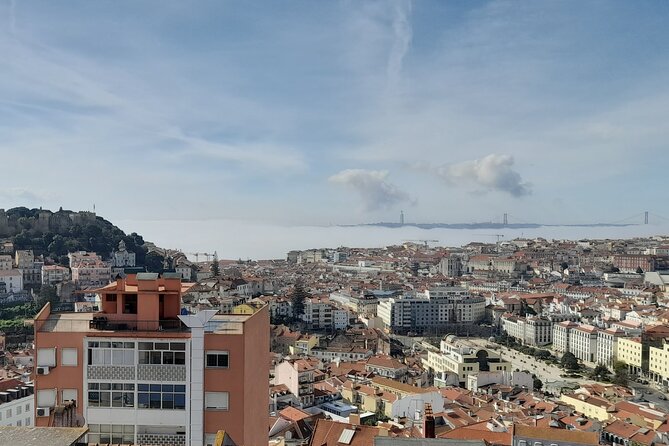
Finally, you get to Miradouro da Senhora do Monte, which the tour calls the best viewpoint in the city, with a 200° panoramic view and a look over a large portion of the historical center. The guide’s framing is specific: you can see the castle, the Christ figure, the bridge, and even a note pointing toward Cristiano Ronaldo’s most expensive apartment ever sold in Portugal, listed as owned by him. It’s a very modern Lisbon detail folded into a historic vista, and it helps make the panoramic view feel personal.
Why these stops matter for you:
- Viewpoints do the job of a city map. They help you understand where you are relative to landmarks.
- You get repeated photo angles, so your pictures aren’t just one view—they’re a sequence.
- The guide’s stories keep the scenery from feeling random.
Possible drawback: this is where you’ll do the most standing. If your legs get tired, treat these stops as “look, shoot, breathe” moments rather than trying to linger too long at each one.
Big churches and the patron saint clue you’ll remember
The middle of the tour includes more big-picture religious architecture—one of the biggest churches and convent in the city, plus another major church linked to Lisbon’s patron saint.
The tour’s wording makes a point of a surprise: the patron saint is not Portuguese by origin, which the guide turns into a question you’ll carry around while you’re looking at the building. That kind of framing is useful because it changes your attention. Instead of just staring at size and decoration, you listen for the story behind the dedication.
After that, you visit a pantheon that houses tombs of some of Portugal’s most important figures. The stop lasts about long enough to orient you and connect it to Portuguese identity, not to turn into a long stay.
If you’re church-experienced, you might still enjoy this segment because the tour doesn’t treat churches like quiet backdrops. It treats them like public history.
Alfama for real: labyrinth streets, then the discovery-era square
No Lisbon “history + orientation” plan feels complete without Alfama. The tour gives you about 15 minutes to explore the neighborhood’s narrow lanes, described as a labyrinth.
This short wander is important: it’s the moment you trade the “from above” view for the lived-in street view. You’ll see how the city is organized to fit hills and tight spaces, and why Lisbon feels more like a set of connected neighborhoods than one big straight grid.
The tour also includes the most significant square of Lisbon’s history, featuring a triumphal arch, tied to how Portuguese discoveries were managed. Again, it’s a story stop: it’s meant to help you connect Lisbon’s ocean-era power to the city’s layout and monuments.
It’s not an all-day history lecture. It’s a “you can’t unsee this once you know the why” finale.
A practical way to time your day around this tour
Because the tour is about 4 hours, I’d plan it as either:
- a first-half-day orientation on arrival, so later museum and neighborhood wandering makes more sense, or
- a planned anchor midday if you’re short on time and want “big hits” without hopping between taxis all day.
Also remember the schedule includes transportation time with small explanations of things you drive by. That means you won’t just sit. You’ll pass landmarks, hear quick context, and then move to your next stop.
The tour is in English, offered as a private tour/activity, and it uses a mobile ticket. Pickup is offered, and your driver is named Gonçalo Seabra. If you’re meeting in busy areas, give yourself a little buffer and keep an eye out for that Mandala tuk tuk.
Who should book this tuk tuk tour (and who might not)
Book it if you want:
- a fast, guided introduction to Lisbon’s center and viewpoints
- a private group experience up to 6 people
- multiple short, free-entry style stops instead of one long ticket line festival
- a driver-guide who connects monuments to Lisbon’s earthquake era, church stories, and viewpoint panoramas
You might choose something else if:
- you want a slow, museum-first day with long reading time
- you dislike short stop hopping (since each stop is designed to be brief)
- weather or mobility limits would make open-air streets and walking uncomfortable
Should you book?
Yes, if your goal is to get your bearings fast and leave with photos plus context. This tour’s best strength is the pacing: it keeps moving while still giving you enough time to feel key places—Santa Justa, several major churches, the Roman-earthquake connection, and the miradouros that make Lisbon look like Lisbon.
And if you’re traveling with a small group and want a local guide with a named driver like Gonçalo Seabra, this is the kind of half-day plan that can genuinely save your energy and sharpen your later exploring.
FAQ
How long is the Lisbon tuk tuk historical tour?
It runs for about 4 hours.
How many people are in a group?
This is a private tour/activity for your group, priced per group up to 6 people.
Is pickup available?
Yes, pickup is offered.
What language is the tour offered in?
The tour is offered in English.
What should I look for at the meeting point for pickup?
Look for the tuk tuk with colorful Mandalas.
Is there a cancellation window for a full refund?
Yes. You can cancel up to 24 hours in advance for a full refund. If you cancel less than 24 hours before the start time, the amount paid won’t be refunded.