REVIEW · PORTO
Walking Tour – History of Tiles in Porto
Book on Viator →Operated by Be My Guest In Porto · Bookable on Viator
Porto tiles tell stories if you know what to look for. This 2 hours 45 minutes walk turns UNESCO-listed backstreets into a living gallery, and I like the small-group size (max 10) that keeps questions flowing. The other thing I really like is how you’ll practice spotting tile techniques as you move through iconic landmarks.
One consideration: food and drinks are not included, so plan a snack break before or after if you get hungry. Also, you’ll be on your feet for most of the tour while you take in façades, station halls, and church artwork.
In This Review
- Key Highlights Worth Planning For
- Porto’s Tiles: Why This Walk Feels Different
- Starting at Igreja do Carmo and Finding Your Tile Eye
- Stop 1: São Bento Station and the Magic of Jorge Colaço Tiles
- Stop 2: Museu da Cidade do Porto and the City Hall Connection
- Stop 3: Igreja do Carmo and the Tile Panel on the Church Facade
- From Technique to Meaning: How You’ll Learn to Read Azulejos
- The Walk Through Porto: Timing, Stretches, and What to Expect
- Why the Price Makes Sense for an English, Art-History Tour
- Who Should Book This Tile History Walk
- About Your Guides and the Style of the Tour
- What This Experience Adds to a Porto First Day
- Should You Book This Tour?
- FAQ
- FAQ
- How long is the Walking Tour – History of Tiles in Porto?
- Where does the tour start and where does it end?
- What’s included in the ticket price?
- Are food and drinks included?
- How big is the group?
- What language is the tour offered in?
- Is it okay for children or service animals?
Key Highlights Worth Planning For
- Max 10 people means you get real attention from the art-history guide as you learn what to see.
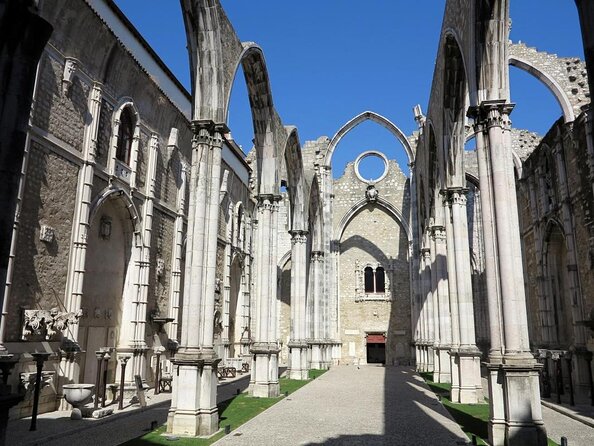
- Fonte dos Leões start outside Igreja do Carmo sets a smart tone right away, near Porto’s UNESCO core.
- São Bento Station mosaics take center stage, including work by Jorge Colaço with free entry.
- You’ll learn tile-making basics: how tiles are painted, built, and how production changed over time.
- Carmo Church & Ribeira area finish: you end your tile education near Porto’s riverfront heart.
- Mobile ticket + English-led tour makes it easier to show up and settle in.
Porto’s Tiles: Why This Walk Feels Different
Azulejos are everywhere in Porto, but most people only glance and move on. What makes this tour worth your time is the focus: you’re not just sightseeing; you’re training your eye. You’ll learn the building blocks of tile craft—how patterns are made, how different looks are created, and how the industry and styles developed over the years.
And because the walk is anchored in real landmarks, the tile lessons don’t stay theoretical. You’ll stand in front of recognizable Porto icons and start asking better questions, like why a certain color palette shows up here, or how a façade design helps a building communicate with the street.
I also like that the tour links art to Porto’s identity. The tiles connect to the industrial and cultural history of northern Portugal’s capital city, so you get more meaning than just pretty surfaces.
You can also read our reviews of more walking tours in Porto


Starting at Igreja do Carmo and Finding Your Tile Eye
You meet by Igreja do Carmo (Igreja do Carmo, R. do Carmo, 4050-164 Porto), right near the Fonte dos Leões (Fountain of Lions) outside Porto’s UNESCO-listed center. That location matters. You’re not starting at some far-off museum. You’re starting at the edge of the historic core, with tile work already in your line of sight as you begin.
From the first minutes, your guide sets you up with a simple goal: learn what to look for in azulejos. That can be as practical as learning how to read a scene or a border pattern, but it also turns into a rhythm for the rest of the day. Once you know what to notice—materials, brush-like effects, layout, repeated motifs—you start seeing details you would normally miss.
This is where the small group size helps. With up to 10 people, you can pause for a question and keep moving without the tour feeling like a lecture you’re trapped inside.
Stop 1: São Bento Station and the Magic of Jorge Colaço Tiles
The first major moment is São Bento Railway Station, one of Porto’s most dramatic tile experiences. Admission here is free, and the time on-site is short—about 10 minutes—so you’ll want to arrive ready to look fast.
What makes this stop special is the sheer storytelling power of the mosaics. The station tiles are famous for dramatic battles and historical events, and this tour spotlights the work of Jorge Colaço. Even if you’re not a train person, this is one of those places where you quickly understand why azulejos became such a powerful public art form.
What to do in your head while you’re there:
- Follow the scene flow first (don’t just pick one favorite panel).
- Notice how figures and action are arranged across the space.
- Compare the visual “tone” of different sections—some read more like murals, others feel more like composed diagrams.
A realistic drawback: because it’s a station, you may be sharing the space with foot traffic. Ten minutes goes quickly. If you want to linger, you’ll have to choose your favorite panels and really study those instead of trying to cover everything.
Stop 2: Museu da Cidade do Porto and the City Hall Connection
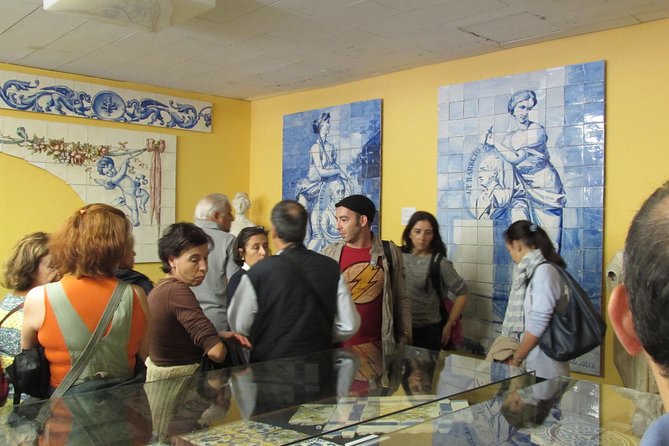
Next you head to Museu da Cidade do Porto, where you’ll spend about 15 minutes. Admission is free.
This is a useful stop because it shifts the focus from the spectacle of famous tiles to the broader story of Porto itself. The tour frames the museum as a way to connect the tiles to the city’s civic life—so the question becomes less about decoration and more about culture: who commissioned art, why it shows up in public settings, and how local identity gets expressed through tile work.
If you like turning architecture into a timeline, you’ll appreciate this segment. It acts like a bridge between iconic public art (like the station) and church façades and urban storefronts you’ll see later.
What to watch for during your short visit:
- Pay attention to how tiles connect to Porto’s official spaces.
- Use the guide’s prompts to connect “why this exists” with “what it looks like.”
A practical note: the museum stop is brief. So keep your expectations tight. Think of it as a tile-and-city primer, not a full museum afternoon.
Stop 3: Igreja do Carmo and the Tile Panel on the Church Facade
Then you return to Igreja do Carmo—or at least you go back to the church façade focus. One of the tour’s stop points is a first panel covering a church facade, with about 5 minutes allocated.
This is the kind of stop that works even if you’re not a tile nerd. It teaches you how to read religious architecture through decorative art. You’re not just admiring a patterned surface—you’re learning how panels act like messages on a building’s skin: where they’re placed, what they highlight, and how they frame the idea of a façade.
Why this matters: station tiles tend to pull you inside with drama, while a church façade tile panel teaches you how the city “speaks” to passersby outside. It’s public art in both directions—inside and out.
The only caution here is simple: five minutes disappears fast. If the panel style clicks with you, don’t wait for later to get your close look. Take a minute, then move on with the group.
You can also read our reviews of more historical tours in Porto





From Technique to Meaning: How You’ll Learn to Read Azulejos
The core of the experience is the way the guide trains your eye. You’ll learn about the different techniques used to paint and create tiles, and how those methods developed over the years. You’ll also get help noticing craftsmanship details you could easily miss when you’re just walking around on your own.
Here’s what that “tile training” can feel like in real life:
- You start separating tiles by look and finish—how surfaces catch light and how colors behave.
- You look for repeated elements: borders, pattern systems, and compositional rules.
- You spot how scenes are organized and how figures interact with background elements.
And the guide doesn’t keep it in a bubble. The tile history stays tied to Porto’s broader industrial and cultural story—especially the idea that this craft grew into a signature of northern Portugal’s capital city.
The Walk Through Porto: Timing, Stretches, and What to Expect
This is a 2 hours 45 minutes walk, so yes, there’s plenty of city walking between tile moments. You’ll be moving through the UNESCO-listed historic center area. The benefit is that the tour doesn’t hide behind walls. You’re learning tiles in the places where they actually live: façades, public interiors, and major landmarks.
The pace also matters. It’s designed for a small group limited to 10, which helps the walk feel more like a guided conversation than a checklist. Your guide can point something out, let you look, then connect it to something you’ll see later.
You’ll also start near Fonte dos Leões and finish after about three hours beside Ribeira Square. The stated end point is São Bento station, which is close to the same central web of streets. Bottom line: you won’t get stranded on a far edge of town. You’ll finish in an area where it’s easy to keep exploring.
Wear shoes you can walk in for nearly three hours. Porto has uneven spots, and when you’re hunting for details, you’ll slow down. That means more time on your feet than you might expect.
Why the Price Makes Sense for an English, Art-History Tour
The price is $81.93 per person for a tour that runs about 2 hours 45 minutes and includes a professional art historian guide plus a local guide. That’s the key value point: you’re paying for guided interpretation, not just entry to famous sites.
Also, the tour offers a mobile ticket and is offered in English. For many visitors, that’s a big part of the cost equation—clear explanations help you get more out of what you’re seeing.
Add in the small group cap of 10, and the price feels less like a generic “walk and look” and more like a guided lesson. If tiles are even a mild interest, this kind of structure tends to pay off fast because you’ll leave with an eye that works on your own.
If you’re only a casual passerby to Porto tiles, you might decide you’d rather do a self-guided walk and spend the money on a meal. But if you want to understand why the tiles look the way they do, the guide factor is the bargain.
Who Should Book This Tile History Walk
Book this if:
- Porto tiles are already on your must-see list
- You like architecture and want a way to “read” façades
- You enjoy hands-on visual learning—looking closely, comparing details, and building understanding
- You want a small-group tour that doesn’t feel rushed
Skip or reconsider if:
- You’re short on walking time and don’t want a mostly-on-foot experience
- You’re looking for food and drink as the main attraction, since food and drinks are not included
- Tiles feel like background noise rather than a focus
It’s also a solid option for people who enjoy connecting art to place. This walk links the craft to Porto’s industrial and cultural story, so you’ll get more than a list of sights.
About Your Guides and the Style of the Tour
The tour is led by trained guides with strong art-focus credentials. In past groups, guides such as Susana and Nuno have been highlighted for their enthusiasm and for connecting tile craft to Porto culture. That matters because you’ll hear practical “what to look for” guidance while you walk.
In other words, the tone isn’t just facts. It’s interpretation—what to notice, how to make comparisons, and how to connect tile choices to the city around them.
What This Experience Adds to a Porto First Day
I like this kind of tour early in a trip because it changes how you see everything afterward. Once you learn what to watch for—technique, composition, panel placement—you’ll start noticing tiles in alleyways and on building corners that you’d normally ignore.
And because the tour touches major public landmarks like São Bento, plus church façades and city-linked spaces, it gives you a scaffold. Later, when you’re just strolling or looking for dinner, you’ll have a mental map of tile styles and meanings.
Should You Book This Tour?
You should book it if you want a clear, friendly way to understand Porto’s signature craft. With a max group size of 10, English language delivery, and art-history guidance, you’re set up to look smarter, not just longer.
You might pass if you only want highlights without interpretation, or if you’re mainly after food, beaches, or shopping. This is a walk built around tiles as art and tiles as culture.
My simple decision rule: if you can spend time staring at small details and you’d like your guide to point them out, this is a good use of your Porto hours.
FAQ
FAQ
How long is the Walking Tour – History of Tiles in Porto?
It lasts about 2 hours 45 minutes.
Where does the tour start and where does it end?
It starts at Igreja do Carmo, R. do Carmo, 4050-164 Porto, Portugal. It ends at São Bento station, Praça de Almeida Garrett, 4000-069 Porto, Portugal.
What’s included in the ticket price?
The tour includes a professional art historian guide and a local guide. Admission at listed stops is free where noted.
Are food and drinks included?
No. Food and drinks are not included.
How big is the group?
The tour is limited to a maximum of 10 travelers, with a minimum of 2 people required per booking.
What language is the tour offered in?
It is offered in English.
Is it okay for children or service animals?
Children must be accompanied by an adult. Service animals are allowed.