REVIEW · PORTO
Explore Porto Aboard A Classic Tuk-Tuk tour 1h
Book on Viator →Operated by Green Tours · Bookable on Viator
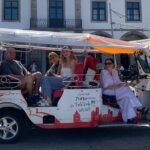
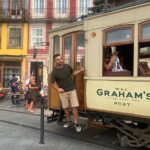
Porto looks better when you’re rolling on wheels. This classic tuk-tuk tour is a smart, quick way to see a lot of iconic places in about an hour, while your guide explains what you’re looking at. You’ll glide past major landmarks and also get those tight-street views that cars often can’t manage.
I really like two things here: the focus on orientation (you’ll understand how Porto hangs together) and the English-speaking guide time spent on small details you’d miss if you were just walking. Guides such as Pedro Melo, Tiago, Carlos Bonita, Carlos, Alex, and Maria have all been praised for friendly, helpful explanations and for adjusting the vibe—seriously, even rain doesn’t stop the fun.
One drawback to plan for: it’s short, and several stops are photo-and-pass moments. Some sights (like the cathedral and Carmelitas) list tickets not included, so if you want inside time at those, you may need to pay extra.
In This Review
- Key highlights you’ll actually feel during the ride
- Why a Classic Tuk-Tuk Works in Porto’s Hilly Center
- Price and what $120.02 per group really covers
- Meeting at Vímara Peres and what the 1-hour pacing feels like
- Stop 1: Porto Cathedral (Cathedral of Porto) without long ticket time
- Stop 2: São Bento Railway Station tiles you can actually understand
- Stop 3: Avenida dos Aliados and getting your bearings fast
- Stop 4: Igreja dos Carmelitas and a quick story-driven church stop
- Stop 5: Torre dos Clérigos—Porto’s postcard, viewed with purpose
- Stop 6: Livraria Lello from the street—why the passing matters
- Stop 7: Porto Judeu and learning the city’s Jewish quarter context
- Stop 8: Dom Luís I Bridge and that Eiffel-related engineering connection
- Stop 9: Miradouro Serra do Pilar for panoramic payoff
- How the 1-hour timing fits your trip (and when to choose something longer)
- The human part: guides like Pedro Melo, Tiago, Carlos Bonita, and Maria
- Included vs. not included: how to plan so you don’t get surprised
- Is the Classic Tuk-Tuk Tour worth booking?
- FAQ
- FAQ
- How long is the Classic Tuk-Tuk Porto tour?
- What’s the price and group size?
- Is the tour offered in English?
- Which parts have admission tickets not included?
- Are any stops free to enter?
- Can I cancel for a full refund?
- Is this tour private?
Key highlights you’ll actually feel during the ride
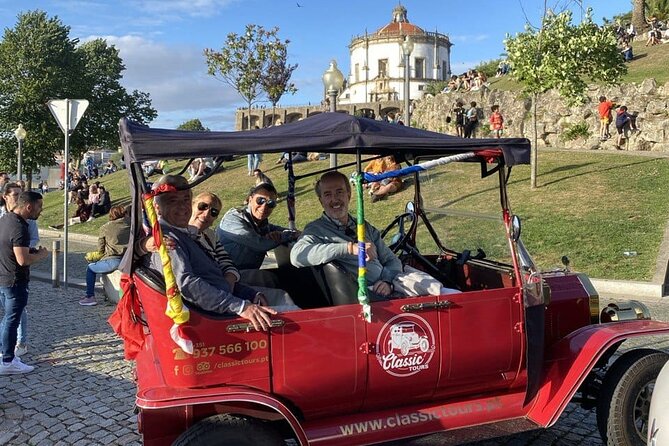
- Classic tuk-tuk practicality: easy routes around Porto’s center, built for sightseeing speed.
- Free stops that add up: São Bento Station, Aliados Avenue, Porto Judeu, Dom Luís I Bridge, and Serra do Pilar viewpoint.
- Photo-friendly timing: quick stops for postcard sights like Clérigos Tower and Livraria Lello from outside.
- Panoramic payoff at Serra do Pilar: a real viewpoint moment after crossing the river area.
- Private group feel (up to 4): your group rides together, not mixed into a bigger crowd.
- All-fee included simplicity: fees and taxes are covered in the tour price, so you’re not doing constant add-ons.
Why a Classic Tuk-Tuk Works in Porto’s Hilly Center
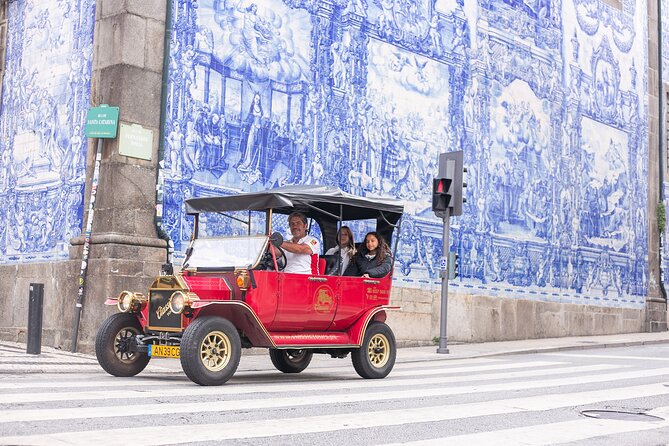
Porto can be a workout if you try to cover too much on foot. This is where the tuk-tuk shines. You still get street-level views, but you spend less energy climbing between viewpoints and landmark clusters.
The route is built like a greatest-hits sampler: cathedral area, the train station, Aliados Avenue, churches, Clérigos area, then toward the river for the bridge and a panoramic viewpoint. In just one hour, you’ll come away with a mental map of where things are and how the city’s layers connect—upper neighborhoods, central boulevards, and the riverside perspective.
The other reason it works is that Porto is full of narrow streets and quick bends. A classic tuk-tuk can get you into the right sightlines without forcing you into long detours. And because the stops are timed, you’re not stuck waiting around for long lines or wandering while the day slips away.
A few more Porto tours and experiences worth a look


Price and what $120.02 per group really covers
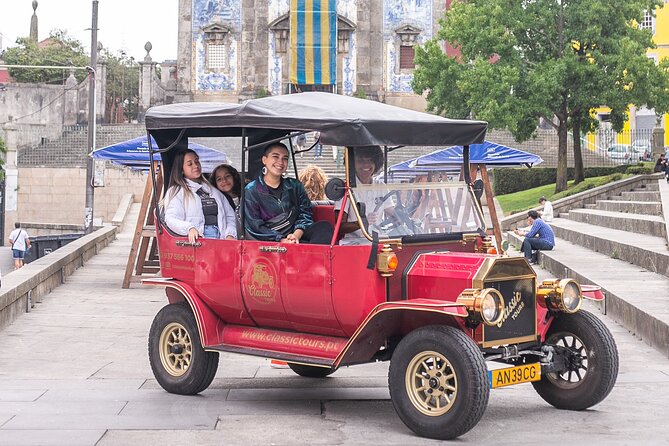
The price is $120.02 per group, up to 4 people, for about 1 hour. That matters, because when you split it among a small group, the cost per person drops fast compared to tours priced per traveler.
It’s also set up to reduce uncertainty: all fees and taxes are included. That means you can focus on the sights rather than constantly wondering what costs extra.
Just keep expectations grounded about admissions. Some stops explicitly say admission ticket not included, so if you want to go inside, you’ll need to arrange tickets on your own for those specific places. Other stops are marked free, like São Bento Station and the bridge area, so you can enjoy those without planning ahead.
Meeting at Vímara Peres and what the 1-hour pacing feels like
You meet at the Statue of Vímara Peres on Calçada de Vandoma, 4000-013 Porto. The activity ends back at the meeting point, which makes it easy to keep your plans simple right after.
About the timing: this tour is structured to keep you moving. You’ll have short viewing windows—some around 5 minutes, a couple closer to 10 minutes—and that’s intentional. It’s designed for people who want strong first-time context and memorable photos without committing an entire half-day.
If you like to linger, this tour can feel a bit quick. But if you want the city’s shape in one concentrated hour, the pacing is a plus. You’ll leave knowing where to return later if you want more time at any specific church, tower, station, or viewpoint.
Stop 1: Porto Cathedral (Cathedral of Porto) without long ticket time
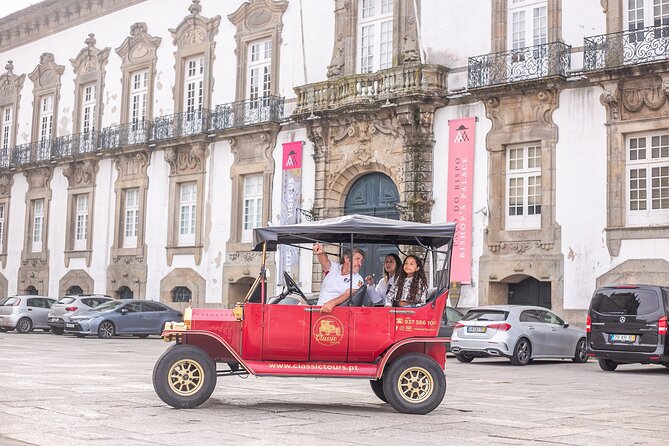
First stop is the Catedral do Porto. It’s described as Gothic and built in the 12th century, and it’s the main building of the Catholic Church in Porto. The way the tour uses this stop is useful: you get the context early, so later landmarks make more sense.
The practical note: the entry ticket is not included. That doesn’t mean you can’t see it well. It means you should treat this as a guided exterior-and-or-brief look, unless you plan to pay to go inside separately.
Why it’s worth including at the start: the cathedral anchors Porto’s religious and historic center. After this, your guide can connect what you see at churches later in the route, instead of jumping from site to site with no thread.
Stop 2: São Bento Railway Station tiles you can actually understand
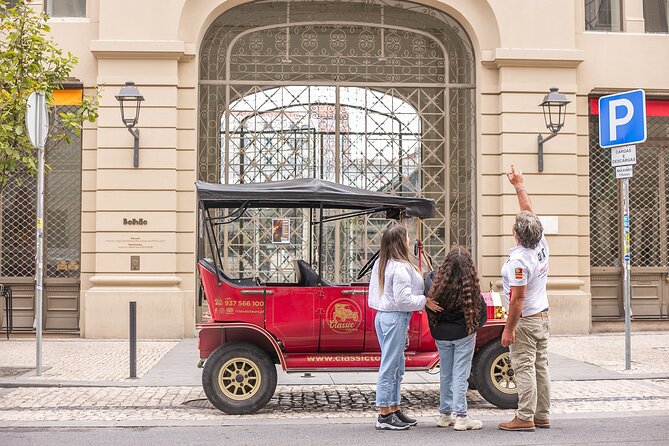
Next is São Bento Railway Station, one of the most beautiful stations in the world. This isn’t about trains. It’s about the interior wall story—decorative tile scenes that make Porto feel like a living textbook.
This stop is free for admission, so you’re not juggling ticket costs during a tight schedule. And because it’s a station, it’s also built for quick visits. You can get in, look around, and take photos without feeling like you need hours.
What I like about seeing São Bento on a tuk-tuk tour: your guide points you toward what to notice. You won’t just see tiles—you’ll understand that the art is part of how Porto tells its own history.




Stop 3: Avenida dos Aliados and getting your bearings fast
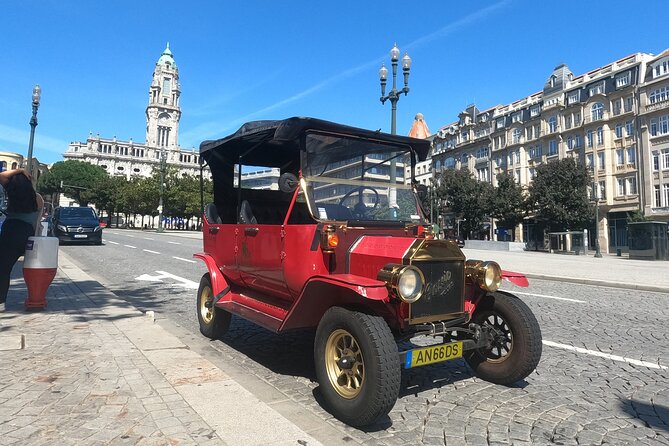
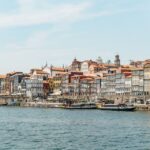
Then you hit Avenida dos Aliados, Porto’s main avenue and the city’s central hub area. This is a great “reset stop.” By now you’ve seen the cathedral and station, so Aliados helps you orient: where the energy is, where the city feels most formal, and where pedestrian life clusters.
It’s also free, so it works well even if you’re tired. You’ll get a guided explanation of why the avenue is emblematic, and then you can decide if you want to spend more time here later on your own.
Stop 4: Igreja dos Carmelitas and a quick story-driven church stop
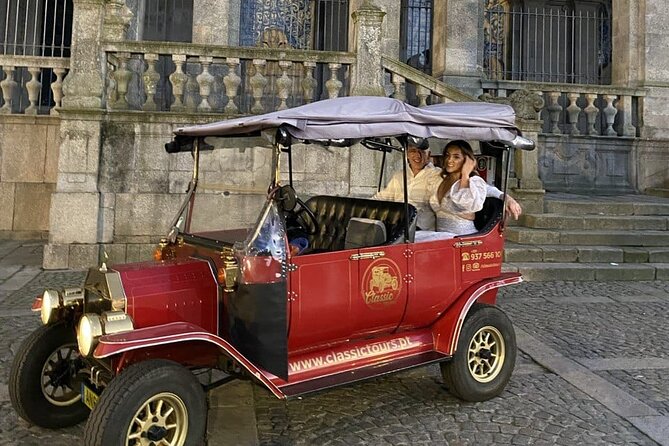
The tour continues with Igreja dos Carmelitas. This church is noted as starting in the 17th century and is presented as a place that tells a curious story about Porto.
Admission is not included here. In practice, that means this is best treated as a short, guided stop to understand the church’s place in the city—rather than a full visit where you take your time with every chapel detail.
One advantage of keeping it short: Carmelitas pairs well with the next stop in terms of mood. Porto’s churches can feel similar from far away. A guided sequence helps you notice differences instead of blending them together.
Stop 5: Torre dos Clérigos—Porto’s postcard, viewed with purpose
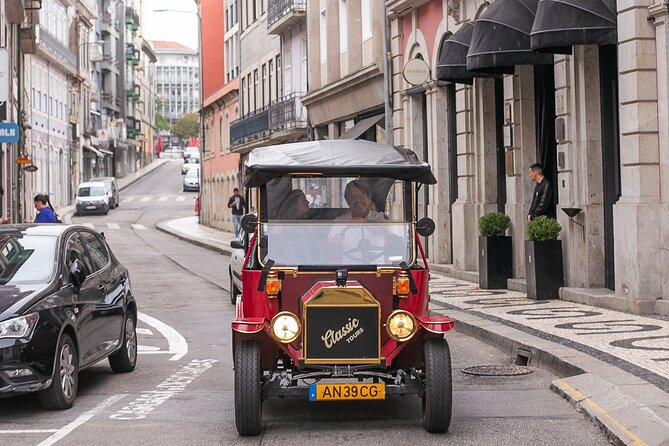
Next up is Torre dos Clérigos, described as a remarkable architectural ensemble and considered Porto’s postcard. Even if you never climb anything, the tower is a quick visual anchor for the city.
Admission is not included, so again, think photo and orientation rather than a long ticketed visit unless you’re prepared for extra costs. The value is in your guide’s framing: they point out why the tower is so recognizable and how it fits into Porto’s skyline.
This is also a smart stop because it prepares you for what comes right after—Livraria Lello—where the city blends postcard charm with a more quirky, bookish side.
Stop 6: Livraria Lello from the street—why the passing matters
Then you’ll pass Livraria Lello (Lello Bookstore). It’s presented as one of the most beautiful bookstores in the world, and the emphasis here is on seeing it as part of the city’s walking story.
Admission is not included, so the tour is basically a guided pass-by moment. That’s not a dealbreaker. In fact, it can be perfect if your goal is to get the visual hit and decide later if you want to do the more time-consuming ticket visit separately.
Why this works on a tuk-tuk: Porto’s center is full of “stop and stare” moments. By pairing the bookstore pass with a Clérigos stop right before it, you get two different kinds of postcard appeal—architecture first, then culture—without losing momentum.
Stop 7: Porto Judeu and learning the city’s Jewish quarter context
Next is Porto Judeu, a guided tour portion focused on the Jewish quarter with historical information. Admission is free for this part.
Even though the time is short, this stop can change how you walk the streets afterward. When you hear the neighborhood context explained by someone at street level, you start noticing details you would normally gloss over—street rhythm, building age cues, and how people historically moved through the area.
If you like cultural context more than museum-style exhibits, this is one of the most meaningful stops. You’re not just ticking boxes; you’re building a story.
Stop 8: Dom Luís I Bridge and that Eiffel-related engineering connection
Then comes one of Porto’s big moments: the Dom Luís I Bridge. You pass over it, and the guide highlights that it was designed by the same engineer as the Eiffel Tower, Gustave Eiffel.
Admission is free here. That’s helpful because it’s one less thing to think about during an already tight schedule.
The real value is perspective. From the bridge area you get a sense of how Porto and Gaia sit across from each other. After you’ve been in the city’s central spine, the river connection makes Porto feel bigger and more dramatic.
Stop 9: Miradouro Serra do Pilar for panoramic payoff
The final sight is Miradouro Serra do Pilar, a viewpoint with panoramic views of Porto and Gaia. This stop gets about 10 minutes, which is just enough time to get a few clear photos and actually enjoy the view for a moment.
Admission is free. That means you can arrive and simply take in the landscape without ticket friction.
This is a strong closer for two reasons. First, it helps your brain “land” after the city stops. Second, it gives you a final wide-angle understanding of the route you just rode—where you started, where you looped, and what you should revisit if you want deeper photos later.
How the 1-hour timing fits your trip (and when to choose something longer)
An hour is perfect if:
- you’re on your first day and want a fast mental map
- you’re short on time but still want postcard sights plus context
- you prefer fewer ticket hassles and more guided orientation
- you want a plan that works even in bad weather (a tuk-tuk ride with quick stops is easier than a long walking day)
It may not be perfect if:
- you want lots of interior time at churches, the tower, or the bookstore
- you hate “photo-stop” moments and want long museum-style visits
- you’re traveling with someone who needs long rest stops between activities
My practical advice: treat this as the tour that helps you choose your next two or three “real visits.” After you ride, you’ll know where you want to spend more time.
The human part: guides like Pedro Melo, Tiago, Carlos Bonita, and Maria
The biggest strength of this experience is the people behind the wheel and at the microphone. Guides such as Pedro Melo, Tiago, Carlos Bonita, Alex, and Maria are described as friendly and helpful, with good English so you aren’t stuck guessing what something is.
A recurring theme in the praise: guides don’t just list names. They explain what you’re seeing and keep the tone light. That matters on a short tour. When your guide injects a bit of humor and pacing, the hour feels like something you remember, not just a sequence of stops.
It also helps that the tour is private for your group (up to 4). That means your guide can adapt to your pace and interests more than on a large group bus.
Included vs. not included: how to plan so you don’t get surprised
Here’s the simple way to think about it:
- Free, easy moments: São Bento Station, Aliados Avenue, Porto Judeu, Dom Luís I Bridge, and Serra do Pilar viewpoint.
- Places where tickets are not included: Catedral do Porto, Igreja dos Carmelitas, Torre dos Clérigos, and Livraria Lello.
So if you want to go inside any of the not-included stops, expect to pay separately. If you’re happy with exterior views plus quick guided explanations, you can keep your budget predictable and focus on the ride.
Is the Classic Tuk-Tuk Tour worth booking?
If you’re asking whether it’s good value, I’d say yes—especially if you’re traveling as a small group and you want a tight, guided overview of Porto.
You’re paying for four things:
- time efficiency (about an hour)
- smart route selection through Porto’s center
- guided explanations with English support
- a private, small-group feel up to 4 people
Then you get a blend of iconic landmarks and practical sightseeing. That mix is exactly what works well for first-timers and for anyone who wants highlights without committing to a long schedule.
If you’re the type who wants deep interior time at churches, the tower, and the bookstore, you might still book this—but plan to follow it with return visits on a different day.
FAQ
FAQ
How long is the Classic Tuk-Tuk Porto tour?
It’s about 1 hour.
What’s the price and group size?
The price is $120.02 per group, for up to 4 people.
Is the tour offered in English?
Yes, it’s offered in English.
Which parts have admission tickets not included?
Admission ticket not included is listed for Porto Cathedral, Igreja dos Carmelitas, Torre dos Clérigos, and Livraria Lello.
Are any stops free to enter?
Yes. São Bento Railway Station, Avenida dos Aliados, Porto Judeu, Dom Luís I Bridge, and Miradouro Serra do Pilar are listed as free.
Can I cancel for a full refund?
Yes. You can cancel up to 24 hours in advance for a full refund.
Is this tour private?
Yes. It’s a private tour/activity, with only your group participating.