REVIEW · PORTO
Porto: Private Tour to the Historic Center in a Classic Car
Book on Viator →Operated by OldTour Porto · Bookable on Viator
A classic car turns Porto’s highlights into a story. In about 90 minutes, you’ll roll through Porto’s most photogenic historic corners, hitting big landmarks like the Luís I Bridge and Palácio da Bolsa with time to see, pause, and ask questions.
I love the way the guides keep the facts clear and personal, whether it’s Mariana’s calm explanations or João’s easy, real-life style. I also love the pacing that gives you photo stops at major viewpoints, not just a quick drive-by.
One thing to consider: the ride can feel a bit bumpy on older streets in an antique-style car, and route timing can be affected by historic-center road closures—so I’d keep your must-see list handy and confirm timing with your guide.
In This Review
- Key things you’ll notice on this Porto classic-car tour
- Why a classic car is the best way to start your Porto sightseeing
- Price and value: what $39.79 buys you in 90 minutes
- The meeting point and how pickup really works
- Route walkthrough: what you’ll experience stop by stop
- Luís I Bridge crossing: engineering views over the Douro
- Infante D. Henrique Museum: Portugal’s maritime big story
- Palácio da Bolsa and the Arab Room: maximum wow per minute
- Porto Customs House: trade, taxes, and riverfront scale
- Fortress São João Baptista: Atlantic defense and wide views
- Electric Tram Museum: public transport history, plus possible rides
- Jardim do Passeio Alegre: a cool breath of green near the river mouth
- Castelo do Queijo (Cheese Castle): fort shape, sea views, and photo angles
- Jardins do Palácio de Cristal: the romantic park finish
- Getting the most from the ride: practical tips that really matter
- Who this tour fits best
- Should you book this Porto classic-car tour?
- FAQ
- How long is the Porto private tour in a classic car?
- What does the tour cost, and is it private?
- What language is the tour offered in?
- Is pickup included, and where do we meet?
- Are entrance tickets included for all stops?
- Can service animals join the tour?
Key things you’ll notice on this Porto classic-car tour
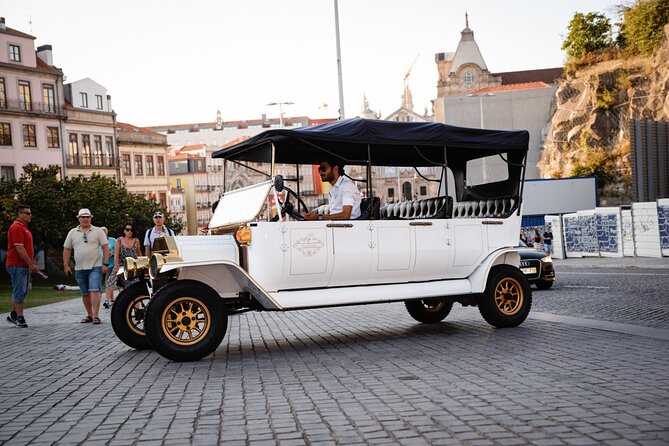
- A private drive through major Porto sights in a short 1.5-hour window
- Luís I Bridge panoramas from the crossing, with great photo angles over the Douro
- Palácio da Bolsa and the Arab Room for high-impact neoclassical details
- Trade-and-maritime context at the Infante D. Henrique Museum and the Customs House
- Atlantic fort views at São João Baptista and the Cheese Castle (both made for skyline photos)
- A classic transport + nature mix with the Electric Tram Museum and garden breaks
Why a classic car is the best way to start your Porto sightseeing
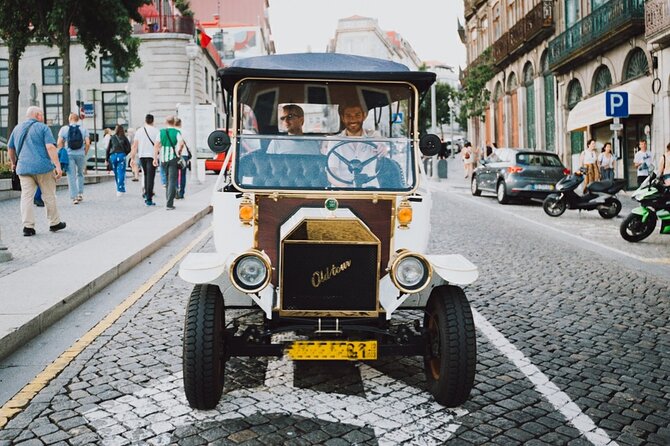
Porto has a way of rewarding slow looking. This tour uses a private classic car format to make that possible without turning your day into a sprint. You get transportation plus a guide’s story-thread—so when you see something like the Luís I Bridge, it’s not just a pretty structure. It’s a piece of engineering and a moving viewpoint over the Douro.
For me, the winning combo is simple: major sights in a tight loop, plus a guide who actually talks through what you’re seeing. Guides I’ve heard named—Mariana, João, Gama, Maria, Inez, and Ana—show the same theme: they’re patient with questions, and they’ll point out what’s worth lingering over.
You can also read our reviews of more private tours in Porto


Price and value: what $39.79 buys you in 90 minutes
At about $39.79 per person for roughly 1 hour 30 minutes, you’re paying for three things at once:
- a guide in English
- private classic-car transport (so you’re not bouncing between multiple taxis or rideshares)
- quick but meaningful stop-and-see access at several top sights
This is not a full-day museum marathon. Instead, it’s an efficient way to get your bearings fast. If you’re the kind of traveler who likes to decide what to return to later, this kind of focused tour is a smart first step.
The meeting point and how pickup really works

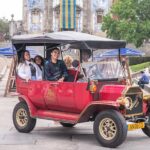
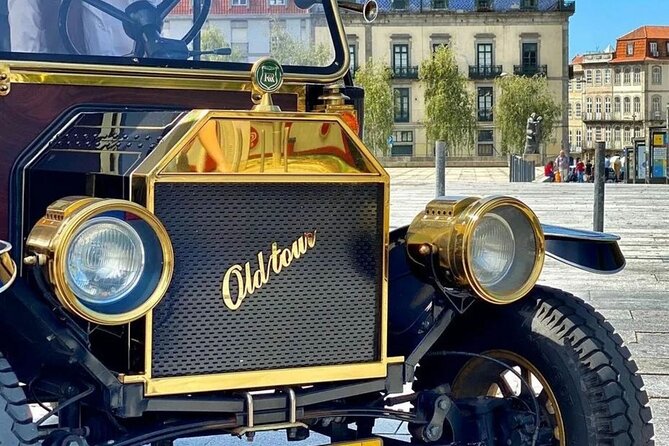
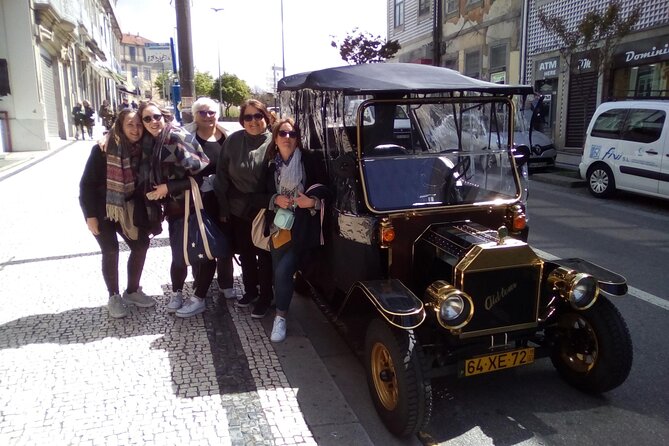
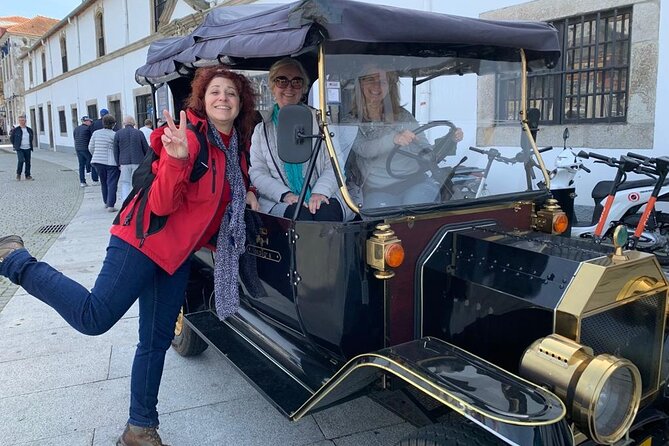
Your meeting point is flexible: it’s anywhere in the historic center area, and you’ll spot the classic car easily. It’s listed as either black or green, and the guide will be identified with the name Oldtour.
Pickup is offered, and in many cases it can work out well—especially if you’re staying in the center. Still, one practical caution: parts of Porto’s old streets can be tricky for vehicles and routing. If your lodging is farther out or access is limited, plan to meet a bit closer to the core area rather than counting on hotel door pickup as guaranteed.
Route walkthrough: what you’ll experience stop by stop
This tour is built around Porto’s “big picture” story—city-to-river engineering, maritime exploration, commerce, and defense—then it slows down with gardens and transport history. Here’s what to expect at each stop.
Luís I Bridge crossing: engineering views over the Douro
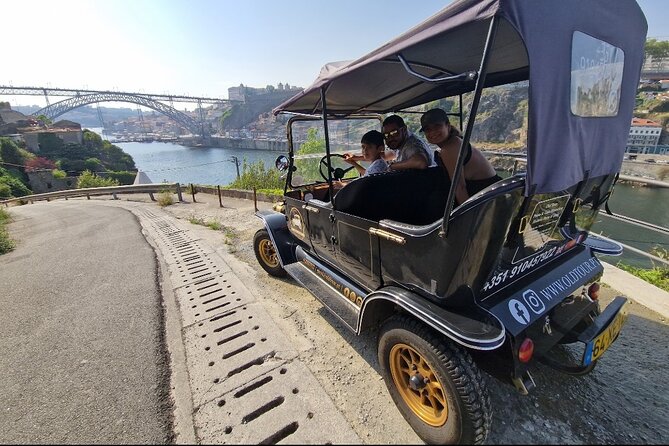
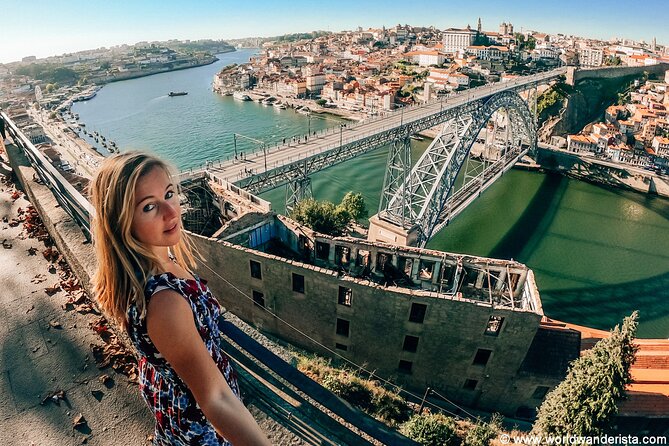
You start with the Luís I Bridge, one of Porto’s most iconic engineering feats linking Porto to Vila Nova de Gaia. Designed by a disciple of Gustave Eiffel, it’s a metal-structure masterpiece, and the drive-by becomes a mini viewpoint experience rather than just a photo moment.
What you’ll notice from the crossing:
- panoramic views over the Douro River
- the riverbanks and cityscape rolling by in a way that feels unusually “wide”
- boat movement sounds and the rhythm of the water (great for atmosphere)
Walking along the upper deck is part of the appeal here. It’s about 60 meters high, so it’s a dramatic angle for photos—especially when light is soft.
Practical note: plan to be ready for wind. The bridge can feel breezy, and that matters if you’re wearing a lightweight jacket or holding a phone/ camera low.
You can also read our reviews of more historical tours in Porto

Infante D. Henrique Museum: Portugal’s maritime big story
Next comes the Infante D. Henrique Museum, a strong choice if you like history that connects to real places. The museum focuses on Portugal’s maritime past and the legacy of the Discoveries: navigation, cartography, and exploration.
This stop feels especially useful because it gives you context for what you’ll see later—trade, river life, and coastal defense. You can expect:
- ship models and navigational instruments
- maps that show how sea exploration shaped national identity
- exhibits that work well for families too
At roughly quick-tour pace, don’t try to read everything word-for-word. Instead, scan for the big visual anchors: major maps, famous instrument displays, and ship models. That’s where the “aha” moments usually land.
Palácio da Bolsa and the Arab Room: maximum wow per minute
Then you reach Palácio da Bolsa, a 19th-century neoclassical showpiece that once served as the Stock Exchange. This building is famous for the Arab Room, decorated with Moorish influences and intricate detail.
Even if you’re not a “museum person,” this stop tends to click because the interior design is visually dramatic. You’ll explore several rooms—each one designed to impress—and you’ll get the commerce angle too: how Porto’s economic life shifted and why this building mattered.
Two practical things I recommend:
- take a slow moment in the Arab Room before rushing to the next room
- if you like photos, aim for steadier lighting inside the palace halls (they can vary a lot)
Porto Customs House: trade, taxes, and riverfront scale
After that, you’ll see the Porto Customs House, another 19th-century neoclassical landmark on the Douro’s riverbanks. It originally served as the city’s tax authority tied to managing trade, and it still carries that official grandeur.
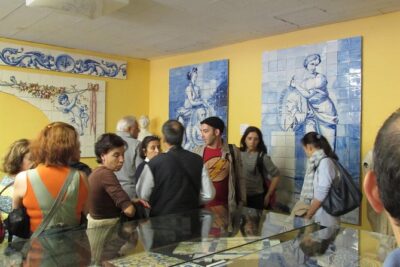
Inside, the Porto Customs House houses the Porto Museum, with exhibits tied to Porto’s cultural and social history. You’ll also get time around the building where the river and bridges frame the scene—nice if you want a calmer moment after indoor rooms.
If your brain likes connections, this stop helps you connect the dots from:
- maritime exploration (museum)
- commerce and trade institutions (palaces)
- taxes and regulation (Customs House)
Fortress São João Baptista: Atlantic defense and wide views
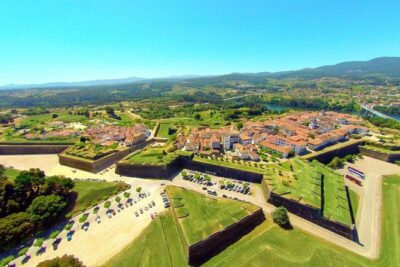
Now you shift from civic buildings to military architecture at Fortress São João Baptista. This 17th-century fort faces the Atlantic Ocean, built to protect Porto from maritime invasions.
Expect two main payoffs:
- impressive fortress walls with the feel of a strategic coastal site
- strong views over the Douro estuary and the surrounding coastline
This stop includes a visit time of about 10 minutes, but note the detail: admission ticket is not included. So if you want to go inside specific areas, plan on paying any entry fees separately.
If you’re traveling with time constraints, this is still a worthwhile stop because the exterior and viewpoint angles can be enough to satisfy.
Electric Tram Museum: public transport history, plus possible rides
The Electric Tram Museum is housed in a former electric tram factory, and it’s a fun change of pace. Instead of another “look up and admire,” you get to think about daily life and urban movement.
You’ll see:
- historical tram collection from the 19th century
- photos, documents, and models showing how trams shaped city mobility
- the chance to take rides on some restored trams (availability can vary)
If you want one stop that feels playful without losing historical weight, this one usually does it. It’s also a good option if your group includes people who like lighter, more hands-on experiences.
Jardim do Passeio Alegre: a cool breath of green near the river mouth
Next is Passeio Alegre Garden, a 19th-century park near the mouth of the Douro. It’s known for shady trees, flowering shrubs, and palm trees, with winding paths and benches meant for lingering.
This is one of the best “reset” stops on the tour. It helps break up the density of major architecture and gives your feet a chance to relax.
What you’ll enjoy here:
- strolling paths and ornamental fountains
- classic statuary details
- sea breeze coming off the waterfront
Admission is listed as free, and the stop is short (about 5 minutes). Still, even a short garden break can make the rest of the tour feel less rushed.
Castelo do Queijo (Cheese Castle): fort shape, sea views, and photo angles
Then you hit Castelo do Queijo—also called the Fort of São Francisco do Queijo. This 16th-century coastal fort was built to protect Porto from maritime invasions and pirate attacks.
The fun part: the “Cheese Castle” name comes from its shape, said to resemble a Serra cheese. That’s not just trivia. It helps you remember the structure’s outline when you’re standing there looking at it.
You’ll get:
- robust bastions and defensive walls
- sweeping views over the sea and toward the Douro River mouth
- a spot locals and tourists use for exhibitions and events
Admission is listed as free. If you care about photos, this is one of the best stops for dramatic sky-and-water scenery.
Jardins do Palácio de Cristal: the romantic park finish
You end with Jardins do Palácio de Cristal, created in the 19th century as part of the story of the Crystal Palace—an earlier glass-and-iron landmark inaugurated in 1865.
The gardens are designed in a Romantic style, with lakes, hills, and small pavilions, and they were planned by English landscape architect Edmundo de Melo e Castro. In plain terms: it’s a park that makes you feel like you’ve stepped out of the city’s noise while still looking back at Porto’s grandeur.
This stop is listed at about 15 minutes, and admission is free. It’s also a satisfying closer because it gives you a slower tempo to absorb the views.
Getting the most from the ride: practical tips that really matter
Here’s how I’d prepare if you want this tour to feel smooth rather than chaotic.
Expect small road bumps
Classic cars + historic streets can mean a less-than-soft ride. Wear shoes you don’t mind getting a little tired, and don’t pack fragile camera straps that you’ll constantly adjust.
Use your must-see list
Because the historic center can have road closures and traffic swings, you should tell your guide which stops matter most to you. If the timing tightens, that list helps prioritize.
Bring a photo plan
You have several viewpoint-heavy stops: Luís I Bridge, the Atlantic forts, and the garden outlooks. If you know what time of day you’re going, you can frame shots around that light.
Wear weather-ready layers
The bridge and coastal stops can feel breezy and cool, even when the city’s sunny.
Who this tour fits best
This is a great match if:
- you want a private, guided overview of Porto in a short time
- you like the big landmarks but also want context (maritime history, commerce, defense)
- you enjoy photos and want stops where you can actually get out
- your group includes at least one person who likes transport history (the tram museum)
It’s less ideal if you want long museum time inside every building or if you’re very sensitive to bumpy rides.
Should you book this Porto classic-car tour?
I’d book it if you’re arriving in Porto and want a smart first pass through the historic core—especially the river crossings, trade landmarks, and Atlantic viewpoints. The classic-car format keeps things fun, and the guide-led approach helps you understand what you’re seeing before you choose what to revisit on your own.
I wouldn’t book it as your only Porto plan if you know you want extended time in museums or you hate even mild bumps. In that case, treat this as a “set the stage” tour, then plan follow-up visits where you want more time.
If you do book, do one thing that pays off fast: come with a short must-see list and ask your guide to focus the route around it.
FAQ
How long is the Porto private tour in a classic car?
It runs for about 1 hour 30 minutes.
What does the tour cost, and is it private?
The price is $39.79 per person, and it’s a private tour, meaning only your group participates.
What language is the tour offered in?
The tour is offered in English.
Is pickup included, and where do we meet?
Pickup is offered. The meeting point is anywhere in the historic center area, and you’ll spot a black or green classic car. The guide will be identified as Oldtour.
Are entrance tickets included for all stops?
Not all admissions are included. For example, Fortress São João Baptista lists admission as not included, while stops like Passeio Alegre Garden and Castelo do Queijo list admission as free. Other sites may have different entry details, so it’s worth confirming for the specific buildings you care about most.
Can service animals join the tour?
Yes, service animals are allowed.