REVIEW · PORTO
3-Hour Guided Walking Tour of Porto
Book on Viator →Operated by Pxt, Lda · Bookable on Viator
Three hours, and Porto feels reachable. A local guide gives you the story behind the city as you move between Porto Cathedral, São Bento’s murals, and the Douro waterfront, so you’re not just collecting photos. I also like that the route is built around major sights and smaller detours—like the tile-covered streets near Rua das Flores—without making the day feel rushed.
I especially liked how guides like Pedro and Riccardo show up in the reviews for being clear, friendly, and practical, which is exactly what you want when you’re trying to get your bearings fast. One possible drawback: a couple of comments flag that it can be a bit hard to find the group beforehand, and one mention says the pace/duration felt off on a specific day, so arrive a few minutes early and watch for your guide.
In This Review
- Key Highlights You’ll Actually Feel On This Walk
- Starting at Terreiro da Sé: How Porto Cathedral Sets the Tone
- São Bento Train Station Murals: Art You Can See in Minutes
- Rua das Flores: Tile Houses, Medieval Wall Traces, and Places to Browse
- Along the Douro at Cais da Ribeira: Views Tied to Real Neighborhoods
- Dom Luís I Bridge: The Part You Don’t Want to Rush
- How the 3-Hour Format Works (and Why It’s Good Value)
- Price Check: Is $33.61 Worth It?
- What You Should Know Before You Go
- Should You Book This Porto Walking Tour?
- FAQ
- How long is the 3-hour guided walking tour of Porto?
- How much does the tour cost?
- Where do you meet for the tour?
- Where does the tour end?
- What’s included in the price?
- Are there any admission tickets you need to pay during the stops?
- What language is the tour offered in?
- What if the weather is bad?
Key Highlights You’ll Actually Feel On This Walk
- Porto Cathedral square start: a straightforward meeting point that makes it easy to join in.
- São Bento Station murals: art you can study without paying extra.
- Rua das Flores tile houses and craft shops: visual character plus chances to browse local goods.
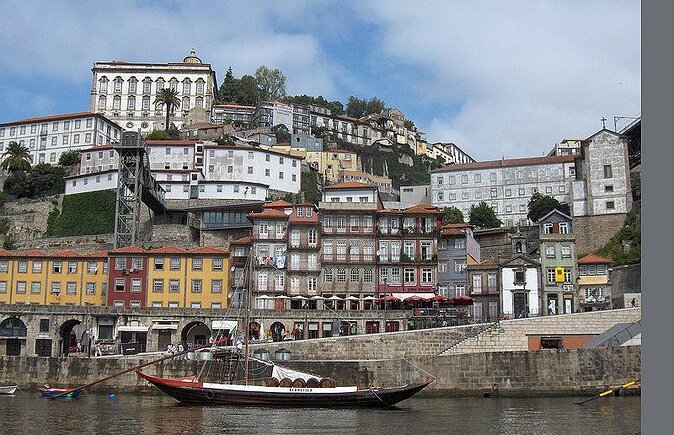
- Douro riverside walk: you get viewpoints tied to neighborhoods like Pena Ventosa and Vitória Hill.
- Dom Luís I Bridge viewpoints: a guided “read” of the river, not just standing and looking.
- Small group size (max 25): easier conversation and fewer bottlenecks at photo stops.
Starting at Terreiro da Sé: How Porto Cathedral Sets the Tone
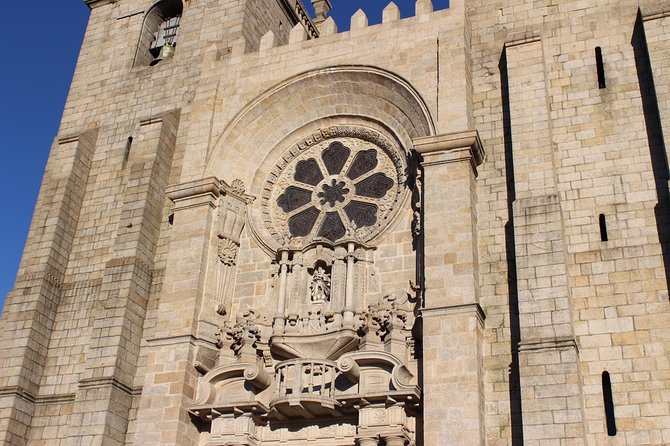
You begin in Terreiro da Sé, right in the historical center, with Porto Cathedral as your anchor point. This matters more than it sounds. When you start at a place that people have used for centuries, the guide can connect what you’re seeing now with why Porto grew the way it did—trade, hills, river power, and the city’s role along the Douro.
From the first minutes, you’ll get a sense of Porto’s structure: the way streets step up and down, how the river shapes neighborhoods, and why so many buildings have that mix of old stone and later upgrades. Even if you’re not a “history person,” this kind of framing turns the rest of the walk into something you can place in your mind.
The best part here is the pacing. You don’t spend the whole tour on one monument. Instead, the guide uses the Cathedral area to explain the city’s logic, then moves you outward to places you’d likely wander past without understanding what you’re looking at.
You can also read our reviews of more walking tours in Porto



São Bento Train Station Murals: Art You Can See in Minutes
Next you head to São Bento Railway Station, a quick stretch of walking that pays off fast. The main reason to go is the wall of murals. They’re not just decoration; they’re a visual timeline approach—moments from history turned into scenes you can spot with your eyes while you’re standing inside.
This stop is short, and that’s good. You’ll get enough time to enjoy it, but you’re not stuck in a long “museum mode.” Also, being a functioning station means the artwork is integrated into daily life, not staged behind ropes.
Practical tip: keep an eye on your feet while you look up. Stations tend to be busy, and you don’t want to miss the mural details while sidestepping other people.
Rua das Flores: Tile Houses, Medieval Wall Traces, and Places to Browse
After São Bento, you move toward Rua das Flores, where Porto shows off that signature look—colorful tiles on the walls, charming facades, and streets that feel made for slow walking. This section is one of the tour’s best “slow down” stretches.
Here’s what makes it special in real terms:
- You’ll see remains of medieval city walls, which is the kind of thing you don’t always notice on a casual stroll.
- You’ll spot tiles that range from decorative to story-like, and you’ll start to understand how Porto’s design identity lives on the outside of buildings.
- You’ll pass artistic shops where you can browse local crafts, plus the area includes 19th-century gardens of fragrant flowers.
That last detail is important. Porto isn’t only about big landmarks. It’s also about small pockets of beauty tucked into a dense city. If you’ve got limited time, this stop is your chance to feel that “lived-in” side.
Possible drawback to keep in mind: this part of town attracts people for exactly these visuals, so expect crowds around photo-friendly facades. If you’re sensitive to bottlenecks, take your photos quickly, then move on.
Along the Douro at Cais da Ribeira: Views Tied to Real Neighborhoods
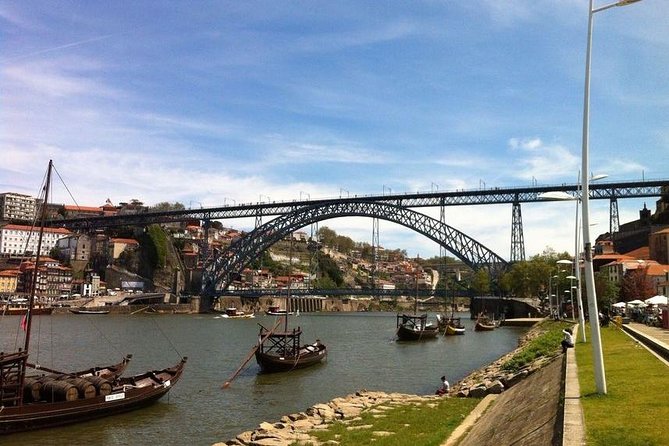
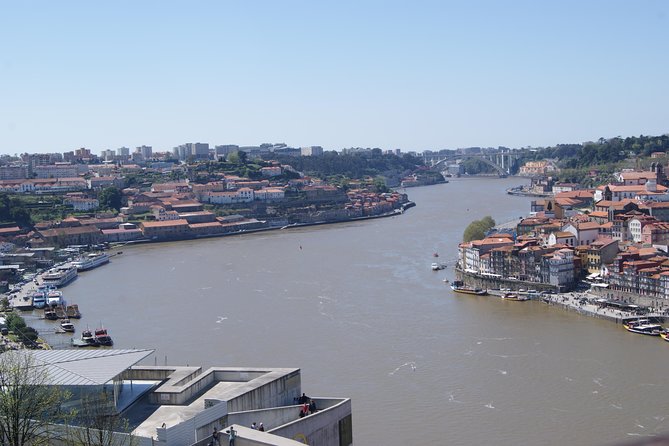
Then you get to Cais da Ribeira, where walking beside the Douro turns into more than scenery. The guide helps you connect what you see—water, bridges, slopes—with neighborhoods and viewpoints like Pena Ventosa and Vitória Hill.
Why I like this stop for first-timers: Porto’s riverfront can look postcard-perfect, but without context, it’s easy to forget that the city is built around viewpoints and climbs. With the guide’s explanations, you start understanding how people historically moved through the hills and how the river served as the city’s main artery.
You also get a sense of scale. From street level, you can look toward the hills and realize Porto isn’t flat—it’s a set of levels, stairs, and terraces. That affects where you’ll want to go later for sunset or longer walks.
Quick practical note: riverside sections can feel cooler or breezier even when the rest of the city is warm. Bring a light layer if you tend to run cold.
Dom Luís I Bridge: The Part You Don’t Want to Rush
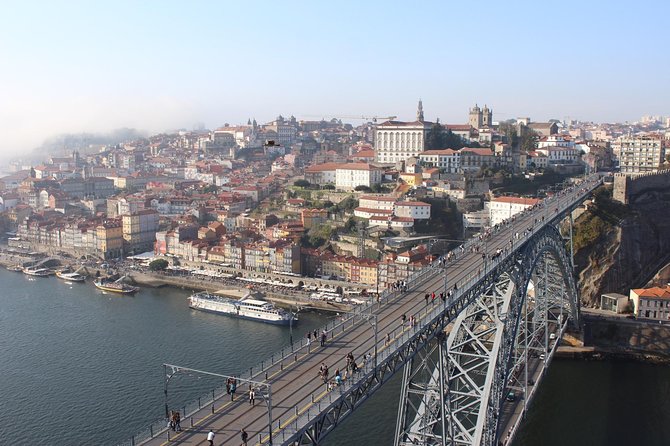
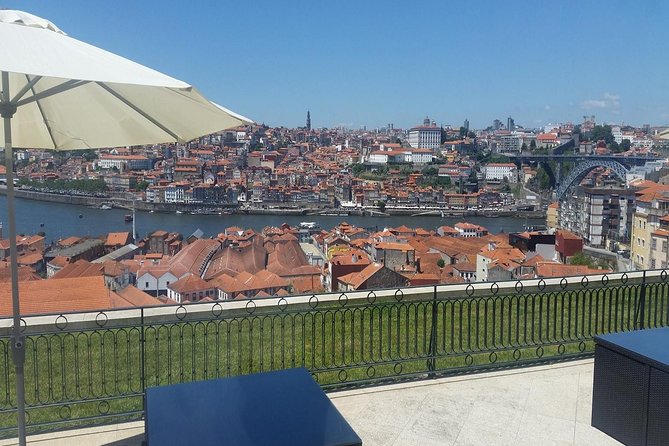
The tour ends with the Dom Luís I Bridge, and this is the stop where you’ll really appreciate having a guide. Bridges can be “just a photo spot” if you visit on your own. With a local guide, you get a smarter view: they point out relationships between river, neighborhoods, and the overall shape of Porto.
You’ll also get that satisfying “now I get it” moment—standing where the city visually connects and seeing how the walk’s earlier themes (old city walls, hills, river life) all fit together.
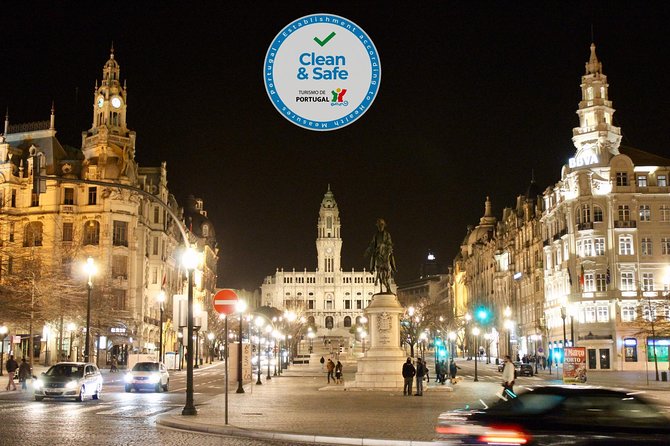
Since your tour ends at Avenida dos Aliados, you’re also in a good spot to keep exploring right after. That avenue is a natural place to transition into cafés, shopping streets, or your next neighborhood.
You can also read our reviews of more guided tours in Porto




How the 3-Hour Format Works (and Why It’s Good Value)
At about 3 hours, this walking tour sits in a sweet spot. Long enough to give context and cover several key areas, short enough that you won’t burn half your day and end up too tired to enjoy Porto afterward.
The group size is capped at 25, which helps. Big groups tend to turn walking tours into a moving queue. Smaller groups make it easier to hear the guide and ask questions when something doesn’t click yet—like why certain buildings look the way they do, or why the river matters so much in city life.
You also get two tour times for your convenience. That’s helpful if you’re trying to line up with other plans (arrive, check-in, eat, then tour; or tour earlier and save evenings for the river).
One more detail worth noting: the tour uses a mobile ticket, and it’s offered in English. That matters if you’re trying to plan around language or schedule.
Price Check: Is $33.61 Worth It?
For $33.61 per person, you’re paying for guided interpretation, route efficiency, and a short loop through high-impact stops. Most entries are essentially free to view—you’re not paying museum fees every half hour.
So the value isn’t in access. It’s in translation: the guide turns what you see into something you can recognize later while exploring on your own. That’s what makes it useful beyond the three hours.
If you’re the type who likes to wander without a plan, this still helps—because the tour gives you a mental map of what areas are worth returning to. If you prefer a structured day with clear stops and a friendly pace, it also fits.
What You Should Know Before You Go
A few practical notes can make the difference between a smooth walk and a mildly stressful start.
- Meeting point is Terreiro da Sé: arrive early so you’re not searching while people stream in.
- Comfortable walking shoes matter: the route is very doable, but it’s still a guided walking experience.
- Moderate fitness level: plan for steady walking rather than long, steep climbs, but don’t show up in brand-new shoes.
- Service animals are allowed.
- Good weather helps: the experience depends on weather, and poor conditions can trigger a change in date or a full refund.
- Your guide’s style affects the whole day: multiple reviews praise guides for being informative and friendly (including names like Pedro and Riccardo), which is a strong sign you’ll actually enjoy the narration, not just tolerate it.
Should You Book This Porto Walking Tour?
Book it if you want a fast, friendly introduction to Porto’s key sights in a way that helps you explore later. This tour works especially well as your first “serious” Porto day, when you need a map in your head more than another list of monuments.
I’d also recommend it if you like learning in motion—tiles, murals, bridge views, and riverside streets—where a guide’s explanations keep the whole walk coherent. And if you’re traveling with limited time, the 3-hour length is a practical win.
Skip or consider alternatives if you’re extremely sensitive to meeting delays or if you’ve had bad luck with guided tours being inconsistent with schedule in the past. One review flagged communication/finding the meeting group and another mentioned a shorter-than-expected duration on a specific day—so give yourself buffer time.
If you want a solid start in Porto without overcommitting, this is an easy yes.
FAQ
How long is the 3-hour guided walking tour of Porto?
It runs for about 3 hours.
How much does the tour cost?
The price is $33.61 per person.
Where do you meet for the tour?
You meet at Terreiro da Sé, 4000 Porto, Portugal (in front of Porto Cathedral).
Where does the tour end?
The tour ends at Avenida dos Aliados, 4000 Porto, Portugal.
What’s included in the price?
The tour includes a local guide.
Are there any admission tickets you need to pay during the stops?
Admission is listed as free for the stops mentioned (so there are no paid entry fees indicated in the tour details).
What language is the tour offered in?
It’s offered in English.
What if the weather is bad?
The experience requires good weather. If it’s canceled due to poor weather, you’ll be offered a different date or a full refund.