REVIEW · PORTO
Porto’s #1 Walking Tour
Book on Viator →Operated by Revolutours · Bookable on Viator
Porto makes sense on two and a half hours of walking. This guided route threads through the historic center with free viewpoints, big-ticket photo stops, and an end point right at Porto Cathedral. It is built for a small group, with a maximum of 28 people, so you get less chaos than the bigger bus tours.
I especially like the way the tour balances set pieces with time to look—São Bento Station is a highlight because admission is included, and the guide helps you read what you are seeing. I also like the human factor: guides such as André, Harold, Jorge, Diogo, Caoi, and Natalia are repeatedly praised for lively storytelling and answering questions beyond just the buildings.
One thing to plan for: several major stops are not included for entry, like Clérigos Tower, Livraria Lello, and the Cathedral, so your total cost may rise if you want to go inside. If you are hoping to see every famous site without extra tickets, this might feel a bit pay-to-enter heavy.
In This Review
- Key highlights you will feel on this walk
- Entering Porto’s core from Largo Amor de Perdição to Sé
- Price and tipping: why a low listed cost can still be fair
- The route feel: short stops, smart pacing, and photo-friendly timing
- Stop-by-stop: what each location adds to your Porto picture
- Centro Português de Fotografia: setting the cultural tone
- Miradouro da Vitória: a viewpoint break that pays off
- Torre dos Clérigos: seeing the skyline icon without assuming entry
- Tribunal da Relação do Porto: a civic building moment
- Igreja do Carmo: tile work that deserves your attention
- Universidade do Porto: spotting the academic presence
- Livraria Lello: the famous bookshop moment (tickets are separate)
- Avenida dos Aliados: the central-city pulse
- São Bento Railway Station: included admission and the tile masterpiece
- Catedral do Porto (Sé): the walk’s dramatic finish
- What kind of guide experience you can realistically expect
- How to get the most out of it on the day
- Should you book Porto’s #1 Walking Tour?
- FAQ
- Is the tour in English?
- How long is the walking tour in Porto?
- How much does the tour cost?
- Where does the tour start and end?
- Is admission included at São Bento Railway Station?
- Are all the stops included for entry?
- What is the maximum group size?
- Can I cancel for a full refund?
- Do I need a print ticket?
Key highlights you will feel on this walk
- English-speaking guides who run the streets well, and often share practical tips on what to do next
- São Bento Railway Station is covered with included admission, so you are not scrambling for tickets
- Tiles, views, and skyline landmarks are the tour’s secret weapon—especially the Church of Carmo tile work
- A satisfying start-to-finish route, beginning near Largo Amor de Perdição and ending at Sé Cathedral
- A manageable group size (28 max) for a route that is mostly in one concentrated area
Entering Porto’s core from Largo Amor de Perdição to Sé
This walk is a straight shot through the part of Porto most people want to understand first. You start at Largo Amor de Perdição (Campo dos Mártires da Pátria 2117) and you end at Porto Cathedral in Terreiro da Sé. That is a smart setup because you finish at one of the best bases for wandering afterward—stairs, viewpoints, side streets, and plenty of cafés nearby.
The timing is also realistic. The full experience runs around 2 hours 30 minutes, with short, focused stops (about 10 minutes at each major point). You do not spend all day standing around like some tours do, but you also get enough time to actually look up, not just walk past.
You should expect a walking tour, not a ride. Porto has hills and uneven streets, so if you do not love steep sidewalks, wear shoes with grip and plan for some elevation. On the bright side, the route feels designed for mixed ages and “first trip to Porto” energy, not for hardcore hikers.
You can also read our reviews of more walking tours in Porto



Price and tipping: why a low listed cost can still be fair
The price shown is $0.91 per person, but the tour runs as a pay-what-you-want model. The key detail is that your booking guarantees your presence on the tour, but it does not function like paying a fixed set fee for the guide.
Practically, that means you should budget for a tip based on how the guide delivers the experience. There is no stated fixed amount—you tip what you think is fair, based on the value you received. If you get an animated guide who answers questions and keeps the group moving smoothly, that is exactly the kind of service you would tip well for.
Is it “cheap”? It can be, especially because the route covers a lot of high-recognition stops in a short window. You also get an English-speaking guide, which is often the biggest cost driver for walking tours. And since São Bento Station admission is included, you save yourself at least one ticket purchase on a place people usually want to see.
If you prefer price clarity with no tipping element, this tour is not built for you. But if you like a friendly, flexible setup, it is one of the better value styles in Porto.
The route feel: short stops, smart pacing, and photo-friendly timing
A big reason this tour earns such strong ratings is pacing. Stops are brief enough that the day does not drag, but they are long enough for the guide to point out what to notice. You will hear stories tied to each location, not just a list of names.
The walk also has a photo rhythm. You will have designated pauses to capture views and details. That can be perfect if you love pictures (including people who bring a camera and want time to frame). It can feel like too much if you prefer to keep moving and treat photos as quick snapshots. Either way, you will not feel rushed out of each stop.
Group size matters, too. With up to 28 travelers, it is large enough that the streets may get crowded, but small enough that you should still hear your guide clearly during key moments. The guide’s job is to keep everyone together while still giving you time to look around.
Stop-by-stop: what each location adds to your Porto picture
Centro Português de Fotografia: setting the cultural tone
You begin with Centro Português de Fotografia. Entry at this stop is listed as free, and you spend around 10 minutes here. It is a good early choice because it nudges you beyond “look at old buildings” mode and toward Porto’s cultural identity—how photography connects people to place.
Think of this stop as the warm-up. You get a quick orientation and context, so later, when you see tiled façades and major landmarks, you are not just collecting sights—you are understanding how Porto tells its story.
The drawback is simple: it is short. You will not leave with deep expertise. But for a walking tour that is only 2.5 hours, that is normal, and this stop helps the whole walk feel more intentional.






Miradouro da Vitória: a viewpoint break that pays off
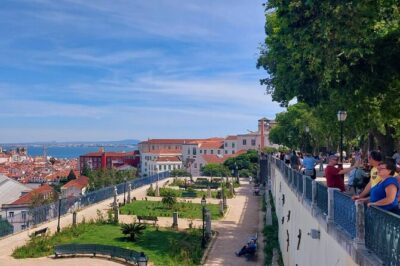
Next up is Miradouro da Vitória, another free admission stop with about 10 minutes on site. Viewpoints are where Porto suddenly “clicks,” because you finally see the city’s layers—streets, rooftops, and the feeling of steep neighborhoods stacked like stories.
This is also a natural photo moment. If you like sunrise or late afternoon light, you might notice how the view changes as the sun shifts. Even if you do not plan timing, a viewpoint stop is still useful because it gives you spatial memory. After that, the buildings you see in the walk make more sense.
If you hate crowds at scenic points, this is the one stop you might want to approach calmly. Viewpoints tend to pull everyone’s phones out at once.
Torre dos Clérigos: seeing the skyline icon without assuming entry
You then reach Torre dos Clérigos. Entry here is not included, so the stop is more about seeing and learning than going inside on the spot. Expect the guide to explain why the tower matters to Porto’s visual identity.
This matters even if you skip tower entry. Clérigos is a skyline landmark, and seeing it from the street helps you understand why locals use it as a reference point. It is also one of those structures that looks different as you shift your angle, so even a quick stop can still be worthwhile.
The consideration: if you want to climb or tour the tower interior, you will need to plan your ticket separately. Many people do, and the tour does not promise it for you.
Tribunal da Relação do Porto: a civic building moment
At Tribunal da Relação do Porto, admission is not included. This is a “stop and notice” kind of location, where the guide can connect the architecture to Porto’s official, public-life history.
This location adds variety. After churches and viewpoints, it is refreshing to see how the city’s civic identity shows up in stone and façades. It also broadens the story beyond churches and bookshops.
You might walk past quickly if you are mainly there for interiors. If you love architecture from the outside, you will likely enjoy this one more.
Igreja do Carmo: tile work that deserves your attention
Igreja do Carmo is specifically highlighted for its tiles, and you spend about 10 minutes here. Admission is not included, but the tour’s focus at this stop is exactly what most people want: the exterior tile artistry.
This is the moment to slow down a bit. Tiles are detail-heavy, and the best way to appreciate them is to look for patterns and storytelling scenes rather than just snapping a photo from one angle. The guide’s explanations make a huge difference here because they help you see what you are actually looking at.
If you were hoping for a full church visit, you may need to add extra time on your own. This stop is designed around seeing and understanding the tile attraction, not completing a full interior experience.
Universidade do Porto: spotting the academic presence
Universidade do Porto is next, again with admission not included and around 10 minutes. Even if you do not go inside, the university stop helps ground Porto as a living city with education, not just a museum of old stone.
This stop can feel a bit “quick exterior look” depending on what you personally love. If you are more into religious sites and major landmarks, you may skim it mentally. If you enjoy street-level architecture and the feel of neighborhoods, it works well.
If you want more time for this stop, plan a separate return later. The tour gives you the introduction.
Livraria Lello: the famous bookshop moment (tickets are separate)
Then comes Livraria Lello, with admission not included. You get the iconic sight, and the guide helps frame why the bookshop is such a cultural magnet.
This is one of those stops where you should set expectations. The tour does not bundle entry. If you want to actually go in, you will likely do it outside of the walking tour window.
The upside: even without entry, seeing the place in context makes it more than just a photo background. You understand where it sits in Porto’s city fabric, not as an isolated attraction.
Avenida dos Aliados: the central-city pulse
At Avenida dos Aliados, you get about 10 minutes. Admission is not included because this is about the public space—the broad avenue feel and the urban energy of central Porto.
This is a useful “breather” because it is not an entrance-ticket site. It helps you connect the walk to where people actually hang out, shop, and move through the city.
The downside is also simple: if you are only into monuments, this might feel less dramatic than a tower or a station hall. But as part of orientation, it works.
São Bento Railway Station: included admission and the tile masterpiece
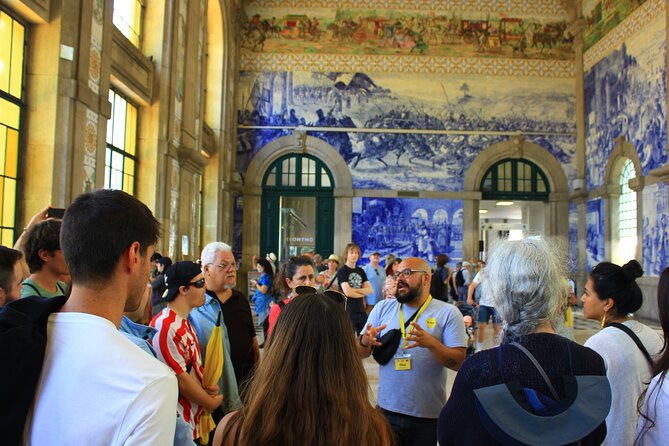
Now for the stop that many people time the rest of the day around: São Bento Railway Station. Here, admission is included, and you get about 10 minutes.
This is where Porto’s tile culture really becomes a visual storytelling engine. The station hall is famous for azulejos, and the guide’s job is to help you look beyond the obvious. You should spend at least some of those minutes reading scenes and noticing how the tiles form a historical mood.
This included access changes the tour’s value. You do not need to plan a separate ticket. You walk in and focus on what matters: the art, the setting, and the feeling of being inside a living transit space.
A small practical note: stations are active. If you want photos without motion blur, you might need a tiny bit of patience. Ten minutes goes fast when you are looking for details.
Catedral do Porto (Sé): the walk’s dramatic finish
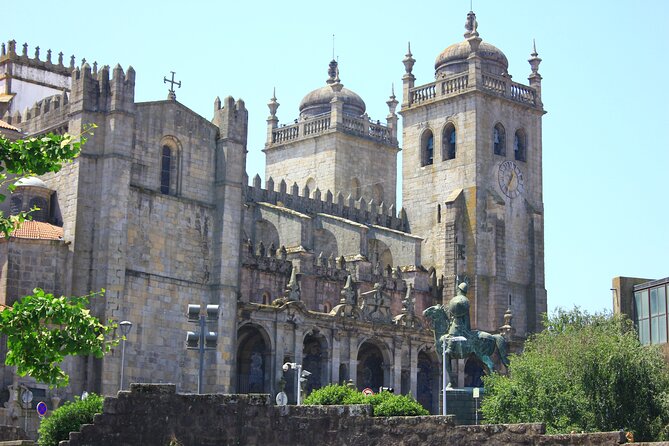
Finally, you end at Porto Cathedral, in Terreiro da Sé. Admission is not included at this last stop, so the tour is more about getting you to the right doorstep and giving you context for what you are seeing.
Ending here is smart. The area around Sé is ideal for a final stretch of wandering—side streets, views, and quick meals. If you want to go inside, you can do it at your own pace after the guide has finished.
Consideration: since entry is not included, some people end up spending extra time planning tickets or adjusting expectations. That is not a dealbreaker, just something to accept up front.
What kind of guide experience you can realistically expect
This is a guide-led walking tour, and the difference shows up fast. People consistently praise guides like André, Harold, Jorge, Diogo, Caoi, and Natalia for being animated and for answering questions beyond the tour script. That might include advice on transportation and other activities, which is exactly what you want while you are still finding your footing in a new city.
You may also notice that guides tend to mix humor with facts. That matters because it keeps a short 2.5-hour experience from turning into a lecture. The result is that you leave with an easier mental map of Porto, not just photos of façades.
One mild caution from real-world experiences: some tours include occasional QR-code scans or light promotions while you walk. If that is your pet peeve, it might feel like a distraction. Still, it usually does not derail the main sightseeing.
How to get the most out of it on the day
If your goal is orientation, do this early in your Porto stay. The route ends at Sé, and you can build a next-day plan from there.
Wear comfortable shoes with grip, because Porto sidewalks can be uneven and the route includes at least some hill effort. Bring water, even if the stops are short. And if you want interior visits, decide what you care about before you start—because several key sites along the way do not have included admission.
If you love photography, arrive a little early. The guide’s pauses are timed, but you will still enjoy the experience more if you are not rushing to get ready when the group moves on.
Should you book Porto’s #1 Walking Tour?
Book it if you want a high-value first pass at Porto’s historic center with an English guide, a strong tile and landmark focus, and a great included payoff at São Bento Station. The price structure can be a plus if you are comfortable tipping, and the route length is ideal for fitting into a single afternoon.
Skip it or pair it with something else if you want every major sight handled with zero extra tickets. Several big names on the route—Clérigos Tower, Livraria Lello, Carmo, the University, and the Cathedral—do not include admission, so you will need to pay separately if you want interiors. Also, if you expect to cover the entire city in one sweep, you will not. This walk concentrates on one especially important part of Porto.
In plain terms: this is a smart way to learn Porto’s shape fast. If you treat it as an orientation plus a few anchor stops (especially São Bento and Carmo tiles), you will likely feel like you got your money’s worth.
FAQ
Is the tour in English?
Yes. The experience is offered in English with an English-speaking guide.
How long is the walking tour in Porto?
It runs for about 2 hours 30 minutes (approximately).
How much does the tour cost?
The listed price is $0.91 per person. The tour operates as a pay-what-you-want style, so you should also plan to tip the guide individually.
Where does the tour start and end?
It starts at Largo Amor de Perdição, Campo dos Mártires da Pátria 2117, 4050-600 Porto, Portugal. It ends at Porto Cathedral, Terreiro da Sé, 4050-573 Porto, Portugal.
Is admission included at São Bento Railway Station?
Yes. São Bento Railway Station has admission included. Other stops may not include admission.
Are all the stops included for entry?
No. Some stops are free, some have admission not included, and only São Bento Railway Station is listed as included for admission.
What is the maximum group size?
The maximum is 28 travelers.
Can I cancel for a full refund?
Yes. You can cancel up to 24 hours in advance for a full refund.
Do I need a print ticket?
No. You get a mobile ticket.