REVIEW · LISBON
Tour Tuk Tuk Lisbon-Belem 4 H Free Pick-up
Book on Viator →Operated by Chaparru's Tours · Bookable on Viator
Skip the long walks, get the Lisbon views fast. This 4-hour private tuk-tuk tour is a smart way to see both Lisbon and Belém in one go, with plenty of short stops at dramatic miradouros and classic churches. I especially like how the guide weaves what you’re seeing into the city’s big moments, from Moorish Lisbon to the age of Portuguese discoveries.
The main trade-off is time: most stops are quick, and a couple of indoor sights have entry tickets not included. Also, the ride is fun but the streets can be bumpy, so if you’re sensitive to jolts, plan for that.
In This Review
- Key things I’d mark on your map
- How the 4-hour private tuk-tuk experience really feels
- Lisbon Cathedral and Miradouro das Portas do Sol: oldest stone and best river light
- Senhora do Monte: panoramic views plus a hermitage legend
- São Vicente de Fora: church art styles and Bragança burial ties
- Panteão Nacional and Alfama: Amália and Eusébio, then the Arabic bath origins
- Praça do Comércio, Martinho da Arcada, Pink Street, and Chiado’s writers’ cafés
- São Roque and Miradouro São Pedro de Alcântara: baroque chapels and an east-facing view
- Bairro Alto: cobblestones, fado clubs, and the nightlife pulse
- Belém National Palace and São Bento Palace: power, politics, and Lisbon’s edge
- Basilica da Estrela: marble inside, vows outside, and a royal family detail
- Pastéis de Belém: why the stop feels worth it
- Jerónimos area, Torre de Belém, and the Monument to the Discoveries
- Price and logistics: is €150ish worth it for 4 hours?
- Tips that make your tuk-tuk day easier (and better photos)
- Should you book this Lisbon–Belém tuk-tuk tour?
- FAQ
- How long is the Lisbon–Belém tuk-tuk tour?
- Is this tour private or shared?
- What languages do the guides speak?
- Is pick-up included?
- Are entrance tickets included for all stops?
- Is food or drink included?
- Do I need good weather?
- What’s the general style of the tour?
- Does it use a mobile ticket?
- Can I cancel and get a full refund?
Key things I’d mark on your map
- Private transport, not a cattle-car: your group rides together with your guide doing the driving and explaining.
- Short-viewpoint stops that actually work: quick 10-minute miradouro moments beat trying to coordinate them yourself.
- Belém’s hits in one loop: Pastéis de Belém, plus the Jerónimos area and Torre de Belém viewpoints.
- Church stops without feeling like a museum day: most are walk-in, with a few ticketed interiors.
- Guides who tailor the pace: you’ll often get photo time and a practical sense of where to pause.
- Weather matters: it requires good conditions, and rain can affect comfort and sightlines.
How the 4-hour private tuk-tuk experience really feels
This is a private tour/activity, meaning only your group participates. That matters in Lisbon, because the hills plus tight streets can make group tours feel crowded fast. Here, you get a calmer rhythm: ride, stop, short explore, ride again.
The tour lasts about 4 hours. Along the way you’ll spend small chunks of time at key points—often around 10 minutes at viewpoints and 15–20 minutes at bigger stops. It’s designed so you come away with a sense of Lisbon’s neighborhoods and Belém’s landmarks, not so you linger for hours inside every site.
You should also expect the tuk-tuk to be a little bumpy. Lisbon’s cobblestones and steep bits are part of the deal, even when you’re not walking them. If you’re going with anyone who needs extra help getting in and out, ask the operator ahead of time—some guides have handled that with small practical aids.
Finally, the tour includes private transportation, and the price covers that and the guide experience. It does not include food or drink, and it also doesn’t cover every entrance fee, so bring a bit of flexibility (and a little money) for the indoor sights you choose to do.
You can also read our reviews of more tours and experiences in Lisbon.

Lisbon Cathedral and Miradouro das Portas do Sol: oldest stone and best river light
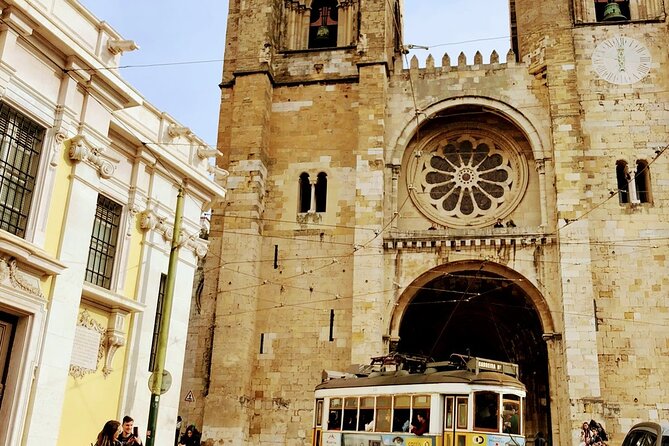
You start at Lisbon Cathedral, a Romanesque-era standout built beginning in 1147 after Lisbon was taken from the Moors. The cathedral is considered the oldest church in the current Portuguese capital, so it sets a strong “this is really old” tone early.
Plan about 15 minutes here. The ticket is not included, so you’ll either pay on-site or keep it to the areas you can see without entry. If you’re the type who likes architecture details, this stop is the right kind of quick: it gives you a sense of Lisbon’s long timeline without forcing a full guided church marathon.
Then you hop to Miradouro das Portas do Sol, one of the city’s classic viewpoints. The name connects to the old Porta do Sol and the Moorish fence—there’s even a reference to wall remains near Cerca Velha, plus Lisbon’s 1755 earthquake history in the background of the view.
This stop is free and short—around 10 minutes. That’s perfect for photos and a quick reset before the next hilltop perspective. If you’ve ever been stuck doing viewpoints that feel crowded and rushed, this pacing is the opposite: enough time to look, less time to wait.
Senhora do Monte: panoramic views plus a hermitage legend
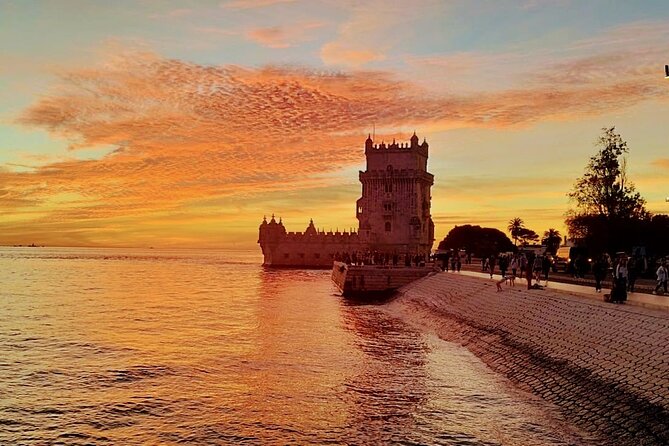
Miradouro da Senhora do Monte is where Lisbon’s geography really hits you. From here you can see south toward the Palha Sea, São Jorge Castle, parts of Baixa, and the Tagus estuary. You can also look west toward Bairro Alto and east over the Avenida Almirante Reis valley direction.
This is another quick viewpoint stop—about 10 minutes—and admission is free. I like it because the view gives context. You stop seeing Lisbon as random streets and start understanding how the neighborhoods stack on top of each other like layers.
Right next door is the small ancient Hermitage of Nossa Senhora do Monte. It was founded in 1147 and consecrated to Saint Gens. The tour also points out a local legend about a stone chair inside the hermitage: pregnant women who sat there were said to have uncomplicated births.
Even if you’re not chasing legends, this is still a meaningful stop because it connects the viewpoint to older Lisbon. The time is brief, so you get the moment without a long detour.
São Vicente de Fora: church art styles and Bragança burial ties
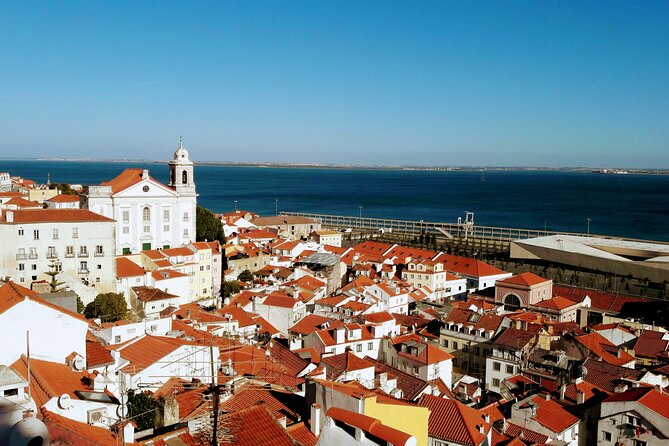
Next up is Igreja de São Vicente de Fora. Construction began in 1582, and the story here is tied to earlier royal intentions connected to D. Afonso Henriques and the patron saint of Lisbon, S. Vicente, proclaimed in 1173.
This stop is free and scheduled around 10 minutes. What makes it worth a quick visit is the mix of styles: traces of Mannerism in Portugal, plus Gothic and Baroque influences. That combination is the kind of thing you’d miss if you only focused on one era of Lisbon’s architecture.
It’s also home to the Pantheon of the Dukes of Bragança, with burials of Portuguese kings from the Bragança dynasty. If you want a shortcut to understanding why “royal Portugal” matters here, this church delivers it fast.
Panteão Nacional and Alfama: Amália and Eusébio, then the Arabic bath origins
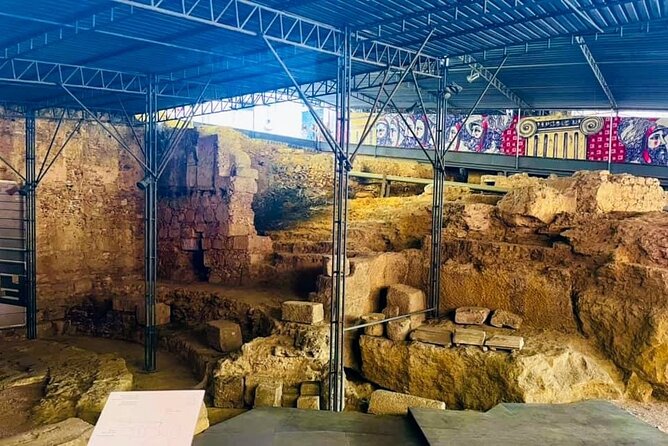
The National Pantheon (Panteão Nacional) is housed in the Church of Santa Engrácia. Construction began in 1682 and the project took centuries to finish, ending in 1966—so the building itself carries a sense of long planning and political shifts.
This stop is about 20 minutes, and admission is not included. If you skip paying for the interior, you still get a meaningful outside moment, but the names inside are the hook: Amália (the fado diva) and football player Eusébio are among the graves honored here.
After the pantheon, the tour shifts to Alfama, Lisbon’s oldest neighborhood and one of its most typical districts. The name traces back to Arabic al-hamma, meaning fountain or hot water baths—because Alfama was tied to thermal waters.
This is free and short—about 10 minutes. I like Alfama as a “human scale” break in the route: even when you’re not walking long, it reminds you Lisbon isn’t only viewpoints and monuments. It’s also streets, sound, and the neighborhoods that made those legends and songs possible.



Praça do Comércio, Martinho da Arcada, Pink Street, and Chiado’s writers’ cafés
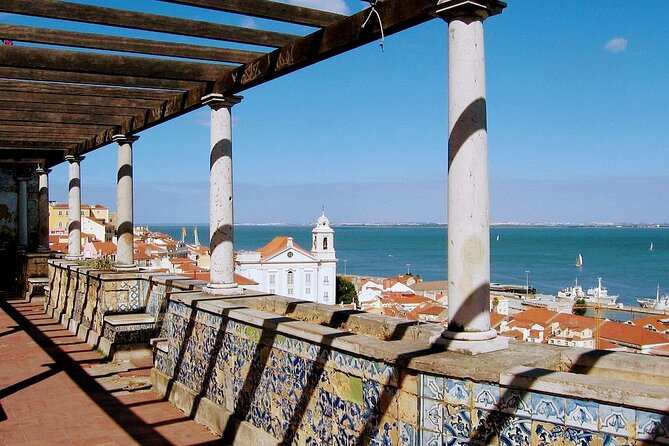
Then the route moves into Lisbon’s central rhythm: Praça do Comércio. This huge square was the site of the kings’ palace for around two centuries, and it’s one of the largest squares in Europe. It’s also a great place to orient yourself visually—this is the kind of square that makes Lisbon feel navigable.
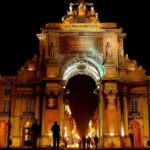
Along the square’s edges you’ll pass references to Rua Augusta Triumphal Arch and the formal feel of the old river entrance. The tour also highlights Martinho da Arcada café, described as the oldest in Lisbon and a favorite of Fernando Pessoa.
From there, you’ll hear about Rua Cor-de-Rosa—Pink Street. This area is known for nightlife and late hours, with the New York Times placing it among its favorite European streets. Even if you’re visiting in daylight, it’s still useful to know where the city’s party energy concentrates.
Next is Chiado, the bohemian, emblematic neighborhood tied to writers, artists, and intellectual gatherings. You’ll also encounter baroque church references like Church of Loreto and Church of Our Lady of the Incarnation, plus Largo Luís de Camões.
This is the part of the tour where Lisbon starts feeling like a living modern city. You get a sweep of the old center without having to map five separate neighborhoods on your own.
São Roque and Miradouro São Pedro de Alcântara: baroque chapels and an east-facing view
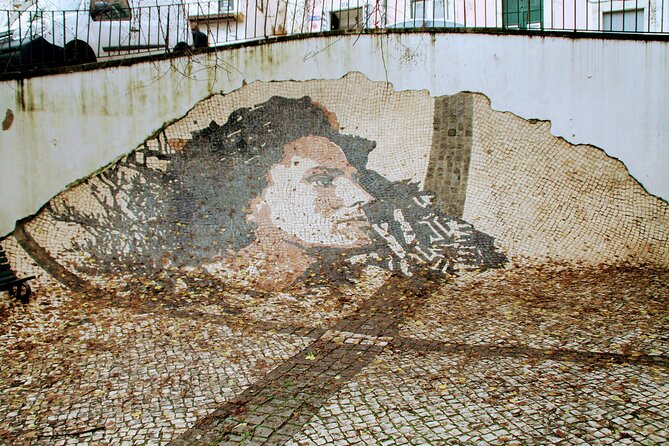
Iglesia de São Roque is one of the strongest “quick church payoff” stops on this route. It was built at the end of the 16th century and belonged to the Society of Jesus—its first church in Portugal and among the first Jesuit churches in the world. It also survived the 1755 earthquake unscathed, which is the kind of detail that makes a short stop feel extra meaningful.
Admission is free and the scheduled time is around 10 minutes. The interior focus is on chapels, mostly early 17th-century Baroque style. One chapel gets special mention: Saint John the Baptist, from the 17th century, described as a masterpiece of Italian art.
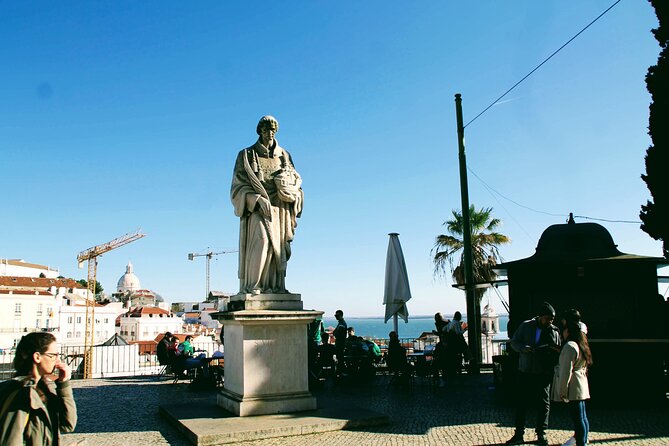
Then you roll to Miradouro São Pedro de Alcântara. This viewpoint is noted for east-facing views over the Baixa area. Admission is free and you’ll get about 10 minutes to take it in.
I like this pairing because it switches from architecture to views. In a short time, you get a sense of how Lisbon expresses itself both in buildings and in the angles of the city.
Bairro Alto: cobblestones, fado clubs, and the nightlife pulse
Bairro Alto is old and picturesque, with narrow cobbled streets and centuries-old houses. It’s also Lisbon’s best-known nightlife area since the 1980s, with fado clubs and countless bars and restaurants.
Even if you’re here earlier in the day, the streets give away the energy. The key for you is to treat this stop as a quick orientation: you’re learning where the nightlife lives so you can decide later if you want to go back on your own.
If you’re sensitive to crowds, plan your nightlife timing. Bairro Alto can be lively, and the tour is more about showing you the zone than getting you stuck in the loudest moments.
Belém National Palace and São Bento Palace: power, politics, and Lisbon’s edge
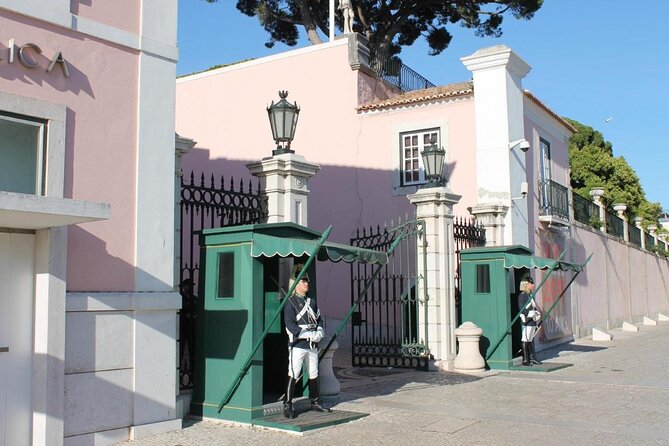
Belém is where Lisbon starts to feel official. You’ll see the Belém National Palace area, described as the official residence of the President of the Republic. The palace was built in 1559 by D. Manuel de Portugal, later acquired by D. João V in the 18th century.
The tour also calls out the 1755 earthquake moment, when the royal family feared another quake and settled in tents on the palace grounds. The palace interior was used as a hospital—one of those history details that turns a viewpoint drive into something heavier.
Then there’s a stop connected to São Bento Palace. It’s built at the end of the 16th century as the Benedito Monastery, with Mannerist and Baroque design traces. After the liberal regime changes, it became associated with national courts and then the National Assembly, which is how it’s known in modern times.
These are not long “go inside and tour” stops on a 4-hour loop. Instead, they provide the political and cultural backbone of Belém, so the monuments you visit after feel tied to a bigger story.
Basilica da Estrela: marble inside, vows outside, and a royal family detail
Basilica da Estrela is also called the Royal Basilica and Convent of the Santíssimo Coração de Jesus. It’s a Catholic temple and former convent of Carmelite nuns.
The background is very tied to royal vows. D. Pedro III and D. Maria I made a vow that they would build a church if they had a son to inherit the throne. Construction began in 1799, but two years before finishing, the boy died of smallpox.
The style mix is part of the appeal: Baroque with a final phase, plus Neoclassical style. The interior is described as marble in gray, pink, and yellow, and the exterior and interior statues are meant to represent faith and devotion.
The tour also notes a specific family point: Queen D. Maria I is described as the only Bragança dynasty Portuguese monarch not found in the Bragança Pantheon, but in the Basilica of Estrela because she ordered it built.
This is free and scheduled around 10 minutes. It’s short, but it’s a good “contrast stop” before you go full-on food mode.
Pastéis de Belém: why the stop feels worth it
The Pastéis de Belém stop is about 15 minutes. The story you’ll hear is that in 1837 clerics connected to the Jerónimos Monastery started selling pastel de nata to survive, with sales boosted by visitors arriving via steamboat connections between Lisbon and Belém.
When the monastery closed after the Liberal revolution, the pastry chef decided to sell the recipe to Portuguese businessman Domingos Rafael Alves from Brazil. That recipe is described as remaining in the possession of his descendants.
Traditionally, these pastries are eaten warm with powdered sugar and/or cinnamon. Practical tip: if you order for takeout, you can often avoid the longest lines. The tour is set up in a way that can help you get your pastel de nata without wasting your limited time standing in queue.
If you’re the type who hates making “tour day” decisions, this stop is a relief. It’s one of Lisbon’s most famous food moments, and it’s built into the route.
Jerónimos area, Torre de Belém, and the Monument to the Discoveries
Jerónimos is the big cultural anchor of Belém. The Mosteiro dos Jerónimos (Monastery of Santa Maria de Belém) was built by King D. Manuel I at the end of the 15th century and belonged to the order of São Jerónimo. The tour notes that in 1452 Infante D. Henrique ordered the construction of the Hermitage of Santa Maria de Belém, where great navigators held vigils before departure.
It also highlights that tombs connected to Camões and Vasco da Gama are buried in the chapel, and the monastery serves as a pantheon.
Because this is a 4-hour tour, your time here is still short. Admission details aren’t specified for this specific stop in the data you provided, so I’d treat it as a place you’ll at least see and potentially enter, depending on how your guide manages the timing.
Next is Torre de Belém, described as formerly known as Torre de São Vicente a Par de Belém. Its job was to defend the Tagus riverbank. It’s a brief stop—around 5 minutes—and admission is not included.
Finally comes Padrão dos Descobrimentos, also called Monument to the Discoveries. It was built in 1940 for the Portuguese World Exhibition to honor figures linked to Portuguese discoveries. The current replica is described as later, inaugurated in 1960.
This is another quick photo-and-understand moment. If you’ve already seen the Jerónimos and tower area, this monument helps tie it to Portugal’s “age of exploration” framing.
Price and logistics: is €150ish worth it for 4 hours?
At $150.85 per person for about 4 hours, you’re paying for three things: private tuk-tuk transport, an English-speaking guide experience, and a route that strings together both Lisbon and Belém efficiently. That’s real value if you’re short on time or if hills and distance would otherwise slow you down.
What’s not included is food and drink. Also, a few key indoor sites have tickets not included—Lisbon Cathedral, the Panteão Nacional, and Torre de Belém are explicitly listed as ticketed. That means you’ll likely add a bit to the total cost if you want interiors.
Here’s the best way to think about it: the price buys convenience and context. If you also plan to pay for major interiors and eat on your own schedule, you’ll still get a smoother day. If you’re hoping to do lots of long museum-style entry time at multiple buildings, you may wish you had an extra afternoon.
Also note the tour is marked as requiring good weather. When conditions are rough, tuk-tuk comfort and sightlines can change. One practical sign you should watch for: clear rain gear can block views and make it harder to step in and out quickly.
Tips that make your tuk-tuk day easier (and better photos)
To make this kind of tour work for you, treat it like a guided highlights sprint, not a slow sightseeing day.
Ask your guide what to do at each stop to get the best payoff in the time given—some guides will happily recommend photo angles, quick church priorities, or where to step for the cleanest view. In real-life examples from past guides, people loved that some drivers explained why Lisbon buildings look the way they do, including tile details and how to read city surfaces beyond just the view.
If you’re going with someone with mobility needs, speak up about getting in and out of the tuk-tuk. In one case, a guide used a small step ladder so seniors could manage the ride with less strain.
And if you catch wind that roads might be closed because of an event, expect schedule tweaks. In a city like Lisbon, marathons and other big days can shift routes. The smart move is to stay flexible and trust your guide to adjust while still hitting the main landmarks.
Should you book this Lisbon–Belém tuk-tuk tour?
I’d book it if you want an efficient first-pass through Lisbon’s neighborhoods plus Belém’s famous monuments in just 4 hours. It’s ideal for first-time visitors, people who don’t want to fight logistics on hills, and anyone who likes learning the “why” behind what they’re seeing without spending the whole day inside.
I would skip or add an extra day if you want long, ticketed, slow museum visits. Some interiors are ticketed and the time at each stop is brief, so the tour works best as a sampler. If you’re traveling in tight weather windows, remember it requires good weather, and rain can affect comfort.
If you book, choose your priorities ahead of time: plan which ticketed interiors you’re most excited about (cathedral, pantheon, tower) and which ones you can treat as exterior/photo moments. Then your 4 hours will feel like a win, not a rush.
FAQ
How long is the Lisbon–Belém tuk-tuk tour?
It runs for about 4 hours.
Is this tour private or shared?
It’s a private tour/activity, so only your group participates.
What languages do the guides speak?
The tour is offered in English.
Is pick-up included?
The title indicates free pick-up, and the tour is near public transportation, so you’ll want to confirm the exact meeting point when booking.
Are entrance tickets included for all stops?
No. Some sites list admission as not included, including Lisbon Cathedral, the National Pantheon, and Torre de Belém.
Is food or drink included?
No. Food and drink are not included.
Do I need good weather?
Yes. The experience requires good weather, and if it’s canceled due to poor weather, you’ll be offered a different date or a full refund.
What’s the general style of the tour?
Expect a ride between neighborhoods with short stops at viewpoints, churches, and Belém landmarks—more like a highlights loop than a long museum day.
Does it use a mobile ticket?
Yes, it includes a mobile ticket.
Can I cancel and get a full refund?
Yes. You can cancel up to 24 hours in advance for a full refund. If you cancel less than 24 hours before the start time, the amount paid is not refunded.